
Media OutReach
Tenchijin – Japan’s Leading Satellite Tech Company to Develop its own Satellite and Launch in 2027

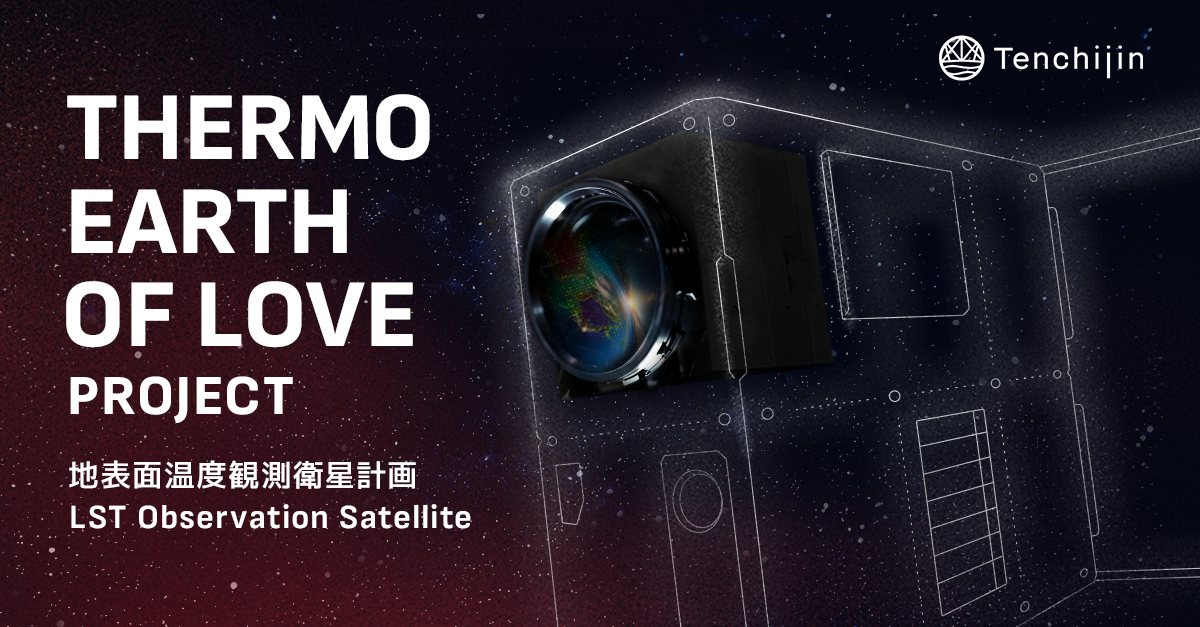
“Thermo Earth of Love Project” to Enhance Surface Temperature Observation and Advance its Solutions Further
TOKYO, JAPAN – Media OutReach Newswire – 20 February 2025 – On January 27, 2025, Tenchijin announced the launch of “Thermo Earth of Love Project,” a proprietary satellite program aimed at enhancing surface temperature monitoring capabilities. The company’s satellite is scheduled for launch in 2027.
has been utilizing satellite data to tackle various societal challenges, including climate change mitigation, aging infrastructure, and urban planning. Among the extensive range of satellite data, Tenchijin places particular importance on surface temperature data.
Surface temperature has been one of the key satellite data types Tenchijin has worked with since its founding. As Tenchijin has collaborated with stakeholders such as agricultural producers, local governments, and water utilities to address their challenges, it has recognized the growing importance of this data. In recent years, with increasingly severe summer heatwaves, knowing not only air temperature but also ground heat level has become even more critical. Tenchijin believes that surface temperature data is essential for understanding the impacts of climate change, assessing disaster risks, and developing effective countermeasures.
It is this belief in the potential of surface temperature data that led the company to take the significant step of developing its own satellite. The project name “Thermo Earth of Love Project” symbolizes both the warmth of Earth that surface temperature data reveals (Thermo Earth) and Tenchijin’s love and dedication to the planet (Love).
Continuous observation and analysis of surface temperature from space allow us to reexamine the relationship between Earth and humanity from the ground up. By making surface temperature data a standard part of society and transforming it into solutions that enhance people’s lives with greater safety and security, Tenchijin aims to contribute to a better future for the next generation.
Tenchijin does not view satellite data as a single-use resource but rather as part of a comprehensive big data approach. Tenchijin employs a unique method, uncommon in the space industry, by overlaying different satellite datasets and combining satellite data with ground-based data (such as sensor data, statistical data, and GIS data).
Satellite Imagery
When people think of satellite data, satellite imagery (visible images) is often what comes to mind. Many private companies, both in Japan and abroad, provide satellite imagery. At Tenchijin, these images are used to monitor natural changes, detect urban development, and identify structures and other features.
SAR Imagery
Satellite imagery can also capture information that is invisible to the human eye. One example is Synthetic Aperture Radar (SAR) imagery, which has recently gained attention. While SAR satellites like Japan Aerospace Exploration Agency (JAXA)’s advanced radar satellite “Daichi-4” (ALOS-4) have traditionally been developed under government initiatives, private companies have also started entering the field. Tenchijin uses SAR data to analyze ground deformation and related phenomena.
Surface Temperature
Surface temperature refers to the temperature of the ground itself. Unlike air temperature, which measures the temperature of the atmosphere, surface temperature indicates how hot or cold the ground is.
Surface temperature is a specialized dataset collected by various national satellites, including those from the Japan Meteorological Agency, JAXA, and NASA. Traditionally, this data has primarily been used by scientists and researchers.
However, since its founding, Tenchijin has been applying surface temperature data to business use cases. The reason why this data had not been widely adopted in business before lies in its complexity and the rarity of overlaying multiple satellite datasets.
Why has Tenchijin been able to leverage this data?
The answer lies in the company’s name. The name “Tenchijin” embodies its core mission:
“Ten” (Sky): utilizing satellite data from space
“Chi” (Earth): integrating ground-based data
“Jin” (People): enhancing people’s lives and activities through data
Because Tenchijin was founded with a vision of integrating multiple data sources, the company was able to quickly realize the potential of surface temperature data.
Surface temperature plays a crucial role in Tenchijin’s existing services, such as evaluating the risk of infrastructure deterioration, selecting optimal locations for renewable energy, and assessing suitable areas for agriculture adapted to climate change.
Recognizing the value of surface temperature data early on, Tenchijin has been conducting research and development to create proprietary high-frequency, high-resolution surface temperature information. This involves integrating data from JAXA’s GCOM-C satellite, the Himawari weather satellite, and various international satellites.
We are currently utilizing this technology in the free-to-use WebGIS service called “Tenchijin COMPASS” and in the water utility DX service for local governments and water service providers, known as “Tenchijin COMPASS KnoWaterLeak.”
The “Thermo Earth of Love Project” is an initiative by Tenchijin, a company that has long believed in the potential of surface temperature data. Through the development of its own satellite, this project aims to enhance surface temperature observation, with a satellite launch planned for 2027.
Starting in 2027, expanded coverage and higher resolution surface temperature data will significantly advance our solutions. We envision specific applications in the following areas:
Enhancements in Water Infrastructure Management
High-resolution, high-frequency surface temperature data will enable more advanced maintenance and management of water infrastructure. This includes improving leak detection accuracy, providing near-real-time monitoring for rapid response, and enabling the prediction and preventive maintenance of water pipes. Additionally, this data will be utilized to assess damage from earthquakes and volcanic eruptions, contributing to urban planning and disaster management efforts.
Precision Agriculture
By leveraging more detailed surface temperature data, we can enable precise monitoring of crop growth conditions, early detection of pests and diseases, and optimal selection of crop varieties. Near-real-time analysis of climate change and soil temperature variations will enhance the accuracy of harvest planning, supporting the development of sustainable agricultural models.
“Thermo Earth of Love Project” represents a bold step for Tenchijin, a startup that has previously deployed satellite data-driven solutions, as it now ventures into the domain of space hardware development.
In the space hardware sector, business models have traditionally been hardware-driven, where companies develop their own satellites and sell the resulting observation data. However, Tenchijin’s solution-driven vertical integration approach is a rare and pioneering initiative, even on a global scale.
Tenchijin’s strength lies in knowing the data required through real-world business applications. By identifying data that can effectively address societal challenges, Tenchijin believes it can fully unlock its value.
Surface temperature data, in particular, is a specialized form of information monitored by government satellites, such as those from the Japan Meteorological Agency, JAXA, and NASA. This is precisely why it is significant for not only government agencies but also private companies to possess and utilize this data, broadening its potential applications.
Tenchijin is guided by its mission of “optimizing human civilization through space big data” and its core values of “thinking from a space perspective” and “engaging in activities beneficial to Earth.” “Thermo Earth of Love Project” is a major step toward achieving these high aspirations.
The satellite data capturing Earth’s state holds limitless possibilities. “Thermo Earth of Love Project” expresses both the warmth of surface temperature and a deep love for the planet.
Tenchijin firmly believes that surface temperature data is an invaluable resource for humanity. Tenchijin sincerely hopes you will follow and support the challenges it faces in “Thermo Earth of Love Project.”
Hashtag: #Tenchijin #Space #SatelliteTechnology #SurfaceTemperature
 https://tenchijin.co.jp/?hl=en
 https://www.linkedin.com/company/tenchijin/?hl=en
 https://x.com/tenchijin_pr?hl=ja
 https://www.facebook.com/tenchijin.pr?hl=ja
The issuer is solely responsible for the content of this announcement.
Tenchijin, Inc.
E-Mail:  in**@**********co.jp (person in charge of communication: Keisuke Sunagare)



Media OutReach
From PolyU Research to Geneva Global Debut: GOOD Vision oka³y! ™ Redefines Precision in Freeform Orthokeratology

Beyond Traditional Toric Lenses: The Future of Freeform Orthokeratology
With myopia expected to affect 50% of the world’s population by 2050, demand for effective management is high. While Ortho-K is a highly effective strategy, traditional symmetric and spherical/ toric designs often underestimate corneal shape complexity, causing lens decentration and poor visual outcomes.
The oka³y!™ freeform technology, incorporating the company’s proprietary FAST-360 and CORe Technology, surpasses traditional lens design. AI-based FAST-360 reconstructs missing corneal data for faster scans, while CORe ensures precise alignment with the visual axis, leading to 3.1 times greater stability.
Precision Myopia Correction and Control for High Astigmatism and Asymmetric Corneas
For optometrists and clinic owners, oka³y!™’s key benefit is improving workflow by automating complex mathematics, cutting chair time by 64%. This boosts myopia management capacity without extra staff or lengthy training. “As a registered optometrist in Hong Kong and a researcher in one of the world’s leading optometric institutes, I witnessed a growing gap between the number of patients seeking Ortho-K and the limited range of conventional products available to treat them,” says Dr. Kin Ho Chan, Ken, the lead inventor of oka³y!™. “By focusing on the ‘3A’: AI-guided, Astigmatism, and Asymmetry, and working alongside The Hong Kong Polytechnic University (Poly U), we have developed a design that not only delivers superior vision but also enhances safety by reducing corneal staining. We are turning a frustrating, manual trial-and-error process into a predictable one-click adjustment.”
From Niche Specialty to Global Enterprise: Scaling the Future of Eye Care
As myopia rates reach epidemic levels, GOOD Vision partners with PolyU, harnessing its research strengths and support from its startup ecosystem PolyVentures, to redefine primary eye care by transforming a niche specialty into a scalable global enterprise. By replacing manual OK lens design with oka³y!™, the company has created a technology bridging clinical complexity and scalability. This transition enables practitioners to manage myopia, high astigmatism, and asymmetrical cases precisely, removing barriers to modern refractive error management.
“By embedding and automating the complex mathematics of lens design, we provide clinicians with the tools to treat ‘difficult’ patients who were previously considered unsuitable for Ortho-K,” added Professor Chea-su Kee, Founder of GOOD Vision. “This is about elevating the global standard of care and ensuring that precision myopia management is accessible to the next generation on a global scale.”
Experience the Future of Myopia Control
GOOD Vision invites investors, distributors, and practitioners to a live demonstration of the oka³y!™ at the International Exhibition of Inventions Geneva:
- Location: PolyU Delegation Booth, Hall 2, Palexpo, CP 112, Route François-Peyrot 30, 1218 Le Grand-Saconnex, Geneva, Switzerland
- Dates: 11–15 March 2026
Hashtag: #GOODVision
The issuer is solely responsible for the content of this announcement.
About GOOD Vision Technologies Co., Limited
GOOD Vision, a Hong Kong-based startup nurtured by PolyU, is dedicated to advancing the field of corneal reshaping technologies. With a focus on innovation, efficiency, and affordability, the company develops innovative solutions to empower eye practitioners and enhance the quality of eye care worldwide.
For additional details about GOOD Vision and their innovative offerings, please visit https://www.linkedin.com/company/goodvisiontech

Central Landmark Set for Revitalization with International Expertise
HONG KONG SAR – Media OutReach Newswire – 9 March 2026 – In a vote of confidence in Hong Kong’s vibrant and enduring business environment, Nexxus Building, a landmark Grade‑A commercial property in Central’s prestigious CBD, has been acquired by a leading figure in the technology sector. Trivium Asset Management (“Trivium”), an Asian real estate investment and asset management firm, has been appointed as Nexxus Building’s Asset Manager (“AMC” or Asset Management Company), taking charge of the asset’s comprehensive management and operations.
Under new ownership, Nexxus Building is set to undergo a forward‑looking transformation integrating next‑generation technologies with world‑class professional management. The revitalization aims to redefine the building’s market positioning, enhance its tenant experience, and reinforce its status as an iconic and premier Grade‑A property in the heart of Hong Kong’s CBD.
Leveraging Trivium’s extensive expertise, the enhancement programme will incorporate smart‑building management systems and sustainability‑driven upgrades designed to meet the evolving needs of global tenants. The reimagined Nexxus Building aims to attract financial institutions, fintech platforms, and technology enterprises, reaffirming Central’s position as Asia’s dynamic financial and innovation hub.
Mr. Wilfred Ma, Managing Partner of Trivium Asset Management, said, “Trivium is honored to be entrusted with the role of Asset Manager (“AMC” or Asset Management Company) for Nexxus Building, one of Hong Kong’s most iconic commercial landmarks. Drawing on our track record in real estate investment and operations across Hong Kong and Japan, we are committed to implementing forward‑thinking strategies that enhance tenant value, optimize building performance, and unlock Nexxus Building’s full potential as a commercial anchor in the city’s core.”
Originally built in 1962 as the former headquarters of Hang Seng Bank, Nexxus Building has been a witness to Hong Kong’s rise as a global financial centre. Following a major renovation in 2008 and the addition of a direct footbridge to IFC and the Airport Express in 2020, the building continues to host multinational corporations, leading financial institutions and professional services firms, and premium retail tenants – including the iconic Hong Kong Bankers Club – reinforcing its status as one of Central’s most distinguished Grade‑A office towers.
Hashtag: #TriviumAssetManagement
The issuer is solely responsible for the content of this announcement.
About Trivium Asset Management
Founded in 2022, Trivium Asset Management is a Hong Kong‑based real estate investment and asset management firm overseeing assets valued at over US$900 million across Asia. Trivium serves institutional investors, financial institutions, and family offices through integrated investment and asset management, value‑creation strategies, and technology integration. The firm’s mission is to maximize long‑term value and promote sustainable growth for clients and communities alike.
Media OutReach
HOFA Announces the Second Edition of the Digital Art Awards, in Collaboration with Exhibition Partner PhillipsX in Hong Kong, proudly backed by Lightyear
The awards ceremony will take place on 24 March 2026, featuring the four key categories of Still Image, Moving Image, Innovation and Experiential and followed by a private sale exhibition hosted by Phillips in Hong Kong, from 25–28 March 2026.
As a highlight of Hong Kong’s spring art calendar, the awards celebrate the growing cultural significance of digital art and spotlights the visionary artists redefining visual culture through cutting-edge technologies.
Thirty two international finalists will be selected for their work pushing the boundaries of digital creativity. Each of the four category winners will receive a $10,000 USDC commission towards a new artwork.
The thirty two finalists include several prominent figures in digital and generative art, such as Erick Calderon (Snowfro) Founder of Art Blocks, Botto, Sarah Meyohas, William Mapan, Sasha Stiles and Mario Klingemann – underscoring the calibre of talent the awards are already attracting with over two hundred applications across more than fifty countries.
Refik Anadol is nominated for the Honorary Career Award for Sense of Healing, an AI Data Sculpture that emerges from Refik Anadol Studio’s long-term research into creating meditative art based on neurological data.
Finalists and winners will be selected by a panel of leading experts in art, hospitality and technology, including Irini Mirena Papadimitriou, Exhibitions Director at Diriyah Art Futures, Thomas Heyne, Co-Founder and CEO at Scorpios, Dorothy di Stefano, Art Curator and Creative Strategist at Molten Immersive Art, Danielle So, Hong Kong Head of Auction, Modern & Contemporary Art, Phillips, Sebastien Borget, Co-Founder & Global of The Sandbox, SANDchain, President of Blockchain Game Alliance and Co-Founder of Artverse, Jean-Michel Pailhon, Co-Founder and Chief Investment Officer at Grailcapital, Simonida Pavicevic, Co-Founder and Curator at HOFA, Justin Gilanyi, Founder of WhereArt.Works and Curator at SILK, and Matt Zhang, Founder and Managing Partner at Hivemind Capital.
The Digital Art Awards are proudly backed by Lightyear, a subsidiary of Hivemind Digital Group. A full-stack digital culture partner, Lightyear provides infrastructure, liquidity and market expertise, and hands-on delivery for digital ownership and engagement across physical and digital experiences. Lightyear is committed to championing artists and organizations pushing the boundaries of digital culture.
Hashtag: #HOFA #PhillipsX
The issuer is solely responsible for the content of this announcement.










-
 Feature/OPED6 years ago
Davos was Different this year
-
Travel/Tourism10 years ago
Lagos Seals Western Lodge Hotel In Ikorodu
-

 Showbiz3 years ago
Estranged Lover Releases Videos of Empress Njamah Bathing
-
 Banking8 years ago
Sort Codes of GTBank Branches in Nigeria
-

 Economy3 years ago
Subsidy Removal: CNG at N130 Per Litre Cheaper Than Petrol—IPMAN
-

 Banking3 years ago
Sort Codes of UBA Branches in Nigeria
-

 Banking3 years ago
First Bank Announces Planned Downtime
-

 Sports3 years ago
Highest Paid Nigerian Footballer – How Much Do Nigerian Footballers Earn