Economy
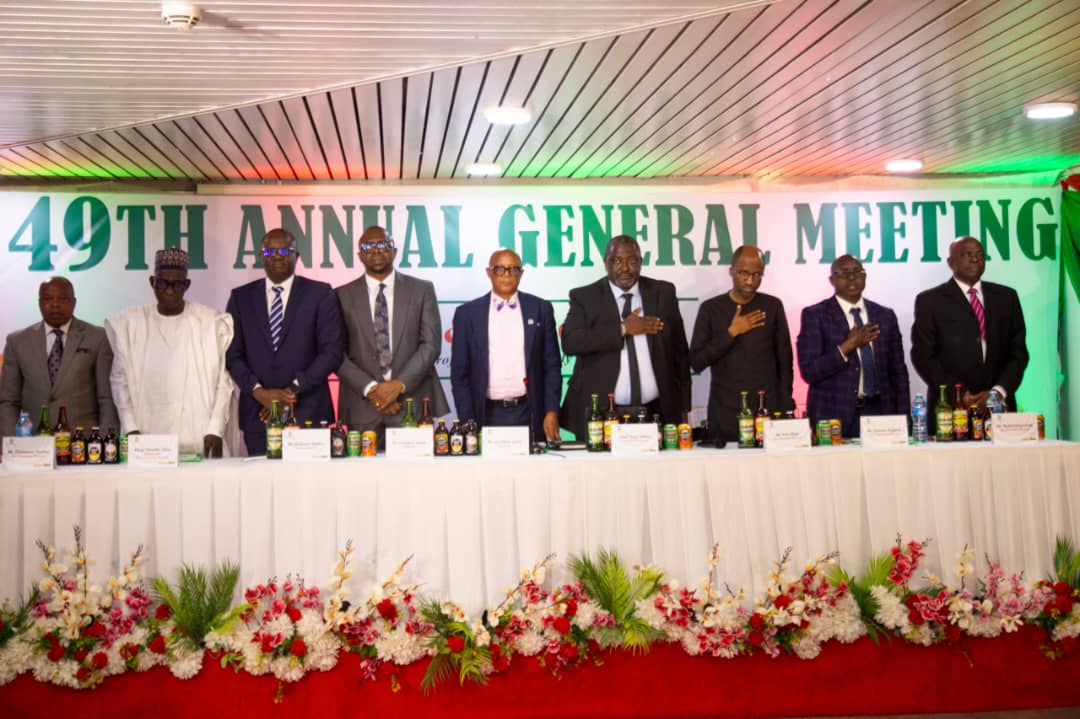
Champion Breweries Meets NGX 20% Free Float Requirement
By Aduragbemi Omiyale
The 20 per cent free float requirement of the Nigerian Exchange (NGX) Limited for listed companies on its platform has been finally met by Champion Breweries Plc ahead of the October 2026 deadline.
The exchange requires publicly-quoted firms on its platform to have at least 20 per cent of their stocks available to members of the public for market liquidity.
Before now, the brewery company fell short of this, forcing Customs Street to add the suffix, BLS, to the organisation.
BLS means Below Listing Standard. It informs investors that stocks with this status have not met the 20 per cent free-float requirement.
However, after increasing the free float above 20 per cent after the recently concluded public offer and rights issue, the NGX Regulation (NGX RegCo) Limited, the regulatory arm of NGX Group Plc, has removed the BLS status indicator previously displayed beside the company’s name across the NGX platforms.
The completed capital raises, successfully approved by the Securities and Exchange Commission (SEC), are currently in the final stages of the Central Securities Clearing System (CSCS) account crediting.
All applicants under the rights issue have now been credited with their new shares, while crediting for applicants under the public offer is ongoing.
This milestone transaction, having achieved the primary objective of the acquisition of the Bullet portfolio, has achieved the additional benefit of achieving full compliance with the bourse’s liquidity and free float requirements.
The board and management of Champion Breweries thanked the investing community for their continued support of the organisation’s long-term vision and extended special appreciation to NGX RegCo for its guidance as the firm works with the registrars and the CSCS to complete the share crediting process.
Economy
Brent Rises to $80 as Israel, Hezbollah Agree Ceasefire
By Adedapo Adesanya
Brent crude gained 66 cents or 0.53 per cent to sell for $80.38 per barrel on Friday after Israel and Hezbollah agreed on a ceasefire in Lebanon, though Iran set conditions for using the vital Strait of Hormuz.
Also, the US West Texas Intermediate (WTI) crude was up 94 cents or 1.23 per cent to $77.54 per barrel, amid light trading volumes due to the US Juneteenth holiday.
In spite of Friday’s gains, Brent was down about 8 per cent week-over-week, reflecting a significant easing of supply concerns in the wake of the US-Iran deal to end the war.
Gulf producers were preparing to raise exports after Israel and Hezbollah agreed to a ceasefire, which began on Friday.
Israel and Hezbollah agreed to halt fighting in southern Lebanon after days of escalating clashes threatened to derail the fragile US-Iran peace process, reducing the risk that the first major test of the agreement would turn into its first major failure.
At least four tankers carrying crude, oil products and liquefied petroleum gas (LNG) entered the Strait of Hormuz on Friday, heading for Iraqi Gulf ports. However, despite the uptick in activity, Iran signalled tighter control over shipping.
Iran’s Persian Gulf Strait Authority said “no vessel is permitted to pass through the Strait of Hormuz without a valid passage permit issued by the PGSA”.
Concerns also remain as a planned meeting between Iranian and American officials in Switzerland on Friday was postponed, with arrangements underway for talks in the coming days.
Iran’s Foreign Ministry said the meeting was no longer urgent because a memorandum of understanding on ending the war had already been signed digitally between the two sides.
Analysts expect the deal to release more than 85 million barrels of oil stranded in the Middle East Gulf into global markets. The agreement also includes the lifting of US sanctions on Iranian oil, which would add more supply.
However, recovery in flows of supply that transits Hormuz and production after the US-Iran deal could take several months.
On the demand front, the Organisation of the Petroleum Exporting Countries (OPEC) said in its 2026 World Oil Outlook that world demand will rise to 113.3 million barrels per day in 2030 from 105.1 million barrels per day in 2025.
Economy
Nigeria’s Gross Foreign Reserves Hit 17-Year High of $51.04bn
By Aduragbemi Omiyale
The gross foreign reserves of Nigeria reached a 17-year high of $51.04 billion, data from the Central Bank of Nigeria (CBN) shows.
Business Post gathered from the apex bank’s website that this new feat was achieved on Thursday, June 18, 2026.
A day earlier, which was Wednesday, June 17, 2026, the amount in the country’s external reserves stood at $50.96 billion, indicating accretion of 0.16 per cent.
This latest development is expected to strengthen the value of the Nigerian Naira in the foreign exchange (FX) market.
It was observed that since the beginning of this month, the amount in the forex reserves has been building up gradually after an initial scare.
It is believed that inflows from crude oil sales have been boosting the reserves, though prices are expected to trend downward as a result of the ceasefire deals between the United States and Iran on Friday.
The price of crude oil has cooled to around $80 per barrel. It should further moderate to its level before February 28, 2026, when the bombardment of Iran started, which led to the death of the country’s 86-year-old Supreme Leader, Ayatollah Ali Khamenei.
Economy
DBN, EIB Seal €200m Financial Partnership for Nigerian MSMEs
By Aduragbemi Omiyale
A €200 million financial partnership to support the development of small-scale investments of Nigerian enterprises contributing to the country’s green and digital economy has been signed by the Development Bank of Nigeria (DBN) and the development arm of the European Investment Bank (EIB) Group, EIB Global.
The funds would be disbursed to Micro, Small, and Medium Enterprises (MSMEs) in Nigeria, with a focus on agriculture, renewable energy, digitalisation and innovation.
The collaboration aligns with EIB Global’s strategy to support sustainable, inclusive, and resilient economic growth in Nigeria under the Global Gateway Initiative.
The investment programme will boost private sector development in Nigeria and support entrepreneurs and job creation by easing access to suitable finance for MSMEs and Midcaps.
It will also strengthen Nigeria’s green transition by expanding financing opportunities for companies in the renewable energy and agribusiness sectors.
In agriculture, it will help improve productivity, develop local supply chains, and strengthen food security for a country that hosts the largest population in Africa.
On the energy side, improved financing for renewable energy businesses will support clean energy access, reduce carbon emissions, and help build climate resilience in underserved communities.
“This partnership with DBN will strengthen the competitiveness of Nigeria’s private sector, especially for SMEs in the green and digital sectors.
“In supporting green projects and women entrepreneurs, we are also fostering inclusive growth and climate action.
“This is a powerful example of EIB’s real impact on the ground,” EIB Vice-President, Mr Ambroise Fayolle, said at a signature ceremony on Thursday, June 18, 2026, at the Lagos office of the DBN.
Also commenting, the chief executive of DBN, Mr Tony Okpanachi, described the investment as a significant milestone in efforts to drive Nigeria’s economic growth and sustainability.
“The €200 million investment from EIB Global is a significant milestone in our mission to drive Nigeria’s economic growth and sustainability. By supporting local financial institutions and MSMEs in key sectors like agriculture, renewable energy, digitalisation, and innovation, we’re empowering entrepreneurs and fostering a culture of sustainable innovation,” he stated.
-
Feature/OPED6 years agoDavos was Different this year
-
Travel/Tourism10 years ago
Lagos Seals Western Lodge Hotel In Ikorodu
-
Showbiz3 years agoEstranged Lover Releases Videos of Empress Njamah Bathing
-
Banking8 years agoSort Codes of GTBank Branches in Nigeria
-
Economy3 years agoSubsidy Removal: CNG at N130 Per Litre Cheaper Than Petrol—IPMAN
-
Banking3 years agoSort Codes of UBA Branches in Nigeria
-
Banking3 years agoFirst Bank Announces Planned Downtime
-
Sports3 years agoHighest Paid Nigerian Footballer – How Much Do Nigerian Footballers Earn