Connect with us

Showbiz

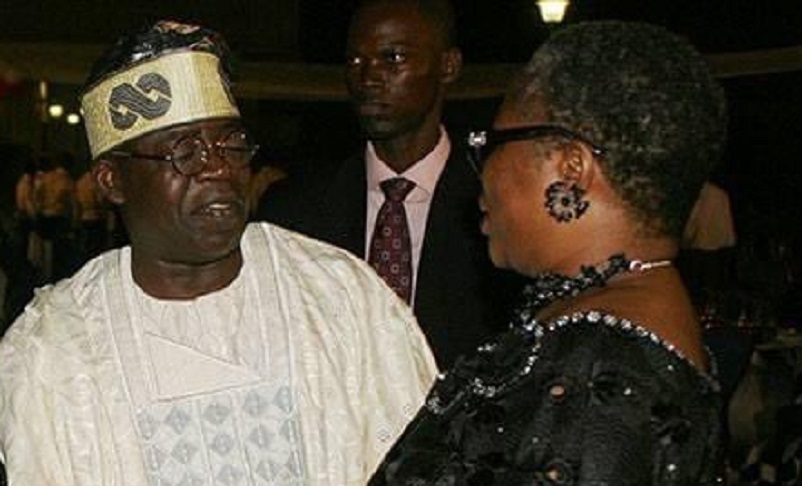
President Tinubu Mourns Onyeka Onwenu

Published

on

tinubu onyeka onwenu - Copy

By Aduragbemi Omiyale

President Bola Tinubu on Wednesday condoled with the family of Ms Onyeka Onwenu, the legendary singer who died shortly after a performance in Lagos.

The music maestro was said to have died after she slumped after she performed at the 80th birthday of the chief executive of Emzor Pharmaceutical Limited, Mrs Stella Okoli, in Lagos on Tuesday.

The songwriter, actor, journalist, activist, and politician was taken to a hospital in the Victoria Island area of the metropolis, where she passed away.

In a statement signed by his Special Adviser on Media and Publicity, Mr Ajuri Ngelale, the President condoled with the entertainment industry, the Imo State Government, and the numerous fans of the departed star over this immeasurable loss.

Mr Tinubu, who said Ms Onwenu lives on in her immortal masterpieces, prayed for the repose of the soul of the deceased artiste, praying she finds a place yonder where the music never fades and where there is Dancing in the Sun.

He said the Queen of Songs evoked fervour of fellowship and harmony through her edifying and mellifluous rendition, One Love, in the 1990s.

The President recalled the many artistic interventions of the late musical icon in promoting public good, noting her classic collaboration with King Sunny Ade on Wait for Me, a melodic campaign on family planning in the 1980s.

Mr Tinubu used the occasion of the mourning to celebrate the life of the 72-year-old versatile and extremely gifted artiste who applied herself to the whole gamut of artistic enterprise and expression, bringing joy and laughter to many.


Click to comment

Leave a Reply

Your email address will not be published. Required fields are marked *

Showbiz

MasterChef Nigeria David’s MasterChef Dream Boils Over

Published

on

MasterChef Nigeria David

There wasn’t a dry eye in the MasterChef Nigeria kitchen as fan favourite David bowed out in one of the most emotional episodes of the season, leaving Fads and Favy as the final two contestants standing in the race for the life-changing ₦73 million grand prize.

With the grand finale within touching distance, the Top 3 walked into the kitchen to find an elegantly laid dining table and an exquisite signature dish created by Chef Eros and Chef Stone. After savouring the meal alongside the judges, they received what would become the defining challenge of their MasterChef journey: recreating the dish with absolute precision to earn a coveted place in the finale.

There were no second chances. With Favy’s immunity pin already behind her, all three contestants stood on equal footing.

“Precision is your friend. Panic is your enemy,” Chef Stone cautioned as the clock began to tick.

For Fads, the challenge became her finest hour. Calm, focused and technically brilliant, she delivered a plate that impressed the judges with its flawless execution, balanced flavours and refined presentation. Her performance earned her Dish of the Day and secured her place as the first finalist.

Favy also rose to the occasion, presenting a dish that won praise for its taste and composure under pressure.

David, however, struggled to bring his vision to life. Despite pouring everything he had into the cook—admitting he had cooked with his “last breath”—his risotto lacked the required texture, while his duck fell short on flavour. In a competition where every detail mattered, those small imperfections had enormous consequences.

Standing beside Favy in the bottom two, David waited anxiously as the judges delivered their final decision.

His MasterChef journey had come to an end.

What followed was one of the season’s most unforgettable moments. Overcome with emotion, David broke down as he reflected on how far he had come. Across the room, Favy was so consumed by the moment that she barely realised she had secured her place in the finale.

Yet even in defeat, David’s story found a remarkable new beginning.

Moved by his passion, determination and undeniable talent, the judges described him as “a diamond in the rough” and rewarded his potential with an extraordinary opportunity: a fully sponsored six-month professional training programme at Chef Stone’s Red Dish culinary school, followed by a paid six-month internship at Chef Eros’s Ile Eros restaurant.

It was a powerful reminder that while competitions may end, dreams do not.

Now, the table is set for an unforgettable finale.

Next week, Fads and Favy will go head-to-head in one last culinary showdown for the MasterChef Nigeria title and the life-changing ₦73 million prize.

Two finalists. One kitchen. One final opportunity to create the dish that changes everything.

MasterChef Nigeria airs every Sunday at 7:00 p.m. on Africa Magic Showcase and Africa Magic Family, with repeat broadcasts on Wednesdays at 6:00 p.m. on Africa Magic Showcase and Thursdays at 12:00 p.m. on Africa Magic Family.

Continue Reading

Showbiz

This Weekend on GOtv: Nollywood Movies Worth Watching

Published

on

This Weekend on GOtv

What happens when one tragic event forces a family to confront secrets they’ve spent years trying to bury? In The Journal, the mysterious death of a family member brings five siblings back together, but instead of finding answers, they uncover hidden truths that threaten to change everything they thought they knew about each other. To catch The Journal, tune in on Africa Magic Showcase Ch 8 on Saturday at 7:15 PM.

Stories like this are what make Nollywood impossible to ignore. Whether you’re in the mood for emotional family drama, romance, suspense or stories packed with unexpected twists, GOtv has a lineup of Nollywood movies to keep you entertained all weekend.

If you’re looking for what to watch, here are some Nollywood movies to add to your watchlist this weekend.

Iya

Some battles don’t happen outside the home. In Iya, a mother is determined to drive a wedge between her son and his wife. She goes to great lengths to frustrate her daughter-in-law, hoping to push her back into the life she once lived, making money from her beauty. It’s an emotional story about family interference, manipulation and the lengths some people will go to get what they want.

Showing on Africa Magic Yoruba Ch 2 on Saturday at 8:25 PM.

One Man

Nkechi and Amara share a close bond as sisters, but poverty tears them apart while they are still young. Years later, fate brings them back together, but their reunion doesn’t go as expected. Instead, a shocking decision threatens to change both of their lives forever. It’s a touching story about family, sacrifice and the unexpected turns life can take.

Showing on Africa Magic Epic Ch 6 on Saturday at 11:05 AM.

Unlucky

Kenny and Nora’s relationship is already far from perfect, but things become even more complicated when Mabel, a brilliant tech enthusiast, moves in next door. What starts as a simple neighbourly connection soon turns into a complicated love triangle that leaves everyone questioning where their hearts truly belong.

Showing on Africa Magic Showcase Ch 8 on Sunday at 10:14 PM.

My Madam And I

Chief Donald and Jifeofor have spent years as rivals, but life has a funny way of changing the script. While the two men continue their feud, their children unexpectedly fall in love. Now they must decide whether love is strong enough to overcome pride, family rivalry and years of bad blood.

Showing on Africa Magic Family Ch 7  on Sunday at 11:05 PM.

Whether you’re in the mood for family drama, romance, suspense or stories packed with emotional twists, GOtv’s Nollywood lineup has you covered this weekend. So settle in and let these stories take over your screen.

To upgrade, subscribe or reconnect, download the MyGOtv App or dial *288#. For catch-up and on-the-go viewing, download the GOtv Stream App and enjoy your favourite shows anytime, anywhere.

Continue Reading

Showbiz

Beyond the Olodo Uprising: How Entertainment Is Influencing Learning in Nigeria

Published

on

Beyond the Olodo Uprising

As conversations around the “Olodo Uprising” trend continue to dominate social media, it has reopened an old debate about intelligence, education, and what it really means to learn in today’s Nigeria.

The memes and jokes surrounding the “Olodo Uprising” may be entertaining, but beneath the humour lies a more important question: where are Nigerians actually learning today?

For many people, education no longer begins and ends in classrooms or textbooks. Every day, millions of Nigerians spend hours consuming content across television, social media, streaming platforms, and digital communities. These spaces are increasingly shaping how people think about money, health, relationships, politics, and even citizenship.

This is where entertainment, advertising, and education have quietly begun to overlap.

The rise of learning through entertainment

Brands and organisations have gradually moved away from simply telling audiences what to think. Instead, they now invite people to participate.

Campaigns have become more interactive, relying on games, storytelling, influencer collaborations, audience participation, and competition to communicate ideas. Rather than presenting information in a lecture-style format, they build experiences that people can engage with and remember.

It is a response to today’s attention economy. People are far more likely to retain information when they are emotionally invested or actively involved.

Reality television has become one of the clearest examples of this shift, with Big Brother Naija standing out as perhaps the country’s biggest stage for this style of communication. But the idea of using entertainment to deliver social messages existed long before BBNaija became a cultural phenomenon.

Advocacy found its way into popular culture long before it became fashionable

Years before brands fully embraced reality TV, advocacy organisations were already experimenting with entertainment as a way to reach audiences.

ONE.org, for example, introduced advocacy-focused challenges that encouraged contestants to develop campaigns around healthcare, governance, and citizen participation. Rather than simply discussing social issues, participants were asked to propose solutions and communicate them in ways that mirrored real-world policy campaigns. Some winners later gained exposure through international advocacy platforms, including the UN General Assembly.

BBNaija explored this idea as far back as Season 2, See Gobe edition. Housemates took part in a girl-child education task in partnership with ONE Campaign, where they learnt about the challenges many girls face in accessing education and presented their ideas on how to address them. Bisola’s presentation was selected as the best, earning her the chance to represent the campaign at the United Nations General Assembly as a ONE Ambassador for girls’ education. The task showed that reality television could do more than entertain. It could help people learn about important issues, encourage meaningful conversations, and even create opportunities for real-world impact.

Looking back, these campaigns were early signs of a model that has since become common across Nigerian media.

When brand tasks became learning experiences

As BBNaija evolved, sponsored tasks became more ambitious. Instead of simply promoting products, many brands began building challenges that required contestants to learn new concepts, solve problems, work in teams, and communicate ideas under pressure.

During Season 6, Shine ya Eye edition, PiggyVest introduced a financial literacy challenge centred on saving, spending, and financial planning. Rather than delivering a traditional financial education campaign, the concepts were woven into competitive tasks that made them easier to understand and more engaging to watch.

SuperSport adopted a similar approach, designing challenges around teamwork, strategy, puzzles, and creative thinking.

Other sponsors followed suit.

Health-focused campaigns encouraged conversations around public wellbeing and civic responsibility. Airtel challenged housemates to interpret communication briefs and present marketing ideas. Cooking tasks sponsored by brands such as Munch It and Arla tested creativity, collaboration, and time management while introducing conversations around food and nutrition.

The common thread was never the prize money. It was the process. Contestants had to absorb new information quickly, apply it in real time, and explain their thinking in front of millions of viewers. That is a form of learning, even if it doesn’t resemble a classroom.

Health education moved to centre stage

Recent seasons have made the educational element even more deliberate.

In Season 10, 10/10 edition, Colgate’s oral health challenge required housemates to study information about dental hygiene before competing in games built around oral care, common myths, and healthy habits.

Carex adopted a similar approach with its hygiene challenge, combining entertainment with lessons around germs, handwashing, and infection prevention.

These tasks were designed to be memorable because audiences were watching people learn while being entertained. The products remained visible, but so did the message.

What the “Olodo Uprising” conversation reveals

The current online debate often assumes that young Nigerians are becoming less interested in learning. Yet the same people making that argument spend hours discussing content that regularly exposes audiences to financial literacy, health awareness, communication skills, teamwork, and civic issues.

Learning hasn’t disappeared. It has simply moved into places that don’t always look educational.

Reality television, brand campaigns, creator content, podcasts, and even viral social media conversations have become part of Nigeria’s informal learning ecosystem as they increasingly shape public knowledge and everyday behaviour.

The “Olodo Uprising” conversation reflects that shift. While people continue to debate who is intelligent and who isn’t, the ways Nigerians acquire knowledge have become far more diverse than they once were.

Learning has changed its address

The real lesson is not that reality television is educational by default. It is that education now travels through entertainment because that is where attention lives.

From advocacy campaigns and financial literacy challenges to health awareness initiatives and branded storytelling, Nigerian popular culture has become an unexpected classroom.

The platforms may be different, but the outcome is familiar: people encounter new ideas, engage with them, and carry parts of those lessons into everyday life.

The conversation sparked by “Olodo Uprising” will eventually fade, as most viral trends do. What is likely to remain is the growing recognition that learning today is shaped as much by culture and media as it is by classrooms.

Continue Reading