Showbiz
What’s Behind Nigeria’s Love of Local Music?
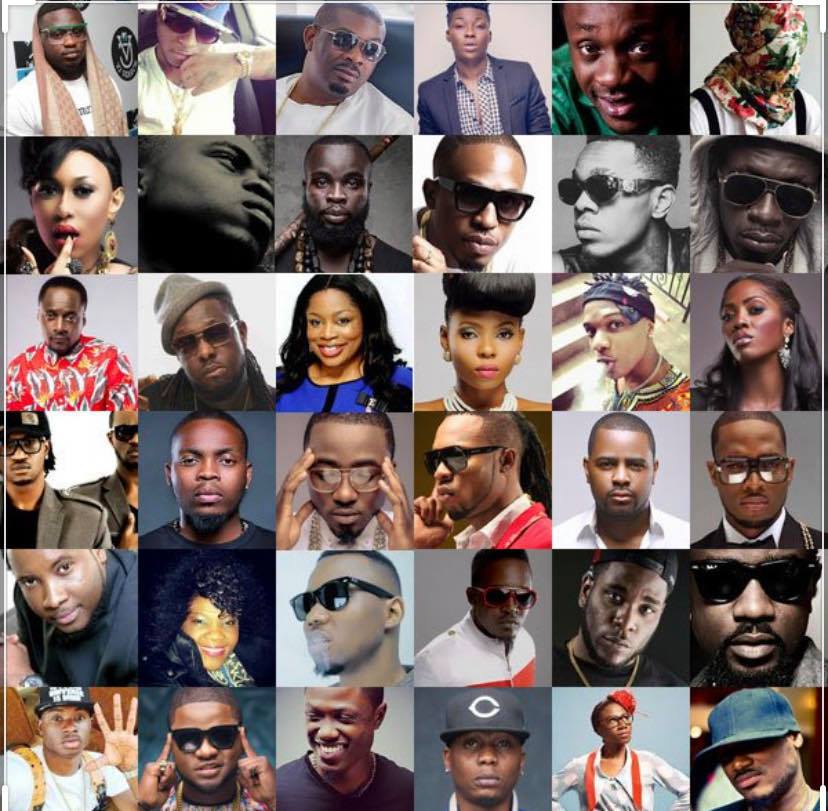
Music is an integral part of Nigerian life and there’s no doubt that Nigerians love music — whether it’s local or international. But in recent times Nigerians have consistently demonstrated their love for local artists, with many of these musicians outranking their foreign counterparts in the West, including those who are the biggest names in entertainment.
This is borne out by data from Spotify Wrapped — their annual round-up of the top artists, albums, songs and playlists of the year as streamed by users on the platform from around the world.
That love of local can even go down to city level, as proven by the fact that Lagos native Wizkid was the most streamed artist in Nigeria’s biggest city this year. And what other country on the planet would celebrate its cities’ notorious traffic jams with a four hour-long playlist primarily comprising local artists?
Given that the music and entertainment industry is set to generate around $8-billion for the economy this year, it’s a phenomenon that should undoubtedly be celebrated and encouraged.
But what drives this passion? Music from Naija (as Nigerians lovingly refer to their country) is going places and gaining worldwide popularity. This is thanks to a new wave of Nigerian artists who are creating innovative music and drawing interest from beyond the region’s borders by showcasing the vitality of the local music industry.
Afrobeats, the heavy-beat, electronic music from Nigeria, has become pop music gaining a global fan base and establishing a path to worldwide domination. Thanks to the Afrobeats’ growing popularity, renowned artists like Snoop Dogg, Drake and Ed Sheeran have collaborated with Nigerian artists, bringing them worldwide attention.
This is a point of pride for Nigerians and could provide a clue as to why they prefer local artists and music, whether they’re listening in nightclubs, at weddings or music festivals, or just through street DJs.
In Spotify’s recently released Wrapped data, Nigerian artists singing and rapping in the Afropop genre dominated the local music scene, with artists like WizKid, Burna Boy, DaVido, and Olamide topping the list of five most-streamed artists. International singer Drake is the only foreign hitmaker in the top five list.
The fact that these artists’ songs tend to revolve around love, wealth, partying, and some of society’s vices — like online fraud — all things which Nigerians deal with on a daily basis may provide some context as to why they resonate more than songs by foreign artists. .
It’s not just the latest club bangers driving Nigeria’s love of local music either. They’re also streaming local albums much more regularly than their international counterparts. Of the top 10 albums streamed by Nigerian Spotify listeners, seven were local. WizKid’s rave of the moment album Made in Lagos topped the chart, beating international artist Justin Bieber’s Justice.
Interestingly, the Wrapped data shows that Nigerians also enjoyed their local music to make the most of the time they spend in traffic. On the top five car data charts, homegrown talents and music dominated the list with LADIPOE’s Feeling topping the chart, followed by Essence, Wizkid featuring Tems, and Bounce by Ruger. Lojay’s Monalisa and DaVido’s Ke Star Remix ranked fourth and fifth respectively.
The Wrapped data shows that the love of Nigerian music cuts across age groups too. Even Gen Zs, who’ve grown up with easy access to international artists, show a strong preference for local performers. Top on the list of these artists and songs are Gbese by Yung Felix and Positivv, Feeling by LADIPOE and Bounce by Ruger.
Across the African continent, other data from Wrapped shows that Nigerian artists also ranked among the top 40 artists in sub-Saharan African countries like Ghana, Kenya, Tanzania and Uganda.
Showbiz
Stripped: What Happens When Men Can’t Keep It All Together
In a world where men are expected to have it all figured out, be strong, provide, and never fall apart, Stripped shows the reality that many don’t talk about.
A new drama series premiered on Africa Magic Showcase on Sunday. The limited series brings together a strong lineup of Nollywood stars, including Daniel Etim Effiong, Efa Iwara, Kunle Remi, Ian Wordi, and Mofe Duncan, in a story that dives deep into the pressures men face behind closed doors.
Stripped follows five friends whose lives are slowly unravelling. From career setbacks to relationship struggles and financial pressure, each man is pushed to the edge in different ways. In a desperate attempt to regain control, they take an unexpected path, stepping into the world of stripping at an upscale club.
Daniel Etim Effiong plays Kel, a former marketing executive now juggling survival and responsibility, while Mofe Duncan (Bolaji) battles to keep his business afloat. Efa Iwara stars as a music video director forced to confront a complicated personal life, Ian Wordi plays a conflicted architect, and a youth pastor caught between duty and desire, while Kunle Remi brings to life a determined hustler trying to rewrite his family’s story.
Their lives intersect when they are recruited by Yvonne, a sharp and calculated lounge owner, who introduces them to a world that challenges everything they thought they knew about themselves.
This series explores identity, pride, friendship, and the silent expectations placed on men. It also shines a light on the emotional weight many carry without saying a word, both vulnerability and moments of humour along the way.
With a strong supporting cast of equally complex female characters, the story unfolds across six episodes, building tension as secrets deepen and relationships are tested.
Watch Stripped on Africa Magic Showcase, available on GOtv Channel 8, with new episodes every Sunday at 8 PM.
To upgrade, subscribe, or reconnect, download the MyGOtv App or dial *288#. For catch-up and on-the-go viewing, download the GOtv Stream App and enjoy your favourite shows anytime, anywhere.
Showbiz
Don’t Just Watch, Decide: Final Days to Vote for AMVCA 12
As the countdown to the 12th edition of the Africa Magic Viewers’ Choice Awards (AMVCA) draws closer, fans across Africa still have a chance to do more than just watch, they can decide.
Voting is officially in its final days, and this is the moment for audiences to show up for their favourite actors, filmmakers, and stories that have made an impact over the past year.
The AMVCA has always stood out as an award platform that gives viewers a choice, allowing fans directly influence who takes home some of the biggest honours on the night. From standout performances to fan-favourite productions, every vote contributes to shaping the final outcome.
Voting is quick, simple, and free. You can cast your vote via the official AMVCA website or through the myDStv and myGOtv apps. Simply log in or create an account, select your favourites across the categories, and submit. You can also vote multiple times across these platforms to increase your support.
Voting for AMVCA 12 closes on April 26, 2026, at 9:00 PM WAT, and once that window closes, that’s it, no extra time and no second chances.
A lot of people wait until the last minute and either forget or run into issues trying to vote at the same time as everyone else. It’s always better to get it done early.
The awards night will come, the winners will be announced, and conversations will happen again, but between now and then is the only time you actually get to influence the outcome.
So if there’s someone you’re rooting for, or a project you genuinely believe deserves it, this is the time to show up.
Don’t just watch how it plays out. Be part of the reason it plays out that way.
Showbiz
Taking Aspiring Filmmakers From the Classroom to Prime-Time
For many aspiring filmmakers, the ultimate culmination of their cinematic dreams is to be able to live through the art form they love.
Filmmakers don’t just want to make a film. They want to build a career doing it. To achieve that, they need training that equips them with industry-relevant skills of the highest standard.
For the MultiChoice Talent Factory (MTF), this understanding is integral to all of its programmes. Academy graduates are equipped with the precise skills required by their industry, empowering them to become prime-time TV professionals.
Since MTF is a MultiChoice initiative, its three academies – in Lusaka, Nairobi and Lagos – provide training in the specific, high-demand technical skills needed by the industry-leading content producer.
MultiChoice, a Canal+ company, is the largest producer of authentic, original content on the African continent. “Africa’s most-loved storyteller” produced 5 340 hours of world-class local content in 2025.
MTF students are trained to these exacting MultiChoice standards. This leaves them well placed to excel in the industry once they graduate.
And excel, they do. MTF graduates speak with pride of the success they have found since leaving the highly respected hub of African film and television training.
Technical skills
Actor, producer, writer and storyteller Myde Glover went on from MTF West Africa Academy to host film festivals and win Africa Magic Viewers’ Choice Awards (AMVCAs).
He credits much of his success to the storytelling skills he learned at MTF, as well as the technical standards the MTF Academy sets.
“The storytelling skills I gained at MTF helped me become a better actor, producer and director. It helps me put the story first,” he says. “However, I was also taught the technical and delivery requirements for submitting projects to platforms like DStv, GOtv, and Showmax. I approach every project with those standards in mind, understanding that quality matters in every aspect.”
Glover says the three most important things for aspiring filmmakers to remember are teamwork, being open to constructive criticism, and staying focused on their goal.
“Strong collaboration improves the quality of any production, feedback helps you grow creatively, and focus ensures you see projects through without losing sight of why you started,” he says.
Lifetime network
Graduating from MTF provides filmmakers with a network that can last a lifetime. Alumni often hire each other as they evolve through their working lives, creating a self-sustaining ecosystem of skilled professionals.
Bahati Kajigi Benjamin from DRC found that MTF gave him the network he needed to tell stories close to his heart.
“My experience with MTF was incredible,” says Benjamin. “I formed a family with my fellow students, and we bonded deeply. We collaborated on numerous films and wrote one that is particularly meaningful to me, illustrating the struggles of my people.”
That film was titled The Canvas, a Zee World project.
Benjamin currently works as a camera operator and editor at Sauti Media Hub in Uganda, producing Kampala Creme, one of the top East African reality shows. He says he secured the position through a recommendation from a fellow MTF alumnus.
Benjamin says his time at MTF was invaluable in honing his skills in cinematography and colour grading.
“I gained extensive knowledge about camera techniques, lighting, and colour harmony in film, which I am currently applying in my role at Kampala Creme.
Benjamin appreciates the importance of paying opportunities forward. He recently shared his cinematography expertise on a three-month online platform called Film Chat, aimed at empowering up-and-coming African creatives.
His advice to young creatives is to never overlook the importance of marketing themselves, and to remember that filmmaking is a business.
“Funders want to understand more than just the script or story,” he says. “You should spend time discussing the financial aspects and the impact the film will create. This is what appeals to investors. Ultimately, it’s an investment for a return.”
Career transformation
MTF West Africa graduate Allen Onyige pursued his passion for human behaviour and storytelling at MTF after leaving university and working in live broadcasting. He describes his time at MTF West Africa as “transformative”.
“MTF refined my creative vision, strengthened my technical skills, and played a pivotal role in shaping my journey as a filmmaker,” he says. “The experience changed my life and set me on the path toward meaningful visual storytelling.”
He says understanding the business side of broadcasting was just as important as the creative skills he gained.
After he left MTF, his production company was commissioned by Africa Magic to produce several series and feature films, including Ikenna’s Trial, Sikiru, Elenini, Kadara, and Dear Future Me.
In 2024, Onyige won the Best Indigenous Language Series award at the AMVCAs for Irora Iya. He also served as director of photography on Grind, now on Amazon Prime. His documentary Sunset in Makoko was nominated for Best Documentary at the AMVCAs. He also worked as a cinematographer on the Emmy Award–winning documentary Mothers of Chibok.
Onyige says young people looking to build a career in film and TV should first look to learn the craft and business of filmmaking, but to master one specific skill. Secondly, he recommends being a team player who sets high standards.
“Be a man or a woman of excellence,” he says. “Integrity will get you jobs that talent alone may not be able to give you.”
-
To learn more about the MultiChoice Talent Factory and how to launch a career in African film and television, visit https://
multichoicetalentfactory.com -
Applications for the 2027 intake are still open, and the closing date is 27 May 2026.
-
Feature/OPED6 years agoDavos was Different this year
-
Travel/Tourism10 years ago
Lagos Seals Western Lodge Hotel In Ikorodu
-
Showbiz3 years agoEstranged Lover Releases Videos of Empress Njamah Bathing
-
Banking8 years agoSort Codes of GTBank Branches in Nigeria
-
Economy3 years agoSubsidy Removal: CNG at N130 Per Litre Cheaper Than Petrol—IPMAN
-
Banking3 years agoSort Codes of UBA Branches in Nigeria
-
Banking3 years agoFirst Bank Announces Planned Downtime
-
Sports3 years agoHighest Paid Nigerian Footballer – How Much Do Nigerian Footballers Earn