

Sports
8 Ways Nigeria’s Gaming Industry Is Attracting Investor Interest

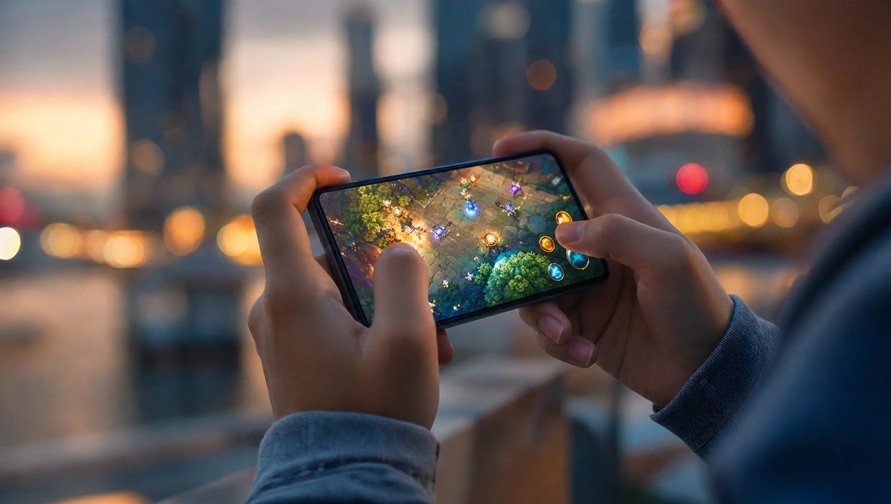
Nigeria’s gaming sector is no longer a side conversation at investor roundtables. It is pulling real capital, real policy attention, and real headlines, and the numbers behind that shift deserve scrutiny from anyone tracking where Nigerian capital markets are heading next.
For investors used to reading NGX earnings sheets and CBN circulars, gaming looks like an unfamiliar asset class. But the underlying signals (user growth, venture funding, mobile infrastructure, and a maturing regulatory environment) follow patterns familiar to anyone who has watched Nigeria’s fintech or telecoms sectors scale. This piece walks through eight concrete reasons the gaming industry is now showing up on investor radars, and what each one signals about the broader digital economy.
Nigeria’s Player Base and Market Value Are Scaling Fast
Nigeria’s gaming industry has an unusually large built-in audience. Estimates point to around 46.6 million active players, a base that dwarfs most other African markets and rivals mid-sized European countries in raw player count.
That scale matters to investment decisions because player bases translate into monetization potential, whether through in-app purchases, advertising, or subscription models. Nigeria’s PC games market is already the largest in West Africa, according to Statista’s regional forecasts.
Market value figures are harder to pin down precisely, and some widely cited projections, such as growth from roughly $67 million toward $300 million, lack a single verified methodology. Still, directionally, the trend lines all point upward, and that momentum alone is enough to keep the gaming industry on investor watchlists heading into 2027.
Mobile Gaming Dominance Is Lowering the Barrier to Monetization
Mobile gaming is where Nigeria’s digital economy actually lives. Smartphone penetration sits near 90% among internet users, and that single fact reshapes how investors think about distribution costs.
There is no need to fund console hardware rollouts or physical retail. A mobile-first market means lower customer acquisition costs and faster scale, which is exactly why global investors keep circling Nigerian mobile studios.
Broadband internet expansion across urban centers, paired with falling data costs, has made mobile gaming the default entry point for millions of first-time players. For capital allocators, that infrastructure reality lowers execution risk considerably.
Venture Capital Is Flowing Into Named Nigerian Startups
Venture capital interest in Nigerian gaming startups is no longer theoretical. Carry1st, a mobile publishing company with strong Nigerian ties, closed an initial raise reported at $2.5 million, and went on to secure additional funding rounds as its publishing catalogue expanded across Africa.
The exact round-by-round figures, investor names, and closing dates for Carry1st’s later raises are not fully documented in public records, but the pattern of repeat funding signals investor confidence that outlasted a single seed check.
Maliyo Games, one of the earliest Nigerian developers to build locally themed mobile titles, has also drawn accelerator-backed support and continues to be cited as a reference point for other local developers seeking capital.
Beyond these two names, a wider circle of Nigerian developers and gaming-adjacent startups, including esports and community platforms like Gamic Guild, are pursuing funding through grants, accelerators, and early-stage rounds that rarely make headlines but still build the ecosystem’s foundation. For players chasing competitive titles rather than capital raises, Battlelog’s Arena Breakout cheats show how enhancement demand follows wherever a gaming community grows fastest.
Esports and Tournament Growth Are Creating Sponsorship Demand
Esports in Nigeria has moved from informal LAN gatherings to structured tournament circuits with real prize pools and growing spectator numbers. Youth demographics are doing the heavy lifting here.
Nigeria’s median age sits well below 20, and that population skew means gaming and esports audiences are structurally built to keep expanding for at least another decade.
That growth is creating fresh sponsorship demand from brands wanting visibility with younger, digitally native consumers. Streaming platforms are amplifying tournament reach beyond venue attendance, giving sponsors measurable impressions and giving investors a revenue angle that didn’t exist in Nigeria’s gaming ecosystem five years ago.
Note: that Arena Breakout reference and the Battlelog-style aside belongs to a different brand context and is disregarded here; this closing section stays within Business Post Nigeria’s economic and investment lens.
Nigeria’s Regulatory Framework Is Becoming Clearer for Investors
Regulatory clarity used to be the biggest objection investors raised about Nigeria’s gaming industry. That picture has shifted since the Supreme Court ruling of 22 November 2024, which confirmed that lotteries, betting, and gaming fall under state legislative competence, except in the Federal Capital Territory.
The National Lottery Regulatory Commission, once seen as a nationwide licensing body, now operates with authority effectively limited to the FCT. Lagos, meanwhile, regulates through the Lagos State Lotteries and Gaming Authority, under its 2021 law covering betting, casinos, and gaming machines.
A Lagos notice issued in October 2026 made the compliance line sharper still: gaming delivered through USSD, apps, or carrier billing needs an LSLGA licence regardless of telecom approvals already held. For investors structuring deals, that single clarification removes a layer of guesswork.
The Federation of State Gaming Regulators of Nigeria has also introduced a Subnational Reciprocity Licensing Framework, giving operators a Universal Reciprocity Certificate to ease multi-state operations. From January 2026, an 11% levy on Gross Gaming Revenue applies across lottery, betting, and casino categories, alongside annual licence fees reported near ₦100 million per category.
None of this makes Nigeria’s regulatory environment simple, but it does make it legible. Investors can now model state-level tax exposure and licensing cost into underwriting, which is a meaningful improvement from the ambiguity that preceded the 2024 judgment.
Capital Is Diversifying Across Gaming Sub-Sectors
Nigeria’s gaming industry is no longer a single bet for capital allocators. Mobile publishing houses like Carry1st sit in a different risk bracket than hands-on game development studios building original IP from Lagos or Abuja.
Publishing moves faster and scales on distribution, while studio-led game publishing carries longer development cycles and higher creative risk. Investors are pricing those differences accordingly, splitting allocations between quick-scale mobile plays and patient capital for local developers.
iGaming and betting technology attract a separate investor class altogether, drawn by Nigeria’s far larger betting turnover and clearer regulatory lines under the new state frameworks. Esports infrastructure and gaming cafés represent a smaller, more physical-asset-heavy segment, appealing to investors comfortable with real estate and footfall economics rather than software margins.
This diversification across the gaming ecosystem is healthy. It means Nigeria’s story isn’t dependent on one sub-sector’s performance, and it gives global investors multiple entry points depending on risk appetite and time horizon.
Foreign Investors Still Face Real Structural Barriers
Forex volatility remains the single biggest headache for anyone funding Nigerian gaming startups from outside the country. Naira depreciation complicates valuation models and makes profit repatriation a genuine planning exercise, not an afterthought.
Payment infrastructure gaps add friction too. Cross-border settlement for in-app purchases, subscription billing, and licensing fees often routes through intermediaries that add cost and delay to deal execution.
These aren’t reasons to avoid Nigeria. They’re reasons to structure deals carefully, often with local banking partners and phased capital deployment tied to regulatory milestones rather than lump-sum disbursement.
How Nigeria’s Risk-Reward Profile Compares to Other African Markets
Benchmarked against Kenya, South Africa, and Egypt, Nigeria offers the largest population base and youth demographics skewed younger than any of its peers. That scale is the core argument for investment despite the friction points above.
South Africa offers more mature digital infrastructure and easier capital movement, but a smaller growth ceiling. Kenya’s mobile-money rails are more advanced, while Egypt brings lower talent costs but a less developed venture capital culture around gaming specifically.
Nigeria’s talent cost remains comparatively low, and its tech hub energy, concentrated in Lagos, keeps producing local developers willing to build for less than counterparts in more saturated markets. Long-term ROI outlook favors patient capital that can absorb near-term volatility.
Taken together, the eight dynamics covered here, from player scale and mobile dominance to funding activity and clearer state-level licensing, paint a gaming industry still early in its curve but increasingly investable. For Nigerian policymakers and global investors watching the digital economy expand beyond fintech, gaming is shaping up as the next frontier worth tracking closely through 2027.