Sports
How Online Casino Slots Are Shaping Digital Finance Trends in Africa
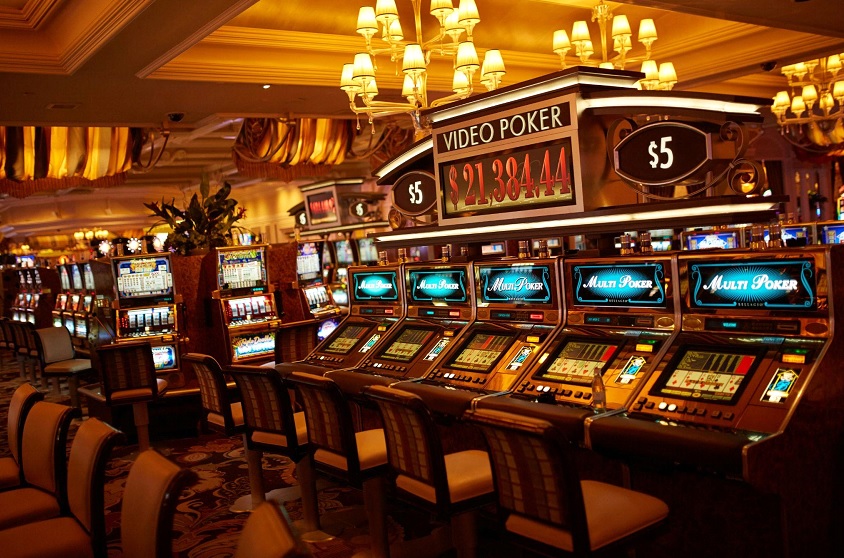
In recent years, the rise of digital platforms has transformed traditional industries—media, banking, retail—and one of the more surprising frontiers is online gambling. Among the most widely accessed formats is the digital slot machine, better known simply as casino slots. The growth of platforms where people can Play casino slots is not just a recreational trend; it has meaningful implications for payments infrastructure, consumer protection, regulatory policy, and financial inclusion across Africa.
The Surge in Online Casino Slot Usage
The proliferation of smartphones, improved internet coverage, and easier access to mobile money and e-wallet services have together opened the door for online gambling—especially slot games—to penetrate mass markets. Whereas in earlier eras slots were confined to brick-and-mortar casinos or informal gambling parlors, now platforms accessible via mobile apps or browsers allow millions to gamble virtually at any time.
In Nigeria, Ghana, Kenya, and South Africa, rising disposable incomes among youth and rapid fintech adoption have further catalyzed interest in online slots. For many users, “spinning the reels” becomes not just entertainment but also a low-cost, low-barrier gamble to win small rewards—especially in markets where sports betting is already deeply entrenched.
Money Flow & Payment Innovation
The link between online casino platforms and payment systems is tight. These platforms must support seamless deposits and withdrawals in local currencies, integrate with mobile money, and often manage cross-border flows where licensing is offshore. The demands lead to interesting innovations and partnerships:
- Micro-payments at scale
Because slot bets are often small (a few naira or cedis at a time), platforms push for ultra-low transaction costs. This encourages payments providers and fintechs to develop lighter rails for tiny payments—rails that can later be repurposed for other sectors like micro-insurance or content monetization. - KYC / AML demands
Regulators require identity verification, anti-money-laundering checks, and monitoring of suspicious transactions—forcing gambling operators to adopt or develop robust identity verification tools, which can then cross-pollinate with banks and remittance firms. - Cash-out conversion and withdrawals
Slot platforms must turn digital winnings into real fiat funds quickly and cost-effectively. This creates pressure to integrate directly with local banks or mobile money operators, enhancing settlement infrastructure.
In effect, the back-end financial plumbing for online slots is acting as a testbed for broader fintech resilience and innovation.
Risk, Regulation & Consumer Protection
With opportunity comes risk. The rapid growth of online slots prompts urgent questions around regulation, taxation, and consumer protection:
- Regulatory frameworks
Some African countries are still developing clear rules for online gambling—licensing, oversight, and enforcement lag behind. Governments must balance revenue generation (through licensing and taxation) with preventing abuse or illegal cross-border operators. - Problem gambling and social harm
Easy access can magnify addiction risks. Platforms must build in responsible gambling tools—limits, self-exclusion, reminders—as well as partner with treatment or counseling bodies. - Data privacy and cybersecurity
With real money at stake and user identities involved, slot operators must maintain strong security standards, protect user data, and guard against fraud.
According to a recent report by the African Union’s Digital Transformation Strategy, digital platforms—including online entertainment and gambling—will increasingly require harmonized regulation across the continent to balance innovation with consumer protection. That insight reflects how the gaming industry’s evolution is intertwined with Africa’s larger digital governance goals.
Economic & Social Spillovers
The growth of online slot platforms can deliver both positive and negative externalities for broader economies:
- Tax revenues & public finance
A regulated online slot industry can mobilize new streams of government revenue—through licensing fees, withholding on winnings, or turnover taxes. These funds can be directed into public goods like health, education, or digital infrastructure. - Job creation & tech capacity
Running a competitive online gambling platform requires developers, security analysts, data scientists, marketing specialists, and legal/compliance teams. Thus, such platforms can stimulate tech employment even outside traditional banking or telecom. - Savings vs. speculative spending trade-off
Critics argue that money spent on gambling could otherwise flow into investment, savings, or consumption of goods. The balance depends on how much the activity is speculative vs. entertainment, and how robust financial literacy is in the user base. - Cross-sector competition & cannibalization
As online gambling grows, it competes with other entertainment and leisure budgets—streaming, games, nightlife—which may shift how consumers prioritize spending over time.
Toward a Sustainable, Responsible Future
To ensure that online slot gaming matures into a sustainable digital economy sector—rather than a speculative bubble—stakeholders must collaborate:
- Models of regulation that balance control and innovation
Governments should adopt light-touch licensing initially, paired with clear consumer protection rules. Sandbox regimes can help operators and regulators iterate in real time. - Partnerships between slot operators and fintech firms
When gambling platforms integrate deeply with reputable payment services, they internalize compliance, KYC, and settlement quality. This cross-industry liaison can raise standards across digital finance. - Embedding responsible gambling and user education
Platforms must normalize self-limits, cooling-off periods, and transparent odds. Further, user education campaigns can raise awareness on the risks of gambling and promote financial discipline. - Data sharing and policy feedback loops
Governments and regulators should encourage anonymized data sharing (e.g. on usage trends, problem behavior) to guide policy, while preserving user privacy. - Extending infrastructure benefits beyond gambling
Investments in microtransaction rails, identity verification, and fraud detection—catalyzed by the gambling sector—should be opened up to broader digital finance players.
Conclusion
Online slot gaming is more than just a pastime: it represents a nexus of consumer behavior, payment systems, risk management, and regulation. As digital finance deepens across Africa, platforms where users can Play casino slots will both benefit from and contribute to the evolution of fintech, financial inclusion, and regulatory regimes. If appropriately regulated and responsibly deployed, the gambling sector could play a surprising—but meaningful—role in driving Africa’s larger digital economy ecosystem forward.
Sports
Uncertainty Between State Governments and the Federal Government Keeps Nigeria’s Gambling Market in Limbo
The crisis in gambling regulation in Nigeria shows no sign of easing. The standoff between state regulators and the federal authorities has entered a new phase after President Bola Ahmed Tinubu rejected a bill in December to centralize oversight of the industry. Now businesses and investors are waiting to see whether 2026 will bring any clarity at all.
Ben Cowe, Marketing Director at Logifuture, outlined the industry’s position in an interview with iGB. The company is a sportsbook platform provider for Bet9ja, the country’s largest betting operator.
What the bill proposed—and why it was rejected
The Central Gaming Bill would have established a national commission that would assume responsibility for centralized regulation of the entire gaming industry. The drafters intended the model to resemble the former Lotteries Act, which is no longer in force.
However, President Tinubu considered that the bill directly contradicts a 2024 Supreme Court decision. The Supreme Court ruled that gambling should be regulated at the state level rather than by the federal government. The bill’s rejection means that a “clean” transition from the federal model to a fully state-based one has still not been formalized.
Business expectations and a call for “common sense”
Despite the prolonged deadlock, Cowe is cautiously optimistic. “We hope 2026 will be the time when common sense prevails,” he said.
According to him, all participants in the process need to “collectively find a system that will work.” Possible formats being discussed in the industry include:
- national legislation with a single rulebook;
- a federal-level coordinating body;
- aligned local committees operating in step with the sector’s interests.
Why the industry needs rules—and what happens without them
Cowe outlined several reasons why businesses are interested in the swift emergence of a clear regulatory framework:
- market safety and protecting players from unfair practices;
- protecting operators from a “rules-free market” scenario;
- the risk of the expansion of offshore operators that pay no taxes and have no obligations to users;
- establishing clear requirements and transparent oversight.
“We don’t want Nigeria to become a free-for-all that offshore operators can simply jump into, grab market share, and not pay taxes,” Cowe stressed.
How the uncertainty affects Logifuture and Bet9ja
Regulatory chaos certainly puts pressure on the legal team, compliance, and licensing. However, operationally the situation looks stable. “Does it affect us day to day? Not really,” Cowe admitted.
The factors ensuring this stability are quite specific:
- Bet9ja is licensed and operates in every state that issues licenses and also, as Cowe put it wryly, “in some states that don’t exactly issue licenses—but act as if they do”;
- more than 20,000 retail outlets operate across the country;
- online access to the Bet9ja platform has not been disrupted.
A unified model and investors
A stronger and clearer regulatory framework could serve as a kind of “green light” for investors, lowering the barrier to entry by making the rules more predictable.
At the same time, the market is maturing. Consolidation is already underway, and a small group of operators dominates. A new brand will require serious investment in building its image, distribution channels, and infrastructure. Even with clear rules, a quick payback is unlikely, and market entry will be strategic and long-term.
Customer acquisition methods are proving effective internationally
In the gambling sector, Nigeria is gradually becoming closer to developed countries with their mature online casino markets. For example, new projects in Europe, the US, or New Zealand have to use a wide range of tools to attract players. These include affiliate marketing, partnerships with streamers and influencers, as well as no deposit casino sign up bonuses and other promotions used to attract newcomers. In Nigeria, all these tools are also being used and deliver results. Moreover, while people in Western countries mostly play for entertainment, in comparatively lower-income Nigeria, as in other countries in the region, people want to make money this way. And bonus offers are even more appealing to them.
Demographics and betting economics
On paper, Nigeria looks highly attractive. More than 1 million people turn 18 each year, creating a “steady pipeline” of new consumers.
However, Cowe cautioned against inflated expectations. The average player’s “wallet size,” the average stake, and other metrics that determine revenue do not point to a fast return on investment. Any entry into this market requires a willingness to take a long-term approach.
A double layer of uncertainty remains
Businesses are counting on a coordinated regulatory system, but until it emerges, the sector will continue to operate amid a tug-of-war over authority between the federal level and the states. The question of which model will ultimately prevail remains open.
Sports
Leading Crypto Casinos for Sports Betting Enthusiasts in 2026
Finding the right site among the leading crypto casinos and sports betting 2026 has to offer can feel like searching for a needle in a haystack. You want a place that handles both casino games and sports betting well, accepts your favorite crypto, and actually pays out fast. This guide cuts through the noise and shows you five sites that deliver on all fronts.
Contents
- What Makes a Great Crypto Casino for Sports Bettors in 2026
Key Features to Look For - Top Crypto Casinos for Sports Betting in 2026
JB Casino
BiggerZ
BC.Game
Vave
TrustDice - Conclusion
What Makes a Great Crypto Casino for Sports Bettors in 2026
Before we jump into the sites themselves, let’s talk about what separates the good from the mediocre. You need to know what to look for so you can make a smart choice.
Key Features to Look For
- Sports market depth: The best sites cover 35+ sports with thousands of daily events. Live betting options matter too. You want in-play markets on major matches, not just pre-game lines. Esports coverage is a big differentiator in 2026, especially if you bet on League of Legends, Dota 2, or CS:GO.
- Accepted cryptocurrencies: Bitcoin, Ethereum, and USDT are table stakes. What sets sites apart is altcoin variety. Look for sites that accept 50+ cryptos, including SOL, XRP, DOGE, and newer tokens. More options mean more flexibility for your bankroll.
- Payout speed: Sub-10-minute withdrawals are the new standard for top-tier crypto sportsbooks. Some sites process USDT withdrawals in under two minutes. Anything slower than 15 minutes is falling behind the curve.
- Sports-specific bonuses: Free bets, deposit matches, and accumulator boosts should come with reasonable wagering requirements. Sports bonuses with 5x to 10x rollover are considered fair. Anything above 15x is borderline predatory.
- Licensing and regulation: Most crypto sportsbooks operate under Curaçao or Anjouan licenses. These jurisdictions allow crypto gambling but offer lighter player protection than UK or Malta licenses. Check whether the site displays its license number prominently.
- Mobile experience: Around 80% of crypto betting happens on phones in 2026. You need a mobile-optimized site or native app that doesn’t crash during live betting. The interface should load in under three seconds and let you place bets in under 10 taps.
Top Crypto Casinos for Sports Betting in 2026
Our top five picks are JB Casino, BiggerZ, BC.Game, Vave, and TrustDice. Each one excels in different areas, so your choice depends on what matters most to you.
Here’s how they stack up side by side:
| Site | Sports Highlights |
| JB Casino | • 35–50 sports + 15–17 esports • Welcome bonus: up to $4,000 + 20 free bets • Payout: 5–15 min • License: Curaçao |
| BiggerZ | • 37–45 sports + 11 esports • 100% up to 500 USDT free bet + 5% daily rakeback • Payout: under 10 min • License: Anjouan |
| BC.Game | • 35+ sports + 9 esports • Up to $4,000 + 20 free bets • Payout: 10 min–6 hrs • License: Anjouan |
| Vave | • 30–40 sports, 1,000+ daily markets • 100% up to 1 BTC, 5x rollover • Payout: as fast as 90 sec • License: Curaçao |
| TrustDice | • 40–50 sports, Player Markets feature • Risk-free first bet up to €90 • Payout: 1–10 min • License: Curaçao |
1. JB Casino
JB’s crypto betting site stands out for its esports depth and fast crypto processing across 130+ digital currencies. If you bet on League of Legends, Valorant, or Rocket League, you’ll find more markets here than on most competitors.
- Crypto support: JB Casino accepts 130–140+ cryptocurrencies, from Bitcoin and Ethereum down to niche altcoins. You can deposit and withdraw in nearly any token you hold.
- Sports and esports coverage: The site covers 35–50 traditional sports and 15–17 esports titles. That’s one of the widest esports selections in the industry. You’ll find markets at regional tournaments, not just major events.
- Welcome bonus: New sports bettors can claim up to $4,000 across four deposits, plus 20 free sports bets. The wagering requirements are posted clearly on the promotions page.
- Payout speed: Withdrawal process in 5–15 minutes with a 0.1% flat fee. That’s competitive for a site handling this many cryptocurrencies.
- Features: Event Builder lets you create custom parlays by mixing markets from the same match. Quick Bet speeds up your betting flow by skipping the bet slip confirmation screen. Both tools save time during live betting.
2. BiggerZ
BiggerZ offers something rare in crypto sports betting: 5% daily rakeback with zero wagering requirements. That money hits your account every day, and you can withdraw it immediately.
- Crypto support: The site accepts 12 major cryptocurrencies, including BTC, ETH, USDT, SOL, XRP, and DOGE. The selection is smaller than JB Casino but covers the most popular tokens.
- Sports coverage: You get 37–45 sports, 11 esports, and unusual markets like politics and TV specials. Major soccer matches feature 400+ betting markets each.
- Rakeback program: The 5% daily rakeback is automatic. You don’t need to opt in or meet any thresholds. Just bet, and the rakeback appears in your account the next day.
- Sports bonus: First-time depositors get a 100% match up to 500 USDT as a free bet. The site also runs a 25% accumulator boost on parlays with four or more legs.
- Payouts: Withdrawals process instantly to under 10 minutes, and BiggerZ charges zero site fees. You only pay the blockchain network fee for your chosen crypto.
3. BC.Game
BC.Game won SiGMA’s “Best Crypto Casino” award three years running (2022–2024) and added the 2025 SiGMA Central Europe win to its trophy case. The site backs up its reputation with the widest crypto selection on this list.
- Crypto support: BC.Game accepts 150+ cryptocurrencies. If you hold it, you can probably bet with it. This is the widest selection among the five sites here.
- Award-winning reputation: Three consecutive SiGMA awards and a 2025 win at SiGMA Central Europe give BC.Game credibility in the industry. These awards come from peer voting and player feedback.
- Sports coverage: The site covers 35+ sports and 9 esports titles, with 8,000+ monthly live events. That’s enough action to fill any betting calendar.
- Welcome bonus: New users can claim up to $4,000 across four deposits, plus 20 free bets. The wagering requirement is 20x, which is higher than some competitors.
- License change: BC.Game surrendered its Curaçao license in 2024 and now operates under an Anjouan (Comoros) license. Anjouan offers a lighter regulatory framework than Curaçao.
4. Vave
Vave processes USDT withdrawals in as little as 90 seconds, making it the speed king in this group. If you care about getting your winnings fast, this is your site.
- Crypto support: Vave accepts 80–100+ cryptocurrencies and lets you register without submitting KYC documents. You can start betting in under two minutes.
- Payout speed: USDT withdrawals have been documented at 90 seconds in independent tests. That’s the fastest confirmed payout time among these five sites.
- Sports coverage: You get 30–40+ sports with 1,000+ daily markets. Single big matches feature 300+ live in-play betting options.
- Low wagering requirement: The sports welcome bonus is 100% up to 1 BTC with just a 5x rollover. That’s one of the lowest wagering requirements in the industry.
- Brand ambassador: Vave sponsors professional snooker player Judd Trump, who appears in promotional materials and social content.
5. TrustDice
TrustDice combines sports betting with a play-to-earn model built around its TXT site token. You can stake tokens for daily crypto dividends or claim free crypto from the faucet every six hours.
- Crypto support: The site accepts ~10 core cryptocurrencies and supports 150+ more through a built-in swap function. BTC Lightning Network is available for instant Bitcoin transactions.
- Sports coverage: TrustDice covers 40–50+ sports and offers Player Markets, a feature that lets you trade shares in athlete performance like stocks.
- Play-to-earn model: Stake TXT tokens to earn daily crypto dividends. The returns vary based on site volume, but the model gives regular bettors a passive income stream.
- Crypto faucet: You can claim free crypto from the faucet every six hours without depositing. It’s a small amount, but it lets you test the site risk-free.
- User ratings: TrustDice holds the strongest independent user rating in this group, with 4.2+/5 across 4,400+ Trustpilot reviews. That’s a solid track record of player satisfaction.
- Risk-free first bet: New sports bettors get a risk-free first bet up to €90. If your first wager loses, TrustDice refunds the stake as a free bet.
Conclusion
Each of these five sites brings something different to the table. JB Casino dominates esports depth and operates under a Curaçao license with strong player protections. BiggerZ rewards loyal bettors with 5% daily rakeback that requires no wagering. BC.Game offers the widest crypto selection and three consecutive industry awards backing its reputation. Vave delivers the fastest payouts and lowest bonus wagering requirement at just 5x. TrustDice earns the best user ratings and adds a play-to-earn model on top of sports betting. Pick the one that matches your priorities, whether that’s speed, bonuses, crypto variety, or something else entirely.
Sports
Chelsea Sack Coach Liam Rosenoir After Poor Results
By Adedapo Adesanya
Chelsea Football Club on Wednesday sacked head coach Liam Rosenior after a string of losses that put the London club on the brink of losing out on European football.
The English coach, who was appointed from Chelsea’s sister club, RS Strasbourg of France, was at the helm of the club for 106 days.
Rosenior signed a five-and-a-half-year deal after arriving from the French club, owned by Chelsea co-owners Todd Boehly and Clearlake Capital.
However, he managed just 11 wins in 23 matches across all competitions, and Tuesday’s 3-0 defeat at Brighton was Chelsea’s fifth consecutive league defeat without scoring, the club’s worst scoreless run since 1912.
Rosenior described the performance as “indefensible” and “unacceptable” after facing angry chants from Chelsea’s travelling supporters on the south coast.
The defeat led to the Blues slipping to seventh in the Premier League, seven points behind Liverpool, occupying the fifth and final Champions League spot.
“Liam has always conducted himself with the highest integrity and professionalism following his appointment midway through the season,” Chelsea said in a statement.
“This has not been a decision the club has taken lightly, however, recent results and performances have fallen below the necessary standards, with still so much more to play for this season,” it added.
Calum McFarlane will take over as interim manager until the end of the season.
McFarlane, who was Rosenior’s assistant, was in charge of a 1-1 draw against Manchester City and a defeat at Fulham in January after previous boss Enzo Maresca was sacked.
“As the club works to bring stability to the head coach position, we will undertake a process of self-reflection to make the right long-term appointment,” Chelsea added.
Rosenior won five of his 13 games in the Premier League and led the Blues to four victories in the FA Cup – all against lower-league opposition – to reach the semi-finals.
McFarlane’s first game in charge comes on Sunday when Chelsea face Leeds at Wembley for a place in the FA Cup final (3 p.m. Nigerian time).
-
Feature/OPED6 years agoDavos was Different this year
-
Travel/Tourism10 years ago
Lagos Seals Western Lodge Hotel In Ikorodu
-
Showbiz3 years agoEstranged Lover Releases Videos of Empress Njamah Bathing
-
Banking8 years agoSort Codes of GTBank Branches in Nigeria
-
Economy3 years agoSubsidy Removal: CNG at N130 Per Litre Cheaper Than Petrol—IPMAN
-
Banking3 years agoSort Codes of UBA Branches in Nigeria
-
Banking3 years agoFirst Bank Announces Planned Downtime
-
Sports3 years agoHighest Paid Nigerian Footballer – How Much Do Nigerian Footballers Earn