Connect with us

Sports

Secrets of the Soccer Locker Room: How Teams Prepare for the most Important Matches

Published

on

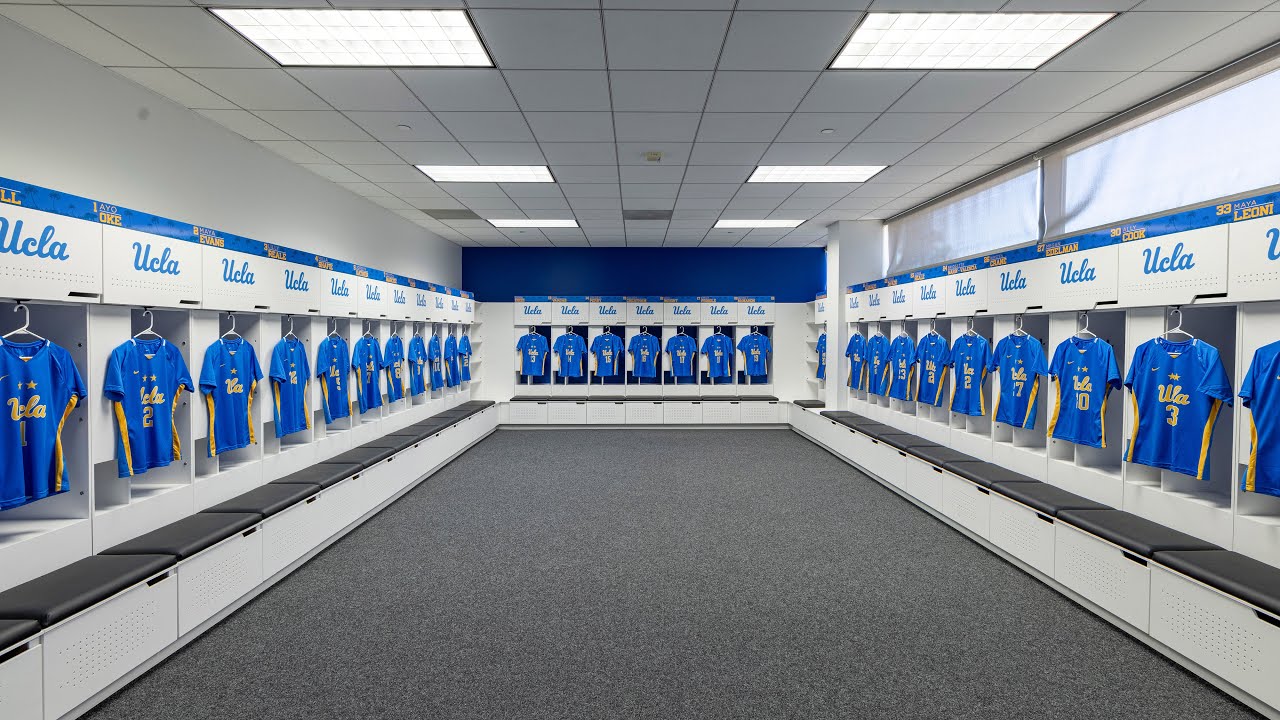
Soccer Locker Room

In the world of soccer games, the outcome of each match is long determined even before the beginning of the game. The foundation for key moments from each team goes back as hours and even days leading up to the match, in no other place than the locker room.

The locker room is a place where teams refine their strategies, tweak their formations and ensure there is a feel-good vibe among the team. This is where coaches also deliver their speeches to inspire and engage their players in personal and team rituals that will solidify their mental and physical readiness before a game.

Here, on our Melbet-betting.com blog, we’ll delve into the secrets of the locker room and reveal the intense preparation that top teams undergo before their game starts.

What happens in the locker room?

As the time ticks towards the start of an important soccer match, the locker room becomes a crucible where every little detail matters for teams.

Let’s take a closer look at what happens in a locker room as the pressure mounts ahead of a match fixture.

The Coach’s Speech

A coach’s speech before a game is very crucial to motivate his players and enable them to create strategies and tactics that can help them beat their opponents. A coach’s concise and clear speech is key to helping players stay mentally and physically prepared to face the task ahead.

Psychological Conditioning

There are various techniques that sports psychologists use for their players before the start of their game. This is primarily visualization and mental rehearsals. These methods help the players to understand what they are doing well, reduce their pre-match anxiety or stress, and improve their performance on the pitch.

Team Bonding and Unity

Team spirit in the face of a seemingly high-pressure game is one way to unify the team and relieve the players off anxiety. This is why players often sing common songs and practices that help them in fostering a kind of camaraderie or team bond.

Studying the Opponent

Before every game, players usually  watch the video analysis of their opponent’s previous matches. This goes a long way in helping them come up with a tailored strategy to exploit their weaknesses.

Formation and Strategy Adjustments

It is in the locker room that the formations as well the tactical setup of the players for a specific match is decided. After the coach decides on the best tactics to employ for a particular game, they will then agree to a certain style of play to use depending on the stakes of the match.

Drills and Practice Sessions

Players often engage in specific drills by simulating the crucial match conditions to be able to create a match strategy that can help them win on the pitch.

Warm Up Sessions

Players usually engage in a warm up session a few minutes before their soccer match starts. Here’s why – It’s to help them exercise their joints and muscles as well as their mental prowess in preparation for an excellent performance on the pitch. It is also key in helping players to prevent injury from taking place during the course of the match.

These warm up sessions include sprinting, press-ups, patterns of play, active stretching, passing awareness practice and many more.

Physical Conditioning and Recovery

Most teams have fitness coaches that help them prepare for pre-match games in the locker room. The role of these fitness coaches include preparing the players physically for their crucial games through some warm-up sessions. They also play a huge role in the recovery process of the players by engaging them in mental activity that can ease their stress before the match starts.

Nutrition and Hydration

It is a big deal for players to stay hydrated before their soccer game starts, as well as within and after the game ends. Hydration plays a major role in enabling the heart muscles to function properly. It helps in lubricating their joints and regulating their body temperatures. It also helps in maintaining normal blood circulation and further supports the delivery of nutrients and oxygen to every working muscle in the bodies of the players.

Individual Player Rituals and Team Rituals

Some players have personal superstitions and routines that they practice before their game starts such as praying, saying words of affirmation, and more.

Every team has specific rituals that they engage in before they step onto the pitch for their match such as a talk from their coach, singing, warm up sessions, and others. These shared rituals create a sense of unity among them.

Final Tactical Instructions

This refers to the last minute instructions, reminders and adjustment from a coach to his team players. It helps in fostering clarity and focus among the players a few minutes before their game begins.

Motivational Boosts

These involve the team huddling up a few minutes before they face their opponents on the pitch. The essence of this is to foster their unity and the power of their collective motivation in winning the game.

The Walk to the Pitch

This is the visual part for football lovers across the world – when the team walks to the pitch. The mental state of the players as they transit to the pitch plays a key part in determining if they’d end up winning or losing the game.

Conclusion

In hindsight, the secrets of the soccer locker room shows that  success on the field  is not just about talent and skill alone but is also dependent on the preparation of the team as a unit.

The hours spent in the locker room, away from the public eye, are where teams build the mental and physical resilience that they need to win their opponents. As the players emerge from the locker room, they carry with them the tactics and confidence that had been forged in those vital pre-match moments. All these elements combine together to see that a team claims victory against their opponents.


Dipo Olowookere is a journalist based in Nigeria that has passion for reporting business news stories. At his leisure time, he watches football and supports 3SC of Ibadan. Mr Olowookere can be reached via [email protected]

Click to comment

Leave a Reply

Your email address will not be published. Required fields are marked *

Sports

UEFA, CONCACAF, AFC Begin Talks on Rival FIFA Tournaments

Published

on

UEFA Club Competitions

By Adedapo Adesanya

European, North and Central American, and Asian football governing bodies have begun preliminary discussions on organising rival international tournaments to those run by the Federation of International Football Association (FIFA).

According to Bloomberg, the talks involve the Union of European Football Associations (UEFA), the Confederation of North, Central America and Caribbean Association Football (CONCACAF), and the Asian Football Confederation (AFC).

The proposed rival competitions represent the latest challenge to FIFA president Gianni Infantino, following his failed plan to spin off the organisation’s commercial operations in a deal involving JPMorgan Chase & Co.

Such tournaments could threaten FIFA’s lucrative international competition circuit, including the World Cup, which generated more than $9 billion during the 2026 edition, a record for the tournament.

UEFA, whose members are home to some of the richest domestic leagues in the world, has led efforts to pressure Mr Infantino to leave office. Despite shelving the plan to further commercialise FIFA’s operations, the European body is still considering a boycott of the World Cup and other FIFA competitions if Infantino remains president.

The first major tournament that could be affected by any boycott is the 2027 Women’s World Cup in Brazil, although several youth competitions are scheduled to take place in the coming months.

According to one of the people familiar with the discussions, the proposed alternative competitions could provide players with opportunities to participate in international tournaments if a disruption to FIFA competitions occurs.

The three confederations also demanded an independent review of Infantino’s World Cup proposal in an open letter issued on Monday.

They argued that, as president of Switzerland-based FIFA, Mr Infantino has a responsibility to act in the best interests of the organisation.

“When trust is broken through deception, when an individual places himself above the collective that entrusted him with authority, that duty has been abandoned,” UEFA, Concacaf and the AFC said in the letter.

The three confederations called for a fully ⁠independent review into the stake sale proposal.

“Football’s strength has ⁠always been its unity,” the statement concluded. “We call for that unity to ‌be honoured now, for leadership that serves football, not ‌seeks ‌to command it.”

FIFA comprises more than 200 national associations organised under six regional confederations. Besides UEFA, CONCACAF and the AFC, the other confederations are the Confederation of African Football (CAF), South American Football Confederation (CONMEBOL) and Oceania Football Confederation (OFC).

The next FIFA presidential election is scheduled for March, with Mr Infantino planning to seek a third four-year term, which would be the final term permitted under the organisation’s rules.

Continue Reading

Sports

Can South Africa’s Provincial Gambling Model Work in Nigeria?

Published

on

nigeria gambling framework

South Africa is not new to gambling legislation and regulatory affairs. As opposed to relying on one singular gambling regulator, like the UK and Malta, South Africa opts for a provincial licensing system, meaning it allows state provinces to regulate gambling, with the model supported by a national legislation. As Nigeria continues to shape and reform its gambling industry, questions are arising.  Can Nigeria use South Africa’s provincial gambling model as a blueprint to monitor online gaming?

South African Gambling Model explained

South Africa monitors gambling both via its national gambling laws along with provincial regulators. Online gaming laws are outlined by the government on a national level, with each province in charge of licensing, compliance and enforcement within each region.

Although widely debated, the current South African market allows sports betting sites to operate legally, yet casino gambling is still regarded as illegal.  Having said that, sports betting sites do offer games of chance such as slot games, table games and quick games via their platforms.

Whilst the main legislation is laid out by the South African government, respective provinces are in charge of the following gambling elements with the region:

  • License bookmaker sites
  • Monitor games with fixed odds offered by platforms
  • Tracks legal compliance and regulations
  • Collects gambling taxes that are generated
  • Promotes responsible gambling practices.

Nigeria’s current gambling framework

Just like South Africa, Nigeria has ample potential in the gambling industry. Currently, the country does not have any licensing procedures in place to legally operate an online casino. Having said that, no laws forbid Nigerian players to join offshore online gambling sites and tempt their luck at gambling.

Sports betting sites in Nigeria are legal. This means, players have the option to go online, register at a sports site and place bets. The National Lottery Regulatory Commission is in charge of the legal framework, with many states developing their own licensing bodies, or in the process of.

Latest court cases in Nigeria and South Africa are giving more power to provinces and states to outline gambling laws, with the government ready to support new laws and licensing bodies.

Could South Africa’s decentralized provincial system serve as a blueprint?

Nigeria and South Africa are very much alike in terms of territories. The latter has 9 provinces, with Nigeria having 36 states and the Central Federal Territory. The constitutional infrastructure of both aligns, with states and provinces having their own gambling territories to monitor. Both countries have a love for sports, with both participating in major sporting events such as the African Cup, Boxing and major athletic competitions. Several provinces in Nigeria have already established a foothold in the gambling market with Lagos being a major player. In recent years, we have seen many live events shown on DAZN, TNT and ESPN happening live from Nigeria. Can the country capitalise from that?  Having Nigerian provinces and regions regulate their own gambling laws just like South Africa will see the market grow, flourish and hopefully see also online casinos or fixed odds games being available to enjoy online.

South Africa’s sportsbetting sites have been working with legislators to officially legalize online casinos. Currently, South African players can register as betting sites and enjoy online games. In theory, they are the everyday online games we grew to love at online casinos, but they are called ‘ fixed odds games’ which in the eyes of South African lawmakers, this is not illegal to do.

Having Nigeria states set the gambling regulations for the region, will see the country move forward in terms of progress, and will also please many online punters. Each state can look at the numbers generated by the state and adapt laws and regulations in line with the customer’s gaming needs. Nigeria, can benefit massively from applying South Africa’s decentralized system as a model of excellence or blueprint.

How will Nigeria benefit from developing State gambling laws and regulations?

Having control of gambling within the state is an important factor to consider. The Nigerian states can develop laws based on customer feedback, activity and state needs. Currently, Nigeria players are allowed to visit offshore sites, register and play, so why not have the possibility of doing so within the state?  Nigeria would benefit massively by doing so, and here is what each state can obtain by legalising online casino gaming:

Revenue Opportunities

  • Licensing Fees paid by each online casino / sportsbook site
  • Collecting of taxes and contribution to the state’s GDP
  • Vast employment opportunities for Nigerians
  • Economic development by investing tax money into State development.
  • Better control on gambling activities happening within the state
  • Licensing online casinos will see operators flock to grow in a new and flourishing market.

Things to consider if Nigeria adopts the South African provincial model

Adopting the South African model of provincial licensing can also pose some challenges for Nigeria. With 36 states, 36 licensing bodies would need to be established, with a centralised body overseeing and setting national gambling standards. Whilst each state can opt to have different technical standards, Nigeria needs to find a way to adopt a compliance stronghold. Each license would need to be monitored, and this could be done adopting the South African model of a national legislation. Operators would need to have a closer look at each state, and ultimately decide on which license to acquire. The good news is that states will deal with licensing requirements at a state level, and thus the process would be easier from an operator standpoint.

Responsible Gambling regulations can be outlined at a national level, with each state having to abide by RG. Centralised RG rules will see Nigeria dealing and tackling illegal and problematic gambling, with states having a blueprint of how to help gamblers in need.

Next Steps for Nigeria

With sporting markets and gambling opportunities everywhere, Nigeria could adopt the South African model or go for a hybrid model of provincial gambling. A national gambling authority would set the minimum regulatory standards. Technical infrastructure and requirements can also be standard across all Nigeria. Ultimately, each state would be responsible in issuing licenses, and operators upholding their part by complying to compliance rules set by licensing states.

The above model can mirror South African’s model, improve enforcement and also attract new operators to Nigeria’s markets. Success is achieved when national standards are clearly set, promoting discussion and cooperation amongst Nigerian states.

Success would depend on creating clear national standards, promoting cooperation among state regulators, and ensuring consistent consumer protections across all jurisdictions. Online Gambling is indeed a growing market, with Nigeria benefitting massively by adopting a standard regulatory system within each state collaborating.

Continue Reading

Sports

Super Falcons’ 2027 World Cup Hopes Alive Despite WAFCON Exit

Published

on

Super Falcons WAFCON 2026

By Adedapo Adesanya

The Super Falcons can still qualify for the 2027 FIFA Women’s World Cup despite losing to Cameroon in the quarter-finals of the 2026 Women’s Africa Cup of Nations (WAFCON) on Sunday.

Nigeria, the 10-time African champions, were beaten 1-0 by the Lionesses after conceding an early free-kick goal, ruling them out of contention for one of Africa’s four automatic tickets to next year’s World Cup in Brazil.

However, the Super Falcons still have another opportunity to secure a place at the tournament, albeit through a longer qualification route.

The Nigerian side will join the three other quarter-final losers — South Africa, Ghana and Côte d’Ivoire — in the continental play-offs.

Following their defeat to Cameroon on Sunday, the Super Falcons will quickly regroup to face South Africa on Thursday.

A victory over Banyana Banyana will earn Nigeria one of the two available continental play-off tickets.

The two teams that emerge from the continental play-offs will then advance to the global play-off tournament, where they will battle for the final remaining places at the 2027 Women’s World Cup.

According to FIFA, the first phase of the global play-off tournament will take place in November and December 2026 at a centralised venue and will feature six teams — two from the Asian Football Confederation (AFC), two from the Confederation of African Football (CAF), one from the South American Football Confederation (CONMEBOL) and one from the Oceania Football Confederation (OFC).

“Using a format which will be confirmed at a later date, two teams will qualify for the final play-off phase,” FIFA stated on its website.

The final play-off phase will be held at a centralised location in February 2027, with the two qualifiers from the first phase joined by two teams from Concacaf, one from CONMEBOL and one from UEFA.

The six teams will be drawn into three paths, with a direct knockout match in each path determining the final three teams to qualify for the World Cup. Teams from the same confederation will not be drawn in the same pathway.

This means only three teams from the global play-off tournament will ultimately secure places at the World Cup in South America next year.

The Super Falcons, therefore, have little room for error if they are to maintain their record of appearing at every edition of the Women’s World Cup since the tournament was introduced in 1991.

At the 2023 World Cup, Nigeria reached the Round of 16 before losing to eventual finalists England on penalties.

Continue Reading