

Sports
The Premier League Title Race: Favorites and Dark Horses

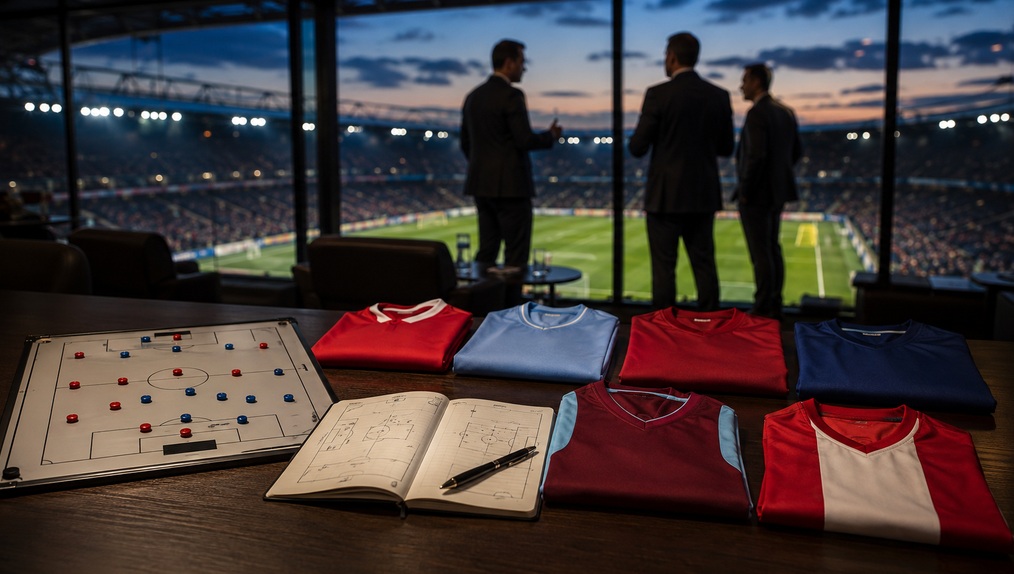
Some seasons begin like a continuation of the past, and others feel like a quiet rearrangement of power, as if the table itself had been gently but decisively moved. The 2026-27 Premier League season opens at the Emirates Stadium on August 21, where Arsenal, now no longer the pursuer but the pursued, welcomes Coventry City back into the top flight.
Mikel Arteta’s team arrives with the weight of achievement. They finished the previous campaign on 85 points, seven clear of Manchester City, and with only 27 goals conceded across 38 matches. Behind them came Manchester United, Aston Villa, and Liverpool.
But the season belongs to no one yet.
Arsenal With Its Crown to Protect
There is a particular difficulty in defending what has only just been won: expectation arrives immediately, like a tide that doesn’t wait for permission.
Arsenal’s triumph was built on a strict structure. Their pressing after loss of possession felt almost instinctive and their defensive record stood as the best in the league. David Raya, for the third consecutive season, claimed the Golden Glove with 19 clean sheets, while the team’s goal difference rose to +44.
New arrivals deepen the equilibrium. Christos Tzolis comes after a season of 17 goals and 23 assists in Belgium, while Piero Hincapié’s loan has been made permanent, anchoring a back line. The first true examination of this reigning order arrives on November 28, when Manchester City visits the Emirates.
City Has Changed the Voice at the Top
Manchester City remain, in many ways, the most familiar force in English football, and yet familiarity does not prevent transformation. They scored a league-high 77 goals last season, and Erling Haaland, as if continuing a private arithmetic, secured his third Golden Boot with 27.
But the most significant change is not numerical. It is structural, even philosophical. Enzo Maresca has succeeded Pep Guardiola, inheriting not only a squad but a language of football that must now be translated rather than simply repeated. Elliot Anderson arrives as a midfielder capable of carrying the ball through pressure and covering vast spaces beside Rodri, a role that suggests both continuity and reinvention.
Yet departures matter as much as arrivals. Bernardo Silva, John Stones, Nathan Aké, and Manuel Akanji leave behind years of collective understanding in buildup and defense. City does not collapse; it simply begins to sound different.
United’s Midfield Now Matches the Results
Manchester United’s third-place finish, on 71 points, carried a sense of arrival after years of unevenness. Bruno Fernandes, with nine goals and a record 21 assists, remained the axis around which their attacking life turned.
Michael Carrick, retained after his interim spell, now steps into permanence, and with him comes a reshaping of the midfield. Youri Tielemans and Andrey Santos arrive to replace the departing Casemiro, offering a different rhythm: less anchored, more fluid, more willing to circulate rather than simply resist.
Yet questions remain, and they are not small ones. United conceded 50 league goals last season, the highest among the top four, a reminder that ambition in attack must still negotiate with fragility behind it. Those who follow the game through betting programs (Arabic: برامج مراهنات) will watch closely whether this new midfield structure alters United’s valuation in the market, especially when European nights begin to test depth and endurance. Prudence still is the quiet companion of optimism.
Liverpool In Its New Era
Some transitions are gradual; others feel like the turning of a page that resists being read.
Liverpool finished the season fifth with 60 points, 12 defeats, and 53 goals conceded. The arrival of Andoni Iraola signals a definitive change: pressing as identity, intensity as principle, and structure as survival.
Salah, Robertson, and Konaté have departed, while Víctor Muñoz brings directness from the left and Jérémy Jacquet is tasked with rebuilding the center of defense. The challenge for Iraola is to restore control and to ensure that speed does not become disintegration.
Villa’s European Win Raised the Standard
Aston Villa’s season carries a different kind of resonance, one that blends domestic consistency with continental triumph. They finished fourth on 65 points, then traveled to Istanbul and defeated Freiburg 3–0 to win the Europa League, ending a 30-year wait for a major trophy.
Unai Emery now returns to the Champions League stage, but the conditions have changed. Morgan Rogers and Tielemans have departed, while Amadou Onana’s long-term injury during the World Cup removes a central pillar of midfield stability.
New figures such as Johan Manzambi and João Gomes will be asked to absorb responsibility quickly. Fans who use MelBet (Arabic: ميل بيت تحميل) will likely observe how Villa’s odds shift across competitions, especially in markets shaped by rotation and fatigue. Thursday nights in Europe have a way of echoing into Sunday afternoons, and no model fully captures that fatigue.
Chelsea Is the Uncomfortable Outsider
Chelsea, finishing 10th with 52 points, enters the season as a contradiction: too talented to ignore, too unsettled to trust.
Xabi Alonso’s arrival brings structure in theory, but structure must first survive contact with a squad still in flux. Rogers helps them play through the lines, Lacroix improves recovery in defense, while Quenda and Marco Palestra give them width and some control at wing-back.
But Chelsea still have too many players crowding the same areas, with roles that blur into each other. Until that’s sorted, every game feels like a trial run that could just as easily go wrong.


