

Sports
Tinubu Orders Football Overhaul After NFF Leadership Exit

By Adedapo Adesanya
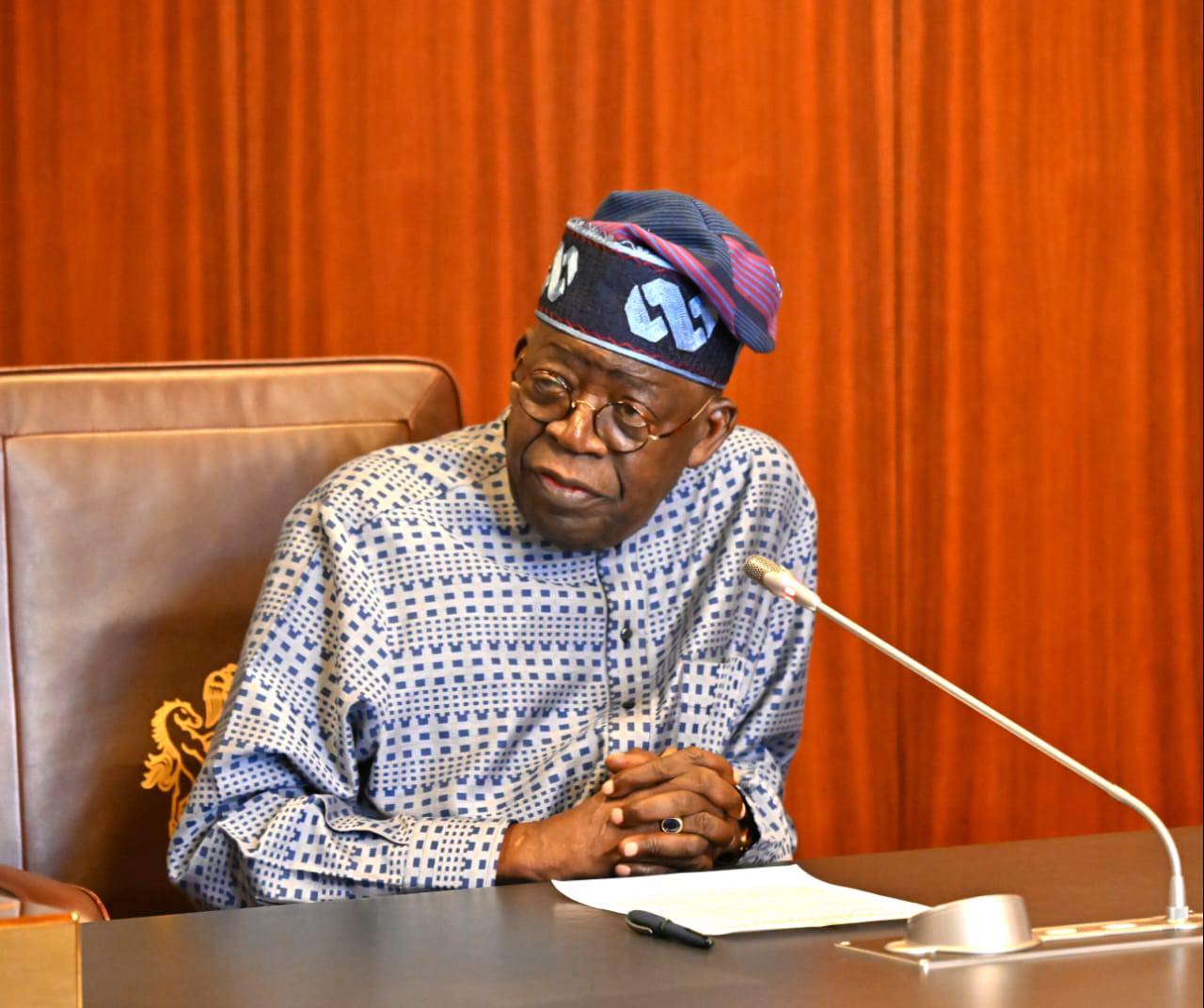
President Bola Tinubu has ordered a comprehensive reform of Nigerian football following the exit of the leadership of the Nigerian Football Federation (NFF) after the country’s repeated failures to qualify for major regional, continental and global tournaments.
President Tinubu directed the Chairman of the National Sports Commission (NSC), Mr Shehu Dikko, to work with the NFF secretariat and other stakeholders to develop reforms covering governance, administration, stakeholder representation, player development, domestic competitions and accountability.
“The reform must respond to a longstanding need to strengthen governance, administration, stakeholder representation, development pathways, domestic competitions and accountability across Nigerian football,” Mr Tinubu said.
On Thursday, the president, general secretary and executive committee of the NFF all resigned, leaving a leadership vacuum at the top of the sport in the country.
The Nigerian President said football had continued to struggle despite being Nigeria’s most popular sport and receiving significant public support, investment and national attention, blaming the situation largely on structural weaknesses within the system.
“Football, Nigeria’s most popular sport and the greatest beneficiary of public support, investment and national attention, has continued to struggle basically due to structural deficits within the system,” he said.
President Tinubu said Nigerian football must translate the country’s abundant talent, passion and resources into stronger institutions and sustained performances, rather than continue to fall short in major competitions.
He tasked the NSC chairman with ensuring continuity in essential football administration while leading a broad and consultative reform process involving relevant stakeholders.
The process, according to the President, should include appropriate engagement with FIFA and CAF while ensuring that Nigeria continues to meet its obligations under the international football framework.
He also urged football stakeholders and Nigerians to support the transition and work collectively towards a stronger, more accountable football system capable of delivering sustained success for the country.
The Super Eagles failed to qualify for the 2022 and 2026 FIFA World Cups, while the Super Falcons recently missed out on the 2027 FIFA Women’s World Cup in Brazil.
Also, Nigeria’s youth teams have recorded underwhelming results, with the Golden Eaglets missing qualification for the FIFA U-17 World Cup in three successive editions, despite being the competition’s most successful team with five titles.
The country’s Olympic side, the Dream Team, has similarly struggled to restore the status it achieved after winning the gold medal at the 1996 Atlanta Olympics.


