
Sports
Which Football Competitions Drive the Highest Betting Payments in Nigeria?

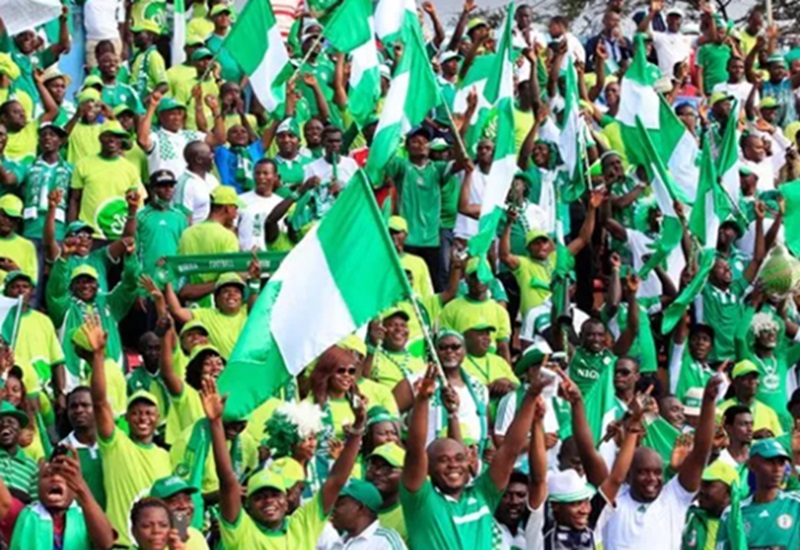
Public payment-by-competition data is limited but that betting attention always centers on the top European football, specifically the EPL and UCL, plus the AFCON spikes in Nigeria.
First, payment volume by competition is not usually published publicly.
In reality, sportsbooks and payment processors do not generally get into the habit of publishing, in an auditable form, competition-by-competition payment breakdowns in a way that can be ranked, with precision, by the public. That is, any assertion that the EPL accounts for exactly X% of payments would be speculation unless supported by a published data set.
What can be said factually is which competitions tend to have the greatest attention from betting in Nigeria, which is based on repeated commentary by market players and patterns of observed consumption: football is clearly the most dominant, and the ones with the greatest amount of coverage, familiarity and weekly volume tend to drive the most consistent wagering behaviour.
In this article, we try to cast the highest payment volume in the form of a practical proxy: competitions that have the most definitive association with high and repeated betting activity.
Football’s weekly engine: never-ending leagues
The most significant driving force for betting-related payments is frequency. Weekly leagues introduce habitual behaviour: consistent deposits through multiple payment methods, steady in-play interest and constant opportunities for accumulators. These payment methods include bank transfers, cards, e-wallets, and others that can be deposited with PayPal. However, it is paramount that you check out the various payment and withdrawal methods offered by each bookmaker before placing your bets.
Within that structure, the English Premier League is widely considered to be the centre of gravity of Nigerian football attention. The reasons are simple and observable: It has good presence in the broadcaster world, it has massive fan bases of the key clubs, and has a full weekend slate which creates a steady rhythm to betting. When a competition is discussed every day, it is the go-to to bet after.
Behind it, other major European leagues (often featuring football’s top flight in Spain or Italy, football’s top flight, in betting parlay), benefit from the same frequency effect: weekly matches, recognisable clubs, widespread media coverage. Even bettors who profess their loyalty to one league, many still bet across the several European slates because the markets are never closed.
The prestige engine: European club competition
The UEFA Champions League is somewhat different to the domestic leagues. It doesn’t run every weekend, it comes in big nights. That structure tends to form spikes. Big clubs, knockout stakes, and trumped-up matchups draw attention. In payment terms this usually manifests itself in bursts: heavier deposits around big midweek ties, followed by a return to domestic routines at the weekend.
The Champions League also promotes different betting behaviour as well. Caused by their narratives; home legs, away goals history (now removed), second leg tactics, often punters go as much for “storey bets” as statistical bets. The result can be increased in-play engagement, and an increase in prop interest on marquee nights.
The national and continental engine: AFCON and major international tournaments
International tournaments like AFCON create a lot of betting activity in Nigeria especially when the national team is involved, or any time the international tournament is covered in the media. It comes in the shape of festival betting: concentrated, time-limited, emotionally charged.
Unlike the steady weekly flow of the EPL, AFCON has a tendency to be peaky during the window. Deposit can increase as people go back to wagering for the tournament, withdrawal can increase after decisive rounds. Even punters who play predominantly in club football often play AFCON when it is a special season for them.
Why these competitions dominate activity
There are three practical reasons as to why these competitions rise above the rest.
First is information. Bettors are more active when they believe that they know. High coverage competitions lead to endless analysis, highlights and discussion, which makes bettors feel confident, even with results remaining uncertain.
Second is market depth. The hottest competitions often have the smallest number of betting markets: match odds, totals, corners, cards, and a host of lines involving players. More markets equals more ways to bet, and can be translated into more transactions.
Third is social reinforcement. When everyone is watching the same leagues and tournaments, then betting forms part of the communal conversation. That social energy is what drives participation.
Bottom line
If by highest payment volume we talk about the competitions most consistently linked to heavy betting barrage, Nigeria’s centre of gravity is top European football, especially the EPL, followed by Champions League nights, other big European leagues and AFCON bursts during the tournament periods. It is nearly impossible to obtain exact payment volume data for each competition, so these precision rankings beyond these broad drivers can’t be found publicly, i.e., they’d have to be obtained internally by operators.


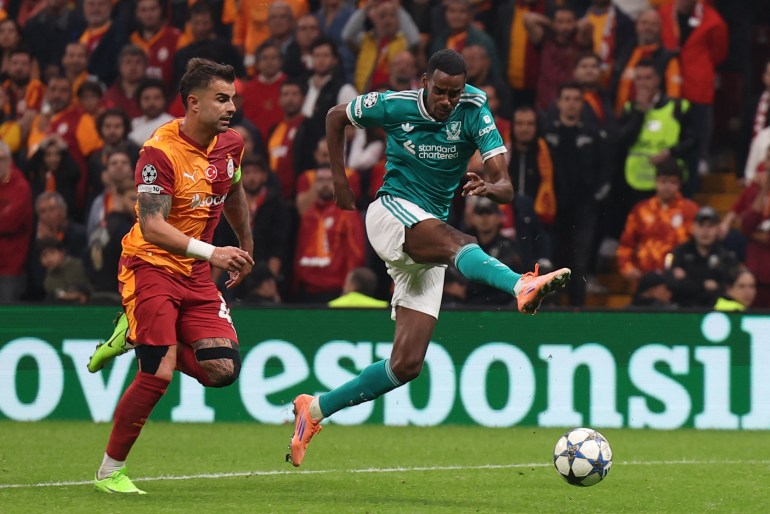
The Liverpool vs Galatasaray match in the UEFA Champions League Round of 16 turned into a real hype blowout that was actively discussed in Cameroon, where interest in top European games is always high. The game was extremely dynamic, with total domination from one side and a sharp turnaround during the tie. Most football fans and bettors use the modern Linebet app in Cameroon, especially those who follow matches live and track odds in real time. The app also provides full stats and analytics, plus plenty of bonuses.
UCL popularity in Cameroon, about the Round of 16
In Cameroon, the UEFA Champions League is a top-tier tournament that attracts maximum attention, especially at the playoff stage. The Round of 16 is no longer just football – it’s a real battle for qualification, where every mistake affects both the bet outcome and the final result.
Matches like Liverpool vs Galatasaray always generate strong interest due to the contrast in styles and high scoring potential.
Main reasons why these matches are popular in Cameroon:
- high tempo and a large number of shots on goal;
- constant movement in live lines and odds;
- opportunities to analyze totals, handicaps, and match outcomes during the game.
The Round of 16 often creates a shift in expectations. Even if the first leg ends with a minimal score, everything can flip in the second match. In this case, Liverpool showed exactly that scenario – a strong comeback with full control.
Match flow, key moments and players
From the first minutes, Liverpool applied maximum pressing and started dominating across all lines. The tempo was high right away, and a bet on an early goal was clear from the opening attacks. Already in the first half, the team created a lot of chances, but finishing was lacking – especially the penalty missed by Mohamed Salah.
Before halftime, the hosts still pushed through in terms of chances and opened the scoring – Dominik Szoboszlai scored after a set piece. At this stage, live odds on Liverpool to qualify started dropping sharply, but the intrigue was still there.
In the second half, Galatasaray completely collapsed. In a short stretch from the 51st to the 62nd minute, Liverpool scored three goals in a row – a classic blowout that killed the intrigue and removed any comeback chances.
Key stretch of the match:
- 51st minute – goal by Hugo Ekitike after a quick combination;
- 53rd minute – rebound goal by Ryan Gravenberch, total goes up;
- 62nd minute – goal by Mohamed Salah, final break in the line.
After that, the game shifted into control mode. Liverpool kept creating chances but without maximum pressure, while Galatasaray was basically out of the game.
Final result – 4:0 at Anfield and 4:1 on aggregate. A clean win for the favorite, fully covering the weak first leg.
Key players of the match:
- Mohamed Salah – goal plus constant pressure, very active in attack;
- Dominik Szoboszlai – crucial first goal and tempo control;
- Uğurcan Çakır – despite conceding four, made many important saves.
UCL betting with Linebet
After this match, Liverpool is seen as a team with strong attacking potential and the ability to hit overs even against solid defenses. For users in Cameroon, this is an important factor when analyzing upcoming games.
The team plays aggressive football with a focus on pressing and fast attacks, which directly impacts totals and live betting lines. There is a clear bias toward over outcomes and individual totals.
What bettors usually focus on when analyzing UCL matches via the Linebet app:
- over totals in matches with attacking teams;
- live bets after the first 15–20 minutes of pressure;
- player stats (shots, goals, assists).
The match against Galatasaray showed a classic scenario: if a team catches momentum, the betting line breaks completely. Liverpool remains a club that can suddenly increase the tempo and decide the outcome in a short period, which is especially important for live analytics and odds evaluation.
Nigeria’s online betting market is booming. Mobile internet and digital payments are driving millions of users to betting platforms, and as turnover grows, regulatory pressure is also increasing. The country’s authorities have to think simultaneously about tax revenues, player safety, and technological change that is outpacing the regulatory framework. Australia’s model is increasingly being cited as a possible benchmark, where online gambling develops within tightly defined rules.
The law that defines the framework
The cornerstone of Australia’s approach is the federal Interactive Gambling Act (IGA), passed in 2001 and amended several times since. Importantly, lawmakers neither imposed an outright ban nor gave the market free rein. Instead, they took a middle path: they clearly defined what is permitted, set out oversight mechanisms, and created a system in which every participant understands their obligations.
Such legal clarity reduces the number of grey areas and gives the regulator real enforcement tools.
What’s allowed—and what isn’t—online
Australia’s structure of permissions and prohibitions is built on an allowlist approach. Licensed operators are entitled to offer online sports betting. This is the main legal offering for the digital market. Online casinos and so-called casino-style games are significantly restricted for domestic operators. Offshore platforms targeting Australian customers without the appropriate licence risk facing ISP blocking and financial penalties. The law leaves little room for ambiguity: operating without authorisation carries clear consequences.
Online casinos are a different story. They are effectively prohibited for operators within the country, but players themselves often use overseas sites. Statistics from review sites show that players from Australia are especially interested in sign up bonuses casino no deposit. Many players use such bonuses to test the games, payouts, and the platform’s interface before making a deposit. This step is seen as important because online casinos operate outside Australian jurisdiction.
When it comes to online casinos, Australia is one of the strictest jurisdictions in terms of regulation. This is explained not only by the need to protect players from addiction, but also by combating fraud. If Nigeria plans to follow Australia’s example, it will need to take the full legal picture into account.
How loopholes were closed in 2017
The rapid spread of the internet and the vague wording of the law’s early versions created grey areas that unlicensed operators readily exploited. The 2017 reforms were a turning point. Lawmakers clarified provisions aimed at offshore platforms and significantly expanded the powers of the Australian Communications and Media Authority (ACMA).
The authority gained the right to conduct investigations, seek ISP blocking of sites that violate the law, and coordinate penalties. In essence, the reform turned abstract prohibitions into a workable enforcement regime.
Player protection as a licensing requirement
Australia’s model is notable for a shift from revenue to harm minimisation. Every licensed operator is required to meet a set of requirements:
- conduct identity verification of players
- provide self-exclusion mechanisms
- implement responsible gambling tools
- comply with clear advertising standards
In fast-growing markets where such measures are absent, there is a high risk of reputational damage and political crises that can set the industry back for years.
Who is responsible for what in a federal system
Australia’s regulatory architecture operates on two levels. Federal law sets the general rules, while states and territories issue licences and oversee compliance within their own jurisdictions. Nigeria, also structured as a federation, can draw practical lessons from this setup. A clear division of powers reduces duplication of functions, eliminates conflicts between agencies, and narrows enforcement gaps.
Enforcement in a digital era when sites are offshore
Legal rules alone are not enough without real enforcement. Australia uses a wide range of digital tools: site blocking, working with banks and payment providers, blocking payments to unlicensed operators, and inter-agency cooperation. Offshore platforms do not disappear entirely, but the visibility and certainty of enforcement increase discipline across the entire market.
Betting ads and the debate over what’s acceptable
Public criticism of bookmakers’ advertising during sports broadcasts has become one of the most contentious issues in Australia’s debate. The concerns relate primarily to the impact on young people. In response, the authorities tightened marketing restrictions in stages. This story clearly shows that regulation is never static and must constantly adapt to new social challenges.
Why Australia’s model is criticised
Even a structured system is not without weaknesses. Critics point out that certain types of gambling remain widely accessible, and the problem of gambling addiction is far from being solved. Political and social challenges persist, and the government has to maintain an ongoing dialogue with the public.
What is Nigeria’s next step
Copying the Australian model wholesale would be a mistake: the legal, cultural, and economic contexts of the two countries differ too much. However, Australia’s experience is useful as a benchmark for updating the regulatory framework and strengthening enforcement. The ultimate goal is for revenue, technological innovation, and player protection to advance together rather than one coming at the expense of the others.

By Adedapo Adesanya
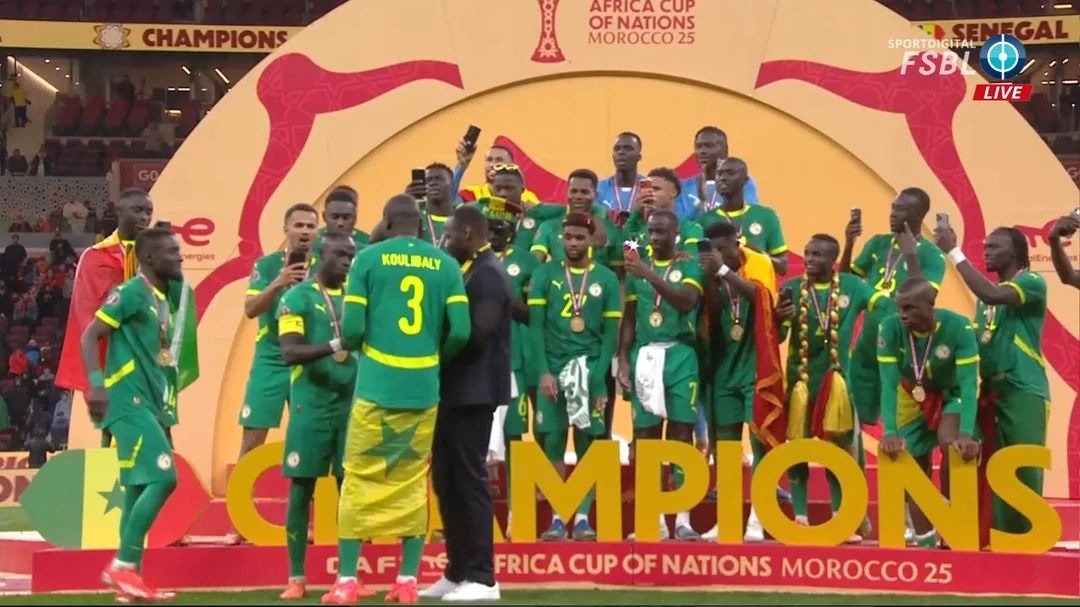
The Court of Arbitration for Sports (CAS) has confirmed that the Senegalese Football Federation has appealed the decision to declare Morocco as the winners of the AFCON 2025, asking to be restored as the original winners.
The appeal, registered by CAS on Wednesday, March 25, 2026, is “to set aside the CAF decision and declare the FSF winners of AFCON”.
It is not clear at the moment when the final ruling will be made, but the court has ordered a freeze on the implementation of the initial verdict.
This places the title in legal limbo until a full hearing is held in the coming weeks.
The Confederation of African Football (CAF) sparked outrage last week after it declared Morocco as champions of the continental showpiece following a walkout staged by the Senegal team in January, but later returned to defeat the hosting nation, 1-0.
CAF, in the statement announcing the decision, said “the Senegal national team is declared to have forfeited the match,” a 1-0 victory in the final, “with the result being officially recorded as 3-0” in favour of Morocco.
The decision follows an appeal by the Moroccan FA, which CAF said is “declared admissible in form” and was upheld.
The Royal Moroccan Football Federation (FRMF) said in a statement, “its action was never intended to contest the sporting performance of the teams participating in this competition, but solely to request the application of the competition regulations”.
During the final on January 18, with the scoreline 0-0, Congolese referee Jean Jacques Ndala gave a spot-kick in the eighth minute of added time.
Referee Ndala was advised by the video assistant referee (VAR) to consult the pitchside monitor and review defender El Hadji Malick Diouf’s challenge on Diaz.
Senegal head coach Pape Thiaw, still incensed by the decision a few moments earlier to disallow a Senegal goal from Ismaila Sarr, ushered his team off the field.
CAF added that “through the conduct of its team”, Senegal infringed on Article 82 of the regulations of the Africa Cup of Nations, and as a result, Article 84 became applicable.
Article 82 states that if a team refuses to play or leaves the ground before the end of regulation time without the referee’s authorisation, it will be considered the loser and eliminated from the competition.
Article 84 complements this provision, stating that any team that violates Article 82 will be permanently eliminated and will lose the match 3-0.
After the decision, the Senegal coach took the trophy on a tour to the country’s military headquarters while President Bassirou Diomaye Faye joined the chorus of disapproval by changing his profile picture across his official social media accounts to an image of the AFCON trophy displayed behind him.












-
 Feature/OPED6 years ago
Davos was Different this year
-
Travel/Tourism10 years ago
Lagos Seals Western Lodge Hotel In Ikorodu
-

 Showbiz3 years ago
Estranged Lover Releases Videos of Empress Njamah Bathing
-
 Banking8 years ago
Sort Codes of GTBank Branches in Nigeria
-

 Economy3 years ago
Subsidy Removal: CNG at N130 Per Litre Cheaper Than Petrol—IPMAN
-

 Banking3 years ago
Sort Codes of UBA Branches in Nigeria
-

 Banking3 years ago
First Bank Announces Planned Downtime
-

 Sports3 years ago
Highest Paid Nigerian Footballer – How Much Do Nigerian Footballers Earn