Technology
9 African Firms, Others for 2026 AWS Social Entrepreneur Accelerator Cohort
By Modupe Gbadeyanka
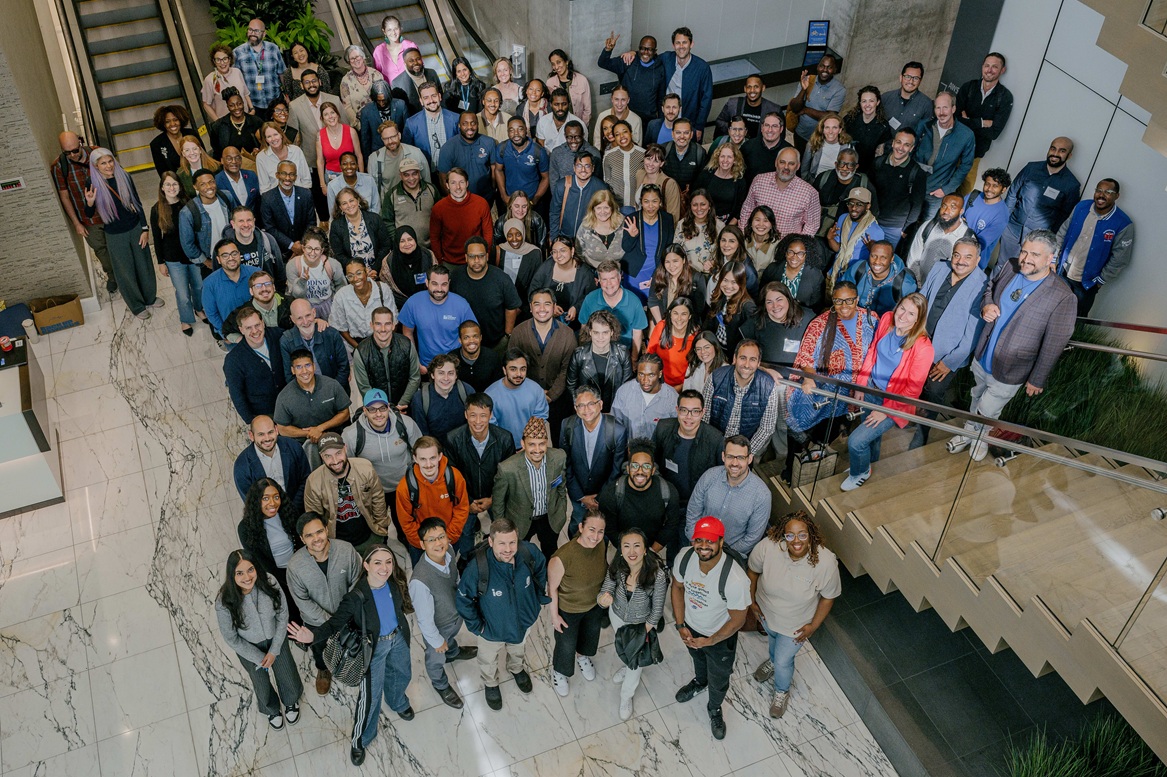
Nine African organisations, including Nigeria, will join 33 others from the USA, Australia, India, the UK and others for the fourth Social Entrepreneur Accelerator cohort of Amazon Web Services (AWS).
The companies from Africa chosen for the 2026 edition of this programme are from Nigeria, Kenya, Ghana, South Africa, Cameroon and Tanzania.
These founders are using cloud and AI technology to solve skills shortages, youth unemployment and food security. Building from the ground up, they are creating African solutions for African challenges.
Nigeria leads the selection with three organisations, namely Sabi Scholar, Kayode Alabi Leadership and Wetech Incorporated.
The chief executive of Sabi Scholar, Mr Divine Iloh, said he is creating an “operating system” for African higher education, enabling any university to launch online degrees in 30 days, a potential game-changer for the continent’s 200M+ youth population.
For Kayode Alabi Leadership, the founder, Hammed Kayode Alabi, is reducing inequalities by empowering underserved young people to lead and innovate through transformative education and technology-driven solutions to solve local challenges and thrive as community changemakers.
As for Wetech Incorporated, established by Gabriella Uwadiegwu, it is building Africa’s largest pipeline of women in technology, from training to mentorship to direct employment pathways.
Kenya follows with two organisations, KuzeKuze and STEM Centre Africa. According to the CTO of KuzeKuze, Enock Sangaka Mong’are, the organisation is building “education passports,” as digital records that follow learners throughout their lives, making personalised education measurable and scalable.
While STEM Centre Africa, a non-profit launched in 2017 by two brothers, Dancun, the CTO and Denish Akoum, the CEO, to promote hands-on STEM education, including coding, robotics and 3D design, reaching over 18,000 + students since inception, with 90 per cent gaining proficiency in Python, Scratch and electronics. Operating two centres in Homa Bay County with 10 organisational partners, SCA aims to reach 100,000 learners by 2030.
The remaining four spots are shared by Ghana, South Africa, Cameroon and Tanzania.
In Ghana, BASICS International, founded by CEO Patricia Wilkins, is breaking cycles of poverty by providing education, certified digital skills training and holistic support to underserved children and youth, equipping them to thrive academically, economically and socially.
For South Africa, FunHouse Digital, founded by Ayabulela Yokwana, is turning gaming lounges into self-sustaining education hubs in rural communities – profits from gaming directly fund free coding and digital literacy programs.
In Cameroon, EduCloud, founded by Rosius Ndimofor Ateh, delivers hands-on Cloud and AI workshops across Africa, bridging the gap between academic theory and industry-ready skills.
From Tanzania is Fiqra Academy, founded by CEO Gerald Revocatus. The firm is creating a direct pipeline from digital skills training to employment for East African youth, with certifications that lead to real careers through their digital learning platform.
In collaboration with Deloitte, the accelerator provides technical training, strategic business planning, and ongoing AWS and Deloitte support to help mission-driven organisations scale.
Since 2023, the programme has supported more than 100 social entrepreneurs across 34 countries, bringing together a global community of social entrepreneurs who are working to address some of the world’s most urgent challenges across education, health and climate resilience.
“Africa’s representation in this cohort reflects what we’re seeing across the continent: a generation of founders who don’t wait for conditions to be perfect. They build anyway.
“Our role is to ensure they have access to the same world-class cloud and AI technology as any startup in Silicon Valley and the support to scale impact across borders,” the General Manager for Sub-Saharan Africa at AWS, Jyoti Ball, stated.
Technology
Damage to Fibre Networks Carries Significant Economic Consequences—NCC
By Modupe Gbadeyanka
The Executive Vice Chairman of the Nigerian Communications Commission (NCC), Mr Aminu Maida, has reemphasised the need to protect the nation’s telecommunications infrastructure, especially fibre networks, noting that damage to fibre networks carries significant economic consequences.
Speaking virtually at the Association of Telecommunications Companies of Nigeria (ATCON) Critical Conversation Forum on Fibre-to-the-Home (FTTH) in Lagos recently, he described FTTH as a critical enabler of Nigeria’s digital future.
“FTTH is uniquely positioned to meet Nigerians' next phase of data demand. The quality of our broadband will increasingly shape the competitiveness of our businesses, the growth of our digital industry and the opportunities available to our citizens,” the NCC chief stated.
“We must uphold deployment standards. Nigeria needs fibre that is properly installed, properly documented, and properly protected,” Mr Maida further said at the event themed Fibre to the Home in Nigeria: Addressing Challenges, Strengthening Standards and Ensuring Sustainable Deployment.
During a panel discussion titled Policy, Governance and Regulatory Alignment, the Deputy Director of Strategic Business Initiatives at ipNX, Mr Segun Okuneye, highlighted the need for stronger collaboration across the telecommunications ecosystem to unlock the full potential of fibre broadband in Nigeria.
According to him, sustainable fibre deployment extends beyond technology and investment to include policy consistency, stakeholder alignment, infrastructure protection, and shared responsibility.
“Achieving universal fibre connectivity requires more than deploying infrastructure; it requires sustained collaboration between operators, regulators, government agencies and host communities.
“When policies are aligned, deployment standards are consistently enforced, and critical infrastructure is protected, we create an environment where investment thrives and more Nigerians can enjoy reliable, high-speed broadband.
“At ipNX, we remain committed to working with all stakeholders to build resilient digital infrastructure that will support Nigeria’s economic growth for generations to come.”
Earlier in his welcome address, ATCON President, Mr Tony Emoekpere, underscored the strategic importance of FTTH in achieving the country’s broadband penetration targets while calling for greater public awareness around protecting communications infrastructure.
“This forum is critical because Fibre-to-the-Home is the technology that will enable the country to achieve full broadband penetration. We all depend on communication infrastructure, and it must be protected,” he declared.
Drawing a comparison with power infrastructure in the country, he added, “If somebody comes to your neighbourhood to tamper with your transformer or power cables, everybody will come out. The same thing needs to apply for communications infrastructure. When we see people damaging fibre cables, we should raise an alarm.”
Technology
Financial Services Professionals Discuss Meeting Rising Customer Expectations
By Modupe Gbadeyanka
Thursday, July 23, 2026, provided an opportunity for financial services professionals to converge on Landmark Event Centre, Lagos, to brainstorm on ways to meet the rising customers’ expectations.
The platform used for this purpose was Core by Interswitch. It is part of the company’s broader commitment to strengthening Africa’s digital payments ecosystem by fostering collaboration, knowledge sharing and operational excellence across the financial services value chain.
At the event, participants, numbering over 400, also highlighted the growing importance of operational excellence in sustaining resilient payment infrastructure.
As digital financial services continue to expand across Africa, closer collaboration among financial institutions, fintechs and payment service providers will be essential to improving responsiveness, resolving operational challenges more effectively and delivering consistently reliable customer experiences.
The Executive Vice President for Operations and Technology at Interswitch, Mr Babafemi Ogungbamila, said the forum reflects the company’s belief that exceptional customer experiences are built not only on innovative technology but also on the expertise, collaboration and commitment of the professionals who keep payment systems running every day.
“Every successful digital transaction is powered by professionals whose work often goes unseen but is fundamental to building trust in digital payments. Core by Interswitch was created to recognise their contribution, strengthen collaboration across the industry and create opportunities for shared learning that ultimately benefit financial institutions and the customers they serve.
“As digital payments continue to evolve, investing in the people and processes that power the technology is just as important as investing in the technology itself,” Mr Ogungbamila said.
Beyond recognising the professionals whose work often goes unnoticed, the programme underscored the value of creating stronger connections across the payments ecosystem.
By creating a dedicated platform for knowledge sharing, collaboration and professional development, Core by Interswitch aims to build a more connected community of payments operations professionals equipped to respond to the evolving demands of the digital economy.
Technology
WhatsApp Introduces Web Calling, Call Transfer, QuickHD Features
By Aduragbemi Omiyale
WhatsApp has been updated with a web calling feature, allowing users to now make and receive audio and video calls, both one-on-one and group, directly from WhatsApp Web.
A notice from the Meta-owned messaging platform disclosed that this feature works without the need to download any app.
It was disclosed that this update was made to WhatsApp to make it easier for users to make calls wherever they are and on whatever device, phone or laptop.
Users will have access to features available on their other devices, including screen sharing, reactions, and a dedicated Calls tab with full call history and favourites, all from their browsers.
WhatsApp noted that calls from this feature are end-to-end encrypted, with no time limits and at no cost, as it is the same private experience they expect from the platform.
WhatsApp has also been embedded with easy call transfer, enabling the movement of an active group call from one device to another without hanging up. Users can seamlessly transfer calls to WhatsApp Web or Desktop when they arrive home to collaborate on a larger screen – or vice versa.
The platform further said it now has QuickHD, which allows for an improved video experience at the beginning of a call. With QuickHD, users can now enjoy high-definition video immediately in the very first few seconds of the call.
In addition, it has launched noise suppression to remove the background noise around callers so their voices come through clearly to the person on the other end, even in loud or busy environments. This can be managed at any time in in-call settings.
WhatsApp said these features are rolling out gradually and will be available to everyone soon, expressing its desire to make WhatsApp calling simpler to use.