Connect with us

Technology

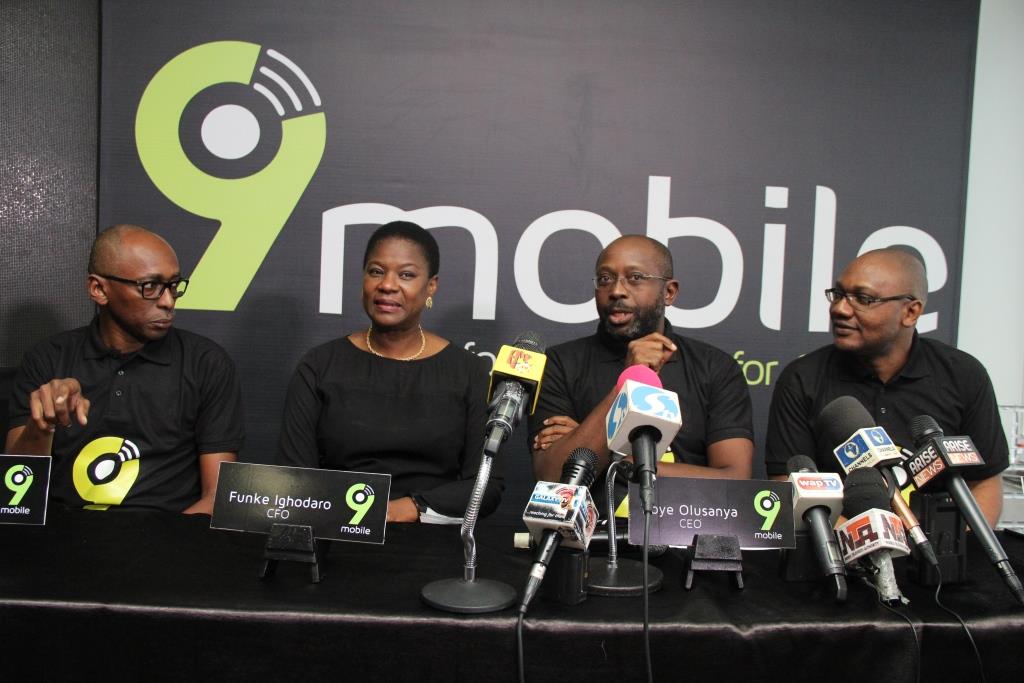
9Mobile Stronger Despite Etisalat’s Exit—Emefiele

Published

on

By Dipo Olowookere

Governor of the Bank of Nigeria (CBN), Mr Godwin Emefiele, has disclosed that the country’s fourth largest telecommunication firm, 9Mobile, which recently changed its name from Etisalat Nigeria, has continued to wax stronger despite the initial fears nursed by some people when its former parent company, Etisalat Group, pulled out of the business.

While addressing journalists on Tuesday in Abuja, the apex bank chief said contrary to opinion, 9Mobile recorded a growth in revenue last month.

He described the intervention of the CBN and the Nigerian Communications Commission (NCC) as necessary, saying it has been “positive.”

“The intervention has been positive, and Etisalat has retained its subscriber base. Its 4,000 staff have continued their work and, indeed, the revenue for the month of June has remained stable at not less than N16 billion.

“A lot of people, who were watching from the sidelines thought Etisalat’s revenue was going to drop drastically and that there was going to be slide to subscriber base, but that was not the case,” the CBN boss said.

However, Mr Emefiele emphasised that the newly constituted board would quit maximum in six months’ time.

“The intervention through the institutionalisations of an interim board, headed by the regulators, I must say here is temporary and our plan is that it should not take more than maximum 90 to 180 days,” he informed newsmen.

He explained that, “We only came in to say, ‘please gentlemen, we understand all your interests in this company either you are a creditor or stakeholder, let’s take things easily so that we do not hurt the interest of others who also have interest in this company.”

Giving more insight into the roles of the CBN and the NCC, Mr Emefiele said, “The issue is that, whereas the regulators, the NCC and the CBN, in this case, businesses and companies that operate in the telecoms market, should operate profitably, but we also expected that whatever decision they take should not be such that would affect other stakeholders in that industry.

“We all know that Etisalat is one of the four biggest telecommunication firms in Nigeria, with a subscriber base of over 20 million; and of course, we also know that the revenue base of the company is also very robust.

“It is important that we should not just allow any creditor who feels disadvantaged, to take a decision that hurts other important stakeholders that operate within Etisalat.

“That was what the NCC and the CBN observed that the activities and the attempt by some creditors were going to leave a dismemberment of that company and we could not allow the millions of subscribers to be running helter-skelter without services, and that we could not allow 4,000 or more employees of this company to just run in disarray because something wrong has happened.”

He added that, “The company’s Advisers have been appointed to provide a process for major investors to intervene in the company and take it over.

“Potential investors have shown interest, so what would happen is that, these interests would be made opened; the advisers would advertise for RSP, everybody can conduct their due diligence after that. The best will win. Therefore, we are not moved at all for the change.”


Dipo Olowookere is a journalist based in Nigeria that has passion for reporting business news stories. At his leisure time, he watches football and supports 3SC of Ibadan. Mr Olowookere can be reached via [email protected]

Click to comment

Leave a Reply

Your email address will not be published. Required fields are marked *

Technology

Meta Reaffirms Commitment to Safer, Positive Digital Experiences for Teens

Published

on

Safety Tools for Nigerian Teens

By Modupe Gbadeyanka

Meta, the parent company of Facebook, Instagram and WhatsApp, has said it will not rest on its laurels in promoting safer and more positive digital experiences for teens.

The firm gave this assurance at the Nigeria Youth Safety Summit, which it co-hosted with the Federal Ministry of Youth Development at the Transcorp Hilton, Abuja.

This event brought together government officials, civil society organisations, parents, educators, creators and youth leaders to discuss digital wellbeing priorities, strengthen partnerships, and promote safer online experiences.

Meta used the opportunity to showcase its ongoing investments in youth safety through built-in protections, parental supervision tools, and digital literacy resources designed to help teens navigate the digital world safely and confidently.

At the centre of Meta’s youth safety efforts are Teen Accounts, a reimagined experience across Meta’s apps designed specifically for teenagers.

Teen Accounts include built-in protections that address parents’ concerns by promoting age-appropriate experiences, limiting unwanted contact, and encouraging healthier digital habits.

Teen Accounts are turned on automatically for all teens, with built-in protections including private accounts, the strictest messaging settings, sensitive content restrictions, limited interactions (tagging/mentions only from people they follow), time limit reminders after 60 minutes each day, and sleep mode between 10 pm and 7 am. Teens under 16 need a parent’s permission to change any of these settings to be less strict.

“At Meta, our goal is to provide teens with safe, age-appropriate online experiences, and events like the Nigeria Youth Safety Summit reflect our commitment to promoting safer and more positive digital experiences for teens.

“With products such as Teen Accounts, Meta is putting the right protections in place so teens can explore their interests and express their creativity in a safe, age-appropriate space.

“We will continue to build the safety features and tools that families need to support young people online,” the Head of Safety Police for EMEA at Meta, Sylvia Musalagani, stated.

“Child online safety is one of our central pillars, and we are steadfast in our mandate to safeguard the Nigerian child from technology-enabled violence. Children cannot navigate the complexities of the online world without informed adults guiding them because safety begins with the parents.

“Safety is a shared tripartite responsibility between parents, technological industries, and government. That is the fundamental premise of today’s summit, a hands-on walk-through of parental supervision tools and Teen Accounts.

“We appreciate Meta for the collaboration and for creating a platform for these important conversations,” the Minister of Women Affairs and Social Development, Ms Imaan Sulaiman-Ibrahim, said.

Also commenting, the Minister of Youth Development, Mr Ayodele Olawande, said, “We believe that keeping young people safe online is a shared responsibility. Government, technology companies, schools, parents, social organisations, community groups, and young people themselves all have a role to play. We encourage Meta to make the tools, guides, and learning materials from this initiative more widely available so that young people across Nigeria can continue to benefit from this laudable summit.”

It was learned that through keynote presentations, the Parents Learn & Brunch session held in partnership with the Federal Ministry of Women Affairs and Social Development, and panel discussions featuring parent creators and parents, participants explored practical approaches to supporting safer online engagement.

The summit also reinforced the importance of multi-stakeholder collaboration in advancing digital wellbeing and online safety for young people.

Continue Reading

Technology

9 African Firms, Others for 2026 AWS Social Entrepreneur Accelerator Cohort

Published

on

2026 AWS Social Entrepreneur Accelerator Cohort

By Modupe Gbadeyanka

Nine African organisations, including Nigeria, will join 33 others from the USA, Australia, India, the UK and others for the fourth Social Entrepreneur Accelerator cohort of Amazon Web Services (AWS).

The companies from Africa chosen for the 2026 edition of this programme are from Nigeria, Kenya, Ghana, South Africa, Cameroon and Tanzania.

These founders are using cloud and AI technology to solve skills shortages, youth unemployment and food security.  Building from the ground up, they are creating African solutions for African challenges.

Nigeria leads the selection with three organisations, namely Sabi Scholar, Kayode Alabi Leadership and Wetech Incorporated.

The chief executive of Sabi Scholar, Mr Divine Iloh, said he is creating an “operating system” for African higher education, enabling any university to launch online degrees in 30 days, a potential game-changer for the continent’s 200M+ youth population.

For Kayode Alabi Leadership, the founder, Hammed Kayode Alabi, is reducing inequalities by empowering underserved young people to lead and innovate through transformative education and technology-driven solutions to solve local challenges and thrive as community changemakers.

As for Wetech Incorporated, established by Gabriella Uwadiegwu, it is building Africa’s largest pipeline of women in technology, from training to mentorship to direct employment pathways.

Kenya follows with two organisations, KuzeKuze and STEM Centre Africa. According to the CTO of KuzeKuze, Enock Sangaka Mong’are, the organisation is building “education passports,” as digital records that follow learners throughout their lives, making personalised education measurable and scalable.

While STEM Centre Africa, a non-profit launched in 2017 by two brothers, Dancun, the CTO and Denish Akoum, the CEO, to promote hands-on STEM education, including coding, robotics and 3D design, reaching over 18,000 + students since inception, with 90 per cent gaining proficiency in Python, Scratch and electronics. Operating two centres in Homa Bay County with 10 organisational partners, SCA aims to reach 100,000 learners by 2030.

The remaining four spots are shared by Ghana, South Africa, Cameroon and Tanzania.

In Ghana, BASICS International, founded by CEO Patricia Wilkins, is breaking cycles of poverty by providing education, certified digital skills training and holistic support to underserved children and youth, equipping them to thrive academically, economically and socially.

For South Africa, FunHouse Digital, founded by Ayabulela Yokwana, is turning gaming lounges into self-sustaining education hubs in rural communities – profits from gaming directly fund free coding and digital literacy programs.

In Cameroon, EduCloud, founded by Rosius Ndimofor Ateh, delivers hands-on Cloud and AI workshops across Africa, bridging the gap between academic theory and industry-ready skills.

From Tanzania is Fiqra Academy, founded by CEO Gerald Revocatus. The firm is creating a direct pipeline from digital skills training to employment for East African youth, with certifications that lead to real careers through their digital learning platform.

In collaboration with Deloitte, the accelerator provides technical training, strategic business planning, and ongoing AWS and Deloitte support to help mission-driven organisations scale.

Since 2023, the programme has supported more than 100 social entrepreneurs across 34 countries, bringing together a global community of social entrepreneurs who are working to address some of the world’s most urgent challenges across education, health and climate resilience.

“Africa’s representation in this cohort reflects what we’re seeing across the continent: a generation of founders who don’t wait for conditions to be perfect. They build anyway.

“Our role is to ensure they have access to the same world-class cloud and AI technology as any startup in Silicon Valley and the support to scale impact across borders,” the General Manager for Sub-Saharan Africa at AWS, Jyoti Ball, stated.

Continue Reading

Technology

Telco Ownership Changes Above 10% Now Subject to NCC Approval

Published

on

NCC

By Adedapo Adesanya

The Nigerian Communications Commission (NCC) and the Corporate Affairs Commission (CAC) have introduced a new regulatory requirement mandating prior approval for significant changes in the ownership structure of telecommunications companies operating in Nigeria.

This was contained in a statement jointly signed by the Director of Public Affairs at the NCC, Mrs Nnenna Ukoha and Head of Public Affairs at the Corporate Affairs Commission, Mr Rasheed Mahe.

According to a joint press release issued by the two agencies, the directive, which takes immediate effect, requires all licensed telecom operators seeking to transfer ownership or control of shares amounting to 10 per cent or more of their total share capital to first obtain a Letter of No Objection from the NCC before such transactions can be registered by the CAC.

The statement reads in part, “The directive, which takes immediate effect, requires all licensed communications companies seeking to transfer ownership or control of shares amounting to 10 per cent or more of their total share capital to obtain a Letter of No Objection from the NCC before such transactions can be registered with the CAC.

“The requirement is in line with the provisions of Section 90 of the Nigerian Communications Act 2003, Regulation 28(2) of the Competition Practices Regulations 2007, and Regulation 42 of the Licensing Regulations 2019, which empower the NCC to monitor transactions involving licensees and ensure fair competition within the sector.

“Under the new arrangement, the CAC will only process and register requests for changes in shareholding structures of telecommunications companies where the transaction involves 10 per cent or more of the company’s shares and is accompanied by evidence of prior approval from the NCC.

“According to the two regulatory agencies, the measure is aimed at strengthening oversight of significant ownership changes, preventing anti-competitive practices, and preserving a fair and competitive communications market. It is also expected to enhance transparency, boost investor confidence, provide greater regulatory certainty, and support the long-term stability and sustainability of Nigeria’s telecommunications industry.

The NCC and CAC reaffirmed their commitment to fostering a transparent, stable, and investor-friendly business environment. Both agencies pledged continued collaboration to promote fair market practices, strengthen regulatory compliance, and ensure the orderly development of Nigeria’s communications sector.”

Continue Reading

Trending