Technology
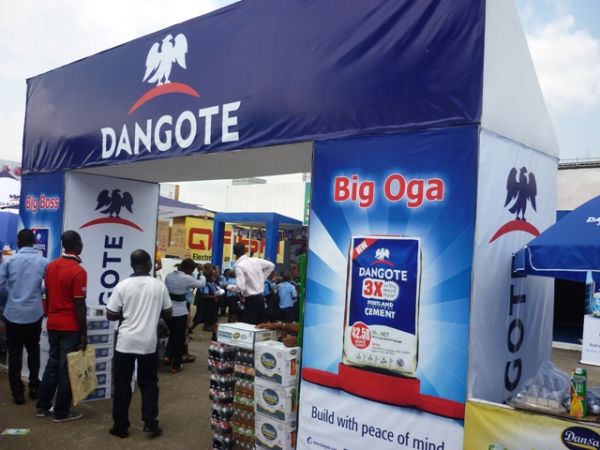
Dangote Gets IT Firm to Streamline Workflow Management
The largest indigenous industrial conglomerate in Sub Saharan Africa, Dangote Group, has deployed Freshservice by Freshworks, its cloud-based service desk software that helps modernize the IT teams along with other business functions. Integration of Freshservice offers a host of ITIL-aligned features, workflow automation, and powerful analytics, all accessible through a clean and intuitive interface.
The Dangote Group is the leading provider of essential needs in food and shelter in Sub-Saharan Africa with sustained market leadership in cement manufacturing, sugar milling, sugar refining, flour milling, operation of cement terminals, port operations, packaging material production, and salt refining.
The integration with Freshservice allows over 150 IT support agents, to streamline workflow management for over 10,000 + employees across its 19 subsidiaries, enabling them to seamlessly work across geographies.
The integration is supported by AI-powered self-service, an employee-facing mobile app, that resolves IT issues swiftly with immediate ticketing of incidents and requests whenever and wherever they occur.
The IT firm is expected to help Dangote improve its operational efficiencies and effectiveness as well as streamline compliance.
It will the conglomerate have more insights into how service management team are working, map their productivity and effectiveness – letting IT support managers identify areas to focus to improve employee on-boarding and service resolution.
In addition, the IT service agents can start a remote session to troubleshoot an end-user or customer problem from within Freshservice, where the agent has context about the issue across group companies.
Previously, the Dangote Group’s traditional ITSM setup relied heavily on disparate technologies and processes.
A statement issued by Freshworks said Dangote Group implemented its services, average response time reduced from 7.5 minutes in 2017 to 5.4 minutes in 2018 — a 38% improvement in the average response time and percentage of tickets resolved on first contact nearly doubled, increasing from 9% of total tickets logged in 2017 to 16% in 2018.
Prasanna K Burri, Group CIO, the Dangote Group, said, “Rather than simply finding replacement system to our on-premise solution, we wanted to transform the way our IT teams work, with Freshservice, we knew we had an opportunity to undergo a complete transformation of our IT service management, to add more value to our business by improving productivity at all levels”
“With the changing business needs of diversified conglomerates, there is an urgent need for agile software that can effectively manage complex business requirements at scale. With Freshservice, we are able to bring operational efficiency and service reliability to transform the way teams work across 19 subsidiaries of The Dangote Group” said Saurabh Prabhuzantye, Head of Business for Middle East and Africa, Freshworks.
Technology
Meta Reaffirms Commitment to Safer, Positive Digital Experiences for Teens
By Modupe Gbadeyanka
Meta, the parent company of Facebook, Instagram and WhatsApp, has said it will not rest on its laurels in promoting safer and more positive digital experiences for teens.
The firm gave this assurance at the Nigeria Youth Safety Summit, which it co-hosted with the Federal Ministry of Youth Development at the Transcorp Hilton, Abuja.
This event brought together government officials, civil society organisations, parents, educators, creators and youth leaders to discuss digital wellbeing priorities, strengthen partnerships, and promote safer online experiences.
Meta used the opportunity to showcase its ongoing investments in youth safety through built-in protections, parental supervision tools, and digital literacy resources designed to help teens navigate the digital world safely and confidently.
At the centre of Meta’s youth safety efforts are Teen Accounts, a reimagined experience across Meta’s apps designed specifically for teenagers.
Teen Accounts include built-in protections that address parents’ concerns by promoting age-appropriate experiences, limiting unwanted contact, and encouraging healthier digital habits.
Teen Accounts are turned on automatically for all teens, with built-in protections including private accounts, the strictest messaging settings, sensitive content restrictions, limited interactions (tagging/mentions only from people they follow), time limit reminders after 60 minutes each day, and sleep mode between 10 pm and 7 am. Teens under 16 need a parent’s permission to change any of these settings to be less strict.
“At Meta, our goal is to provide teens with safe, age-appropriate online experiences, and events like the Nigeria Youth Safety Summit reflect our commitment to promoting safer and more positive digital experiences for teens.
“With products such as Teen Accounts, Meta is putting the right protections in place so teens can explore their interests and express their creativity in a safe, age-appropriate space.
“We will continue to build the safety features and tools that families need to support young people online,” the Head of Safety Police for EMEA at Meta, Sylvia Musalagani, stated.
“Child online safety is one of our central pillars, and we are steadfast in our mandate to safeguard the Nigerian child from technology-enabled violence. Children cannot navigate the complexities of the online world without informed adults guiding them because safety begins with the parents.
“Safety is a shared tripartite responsibility between parents, technological industries, and government. That is the fundamental premise of today’s summit, a hands-on walk-through of parental supervision tools and Teen Accounts.
“We appreciate Meta for the collaboration and for creating a platform for these important conversations,” the Minister of Women Affairs and Social Development, Ms Imaan Sulaiman-Ibrahim, said.
Also commenting, the Minister of Youth Development, Mr Ayodele Olawande, said, “We believe that keeping young people safe online is a shared responsibility. Government, technology companies, schools, parents, social organisations, community groups, and young people themselves all have a role to play. We encourage Meta to make the tools, guides, and learning materials from this initiative more widely available so that young people across Nigeria can continue to benefit from this laudable summit.”
It was learned that through keynote presentations, the Parents Learn & Brunch session held in partnership with the Federal Ministry of Women Affairs and Social Development, and panel discussions featuring parent creators and parents, participants explored practical approaches to supporting safer online engagement.
The summit also reinforced the importance of multi-stakeholder collaboration in advancing digital wellbeing and online safety for young people.
Technology
9 African Firms, Others for 2026 AWS Social Entrepreneur Accelerator Cohort
By Modupe Gbadeyanka
Nine African organisations, including Nigeria, will join 33 others from the USA, Australia, India, the UK and others for the fourth Social Entrepreneur Accelerator cohort of Amazon Web Services (AWS).
The companies from Africa chosen for the 2026 edition of this programme are from Nigeria, Kenya, Ghana, South Africa, Cameroon and Tanzania.
These founders are using cloud and AI technology to solve skills shortages, youth unemployment and food security. Building from the ground up, they are creating African solutions for African challenges.
Nigeria leads the selection with three organisations, namely Sabi Scholar, Kayode Alabi Leadership and Wetech Incorporated.
The chief executive of Sabi Scholar, Mr Divine Iloh, said he is creating an “operating system” for African higher education, enabling any university to launch online degrees in 30 days, a potential game-changer for the continent’s 200M+ youth population.
For Kayode Alabi Leadership, the founder, Hammed Kayode Alabi, is reducing inequalities by empowering underserved young people to lead and innovate through transformative education and technology-driven solutions to solve local challenges and thrive as community changemakers.
As for Wetech Incorporated, established by Gabriella Uwadiegwu, it is building Africa’s largest pipeline of women in technology, from training to mentorship to direct employment pathways.
Kenya follows with two organisations, KuzeKuze and STEM Centre Africa. According to the CTO of KuzeKuze, Enock Sangaka Mong’are, the organisation is building “education passports,” as digital records that follow learners throughout their lives, making personalised education measurable and scalable.
While STEM Centre Africa, a non-profit launched in 2017 by two brothers, Dancun, the CTO and Denish Akoum, the CEO, to promote hands-on STEM education, including coding, robotics and 3D design, reaching over 18,000 + students since inception, with 90 per cent gaining proficiency in Python, Scratch and electronics. Operating two centres in Homa Bay County with 10 organisational partners, SCA aims to reach 100,000 learners by 2030.
The remaining four spots are shared by Ghana, South Africa, Cameroon and Tanzania.
In Ghana, BASICS International, founded by CEO Patricia Wilkins, is breaking cycles of poverty by providing education, certified digital skills training and holistic support to underserved children and youth, equipping them to thrive academically, economically and socially.
For South Africa, FunHouse Digital, founded by Ayabulela Yokwana, is turning gaming lounges into self-sustaining education hubs in rural communities – profits from gaming directly fund free coding and digital literacy programs.
In Cameroon, EduCloud, founded by Rosius Ndimofor Ateh, delivers hands-on Cloud and AI workshops across Africa, bridging the gap between academic theory and industry-ready skills.
From Tanzania is Fiqra Academy, founded by CEO Gerald Revocatus. The firm is creating a direct pipeline from digital skills training to employment for East African youth, with certifications that lead to real careers through their digital learning platform.
In collaboration with Deloitte, the accelerator provides technical training, strategic business planning, and ongoing AWS and Deloitte support to help mission-driven organisations scale.
Since 2023, the programme has supported more than 100 social entrepreneurs across 34 countries, bringing together a global community of social entrepreneurs who are working to address some of the world’s most urgent challenges across education, health and climate resilience.
“Africa’s representation in this cohort reflects what we’re seeing across the continent: a generation of founders who don’t wait for conditions to be perfect. They build anyway.
“Our role is to ensure they have access to the same world-class cloud and AI technology as any startup in Silicon Valley and the support to scale impact across borders,” the General Manager for Sub-Saharan Africa at AWS, Jyoti Ball, stated.
Technology
Telco Ownership Changes Above 10% Now Subject to NCC Approval
By Adedapo Adesanya
The Nigerian Communications Commission (NCC) and the Corporate Affairs Commission (CAC) have introduced a new regulatory requirement mandating prior approval for significant changes in the ownership structure of telecommunications companies operating in Nigeria.
This was contained in a statement jointly signed by the Director of Public Affairs at the NCC, Mrs Nnenna Ukoha and Head of Public Affairs at the Corporate Affairs Commission, Mr Rasheed Mahe.
According to a joint press release issued by the two agencies, the directive, which takes immediate effect, requires all licensed telecom operators seeking to transfer ownership or control of shares amounting to 10 per cent or more of their total share capital to first obtain a Letter of No Objection from the NCC before such transactions can be registered by the CAC.
The statement reads in part, “The directive, which takes immediate effect, requires all licensed communications companies seeking to transfer ownership or control of shares amounting to 10 per cent or more of their total share capital to obtain a Letter of No Objection from the NCC before such transactions can be registered with the CAC.
“The requirement is in line with the provisions of Section 90 of the Nigerian Communications Act 2003, Regulation 28(2) of the Competition Practices Regulations 2007, and Regulation 42 of the Licensing Regulations 2019, which empower the NCC to monitor transactions involving licensees and ensure fair competition within the sector.
“Under the new arrangement, the CAC will only process and register requests for changes in shareholding structures of telecommunications companies where the transaction involves 10 per cent or more of the company’s shares and is accompanied by evidence of prior approval from the NCC.
“According to the two regulatory agencies, the measure is aimed at strengthening oversight of significant ownership changes, preventing anti-competitive practices, and preserving a fair and competitive communications market. It is also expected to enhance transparency, boost investor confidence, provide greater regulatory certainty, and support the long-term stability and sustainability of Nigeria’s telecommunications industry.
The NCC and CAC reaffirmed their commitment to fostering a transparent, stable, and investor-friendly business environment. Both agencies pledged continued collaboration to promote fair market practices, strengthen regulatory compliance, and ensure the orderly development of Nigeria’s communications sector.”
-
Feature/OPED6 years agoDavos was Different this year
-
Travel/Tourism10 years ago
Lagos Seals Western Lodge Hotel In Ikorodu
-
Showbiz3 years agoEstranged Lover Releases Videos of Empress Njamah Bathing
-
Banking8 years agoSort Codes of GTBank Branches in Nigeria
-
Economy3 years agoSubsidy Removal: CNG at N130 Per Litre Cheaper Than Petrol—IPMAN
-
Banking3 years agoSort Codes of UBA Branches in Nigeria
-
Banking3 years agoFirst Bank Announces Planned Downtime
-
Sports3 years agoHighest Paid Nigerian Footballer – How Much Do Nigerian Footballers Earn