
Technology
Digital Wellness 101: Taking Control of Your Life Online

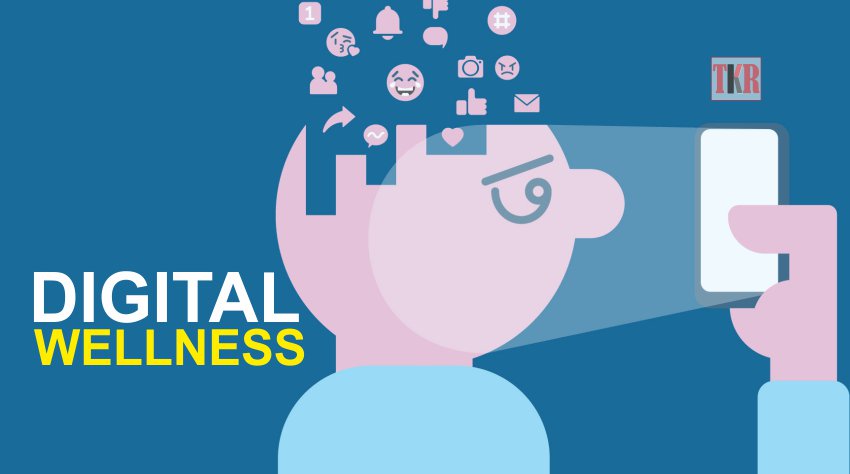
Most people use all the advantages that modern technologies offer. Technology is constantly changing and evolving, allowing us to witness incredible advances in security, safety, transportation, business, architecture, education, medicine, healthcare, communications, etc.
Technology is the answer to the problems facing the modern world these days, but it always comes with some risks. While you have a lot of freedom to learn, connect with others, and find affordable entertainment online, you are also a target for cybercriminals.
With that in mind, let’s look at some of the ways you can take control of your online life.
Leading a digital life can leave certain consequences on a person
While the internet made the world more connected than ever before, it has also made people feel under pressure, depressed, stressed, anxious, fatigued, and simply overwhelmed by constantly dealing with loads of information.
Whether you’re studying, working, just checking your device, browsing websites, or spending time on social media, you’re either experiencing pressure from being constantly connected or dealing with other risks, such as cybersecurity threats. Thankfully, there are certain things you can do to take control of your life online and usher in a new era of digital wellness for yourself.
Social media and you
While social media can do so many great things for you, it can also negatively impact your life, mood, and wellbeing. It can become as addictive as alcohol or tobacco.
Even though your favorite social media platforms allow you to connect with your peers and express your thoughts on various subjects, they can also be mentally challenging, exhausting, even depressing.
Too much social media can cause various mood disorders, including anxiety, stress, and depression. It can cause loneliness and feelings of low self-worth, even self-loathing. Fortunately, you can reduce compulsive behaviors and negative emotions associated with social media use by taking control of your social media life online:
- Set clear goals and intentions on what you want from social media.
- Limit the time you spend online each day.
- If someone or something makes you feel bad about yourself, eliminate it from your online life.
- Don’t believe everything you read on social media and ask yourself if the stories you read there can make your life better in any way.
- Instead of judging someone online, try to find the morale of the other person’s life choices.
- Don’t compete or compare yourself to others because social media isn’t a competition; it’s just entertainment.
Try to shift your online focus on the things that you find interesting and that make you feel happy and good about yourself instead of absorbing all the negative aspects of everything around you.
Online dating and you
Online dating websites took the world by storm, gathering billions of people from every corner of the planet. While these sites and apps can help people find serious relationships, friends, and everything in between, they can also put them at risk in terms of privacy and safety. Many users also seek seksiä on these platforms, hoping to connect with others on a deeper, more intimate level. However, it’s important to approach such encounters responsibly and respectfully to ensure positive experiences.
Online dating scams are on the rise, and hackers are constantly coming up with innovative ways to get their hands on your personal information and financial details.
Online dating can endanger your safety, expose you to fraud, put you at risk of ransomware or photo or video blackmail, phishing attacks, and identity theft, among many other things.
If you’re looking for a date online, keep the following things in mind:
- Avoid oversharing your personal information online.
- Do some research on the common red flags in online dating.
- Check your date on social media and Google before you meet in person.
- Meet in public spaces only and let everyone know where you’re going.
- Only use strong passwords and create a different username and password for your online accounts.
Learn how to protect yourself from cyber threats
There are countless forms of cyber threats on the internet, and they are constantly evolving just as the internet is. However, there is also an array of things you can do to avoid these threats, such as:
- Do not reveal too much information about yourself. For instance, you might enjoy posting about your life on social media. However, there are certain things that you should keep private. Never share your location in real time as it could allow vicious individuals to take advantage of this information.
- Always use antivirus software and make sure your device is up to date with the latest safety and security updates. After all, vulnerabilities could allow attackers to compromise your device, steal data, or infect you with malware.
- Protect your IP address by using a VPN or a proxy. While proxies can offer a certain level of protection online, VPNs are more effective when it comes to hiding your IP and masking your physical location. An Atlas VPN app is an excellent option for adding another layer of protection to your online traffic and keeping your browsing activities to yourself.
All it takes is a bit of planning and some simple tools to stay safe online, so don’t neglect your cybersecurity.
Conclusion
It isn’t that hard to stay safe online, but it does require a certain amount of knowledge about how the internet works and the proper cybersecurity protocols. If you stick to these tips and do some research on your own on how to keep your data and identity safe online, you won’t have to worry about your digital wellness ever again.



By Adedapo Adesanya
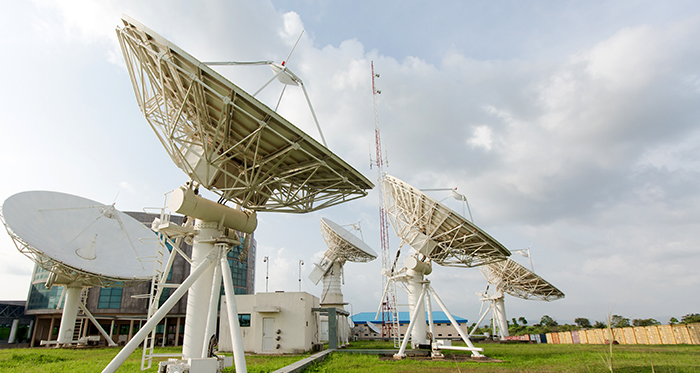
Nigeria has set 2028 and 2029 as the timeline for the deployment of its new satellites, NIGCOMSAT-2A and 2B, respectively.
The Managing Director of NIGCOMSAT, which is Nigerian Communications Satellite Limited and the premier satellite operator in Nigeria, Mrs Jane Nkechi Egerton-Idehen, disclosed this at the second Nigerian Satellite Week in Abuja on Monday. She noted that the development is expected to boost military intelligence, surveillance, and regional connectivity.
“For 2A and 2B, we have started the process. We have closed the tender and are now back into the financing and implementation stage. 2A is built to come up in 2028, and 2B for 2029.
“When they are up and running, they are expected to provide security within the borders and neighbouring countries. They will support the security agencies because data collection and intelligence in real time is important. Satellites like communication satellites allow that, irrespective of where they are,” she said.
In his remarks, the Minister of Communications and Digital Economy, Mr Bosun Tijani, said the satellites form part of the nation’s strategy to strengthen digital infrastructure.
Mr Tijani explained that the satellites will complement ongoing investments in 90,000 kilometres of fibre-optic cable and nearly 4,000 telecom towers, which are being rolled out nationwide and extended to neighbouring countries, including Cameroon, Niger, Chad, Burkina Faso, and the Republic of Benin.
He stressed that satellite technology is critical for national development, affecting education, agriculture, business, and emergency response.
“The president’s approval of NIGCOMSAT-2A and 2B demonstrates a clear commitment to building the future. These satellites will enhance security, connect remote communities, and extend our fibre-optic network into neighbouring countries,” he said.
“Some of these neighbouring countries pay up to ten times more for internet capacity than Lagos. Extending our fibre network will not only improve connectivity but also enhance border security and regional collaboration.
“Satellite technology affects everything, from how a child in a rural community accesses the internet to how farmers make critical decisions and how businesses operate across distance,” the Minister said.
Also speaking, the Chief of Army Staff (COAS), Lieutenant General Waidi Shaibu, welcomed the development, saying the military will leverage the satellites for operational efficiency.
“The Nigerian Army will continue to use space assets to improve intelligence gathering, surveillance, and operational coordination across all theatres of operation,” he said at the event, represented by Major General Kennedy Osemwegie, Commander of the Nigerian Army Cyber Warfare Command (NACWC).


By Modupe Gbadeyanka
A partnership to advance digital payments and financial inclusion across East Africa has been strengthened between Interswitch and KCB Group.
Both parties have agreed to expand digital payment infrastructure and deliver innovative financial solutions that meet the evolving needs of individuals, businesses, and institutions across the region.
The aim is to accelerate seamless, secure, and inclusive digital payments in East Africa, where the leading Africa-focused integrated payments and digital commerce enabler, Interswitch, recently announced an expansion of Verve card acceptance footprint, leveraging its consolidated partnership with KCB Group, Kenya’s largest financial services group by assets, following a similar move in Uganda through the local KCB Franchise in February 2022.
During a recent executive engagement at KCB Group headquarters in Nairobi, the chief executive of Interswitch, Mr Mitchell Elegbe, held high-level discussions with KCB leadership, including its chief executive, Paul Russo.
At the core of the strengthened collaboration is the integration of Interswitch’s robust payment rails, card scheme, and emerging digital token solutions with KCB Group’s expansive regional footprint and trusted banking franchise.
This integration enables the acceptance of Verve cards and tokenised payment solutions across KCB’s extensive merchant point-of-sale network in Kenya and Uganda, significantly enhancing everyday usability for customers while strengthening KCB’s digitally driven retail payments offering.
The consolidated partnership is expected to drive increased merchant acquisition, improve interoperability across payment ecosystems, and expand access to secure, cashless transactions. It also reinforces both organisations’ shared objective of deepening financial inclusion and accelerating digital commerce across East Africa.
“Our collaboration with KCB Group represents a powerful alignment of vision and capability. By combining our technology-driven payment solutions with KCB’s strong regional presence, we are unlocking new opportunities to scale access, drive innovation, and deliver greater value to customers across East Africa,” Mr Elegbe stated.

By Adedapo Adesanya
The Nigerian Communications Commission (NCC) has directed Mobile Network Operators (MNOs) to provide compensation to subscribers whose network quality of service experience is below specified targets within specific locations.
In a Sunday statement, the commission noted that its position is that customers should not be made to bear the full burden of service disruptions where operators fail to meet prescribed standards of service delivery.
Under this directive, NCC said erring operators would compensate affected users directly for breaches of Quality of Service (QoS) Key Performance Indicators (KPIs).
Mobile Network Operators (MNOs) will be required to pay these compensations for instances of poor quality of service recorded within specified time frames.
“The compensation will be provided in the form of airtime credits, calculated based on subscribers’ average spending patterns and their presence within Local Government Areas where service failures occur”, according to the statement.
The directive is rooted in the agency’s broader regulatory philosophy that places the consumer at the centre of Nigeria’s telecommunications ecosystem.
“Telecommunications services today underpin economic activity, social interaction, and access to digital opportunities. When service quality is poor, the consequences affect productivity, commercial activities, and even public confidence in our communications system.
“While regulatory fines have traditionally served as a deterrent against poor service delivery, the Commission is adopting a more consumer-focused approach that strengthens accountability within the industry”.
The commission explained that it has designed this measure to complement existing and ongoing efforts to strengthen service quality monitoring and enforce performance standards.
Further to this directive by the commission to MNOs on compensation to consumers, the regulator has mandated Tower Companies that own the critical infrastructure, such as masts, for Quality of Service delivery, to invest in infrastructure with measurable outcomes using sums that it has fined these companies, in addition to other financial fines the Commission will deem appropriate.
“The commission will continue to reinforce the obligation of operators to invest consistently in network resilience, capacity expansion, and infrastructure upgrades to meet the growing demand for telecommunications services.
“At the same time, it will deploy regulatory tools that promote fairness, transparency, and accountability across the sector, ensuring that every subscriber receives the quality of service they deserve while sustaining a telecommunications industry capable of powering Nigeria’s digital future”, the statement added.
-
 Feature/OPED6 years ago
Davos was Different this year
-
Travel/Tourism10 years ago
Lagos Seals Western Lodge Hotel In Ikorodu
-

 Showbiz3 years ago
Estranged Lover Releases Videos of Empress Njamah Bathing
-
 Banking8 years ago
Sort Codes of GTBank Branches in Nigeria
-

 Economy3 years ago
Subsidy Removal: CNG at N130 Per Litre Cheaper Than Petrol—IPMAN
-

 Banking3 years ago
Sort Codes of UBA Branches in Nigeria
-

 Banking3 years ago
First Bank Announces Planned Downtime
-

 Sports3 years ago
Highest Paid Nigerian Footballer – How Much Do Nigerian Footballers Earn
1 Comment