Technology
Entries Open for 2026 Google for Startups Accelerator Africa
By Aduragbemi Omiyale
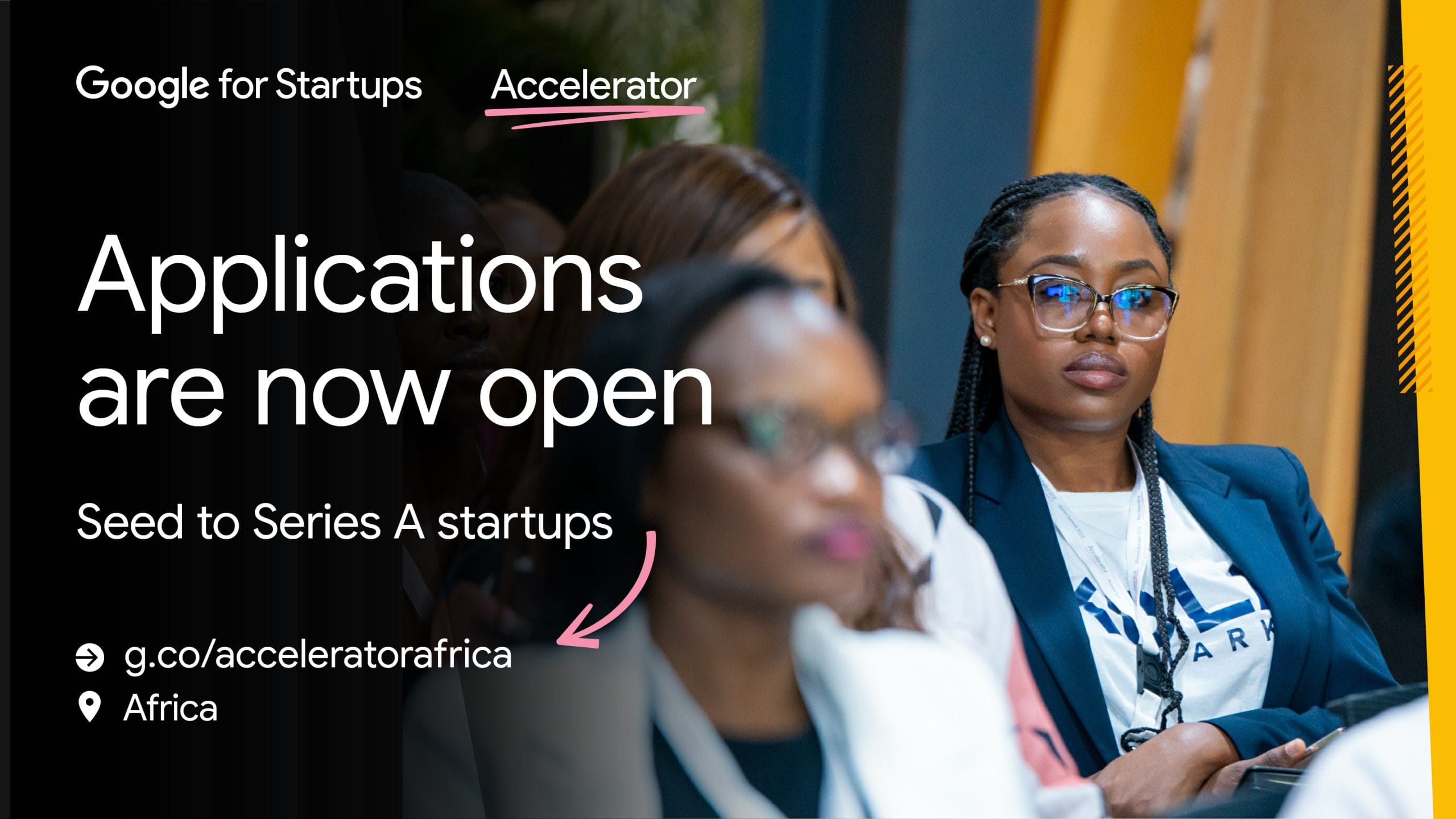
Applications for a 12-week AI First hybrid programme, designed for Series A startups based in Africa or building Africa-centric solutions with AI and machine learning, have opened at g.co/acceleratorafrica.
This is an initiative of Google and it reenforces the tech giant’s commitment to accelerating AI-driven scientific and technological breakthroughs across the continent.
The programme, known as the Google for Startups Accelerator Africa, is in its 10th edition in 2026 and it is targeted as AI-driven scientific breakthroughs.
Entries for the cohort began today, Thursday, February 5, 2026, and will close on Wednesday, March 18, 2026, with the hybrid programme starting in April 2026 for 12 weeks.
A statement from the organisers disclosed that participants will benefit from access to Google’s AI expertise and technical resources, alongside mentorship from seasoned AI professionals and invaluable networking opportunities.
Since its inception in 2018, the Google for Startups Accelerator: Africa program has supported 180+ startups from 17 African countries. Collectively, these startups have raised over $350 million in funding and created more than 3,700 direct job opportunities in the region.
“Africa’s tech landscape is seeing a vibrant shift toward deep-tech innovation. For Class 10, we are focusing on the potential of AI to drive health and societal benefits, providing the infrastructure and expertise to turn these startups into the research labs of the continent,” the Head of Startup Ecosystem for Africa, Folarin Aiyegbusi.
Technology
WhatsApp Introduces Username Feature, Ends Need to Share Phone Numbers
By Adedapo Adesanya
WhatsApp will allow global users to select a username for their account, letting people connect on the platform without having to share their phone number.
WhatsApp, which is owned by Meta Platforms Incorporated, said people can now start reserving a unique username, which should be operational later this year.
WhatsApp, which normally works with phone numbers, is introducing this new feature to allow for some level of privacy when it comes to sharing phone numbers.
Usernames will be launching later this year, in a move to make the communications platform “even more private,” allowing users to keep their phone number concealed from people who are not already in their contacts.
The username launch will be rolling out gradually over the coming months, and users will be notified when the feature is available in their country.
“With over three billion people on WhatsApp, a lot of names overlap, which is why we’re opening reservations early so everyone has the opportunity to select the username that matters to them,” WhatsApp said in its announcement on Monday.
Users can reserve their username by heading to Settings > Account > Username in the latest version of WhatsApp.
Individuals and organisations will have the option to claim their existing Instagram or Facebook handles to help prevent WhatsApp impersonators.
It was reported that usernames for famous figures like celebrities and politicians have already been reserved to prevent them from being claimed. This means that if a person shares a name with a recognised public figure, they will have to create an alternative handle.
To avoid any issues, users can’t browse for people using their usernames, so they will need to know the exact username of a new contact before they can reach out to them.
Business Post understands that if a user already shared their phone number with WhatsApp contacts or group chats, the number will still be visible to them after they’ve enabled the username feature, so these privacy protections only apply to new conversations going forward.
WhatsApp is also introducing an “optional username key” that others will need to know before they can send a message. This is to help users control who can reach them with a WhatsApp username if it’s made public without their consent.
Technology
NCC Dangles Presidential Waivers Before Phone Manufacturers
By Modupe Gbadeyanka
Any phone manufacturer that builds a factory in Nigeria has been promised unprecedented policy incentives and executive alignment by the Nigerian Communications Commission (NCC).
The chairman of the industry’s regulatory agency, Mr Idris Olorunnimbe, made this pledge at the unveiling of the commission’s strategic blueprint aimed to drive domestic manufacturing of smartphones, tablets, and routing equipment.
He stated that some of the incentives to be enjoyed include specialised customs protocols and manufacturing tax holidays, to lower retail device costs for citizens.
According to him, the NCC is moving beyond mere market regulation to actively co-authoring an industrial renaissance with willing investors, highlighting the fundamental link between strong market regulations and consumer affordability.
“Regulation and market integrity are what make a market affordable in the first place. They are the precondition for it. A phone is only truly cheap if it is real, if it is safe, if it connects properly, and if it carries a warranty the buyer can rely on,” he declared.
Mr Olorunnimbe noted that the goal is to shatter the old paradigm that forces citizens to save up for months just to buy basic technology, urging the industry to “retire the assumption that a Nigerian must buy a phone outright, in one payment, on the day. That is not how it works anywhere else in the world.”
The commission’s intervention is expected to address a critical bottleneck in Nigeria’s otherwise booming telecom sector. While aggressive network expansion driven by the executive team has successfully placed coverage within the geographical reach of most citizens, the high upfront cost of compatible entry-level smartphones remains a persistent roadblock.
Central to this industrial masterplan is the integration of the hardware rollout with the NCC’s ongoing project to zero-rate educational websites across the federation. By removing data costs from educational content, the NCC is building a digital ecosystem where learning is universally accessible.
To maximise the impact of this framework, the regulator is advocating locally manufactured MiFi devices, routers, and smartphones to feature embedded, un-deletable shortcuts to national education repositories and open-source vocational training portals. This turns every locally produced device into an immediate, out-of-the-box digital classroom.
Technology
Meta Reaffirms Commitment to Safer, Positive Digital Experiences for Teens
By Modupe Gbadeyanka
Meta, the parent company of Facebook, Instagram and WhatsApp, has said it will not rest on its laurels in promoting safer and more positive digital experiences for teens.
The firm gave this assurance at the Nigeria Youth Safety Summit, which it co-hosted with the Federal Ministry of Youth Development at the Transcorp Hilton, Abuja.
This event brought together government officials, civil society organisations, parents, educators, creators and youth leaders to discuss digital wellbeing priorities, strengthen partnerships, and promote safer online experiences.
Meta used the opportunity to showcase its ongoing investments in youth safety through built-in protections, parental supervision tools, and digital literacy resources designed to help teens navigate the digital world safely and confidently.
At the centre of Meta’s youth safety efforts are Teen Accounts, a reimagined experience across Meta’s apps designed specifically for teenagers.
Teen Accounts include built-in protections that address parents’ concerns by promoting age-appropriate experiences, limiting unwanted contact, and encouraging healthier digital habits.
Teen Accounts are turned on automatically for all teens, with built-in protections including private accounts, the strictest messaging settings, sensitive content restrictions, limited interactions (tagging/mentions only from people they follow), time limit reminders after 60 minutes each day, and sleep mode between 10 pm and 7 am. Teens under 16 need a parent’s permission to change any of these settings to be less strict.
“At Meta, our goal is to provide teens with safe, age-appropriate online experiences, and events like the Nigeria Youth Safety Summit reflect our commitment to promoting safer and more positive digital experiences for teens.
“With products such as Teen Accounts, Meta is putting the right protections in place so teens can explore their interests and express their creativity in a safe, age-appropriate space.
“We will continue to build the safety features and tools that families need to support young people online,” the Head of Safety Police for EMEA at Meta, Sylvia Musalagani, stated.
“Child online safety is one of our central pillars, and we are steadfast in our mandate to safeguard the Nigerian child from technology-enabled violence. Children cannot navigate the complexities of the online world without informed adults guiding them because safety begins with the parents.
“Safety is a shared tripartite responsibility between parents, technological industries, and government. That is the fundamental premise of today’s summit, a hands-on walk-through of parental supervision tools and Teen Accounts.
“We appreciate Meta for the collaboration and for creating a platform for these important conversations,” the Minister of Women Affairs and Social Development, Ms Imaan Sulaiman-Ibrahim, said.
Also commenting, the Minister of Youth Development, Mr Ayodele Olawande, said, “We believe that keeping young people safe online is a shared responsibility. Government, technology companies, schools, parents, social organisations, community groups, and young people themselves all have a role to play. We encourage Meta to make the tools, guides, and learning materials from this initiative more widely available so that young people across Nigeria can continue to benefit from this laudable summit.”
It was learned that through keynote presentations, the Parents Learn & Brunch session held in partnership with the Federal Ministry of Women Affairs and Social Development, and panel discussions featuring parent creators and parents, participants explored practical approaches to supporting safer online engagement.
The summit also reinforced the importance of multi-stakeholder collaboration in advancing digital wellbeing and online safety for young people.
-
Feature/OPED6 years agoDavos was Different this year
-
Travel/Tourism10 years ago
Lagos Seals Western Lodge Hotel In Ikorodu
-
Showbiz3 years agoEstranged Lover Releases Videos of Empress Njamah Bathing
-
Banking8 years agoSort Codes of GTBank Branches in Nigeria
-
Economy3 years agoSubsidy Removal: CNG at N130 Per Litre Cheaper Than Petrol—IPMAN
-
Banking3 years agoSort Codes of UBA Branches in Nigeria
-
Banking3 years agoFirst Bank Announces Planned Downtime
-
Sports3 years agoHighest Paid Nigerian Footballer – How Much Do Nigerian Footballers Earn


Pingback: Entries Open for 2026 Google for Startups Accelerator Africa – Herald Today