Technology
Google Unveils New Agentic AI, Infrastructure Investments
By Modupe Gbadeyanka
Five major new initiatives focused on bridging the digital divide, expanding subsea connectivity, and positioning Africa to lead in the Agentic Era of Artificial Intelligence (AI) have been unveiled by Google.
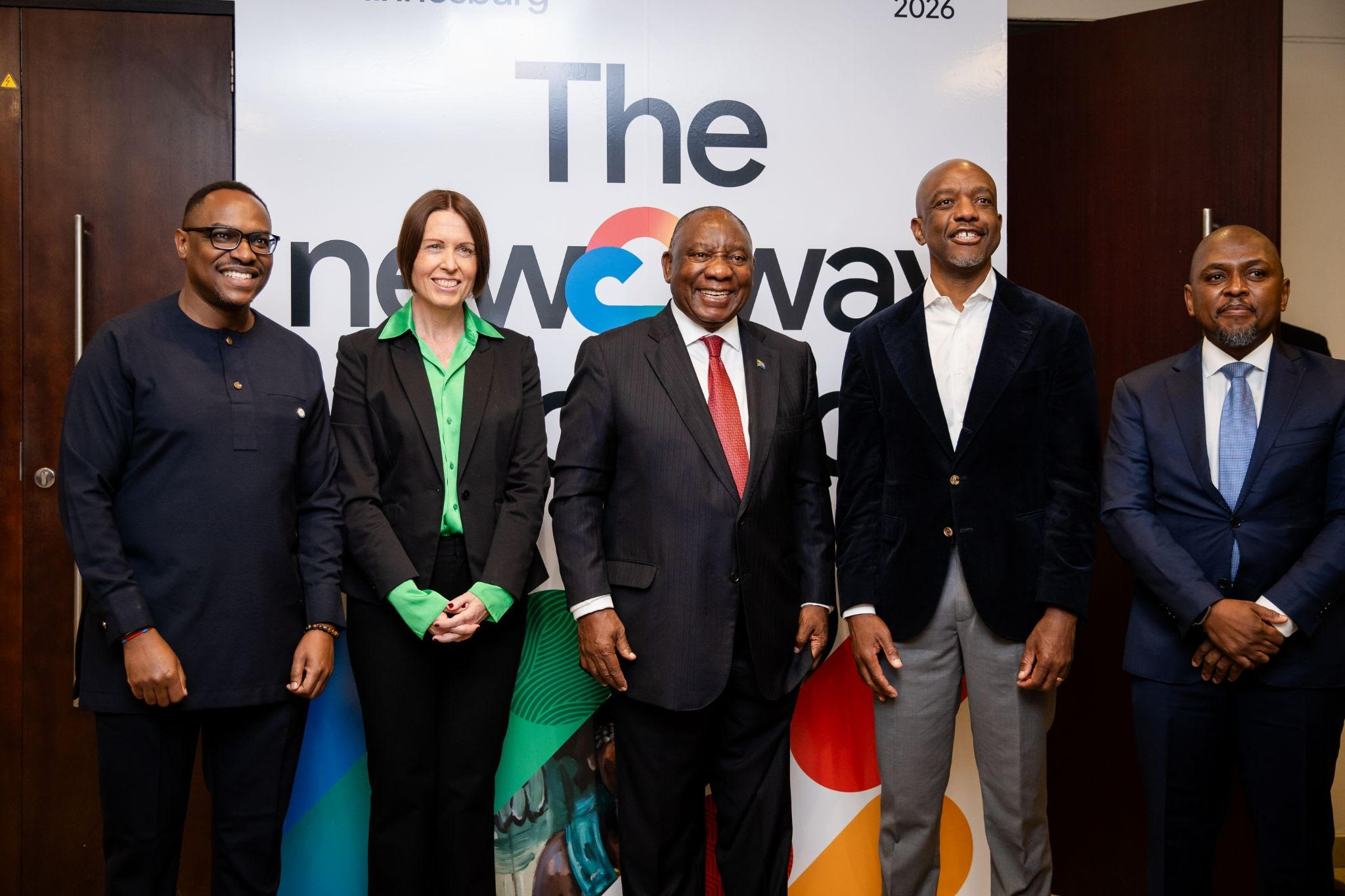
These initiatives were introduced by the firm at its inaugural Cloud Summit in Africa at the Sandton Convention Centre in South Africa.
The event, which was opened by South African President Cyril Ramaphosa, was attended by about 3,000 business leaders, developers, public sector leaders, and partners.
Anchored by the central theme, Building for Africa with Google Cloud, the summit builds upon Google’s 2025 launch of its Johannesburg Cloud Region.
“By building robust infrastructure to harness this technology, we are doing more than modernising our economy; we are taking a quantum leap into the future,” Mr Ramaphosa said.
Also speaking, Google’s Senior Vice President for Research, Labs, Technology & Society, Mr James Manyika, said, “The AI opportunity for Africa is significant, and Google is committed to doing our part working with Africans to help Africa realise it. Building on our past commitments, we’re making new investments in critical areas: infrastructure, African-led innovation, and education and skill building.”
On her part, Google Cloud’s Vice President for the UK, Ireland, and Sub-Saharan Africa, Ms Maureen Costello, said, “African enterprises have moved decisively past the initial phases of AI experimentation. Powered by our Johannesburg Cloud Region, which is estimated to contribute $90.6 billion in additional gross economic output and support 314,900 jobs by 2030, leading organisations like Vodacom, Discovery, Pepkor, and Naspers are establishing the essential framework to build and deploy autonomous agents that solve uniquely African challenges in real-world environments.”
It was gathered that the five new initiatives build on Google’s existing $1 billion investment commitment, its recent $37 million AI skills and research funding, and the launch of the AI Community Centre in Accra last year to advance AI in Africa.
Google announced a new connectivity hub (Digital Exchange Port) located in the Eastern Cape, South Africa. It will anchor the country as a strategic international switching point, directly connecting the continent to Australia via the Umoja subsea cable, as well as a new subsea route to India, to support African internet connectivity.
In Ghana, Google AI Futures Fund, Google Research, and leading VC partners are launching Africa’s first applied AI lab. The Google Africa Applied AI Lab pairs African founders with Google researchers and provides early access to Google’s latest AI models. Based at the Accra AI Community Centre (AICC), the Lab supports founders from across the continent in using the latest AI research to address real-world, uniquely African challenges across work, knowledge, creativity, entertainment, and software development – and, in turn, helps support Africa’s first generation of AI-native unicorn startups. Applications are open now and will close on August 31, 2026.
Google is partnering with The Akuna Group to empower underrepresented creators in Africa. Backed by more than $1 million in Google.org funding, the program delivers AI creative education alongside advanced digital tools. The program’s goal is to equip African creators to tell locally rooted stories in new ways and forge professional advancement pathways.
To ensure the next generation is equipped to lead in the AI era, Google’s Economic and Community Development programme and WeThinkCode have committed to building a R3 million digital innovation centre at the George Tabor Campus of South West Gauteng TVET College in Soweto. Once complete, the centre will serve as a scalable skills platform built to reach talent the industry usually overlooks.
On July 21, 2026, Google will open applications for the 2026 South African cohort of its Google for Startups Accelerator. The program will select 15 local startups for an AI-focused curriculum, hands-on mentorship, and non-dilutive, equity-free funding. This fulfils part of Google’s pledge to back 50 African ventures between 2024 and 2028.
Technology
Damage to Fibre Networks Carries Significant Economic Consequences—NCC
By Modupe Gbadeyanka
The Executive Vice Chairman of the Nigerian Communications Commission (NCC), Mr Aminu Maida, has reemphasised the need to protect the nation’s telecommunications infrastructure, especially fibre networks, noting that damage to fibre networks carries significant economic consequences.
Speaking virtually at the Association of Telecommunications Companies of Nigeria (ATCON) Critical Conversation Forum on Fibre-to-the-Home (FTTH) in Lagos recently, he described FTTH as a critical enabler of Nigeria’s digital future.
“FTTH is uniquely positioned to meet Nigerians' next phase of data demand. The quality of our broadband will increasingly shape the competitiveness of our businesses, the growth of our digital industry and the opportunities available to our citizens,” the NCC chief stated.
“We must uphold deployment standards. Nigeria needs fibre that is properly installed, properly documented, and properly protected,” Mr Maida further said at the event themed Fibre to the Home in Nigeria: Addressing Challenges, Strengthening Standards and Ensuring Sustainable Deployment.
During a panel discussion titled Policy, Governance and Regulatory Alignment, the Deputy Director of Strategic Business Initiatives at ipNX, Mr Segun Okuneye, highlighted the need for stronger collaboration across the telecommunications ecosystem to unlock the full potential of fibre broadband in Nigeria.
According to him, sustainable fibre deployment extends beyond technology and investment to include policy consistency, stakeholder alignment, infrastructure protection, and shared responsibility.
“Achieving universal fibre connectivity requires more than deploying infrastructure; it requires sustained collaboration between operators, regulators, government agencies and host communities.
“When policies are aligned, deployment standards are consistently enforced, and critical infrastructure is protected, we create an environment where investment thrives and more Nigerians can enjoy reliable, high-speed broadband.
“At ipNX, we remain committed to working with all stakeholders to build resilient digital infrastructure that will support Nigeria’s economic growth for generations to come.”
Earlier in his welcome address, ATCON President, Mr Tony Emoekpere, underscored the strategic importance of FTTH in achieving the country’s broadband penetration targets while calling for greater public awareness around protecting communications infrastructure.
“This forum is critical because Fibre-to-the-Home is the technology that will enable the country to achieve full broadband penetration. We all depend on communication infrastructure, and it must be protected,” he declared.
Drawing a comparison with power infrastructure in the country, he added, “If somebody comes to your neighbourhood to tamper with your transformer or power cables, everybody will come out. The same thing needs to apply for communications infrastructure. When we see people damaging fibre cables, we should raise an alarm.”
Technology
Financial Services Professionals Discuss Meeting Rising Customer Expectations
By Modupe Gbadeyanka
Thursday, July 23, 2026, provided an opportunity for financial services professionals to converge on Landmark Event Centre, Lagos, to brainstorm on ways to meet the rising customers’ expectations.
The platform used for this purpose was Core by Interswitch. It is part of the company’s broader commitment to strengthening Africa’s digital payments ecosystem by fostering collaboration, knowledge sharing and operational excellence across the financial services value chain.
At the event, participants, numbering over 400, also highlighted the growing importance of operational excellence in sustaining resilient payment infrastructure.
As digital financial services continue to expand across Africa, closer collaboration among financial institutions, fintechs and payment service providers will be essential to improving responsiveness, resolving operational challenges more effectively and delivering consistently reliable customer experiences.
The Executive Vice President for Operations and Technology at Interswitch, Mr Babafemi Ogungbamila, said the forum reflects the company’s belief that exceptional customer experiences are built not only on innovative technology but also on the expertise, collaboration and commitment of the professionals who keep payment systems running every day.
“Every successful digital transaction is powered by professionals whose work often goes unseen but is fundamental to building trust in digital payments. Core by Interswitch was created to recognise their contribution, strengthen collaboration across the industry and create opportunities for shared learning that ultimately benefit financial institutions and the customers they serve.
“As digital payments continue to evolve, investing in the people and processes that power the technology is just as important as investing in the technology itself,” Mr Ogungbamila said.
Beyond recognising the professionals whose work often goes unnoticed, the programme underscored the value of creating stronger connections across the payments ecosystem.
By creating a dedicated platform for knowledge sharing, collaboration and professional development, Core by Interswitch aims to build a more connected community of payments operations professionals equipped to respond to the evolving demands of the digital economy.
Technology
WhatsApp Introduces Web Calling, Call Transfer, QuickHD Features
By Aduragbemi Omiyale
WhatsApp has been updated with a web calling feature, allowing users to now make and receive audio and video calls, both one-on-one and group, directly from WhatsApp Web.
A notice from the Meta-owned messaging platform disclosed that this feature works without the need to download any app.
It was disclosed that this update was made to WhatsApp to make it easier for users to make calls wherever they are and on whatever device, phone or laptop.
Users will have access to features available on their other devices, including screen sharing, reactions, and a dedicated Calls tab with full call history and favourites, all from their browsers.
WhatsApp noted that calls from this feature are end-to-end encrypted, with no time limits and at no cost, as it is the same private experience they expect from the platform.
WhatsApp has also been embedded with easy call transfer, enabling the movement of an active group call from one device to another without hanging up. Users can seamlessly transfer calls to WhatsApp Web or Desktop when they arrive home to collaborate on a larger screen – or vice versa.
The platform further said it now has QuickHD, which allows for an improved video experience at the beginning of a call. With QuickHD, users can now enjoy high-definition video immediately in the very first few seconds of the call.
In addition, it has launched noise suppression to remove the background noise around callers so their voices come through clearly to the person on the other end, even in loud or busy environments. This can be managed at any time in in-call settings.
WhatsApp said these features are rolling out gradually and will be available to everyone soon, expressing its desire to make WhatsApp calling simpler to use.


Pingback: Google Unveils New Agentic AI, Infrastructure Investments - Cash Insight