
Technology
M&A Activity in Tech, Telecom to Hit $5.9b in 2018—Report


By Dipo Olowookere
According to Baker McKenzie’s Global Transaction Forecast, Mergers and Acquisitions (M&A) activity in the technology and telecommunication sectors in Africa and the Middle East will more than quadruple in 2018, from 2017.
The report, developed in association with Oxford Economics, revealed that M&A in the tech and telecoms sector in Africa and the Middle East was valued at $1.2 billion in 2017.
However, this is predicted to increase to $5.9 billion in 2018 and a further $5.9 billion in 2019, before decreasing to $3.9 billion in 2020.
The report noted that a more positive global economic outlook, the expansion of technology across industries, investment from emerging markets, and strong corporate balance sheets are the key factors in driving investment in tech M&A around the world, including in Africa.
Darryl Bernstein, Head of the Technology, Media and Telecommunications (TMT) Practice at Baker McKenzie in Johannesburg, South Africa, explained the predicted rise in tech and telecoms M&A in Africa, “Africa’s growing telecoms infrastructure and access to online services and platforms continue to improve access to the online economy. Increased local demand for innovative products, services and solutions drives offshore telecommunications and technology companies to target opportunities in Africa.
“The growing financial services sector has also seen domestic banks make significant investments in technology to advance their innovation agenda. African tech companies are also targeting offshore investments in companies that will deepen their access to new technologies, markets and talent.”
“The expansion of emerging technologies across industries, including agribusiness, automotive and of course fintech, will also drive M&A activity as we expect to see more cross-sector deals involving technology,” said Bernstein.
Globally, deal activity in the technology and telecommunications sector is also likely to accelerate. In 2018, M&A activity in the tech and telecom sector is forecast to rise significantly across all regions. North America will top the list with transactions totalling $243 billion, followed by Asia Pacific with $108.3 billion, Europe with $106 billion and Latin America with $4.9 billion.
“The rapid growth of innovation in artificial intelligence, cloud computing, cybersecurity, and big data is driving anticipated deal activity,” says Matthew Gemello, an M&A partner at Baker McKenzie based in Palo Alto.
“Hybrid sectors represent the growing convergence of traditional industries and technology as companies battle to remain competitive,” says Anne-Marie Allgrove, global chair of Baker McKenzie’s Global TMT Industry Group based in Sydney. “When you couple the rapid pace of innovation and continued push for vertical integration, it creates a recipe for increased M&A activity.”
One of the clearest market dynamics driving transactions is that businesses focused on the use of customer data need to increase the scope of their customer reach and are seeking to achieve this by buying competitors and new technologies that will attract more customer engagement.
“Top talent continues to be an important driver in technology acquisitions,” Gemello says. “We are seeing fewer pure ‘acqui-hires’ as compared to prior periods in the last 10 years, but the overarching need remains paramount from a competitive perspective.”




By Adedapo Adesanya
Google and UpSkill Universe, Sub-Saharan Africa’s leading AI and business skills training partner, have announced a major redesign of the Google Hustle Academy programme. For the first time, the free training initiative is open to everyone, not just business owners.
The new curriculum is focused on equipping individuals and entrepreneurs with practical AI skills and comes at a time when small businesses have become the engine of Africa’s economy, creating over 80 per cent of jobs on the continent. To help them grow, the Hustle Academy was launched in 2022, providing bootcamp-style training on business strategy, digital skills, AI, and leadership. The program has since trained over 18,000 SMEs, with many reporting increased revenue and job creation.
Now, as AI reshapes the job market, the program is evolving. The 2026 edition is built for anyone in Sub-Saharan Africa, including employees, students, and job seekers, who want to use AI to advance their careers. To meet the needs of a diverse audience, the new format includes short, 60-minute webinars and more immersive, high-impact bootcamps. These sessions are laser-focused on putting AI to work immediately in areas like digital commerce, marketing, and growth strategy.
Speaking about the academy, Mr Gori Yahaya, Founder & CEO of UpSkill Universe, said, “The 2026 Hustle Academy is designed to close the AI Skills gap with hands-on training that is short, focused, and immediately useful. AI is reshaping how businesses win and how careers are built, right across this continent. We’re excited to renew our partnership, now in its fifth year with Google, combining their global AI leadership with our deep regional AI expertise. The next wave of AI leaders will come from this continent. We are making sure they are ready.”
The Hustle Academy initiative has strengthened digital competitiveness across emerging African economies by enabling SMEs to move beyond AI awareness to practical implementation, positioning them for sustained growth in an increasingly AI-driven business environment.
“We believe that the future of Africa’s digital economy lies in the hands of individuals and entrepreneurs alike. Our new strategy focuses on scaling reach by training individuals in the latest AI-centred tools and techniques,” said a Google representative.
Applications for the 2026 cohort are now open. Interested participants can apply at: https://rsvp.withgoogle.com/events/hustle-academy

By Modupe Gbadeyanka
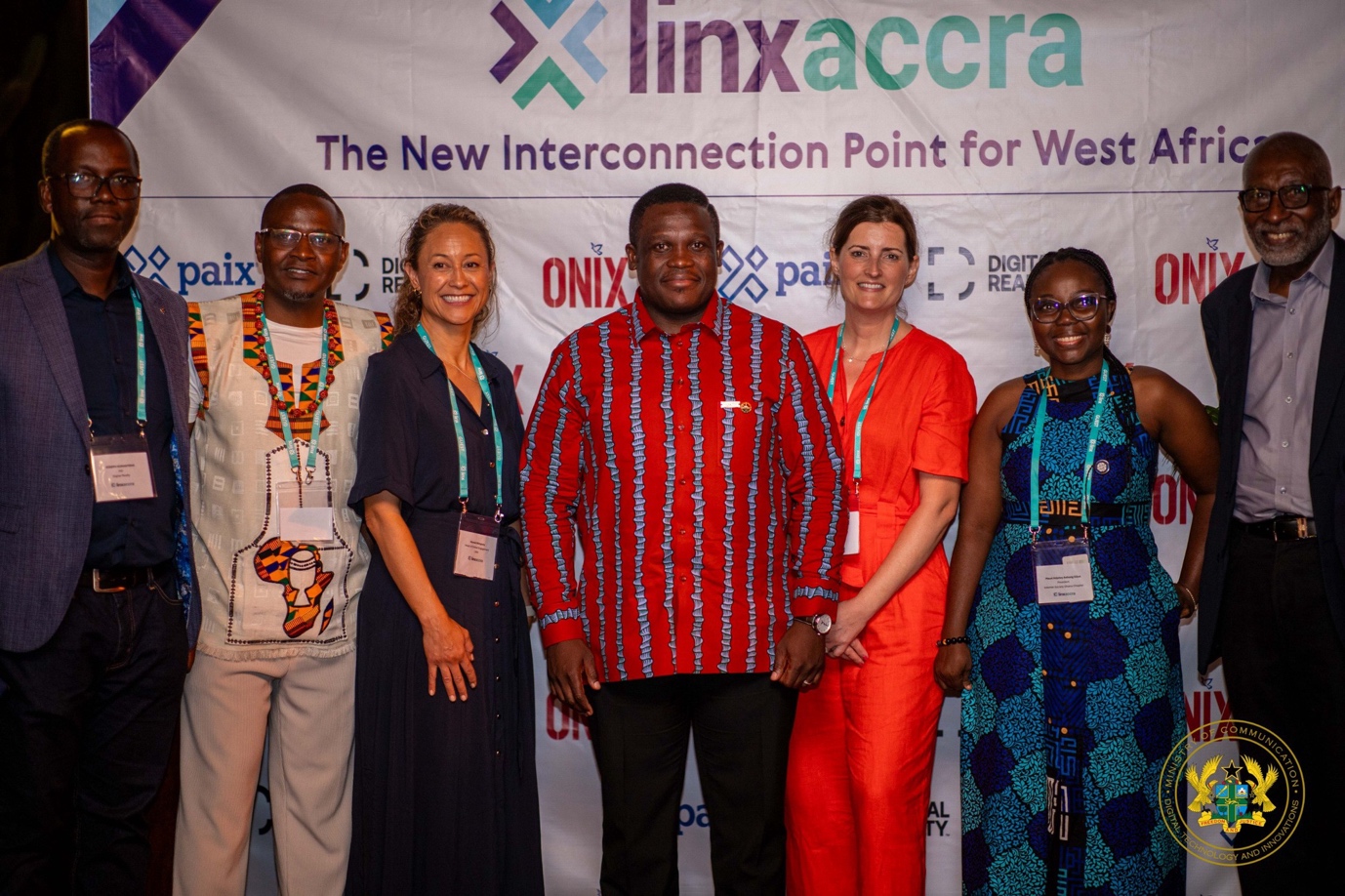
To develop the country’s internet ecosystem and build a dedicated connectivity community, the London Internet Exchange (LINX) has launched a 12-month no-charge promotion for all services at its new Ghana Internet Exchange Point, LINX Accra.
LINX Accra went live at the end of 2025, providing a regional interconnection point and a platform for networks to meet and exchange traffic, available from PAIX, Onix and the new Digital Realty data centre launched at the end of last year.
As part of its growth drive, LINX Accra aims to attract major global internet carriers and content delivery networks to keep more traffic local to Ghana, building relationships between local networks and encouraging early adoptions through promotion.
A key aspect is growing the local networking and peering community to reduce Ghana’s reliance on international routing, improve latency, and cut costs for networks and end users across the country.
“Ghana’s connectivity ecosystem is growing fast, and our goal, through the promotion, is to remove early barriers and encourage local ISPs to join and exchange traffic from the start.
“We’ve seen in other African markets that once the local community grows, global networks follow, so this is an important step for building community engagement and driving the localisation of internet traffic in Ghana and West Africa,” the Head of Existing Business for LINX, Inga Turner, said.
Ghana is one of West Africa’s fastest-growing digital markets, with over 70 per cent of the country’s 25 million people accessing the internet, and Accra is connected to six submarine cables to provide international connectivity to the country.
The market is also attracting significant data centre investment with new facilities opening every few months.
LINX has had a successful growth in Kenya, building on a similar promotion for LINX Mombasa and LINX Nairobi, which helped establish and expand the connectivity ecosystem, attracting major global networks and content providers to keep traffic local.

By Adedapo Adesanya
The federal government has announced plans to establish a national cybersecurity coordination council to strengthen Nigeria’s response to rising digital threats.
In a statement, the Federal Ministry of Communications, Innovation and Digital Economy said the council will serve as a multi-stakeholder platform to improve coordination, intelligence sharing, and collaboration between public and private institutions.
The initiative, championed by the Minister of Communications, Mr Bosun Tijani, aims to enhance Nigeria’s ability to respond to increasingly sophisticated cyber incidents affecting both private companies and public systems.
“The proposed council is envisioned as a non-statutory, multi-stakeholder coordination platform, designed to convene key actors and strengthen partnerships that support efficient coordination, trusted information sharing, and sustained cooperation among institutions responsible for advancing Nigeria’s cybersecurity posture,” the ministry said.
The council will bring together chief information security officers, cybersecurity experts, technology firms, law enforcement agencies, and relevant government institutions.
It will also provide advisory support to the federal government on strategies and frameworks needed to improve national cyber resilience.
“The approach reflects the government’s recognition that modern cyber threats demand collective defence models, trusted threat intelligence sharing, and multi-stakeholder coordination,” the ministry added.
The move follows recent cyber incidents that disrupted operations and highlighted the “increasingly coordinated and sophisticated nature of cyber threats,” signalling the urgent need for stronger national cybersecurity frameworks.
This development comes amid the rising frequency and complexity of cybercrimes, which have made cybersecurity a vital tool that countries must focus on.
Special policies around data breaches, ransomware attacks, and third-party liabilities have come to the fore. While cybersecurity has been historically underutilised in Nigeria, its critical role in mitigating the financial fallout of cybercrimes and threats has taken a new dimension with the adoption of Artificial Intelligence (AI).
Countries are leveraging AI tools to enhance threat detection, automate incident response, and analyse patterns to identify risks early. These AI-driven solutions enable quick and effective responses, improving resilience by detecting anomalies, predicting potential attacks, and mitigating threats before they escalate.
-
 Feature/OPED6 years ago
Davos was Different this year
-
Travel/Tourism10 years ago
Lagos Seals Western Lodge Hotel In Ikorodu
-

 Showbiz3 years ago
Estranged Lover Releases Videos of Empress Njamah Bathing
-
 Banking8 years ago
Sort Codes of GTBank Branches in Nigeria
-

 Economy3 years ago
Subsidy Removal: CNG at N130 Per Litre Cheaper Than Petrol—IPMAN
-

 Banking3 years ago
Sort Codes of UBA Branches in Nigeria
-

 Banking3 years ago
First Bank Announces Planned Downtime
-

 Sports3 years ago
Highest Paid Nigerian Footballer – How Much Do Nigerian Footballers Earn