Connect with us

Technology

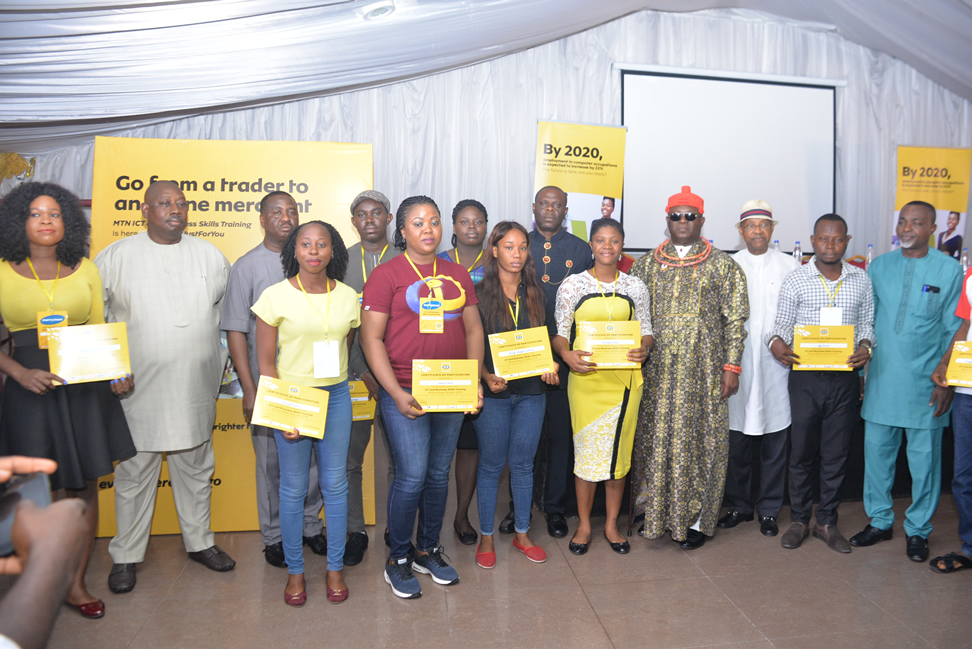
MTN Nigeria Trains 2,000 Young Entrepreneurs on ICT

Published

on

MTN ICT & Business Skills Training

By Adedapo Adesanya

The fourth phase of the MTN ICT & Business Skills Training implemented by the MTN Foundation alongside its partners, Google, Cisco and Oracle, was wrapped up neatly with a virtual closing ceremony on December 11, 2020.

The training, which was held virtually for four weeks, brought together about 2,000 participants from across five Nigerian states: Abia, Kaduna, Borno, Katsina and Akwa Ibom.

The beneficiaries were taught by seasoned facilitators on entrepreneurship, cybersecurity and deploying data and insights to grow their businesses.

Participants were divided into four groups to devise solutions to problems experienced by Nigerians. At the event, they displayed their ideation and presentation skills, proposing solutions to problems ranging from solid waste management to unemployment.

At the end of the presentation, Group Two, represented by Manasseh Jackson, was declared the winner of the group presentation.

They impressed the judges with their plan to optimise agriculture through digital marketing to reduce unemployment.

Several other participants were recognised and rewarded for their hard work including the best presenter, Aliyu Musa Dada, who represented Group Four.

The Executive Secretary, MTN Foundation, Mr Nonny Ugboma, recounting the concept and objectives of the ICT & Business Skills Training, said, “The MTN ICT and Business Skills Training is an initiative formed under the MTN Foundation’s youth development cause and it is aimed at building the capacity of young people between the ages of 18-35 years in the areas of ICT to contribute to their employability and entrepreneurial abilities.”

Also speaking to the participants of the MTN ICT and Business Skills Training at the event, the Chairman, MTN Foundation, Prince Julius Adelusi-Adeluyi, said, “To our participants, I trust that the significance of being trained by these tech giants Google, Oracle and Cisco is not lost on you, You have direct access to life-changing information and expertise.

“We ask that you stay committed to constantly sharpening your skills because this is a sure-fire way to thrive in today’s world. We at the MTN Foundation, board and management are rooting for you and wish you success.”

Within the course of the training, the participants enjoyed course-led and instructor-led sessions facilitated by MTN Foundation’s eco-system partners Google, Cisco and Oracle.

The instructor-led sessions were made possible by Slum2School. Wrapping up the closing ceremony, several participants expressed their gratitude to MTN Foundations and its partners, promising to put the training they have received to good use.


Adedapo Adesanya is a journalist, polymath, and connoisseur of everything art. When he is not writing, he has his nose buried in one of the many books or articles he has bookmarked or simply listening to good music with a bottle of beer or wine. He supports the greatest club in the world, Manchester United F.C.

Click to comment

Leave a Reply

Your email address will not be published. Required fields are marked *

Technology

NITDA Warns of Dangerous AI Malware Targeting Banks, Government Agencies

Published

on

DeepLoad

By Adedapo Adesanya

The National Information Technology Development Agency (NITDA) has warned of an active, Artificial Intelligence (AI)-powered malware named DeepLoad targeting financial institutions and government agencies

The organisation warned that the new harmful malware is targeting Nigerian government agencies, financial institutions, businesses,  and individuals.

In a tweet on its verified X handle, NITDA revealed that once the virus is executed, DeepLoad silently installs itself, harvests stored user credentials and sensitive data from browsers, evading antivirus software by leveraging AI.

NITDA further stated that upon infection, the malware can result in unauthorised access to bank accounts, mobile money services, and payment cards.

It reiterated that the malware also steals saved passwords, personal information, and documents.

It explained that these thefts enable criminals to impersonate victims for financial gains, disruption of public/private organisations’ workflow via document theft, and ultimately a threat to national security via the compromise of classified governance networks.

The agency outlined that the malware targets public and private institutions, Banks and Financial institutions, Critical infrastructure operators, and individual citizens using online banking and email.

The agency cautioned against pasting links and commands from untrusted websites into your computer or phone’s browser, as legitimate websites do not ask for such.

Continue Reading

Technology

Meta Strengthens Teen Safety Online

Published

on

Meta FG ARCON

By Modupe Gbadeyanka

The parent company of Facebook, WhatsApp, and Instagram, Meta, has strengthened its teen safety online with an expansion of its AI-powered age assurance measures.

This is part of efforts to create safer, age-appropriate experiences for young people across its platforms. Through a combination of AI, product design, and parental support tools, Meta continues to strengthen how it identifies teens, protects them by default, and supports families in navigating digital environments.

Strengthening underage enforcement with advanced AI

Meta requires users to be at least 13 years old to use its platforms and continues to invest in advanced technologies to uphold this policy at scale. As part of these efforts, the company is further enhancing its AI-driven systems to more effectively identify and take action on accounts that may belong to underage users.

These advancements include:

Contextual AI analysis across profiles: Meta’s systems analyse a wide range of signals—including posts, comments, bios and captions—to identify contextual indicators such as references to school environments or age-related milestones. This capability is being expanded across additional surfaces within Meta’s apps, strengthening enforcement more consistently and proactively.

Advanced visual analysis technology: Meta is introducing AI that can interpret general age-related cues within photos and videos. This technology estimates age ranges based on broad characteristics and does not use facial recognition or identify individuals. When combined with behavioural and textual signals, it significantly enhances detection accuracy.

Expanded enforcement and verification processes: Accounts identified as potentially underage are subject to age verification requirements. Where age cannot be confirmed, accounts may be removed to maintain platform integrity.

Improved reporting and flagging tools: Meta is making it easier for people to report suspected underage accounts through simplified reporting flows available both in-app and via the Help Centre, helping surface potential violations more efficiently.

AI-supported review systems: To improve consistency and speed, Meta is supplementing human review teams with AI models that apply standardised evaluation criteria to reports, enabling faster and more reliable enforcement outcomes.

Stronger circumvention safeguards: Meta is also enhancing its ability to detect and prevent repeat attempts by users who may try to bypass age restrictions by creating new accounts.

While many of these AI-driven systems are already in use globally, certain advanced capabilities continue to be rolled out progressively across additional markets.

Expanding Teen Account protections

Meta continues to expand its Teen Account framework, which is designed to provide built-in protections that limit unwanted contact and reduce exposure to inappropriate content. Since its introduction, hundreds of millions of teens have been enrolled in these protections across Instagram, Facebook, and Messenger.

These protections include automatically placing teens under 18 into age-appropriate experiences, including a default 13+ content setting designed to limit exposure to sensitive content.

Building on this progress, Meta is further scaling its proactive detection technology that identifies users who may be teens—even if they have entered an adult birthdate—and automatically places them into age-appropriate settings. This technology, already rolled out in several markets, is being expanded to additional regions to make these protections available more broadly over time.

Supporting parents with tools and guidance

Meta continues to support parents as key partners in helping teens navigate online experiences safely. The company is introducing new notifications and guidance designed to help parents better understand how to verify their teen’s age and encourage open conversations about the importance of providing accurate information online.

These efforts build on existing resources available through Meta’s Family Centre, which provides tools and educational materials to help families manage their digital experiences more effectively.

Meta also maintains age verification requirements for users who attempt to change their age in ways that may bypass protections, using a combination of ID verification and facial age estimation tools.

Advocating for industry-wide solutions

Meta continues to emphasise that age assurance is a complex, industry-wide challenge that requires broader collaboration. The company supports approaches where age verification is conducted at the operating system or app store level, enabling developers to deliver consistent, age-appropriate experiences across apps.

In addition to AI-based detection, Meta uses age estimation based on user activity and signals, as well as user reports, to help determine whether someone may be misrepresenting their age.

Continue Reading

Technology

Interswitch Inducts New Interns into Developer Academy to Fortify Tech Talent Pipeline

Published

on

Interswitch’s Developer Academy

By Aduragbemi Omiyale

A cohort of developer interns has been inducted into the Developer Academy of Interswitch as part of efforts to deepen Africa’s tech talent pipeline.

The new cohort emerged through a rigorous multi-stage process involving technical assessments and interviews. They were chosen from over 20,000 applications.

The talents were sourced from across key engineering tracks, including Backend Development, DevOps, Mobile Development, Frontend Engineering, and Quality Assurance.

Their induction highlights both the scale of interest in software engineering opportunities in Nigeria and Interswitch’s role in nurturing the next generation of highly skilled technology professionals.

During the 9-month programme, participants will benefit from mentorship by experienced professionals, exposure to enterprise-grade systems, and the development of workplace readiness skills essential for today’s dynamic work environment.

Designed as an intensive and structured learning experience, the Developer Academy combines theoretical instruction with real-world application, equipping participants with the skills required to thrive in an increasingly global and competitive technology landscape.

At the end of the programme, top-performing interns may be offered full-time roles within Interswitch, while others are well-positioned to pursue opportunities across the broader technology landscape.

“At Interswitch, we have always believed in the capacity to see beyond the immediate challenges and focus on long-term impact. While the migration of skilled talent remains a reality, our approach is to actively shape the outcomes by building a strong and sustainable pipeline of technology professionals,” the chief executive of Interswitch, Mr Mitchell Elegbe, said.

“We are therefore committed to equipping individuals with the capabilities to contribute meaningfully to the broader technology ecosystem, locally and globally, not just for our own needs at Interswitch. In doing so, we are not only strengthening the industry but also reinforcing Nigeria’s position as a source of globally competitive engineering talent,” he added.

Also commenting, the Human Resources Officer, Mr Franklin Ali, said, “The Developer Academy reflects our long-term commitment to building talent at scale. We are equipping these young professionals not just with technical skills, but with the mindset, discipline, and adaptability required to thrive in diverse environments.

“Whether they build their careers within Interswitch, contribute to the local ecosystem, or explore global opportunities, they represent the strength and potential of Nigerian talent and carry forward the standard of excellence we are committed to building.”

Beyond its immediate training objectives, Interswitch’s Developer Academy is anchored on a broader strategic vision, one that addresses the ongoing migration of skilled talent from Nigeria and other developing economies.

As global demand for software engineers continues to rise, many highly skilled professionals are increasingly recruited by international organisations.

Interswitch’s approach reframes this trend, positioning talent development both as a means of local capacity building and as an opportunity to strengthen Nigeria’s reputation as a global hub for technology expertise.

Continue Reading

Trending