Technology
NCC Kicks Against Sale, Use of GSM Boosters
By Adedapo Adesanya
The Nigerian Communications Commission (NCC) has reiterated that the sale, installation and usage of GSM boosters in the country is illegal.
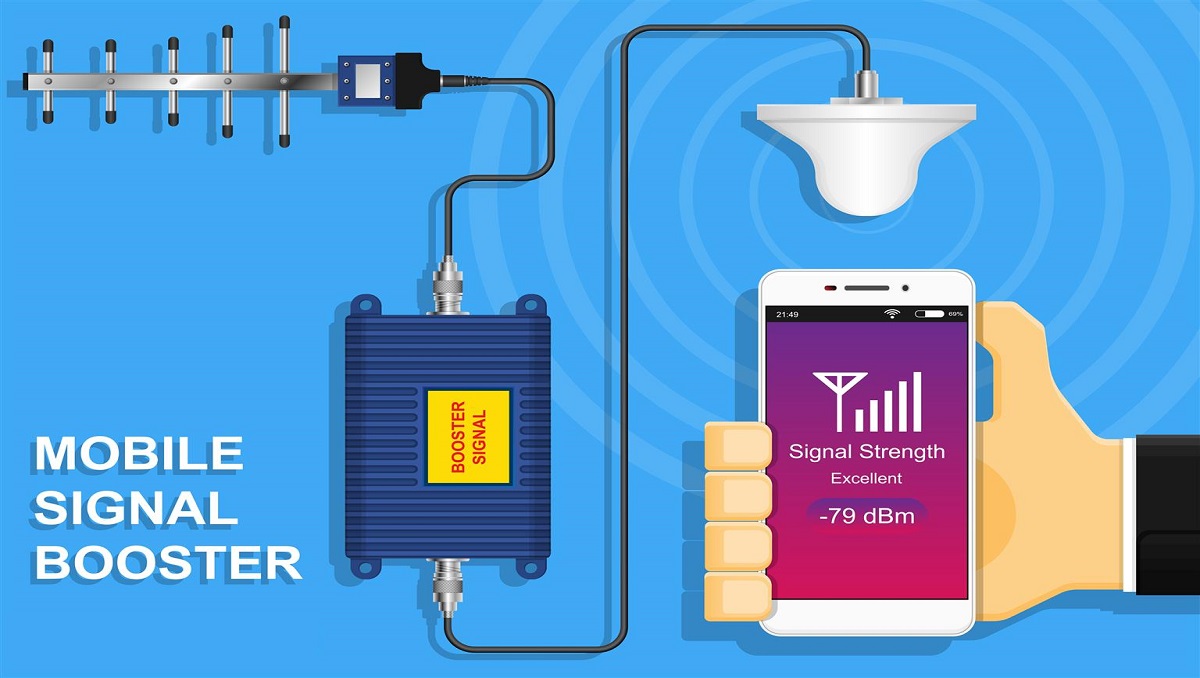
The main aim of the GSM booster is to take the existing cell phone signal around places, car, office, workstation or home and amplify it. After amplification, the signal is rebroadcasted to the area with no reception or weak signal.
In a pre-enforcement notice published on its official website, the commission informed the general public, particularly banks and other financial institutions, government agencies, telecommunications service providers, private/public companies, and owners/occupiers of residential premises that the unauthorized use of the boosters was a criminal offence that could attract monetary sanction or imprisonment.
The notice said: “In exercise of its mandate of ensuring the protection of consumers, ensuring good quality of service and maintenance of technical standards of maintenance equipment, and in accordance with the provisions of section 131 (1) of the Nigerian Communications Act (NCA) 2003, the commission hereby warns the general public that it is a criminal offence to sell, install or use any equipment which may hinder network operations, or which has not been type-approved by the Commission.
“Such acts may lead to monetary sanction and/or imprisonment, or both (fine and imprisonment) as well as the confiscation of any equipment used in the illegal enhancement of network coverage.
“The commission on its part will continue to deepen its collaborative efforts with telecoms service providers to facilitate the provision of ubiquitous telecoms infrastructure necessary to guarantee good quality of service across the nation.
“In view of the above, the commission hereby gives a 14-day Pre-enforcement Notice effective from the date of this publication to any person involved in the sale, installation and use of the device, to forthwith desist from such act.”
The notice, signed by NCC’s Director, Public Affairs, Mr Ikechukwu Adinde, warned that the agency would, without further recourse and upon expiration of the deadline, take “appropriate enforcement action including, but not limited to prosecution, fine and confiscation of equipment used.”
Technology
MTN Fintech Targets Credit Market With Direct Lending Plans
By Adedapo Adesanya
The financial technology arm of MTN is mulling a direct shift into lending after bringing on its parent company, MTN Group, as a major investor to help cushion against losses that have plagued the business.
According to MTN Group Fintech chief executive, Mr Serigne Dioum, the company wants to move beyond helping customers access loans through partners.
He said in markets where regulators allow it, MTN wants to lend directly and use its own balance sheet.
“We’ve expanded access to credit for more people, but we also want to move further up the lending value chain,” Mr Dioum told investors at the company’s capital markets day.
“Where appropriate, we will seek licences that allow us not only to facilitate loans but also to lend directly to customers and deploy our own balance sheet.”
This development is expected to create a shift in its current fintech model which provides financial services, including deposits, payments, transfers and digital wallets to individuals and small businesses via digital and mobile‑based platforms.
The company has applied for Payment Solution Service Provider and Payment Terminal Service Provider licences through MoMo PSB, its Nigerian fintech subsidiary. If approved, the licences would allow MTN to handle more payment processing, build merchant payment tools, deploy and manage POS terminals, and reduce its dependence on third-party processors.
Despite the opportunities present in the credit market, direct lending could give MTN a larger share of revenue, but it would also expose the company to credit risk, regulation and tougher competition with banks and digital lenders.
Mr Dioum said only about 4 per cent to 5 per cent of adults have access to formal credit across the African continent. In Nigeria, the funding problem is especially severe.
A 2025 report by the National Credit Guarantee Company said nearly 80 per cent of Nigerian MSMEs lack access to formal credit, while Stears has estimated the country’s MSME financing gap at about $236 billion.
For traders, small shop owners, transport operators and households, access to small loans can determine whether they restock inventory, pay suppliers, cover emergencies or expand a business.
In April, MTN Nigeria announced that its parent firm, based in South Africa, would acquire a 60 per cent stake in MoMo Payment Service Bank Limited (MoMo PSB) and Y’ello Digital Financial Services (YDFS) Limited.
The fintech units are currently loss-making, and this move will help MTN Nigeria to reduce financial risk and share future losses and investment burden. However, it will still keep a significant minority stake (40 per cent).
Technology
Meta Expands Business Agent to Instagram, WhatsApp, Messenger
By Aduragbemi Omiyale
The reach of the Meta Business Agent is being expanded to Instagram and other platforms of the social media giant.
Meta Business Agent is an artificial intelligence (AI) that allows business owners to attend to customers’ needs with ease.
Customers expect instant responses, but no team can be everywhere at once. This innovation handles such without hassles.
It helps businesses to answer questions specific to the business, makes product recommendations from the catalogue, books appointments, qualifies incoming leads, and closes sales.
More than one million businesses are already using a Meta Business Agent on WhatsApp and Messenger to respond to customers around the clock.
“We’re now expanding our Business Agent to businesses big and small globally, so within minutes you can have yours up and running, responding in your customer’s local language using your tone,” Meta said in a statement.
“We’re also expanding these agents to Instagram since businesses connect with their customers there, too. Businesses can activate their Business Agent here. Getting started with the Business Agent is free. In the coming months, businesses will access the agent through our paid subscription offerings, with options for businesses of every size,” it added.
Meta also stated that it is making it simpler for people to discover businesses powered by a Meta Business Agent directly on WhatsApp. It noted that starting soon, people will be able to find businesses by typing their name in the Search bar, or by sharing their phone number or contact card in chats with friends and family. This way, when more customers reach out, they get a quick, helpful response.
Technology
Lagos Eyes 250MW Data Centre Capacity by 2030
By Adedapo Adesanya
The Lagos State government plans to expand the city’s data centre capacity to over 250 megawatts (MW) by 2030 as part of efforts to strengthen its digital infrastructure ecosystem.
This was disclosed by the state’s Commissioner for Innovation, Science, and Technology, Mr Olatubosun Alake, at the launch of the Kasi Cloud LOS1 data centre facility in Lekki. Nigeria Sovereign Investment Authority (NSIA) invested in Kasi Cloud through an $8 million convertible loan note in 2021.
Mr Alake said Lagos already hosts nearly three-quarters of Nigeria’s commercial data centre capacity, adding that the government intends to expand its infrastructure footprint significantly over the next five years.
“There are about 146 additional megawatt data centres planned in the pipeline,” he said. “We envisage that by 2030, we would have over 250 megawatts of data centre capacity in Lagos, three times the current capacity growth.”
The expansion comes as demand for cloud services, AI computing power, and local data storage continues to grow across Nigeria’s digital economy, with Lagos at the forefront, housing thousands of businesses and startups.
Mr Alake said the Kasi Cloud facility represents Lagos’ entry into “large-scale hyperscale AI infrastructure,” signalling the state’s ambition to evolve beyond being known primarily as a startup hub into a major centre for digital infrastructure and AI computing.
“Lagos is no longer simply a startup city,” he said. “It is an infrastructure city.”
The Kasi LOS1 facility is designed as a 40MW hyperscale data centre campus, beginning operations with an initial 7.2MW IT load.
According to Mr Alake, the facility includes advanced GPU computing infrastructure powered by Nvidia H100 and H200 chips, alongside liquid cooling systems and cloud infrastructure services designed to support AI workloads.
The Lagos State government believes such infrastructure will become critical as AI adoption accelerates globally.
Mr Alake said the state is investing in fibre optic networks, smart city technologies, university innovation programmes, and digital government systems to prepare for the transition.
“The AI economy is going to require hundreds of megawatts,” he said. “The market has already made its decision about where digital infrastructure belongs.”
On his part, Mr Johnson Agbogun, co-founder and chief executive officer of Kasi Cloud, said the project was built to reduce Nigeria’s dependence on foreign cloud infrastructure and give African businesses more control over how their data and AI systems are developed.
“Nigerian enterprises are currently spending $850 million every year on foreign cloud infrastructure,” he said. “Every naira spent abroad on cloud and AI infrastructure helps build capabilities somewhere else.”
He added that the facility runs GPU-powered AI workloads from local enterprises and described the Lekki campus as “the beginning of Nigeria’s AI factory.”
“As artificial intelligence reshapes economies globally, the nations that control their own compute infrastructure and data will be the ones positioned to lead,” added Mr Kolawole Owodunni, NSIA’s Executive Director and Chief Information Officer.
-
Feature/OPED6 years agoDavos was Different this year
-
Travel/Tourism10 years ago
Lagos Seals Western Lodge Hotel In Ikorodu
-
Showbiz3 years agoEstranged Lover Releases Videos of Empress Njamah Bathing
-
Banking8 years agoSort Codes of GTBank Branches in Nigeria
-
Economy3 years agoSubsidy Removal: CNG at N130 Per Litre Cheaper Than Petrol—IPMAN
-
Banking3 years agoSort Codes of UBA Branches in Nigeria
-
Banking3 years agoFirst Bank Announces Planned Downtime
-
Sports3 years agoHighest Paid Nigerian Footballer – How Much Do Nigerian Footballers Earn