
Technology
NCC Threatens 63 Firms, Agencies Over Use of 5.4GHz Frequency

By Adedapo Adesanya
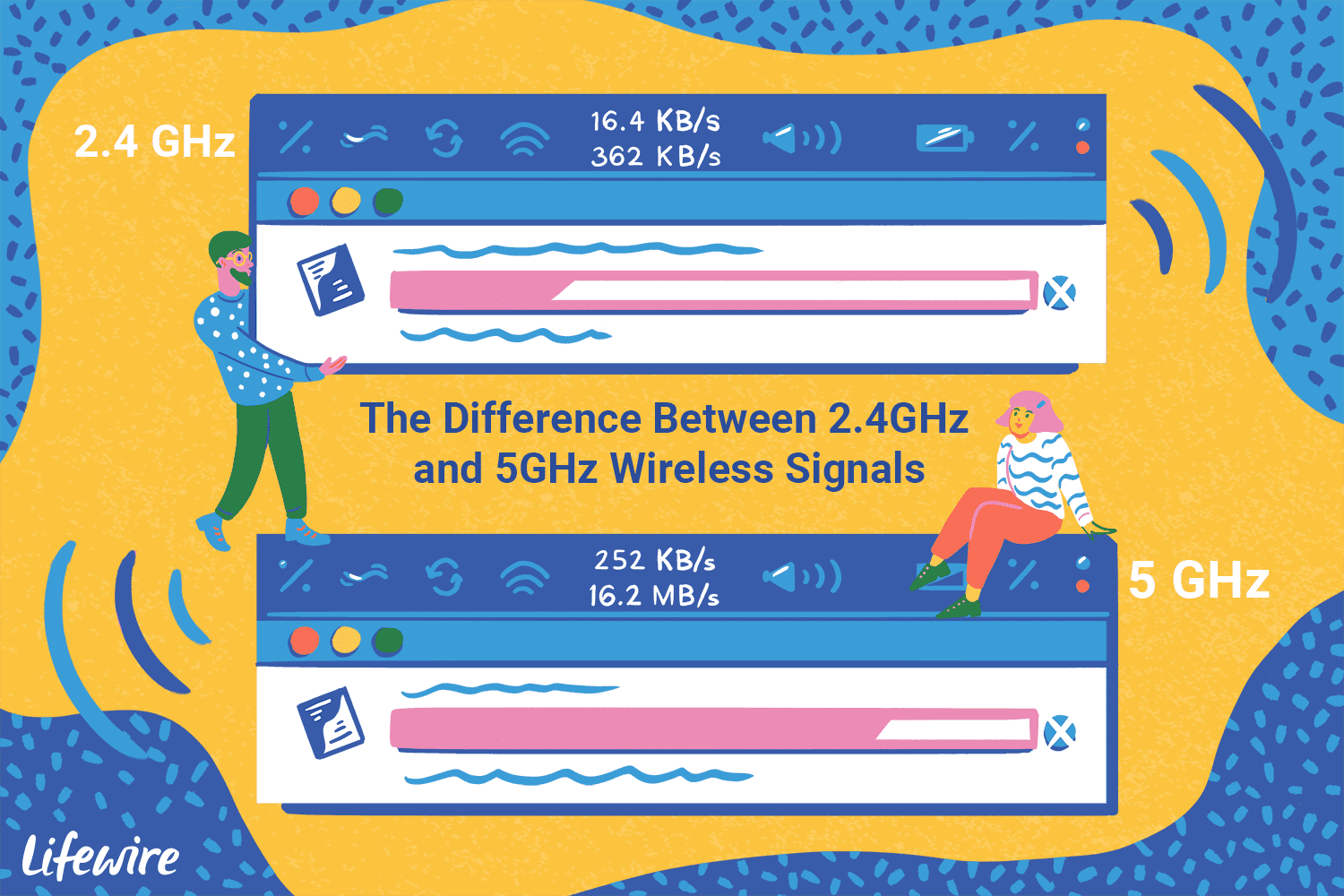
The Nigerian Communications Commission (NCC) has accused 63 companies and agencies of government in 11 states of illegal occupation on the 5.4GHz frequency band in the country.
The commission, which addressed a document to all the unauthorised users, said the 5.4GHz band spanning 5.430-5.725GHz frequency range has been licensed in Nigeria and stated that transmission of signals or use of equipment in any form on the band without a frequency license obtained from the NCC is illegal.
In the document signed by NCC Director of Public Affairs, Henry Nkemadu, those discovered to be using the band in the designated places are doing it illegally, it said.
“Companies, government agencies; telecommunications service providers; private companies or any person(s) using this band in the designated places mentioned should note that it is a criminal offence pursuant to section 122 NCA, 2003 to operate in any frequency not duly assigned by the commission,” the industry regulatory agency said.
According to the commission, these companies are at the risk of sanctions including imprisonment, fine and confiscation of equipment put to use on the band illegally.
“The consequences of such act may lead to imprisonment, sanction and confiscation of equipment used in operating the illegal services,” the commission stated.
Out of the 63 entities under scrutiny, three are government agencies; six are banks, and 55 telecoms and technology companies and these companies operate in Akwa-Ibom; Benue; Cross River; Delta; Edo; Enugu; Imo; Kaduna; Kano; Lagos, and Oyo states.
Some of the companies and agencies include Kaduna State Government House; Lagos Internal Revenue Service; Project E-Delta; DSS; Polaris Bank; First Bank; Access Bank; Union Bank; AB Microfinance Bank; Bet Naija; Orange Drug Limited; Churchgate; IPNX; Cobranet; Hyperia; NETCO; Computer Warehouse; Helios Tower; IHS; MainOne; Priority Communications; K-Kon; VDT, Swift Talk
Telecommunication service listed are MTN, Globacom, Airtel; 9Mobile; Vodacom; Crust Resoources; Cyberspace; Nova Business Centre; Sky Link; Centre Point; Electronics Connections; E-Stream; Cobranet, among others.
According to the NCC, those affected by the illegal occupation by states include Akwa Ibom using 5.547GHz; Benue 5.489 to 5.584GHz; Cross River 5.5189 to 5.600GHz; Delta 5.5987 to 5.700GHz; Edo 5.601 to 5.6989GHz; Enugu 5.489 to 5.618GHz; Imo 5,489 to 5.612GHz.
Others are Kaduna 5.45 to 5.5GHz; Kano 5.6673 to 5.7107GHz; Lagos 5.6756 to 5.6978GHz, and Oyo 5.616 to 5.680GHz.
The commission has given a 14-day enforcement notice to all the unauthorized operators on the band spanning 5.430 to 5.725GHz to vacate and desist from further transmission of signals or use of equipment in any form on the band without authorization obtained from the NCC.
The telecoms regulator said it shall without further recourse and upon the deadline commence appropriate enforcement action including, but not limited to prosecution, fine, and confiscation of equipment used in the illegal transmission of services.


By Adedapo Adesanya
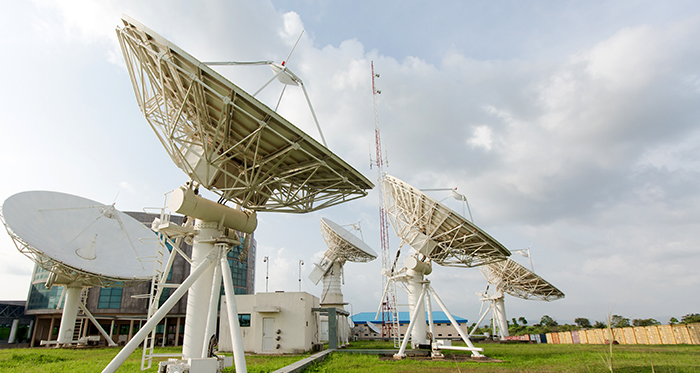
Nigeria has set 2028 and 2029 as the timeline for the deployment of its new satellites, NIGCOMSAT-2A and 2B, respectively.
The Managing Director of NIGCOMSAT, which is Nigerian Communications Satellite Limited and the premier satellite operator in Nigeria, Mrs Jane Nkechi Egerton-Idehen, disclosed this at the second Nigerian Satellite Week in Abuja on Monday. She noted that the development is expected to boost military intelligence, surveillance, and regional connectivity.
“For 2A and 2B, we have started the process. We have closed the tender and are now back into the financing and implementation stage. 2A is built to come up in 2028, and 2B for 2029.
“When they are up and running, they are expected to provide security within the borders and neighbouring countries. They will support the security agencies because data collection and intelligence in real time is important. Satellites like communication satellites allow that, irrespective of where they are,” she said.
In his remarks, the Minister of Communications and Digital Economy, Mr Bosun Tijani, said the satellites form part of the nation’s strategy to strengthen digital infrastructure.
Mr Tijani explained that the satellites will complement ongoing investments in 90,000 kilometres of fibre-optic cable and nearly 4,000 telecom towers, which are being rolled out nationwide and extended to neighbouring countries, including Cameroon, Niger, Chad, Burkina Faso, and the Republic of Benin.
He stressed that satellite technology is critical for national development, affecting education, agriculture, business, and emergency response.
“The president’s approval of NIGCOMSAT-2A and 2B demonstrates a clear commitment to building the future. These satellites will enhance security, connect remote communities, and extend our fibre-optic network into neighbouring countries,” he said.
“Some of these neighbouring countries pay up to ten times more for internet capacity than Lagos. Extending our fibre network will not only improve connectivity but also enhance border security and regional collaboration.
“Satellite technology affects everything, from how a child in a rural community accesses the internet to how farmers make critical decisions and how businesses operate across distance,” the Minister said.
Also speaking, the Chief of Army Staff (COAS), Lieutenant General Waidi Shaibu, welcomed the development, saying the military will leverage the satellites for operational efficiency.
“The Nigerian Army will continue to use space assets to improve intelligence gathering, surveillance, and operational coordination across all theatres of operation,” he said at the event, represented by Major General Kennedy Osemwegie, Commander of the Nigerian Army Cyber Warfare Command (NACWC).


By Modupe Gbadeyanka
A partnership to advance digital payments and financial inclusion across East Africa has been strengthened between Interswitch and KCB Group.
Both parties have agreed to expand digital payment infrastructure and deliver innovative financial solutions that meet the evolving needs of individuals, businesses, and institutions across the region.
The aim is to accelerate seamless, secure, and inclusive digital payments in East Africa, where the leading Africa-focused integrated payments and digital commerce enabler, Interswitch, recently announced an expansion of Verve card acceptance footprint, leveraging its consolidated partnership with KCB Group, Kenya’s largest financial services group by assets, following a similar move in Uganda through the local KCB Franchise in February 2022.
During a recent executive engagement at KCB Group headquarters in Nairobi, the chief executive of Interswitch, Mr Mitchell Elegbe, held high-level discussions with KCB leadership, including its chief executive, Paul Russo.
At the core of the strengthened collaboration is the integration of Interswitch’s robust payment rails, card scheme, and emerging digital token solutions with KCB Group’s expansive regional footprint and trusted banking franchise.
This integration enables the acceptance of Verve cards and tokenised payment solutions across KCB’s extensive merchant point-of-sale network in Kenya and Uganda, significantly enhancing everyday usability for customers while strengthening KCB’s digitally driven retail payments offering.
The consolidated partnership is expected to drive increased merchant acquisition, improve interoperability across payment ecosystems, and expand access to secure, cashless transactions. It also reinforces both organisations’ shared objective of deepening financial inclusion and accelerating digital commerce across East Africa.
“Our collaboration with KCB Group represents a powerful alignment of vision and capability. By combining our technology-driven payment solutions with KCB’s strong regional presence, we are unlocking new opportunities to scale access, drive innovation, and deliver greater value to customers across East Africa,” Mr Elegbe stated.
By Adedapo Adesanya
The Nigerian Communications Commission (NCC) has directed Mobile Network Operators (MNOs) to provide compensation to subscribers whose network quality of service experience is below specified targets within specific locations.
In a Sunday statement, the commission noted that its position is that customers should not be made to bear the full burden of service disruptions where operators fail to meet prescribed standards of service delivery.
Under this directive, NCC said erring operators would compensate affected users directly for breaches of Quality of Service (QoS) Key Performance Indicators (KPIs).
Mobile Network Operators (MNOs) will be required to pay these compensations for instances of poor quality of service recorded within specified time frames.
“The compensation will be provided in the form of airtime credits, calculated based on subscribers’ average spending patterns and their presence within Local Government Areas where service failures occur”, according to the statement.
The directive is rooted in the agency’s broader regulatory philosophy that places the consumer at the centre of Nigeria’s telecommunications ecosystem.
“Telecommunications services today underpin economic activity, social interaction, and access to digital opportunities. When service quality is poor, the consequences affect productivity, commercial activities, and even public confidence in our communications system.
“While regulatory fines have traditionally served as a deterrent against poor service delivery, the Commission is adopting a more consumer-focused approach that strengthens accountability within the industry”.
The commission explained that it has designed this measure to complement existing and ongoing efforts to strengthen service quality monitoring and enforce performance standards.
Further to this directive by the commission to MNOs on compensation to consumers, the regulator has mandated Tower Companies that own the critical infrastructure, such as masts, for Quality of Service delivery, to invest in infrastructure with measurable outcomes using sums that it has fined these companies, in addition to other financial fines the Commission will deem appropriate.
“The commission will continue to reinforce the obligation of operators to invest consistently in network resilience, capacity expansion, and infrastructure upgrades to meet the growing demand for telecommunications services.
“At the same time, it will deploy regulatory tools that promote fairness, transparency, and accountability across the sector, ensuring that every subscriber receives the quality of service they deserve while sustaining a telecommunications industry capable of powering Nigeria’s digital future”, the statement added.
-
 Feature/OPED6 years ago
Davos was Different this year
-
Travel/Tourism10 years ago
Lagos Seals Western Lodge Hotel In Ikorodu
-

 Showbiz3 years ago
Estranged Lover Releases Videos of Empress Njamah Bathing
-
 Banking8 years ago
Sort Codes of GTBank Branches in Nigeria
-

 Economy3 years ago
Subsidy Removal: CNG at N130 Per Litre Cheaper Than Petrol—IPMAN
-

 Banking3 years ago
Sort Codes of UBA Branches in Nigeria
-

 Banking3 years ago
First Bank Announces Planned Downtime
-

 Sports3 years ago
Highest Paid Nigerian Footballer – How Much Do Nigerian Footballers Earn