

Technology
Nigeria Sees 88% Rise in Deepfake Incidents

By Aduragbemi Omiyale
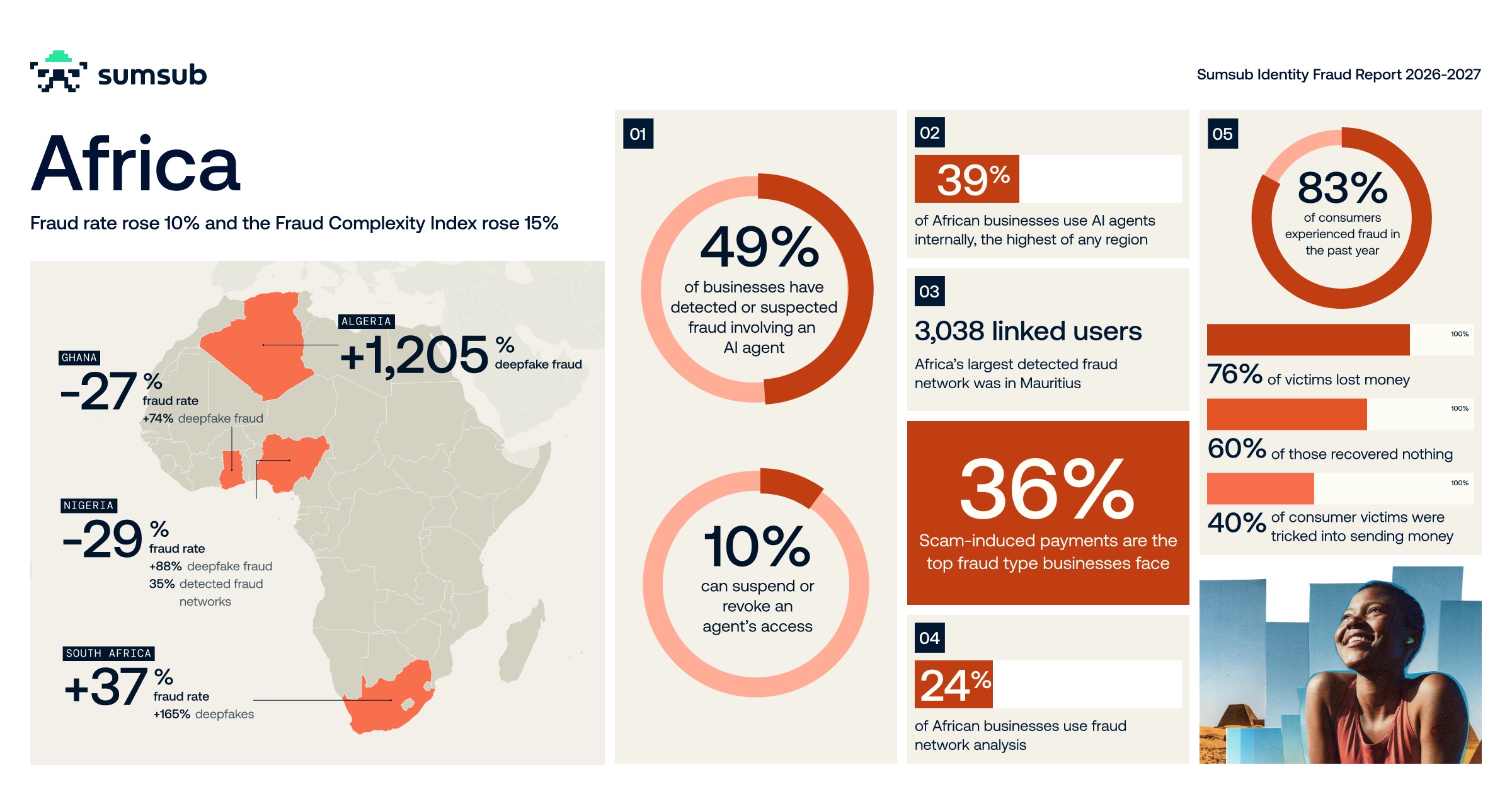
The latest findings from Sumsub’s Identity Fraud Report 2026-2027 have shown that Nigeria recorded an 88 per cent rise in deepfake incidents despite a 29 per cent decline in the overall identity fraud rate.
It was also revealed that the country accounted for 35 per cent of fraud networks detected across Africa, as deepfake incidents in Ghana rose 74 per cent and its overall identity fraud rate declined 27 per cent, while Côte d’Ivoire posted a 291 per cent surge in deepfake incidents and its overall identity fraud rate increased by 22 per cent.
Fraud across Africa is becoming increasingly sophisticated, with deepfake scams, organised fraud networks and AI-powered attacks emerging as some of the continent’s most significant financial crime threats.
The report found that 75 per cent of African businesses experienced confirmed or suspected fraud activity during the past year, while 83 per cent of consumers reported being targeted by fraudsters. Despite growing awareness and investments in fraud prevention, the financial toll remains severe, with 60 per cent of victims who lost money unable to recover any of their losses.
As fraudsters adopt highly complex technologies and multi-step tactics, the continent has become a key battleground in the global fight against financial crime.
“Africa is one of the world’s most dynamic digital growth markets, with businesses rapidly adopting new technologies to drive financial inclusion and innovation. However, the same technologies creating opportunity are also creating new opportunities for fraudsters.
“As fraud becomes more complex and organised, companies need a proactive, intelligence-led multi-layered approach to identity verification and fraud prevention,” the VP of Sales for Africa at Sumsub, Hannes Bezuidenhout, stated.
One of the report’s most significant findings is the growing prevalence of organised fraud rings. Criminals are increasingly operating as coordinated networks rather than individuals, enabling them to scale attacks across multiple platforms, institutions and jurisdictions. These networks are an advanced form of coordinated fraud that may still evade security systems: accounts can be compromised at any time, turning a previously trusted profile into a risk signal for internal systems.
In 2025, Sumsub introduced AI fraud agents as a new global threat for both people and businesses. This year, it has seen agentic use and fraud exposure expanding and making media headlines all over the world, raising huge concern.
Nearly half (49 per cent) of African businesses reported detecting or suspecting fraud involving AI agents, making it one of the fastest-growing emerging threats identified in the report.