
Technology
The Evolution of Digital Communication: How Modular Platforms Are Changing Business Efficiency

In today’s corporate world, the lines between personal communication and professional production have been blurred into non-existence. As working remotely becomes the norm, not the exception, businesses are seeking ways of making their workflows streamlined in the Apps that their employees are already using.
This change has led to the appearance of powerful third-party clients like Nicegram, which allow users to fill in the gap between simple message brokers and elaborate task managers. By scraping the cream of the crop into interfaces that we’re familiar with, these tools are not only changing the way that we chat, but they are fundamentally changing the ROI of digital communication.
The History of the Super-App Philosophy
The technosphere has been pursuing the vision of the so-called Super-App – one ecosystem where a user can bank, shop, work, and be social. Where the Western market has been lagging behind the Eastern in devoting itself to a single monolithic App, we are witnessing a new form of evolution, that of the modular development of existing ones.
It is becoming apparent to the business leaders that there is fatigue that results when you attempt to make your employees cross a series of fifteen tabs (CRM systems up to project management boards). Such a mental burden may lead to a 40% loss of 40%. The solution? Taking the tools to the conversation instead of making the conversation compatible with the tools.
The Dynamics of Messaging Infrastructure to Business
The last competitive advantage in the year 2026 will be the speed of information. Agile startups tend to be too slow on traditional email, whereas specialized enterprise software can be too strict to facilitate creativity. Instant messaging networks have bridged this divide and emerged as a trade-off in the relationships between immediate, persistent, and available.
Nevertheless, in many situations, off-the-shelf messaging Apps lack the scalability and controls to be used professionally. This is the point of intersection of business and tech, and this is where the interesting part appears. Improved client access is beginning to be exploited by modern companies:
- State-of-the-art multi-accounting. Important to social media managers and consultants who are involved with various clients.
- Built-in translation tools. Enabling transnational communication between localised teams without turning off the chat interface.
- Encryption layers and privacy. Securing confidential proprietary information during transit.
The Security Imperative
The more business logic we include in our channels of communication, the greater the risk of security increasing. Cybersecurity is no longer the business of the IT department; it is a fundamental building block of business. In adopting digital tools, organisations are making a statement regarding transparency and sovereignty of the information.
The tendency is in favor of open source foundations and API based enhancements. This enables the businesses to authenticate the security measures of the business communication tools and yet access the custom functionality to enhance productivity daily.
With platforms being set upon enforced and dependable protocols, the firms can always have the best of both worlds: reliability of a worldwide giant combined with the adaptability of a niche, productive package.
Artificial Intelligence integration: the Best Frontier
AI is a vital part of tech and business that cannot be discussed. The biggest advancement in the history of communication technology in the recent past has been the inclusion of the Large Language Model (LLM) on chat windows. To illustrate this, suppose that the manager of a project was endowed with a complicated brief that was brought to him by a message. AI-boosted clients can now type a summary of it or make a calendar appointment instead of doing it manually:
- Write long lines into lists that you can;
- create expert replies depending on the distinct tone of the user;
- program the scheduling with natural language.
The tools that we employ to encrypt our information, to generate our daily reminders, and even the way we are automating our lives through the tools that we consume, determine how rapidly we are maturing. With the adoption of the strength of the improved messaging ecosystem, companies may assist in building a more connected, effective, and secure future.




By Adedapo Adesanya
The federal government has announced plans to establish a national cybersecurity coordination council to strengthen Nigeria’s response to rising digital threats.
In a statement, the Federal Ministry of Communications, Innovation and Digital Economy said the council will serve as a multi-stakeholder platform to improve coordination, intelligence sharing, and collaboration between public and private institutions.
The initiative, championed by the Minister of Communications, Mr Bosun Tijani, aims to enhance Nigeria’s ability to respond to increasingly sophisticated cyber incidents affecting both private companies and public systems.
“The proposed council is envisioned as a non-statutory, multi-stakeholder coordination platform, designed to convene key actors and strengthen partnerships that support efficient coordination, trusted information sharing, and sustained cooperation among institutions responsible for advancing Nigeria’s cybersecurity posture,” the ministry said.
The council will bring together chief information security officers, cybersecurity experts, technology firms, law enforcement agencies, and relevant government institutions.
It will also provide advisory support to the federal government on strategies and frameworks needed to improve national cyber resilience.
“The approach reflects the government’s recognition that modern cyber threats demand collective defence models, trusted threat intelligence sharing, and multi-stakeholder coordination,” the ministry added.
The move follows recent cyber incidents that disrupted operations and highlighted the “increasingly coordinated and sophisticated nature of cyber threats,” signalling the urgent need for stronger national cybersecurity frameworks.
This development comes amid the rising frequency and complexity of cybercrimes, which have made cybersecurity a vital tool that countries must focus on.
Special policies around data breaches, ransomware attacks, and third-party liabilities have come to the fore. While cybersecurity has been historically underutilised in Nigeria, its critical role in mitigating the financial fallout of cybercrimes and threats has taken a new dimension with the adoption of Artificial Intelligence (AI).
Countries are leveraging AI tools to enhance threat detection, automate incident response, and analyse patterns to identify risks early. These AI-driven solutions enable quick and effective responses, improving resilience by detecting anomalies, predicting potential attacks, and mitigating threats before they escalate.

By Modupe Gbadeyanka
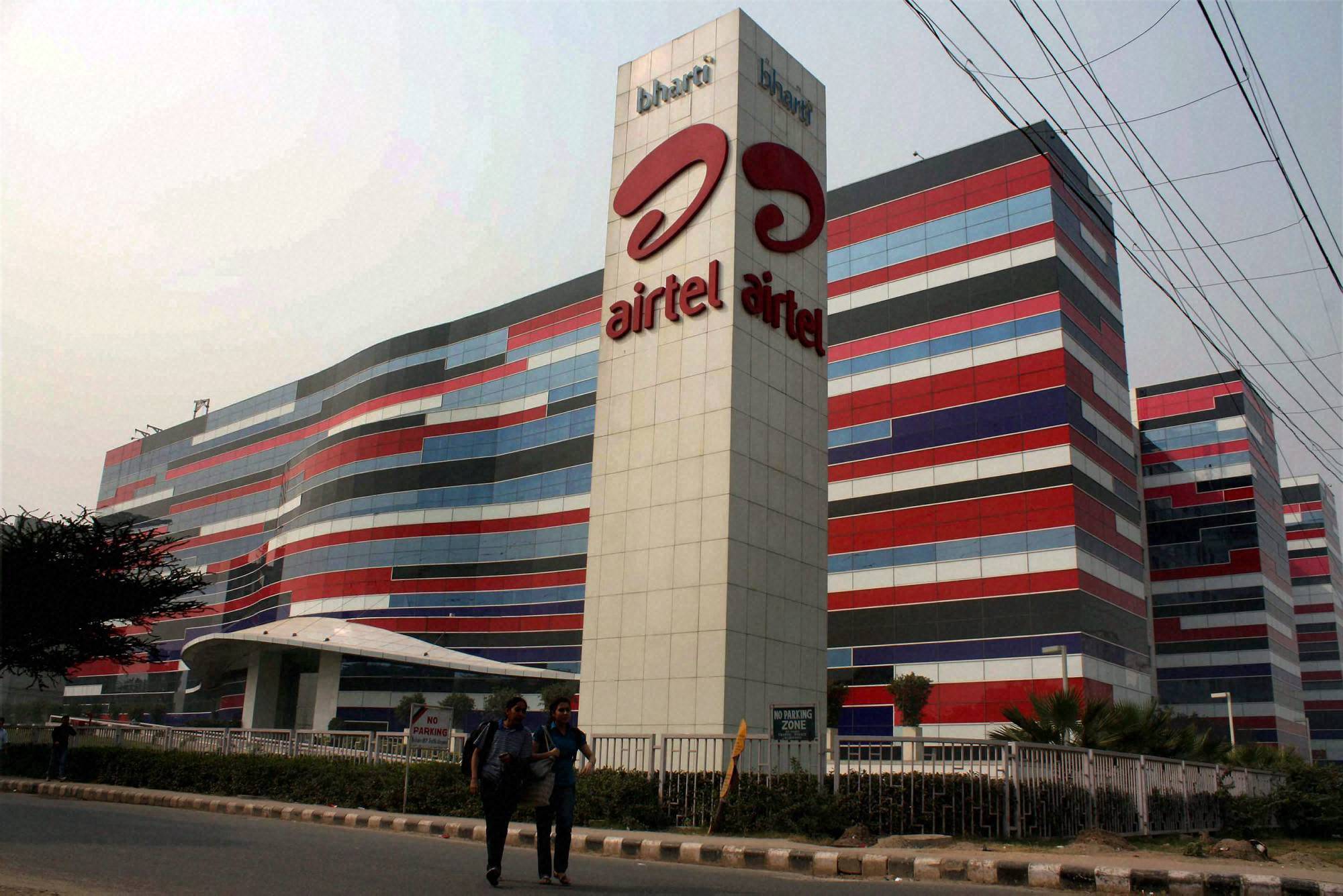
Bharti Airtel has crossed 650 million mobile subscribers worldwide to emerge as the world’s second-largest telecommunications firm.
The Indian company has operations in several countries, including Nigeria, where it has continued to scale infrastructure at a pace unmatched in its recent history.
Over the past three years, the telco has increased its national site count from just above 13,000 to nearly 17,200 sites, including more than 1,560 added in the last 12 months.
This expansion deepens capacity in high-demand corridors and extends high-speed coverage to previously underserved regions.
The latest industry data from the Nigerian Communications Commission (NCC) underscores the significance of this growth. As of December 2025, Nigeria recorded 145,141 base stations across 2G, 3G, 4G and 5G layers.
Of this national infrastructure, Airtel accounts for 46,918 base-station layers, reflecting its substantial contribution to the country’s radio access network and its push to absorb rising data consumption.
Nearly 99 per cent of Airtel Nigeria’s sites are now 4G-enabled, positioning the operator as one of the few with a near-ubiquitous high-speed broadband footprint. Thousands of sites have been upgraded for capacity in the past year alone, enabling improved speeds and more stable performance during peak usage.
That expansion underpins Nigeria’s rising internet adoption. According to the latest regulator figures, Nigeria’s internet penetration recently climbed above 50 per cent, with Airtel recording among the largest monthly increases in new internet subscribers, driven by network upgrades across states and rural corridors.
Strategic Connectivity and Redundancy
Airtel is also tackling a critical infrastructure challenge for the Nigerian digital economy: reliance on a single international internet gateway. The company is advancing plans for its second submarine cable internet breakout point at Kwa Ibo in Akwa Ibom State, early in the 2Africa cable system rollout, to provide faster and more resilient national connectivity across regions. This significant investment aligns with global best practices in network diversity and redundancy, ensuring a more stable digital experience for consumers and enterprises alike.
Digital Finance at Scale: SmartCash
Airtel’s digital finance arm, SmartCash, has gained traction in Nigeria’s competitive mobile money ecosystem, now serving over 3 million active users. The platform is supported by an expansive agent network and digital services that lower barriers for everyday financial transactions and savings.
Outstanding Human Touch: Retail Reach
Across Nigeria, Airtel’s retail distribution network stands as one of the sector’s most extensive, with approximately 4,000 exclusive outlets bringing services, support, and products closer to customers in small towns, communities, and high-traffic urban hubs. That footprint drives both access and engagement in a market where localised presence remains a competitive differentiator.
As Nigeria’s digital economy continues to evolve, Airtel is committed to sustained innovation — from expanded fibre backbones and advanced mobile broadband to future-ready services that include satellite-enabled solutions and enterprise-grade digital platforms. These efforts help ensure that connectivity, commerce, and creativity thrive across Nigeria and beyond.
By Adedapo Adesanya
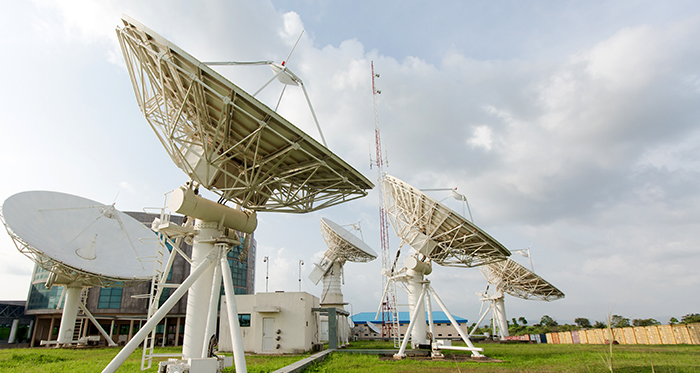
Nigeria has set 2028 and 2029 as the timeline for the deployment of its new satellites, NIGCOMSAT-2A and 2B, respectively.
The Managing Director of NIGCOMSAT, which is Nigerian Communications Satellite Limited and the premier satellite operator in Nigeria, Mrs Jane Nkechi Egerton-Idehen, disclosed this at the second Nigerian Satellite Week in Abuja on Monday. She noted that the development is expected to boost military intelligence, surveillance, and regional connectivity.
“For 2A and 2B, we have started the process. We have closed the tender and are now back into the financing and implementation stage. 2A is built to come up in 2028, and 2B for 2029.
“When they are up and running, they are expected to provide security within the borders and neighbouring countries. They will support the security agencies because data collection and intelligence in real time is important. Satellites like communication satellites allow that, irrespective of where they are,” she said.
In his remarks, the Minister of Communications and Digital Economy, Mr Bosun Tijani, said the satellites form part of the nation’s strategy to strengthen digital infrastructure.
Mr Tijani explained that the satellites will complement ongoing investments in 90,000 kilometres of fibre-optic cable and nearly 4,000 telecom towers, which are being rolled out nationwide and extended to neighbouring countries, including Cameroon, Niger, Chad, Burkina Faso, and the Republic of Benin.
He stressed that satellite technology is critical for national development, affecting education, agriculture, business, and emergency response.
“The president’s approval of NIGCOMSAT-2A and 2B demonstrates a clear commitment to building the future. These satellites will enhance security, connect remote communities, and extend our fibre-optic network into neighbouring countries,” he said.
“Some of these neighbouring countries pay up to ten times more for internet capacity than Lagos. Extending our fibre network will not only improve connectivity but also enhance border security and regional collaboration.
“Satellite technology affects everything, from how a child in a rural community accesses the internet to how farmers make critical decisions and how businesses operate across distance,” the Minister said.
Also speaking, the Chief of Army Staff (COAS), Lieutenant General Waidi Shaibu, welcomed the development, saying the military will leverage the satellites for operational efficiency.
“The Nigerian Army will continue to use space assets to improve intelligence gathering, surveillance, and operational coordination across all theatres of operation,” he said at the event, represented by Major General Kennedy Osemwegie, Commander of the Nigerian Army Cyber Warfare Command (NACWC).
-
 Feature/OPED6 years ago
Davos was Different this year
-
Travel/Tourism10 years ago
Lagos Seals Western Lodge Hotel In Ikorodu
-

 Showbiz3 years ago
Estranged Lover Releases Videos of Empress Njamah Bathing
-
 Banking8 years ago
Sort Codes of GTBank Branches in Nigeria
-

 Economy3 years ago
Subsidy Removal: CNG at N130 Per Litre Cheaper Than Petrol—IPMAN
-

 Banking3 years ago
Sort Codes of UBA Branches in Nigeria
-

 Banking3 years ago
First Bank Announces Planned Downtime
-

 Sports3 years ago
Highest Paid Nigerian Footballer – How Much Do Nigerian Footballers Earn