Technology
TikTok Invests Fresh $200K in AI Media Literacy in Africa
By Modupe Gbadeyanka
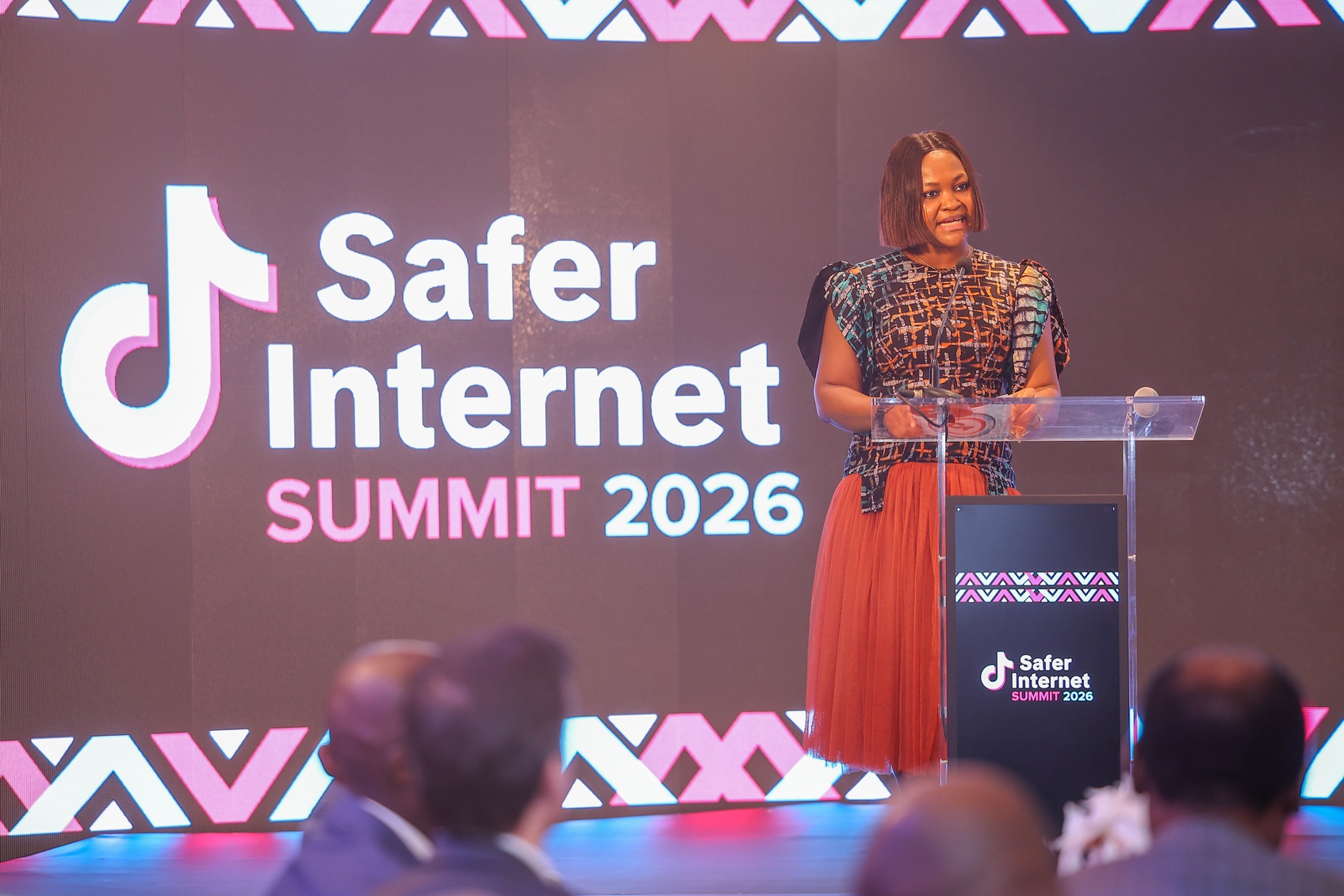
An additional $200,000 will be invested in Artificial Intelligence (AI) media literacy initiatives across Sub-Saharan Africa, TikTok announced during its third annual Sub-Saharan Africa Safer Internet Summit in Nairobi, Kenya.
The platform hosted government officials, regulators, online safety partners and industry leaders for the event, reinforcing its commitment to collaborative approaches to online safety.
The funds will be provided in ad credits to help support local organisations in the region to expand AI media literacy.
This investment builds on the company’s initial $2 million AI Literacy Fund, launched in November 2025, which awarded 20 global non-profits to create content that boosts public understanding of AI.
In Sub-Saharan Africa, TikTok initially supported three organisations to advance digital literacy and combat misinformation.
“With the rapid advancement of AI, we are committed to educating our community online, so they feel empowered to have responsible experiences with AI, whether that’s as viewers or creators.
“We are partnering with trusted local organisations that communities already know and rely on, because their expertise and deep local connections are essential to making AI literacy programs truly impactful,” the Global Head of Partnerships, Elections and Market Integrity at TikTok, Mr Valiant Richey, stated.
Earlier, the Head of Government Relations and Public Policy for Sub-Saharan Africa at TikTok, Ms Tokunbo Ibrahim, said, “As we host the 3rd Annual Safer Internet Summit here in Kenya, our mission is clear: to share learnings, insights, tackle common challenges and collaboratively advance actionable solutions that protect citizens online.
“By bringing together a diverse coalition of policymakers, tech innovators, and creators, we are ensuring that the conversations we have at this Summit are all-inclusive and lead to a more resilient digital landscape.”
The summit featured expert panels and discussions on critical topics, including TikTok’s Trust and Safety efforts, protecting young people online, and policy frameworks for responsible AI governance.
A key highlight of the event was showcasing how TikTok uses AI to transform how people share their creativity and discover new passions, while ensuring the community remains safe through transparent and responsible AI practices.
The platform also shared more about how recent advancements in AI are helping the platform moderate content faster and more consistently at scale, by improving automated moderation and empowering human teams with better moderation tools.
With over 100 million pieces of content uploaded daily to TikTok, these advances, which work alongside human moderation teams, are helping get violative content down faster, reducing the likelihood of the community seeing it.
According to the latest Community Guidelines Enforcement Q3 2025, TikTok removed over 14 million videos across Sub-Saharan Africa, with 96.7 per cent detected and removed proactively using automated technology, underscoring TikTok’s commitment to proactive moderation and swift action.
Technology
Zoho Nigeria Champions Women’s Digital Empowerment at Guardian Women Festival
By Modupe Gbadeyanka
The urgent need to bridge the digital gap for female entrepreneurs has again been emphasised by the Country Head of Zoho Nigeria, Mr Kehinde Ogundare.
Speaking at the Guardian Woman Festival held at the Federal Palace Hotel in Lagos recently, Mr Ogundare stressed that technology does not replace the strengths women already bring to business, such as relationship building and community engagement, but instead, it amplifies them, enabling entrepreneurs to reach wider audiences and scale more efficiently.
“The difference is not talent. Not capital. Not ambition. It is digital adoption,” he said during his keynote address titled Give Value, Gain Growth: Women Driving Reciprocal Innovation in the Digital Economy.
“Smart tools create smart businesses. Smart businesses create strong economies. When women entrepreneurs and leaders have access to the right tools, the possibilities for growth are limitless,” he added.
Zoho Nigeria partnered with Guardian Newspapers for the event as part of activities to mark a month-long initiative celebrating women’s contributions to business, governance, and social development while promoting digital empowerment for female entrepreneurs.
The Guardian Women Festival, themed Reciprocity, was to encourage the exchange of value, networks, and digital innovation to strengthen women-led businesses and foster collaboration.
While Nigeria has the highest concentration of women-owned businesses in Africa, fewer than 30 per cent currently use digital tools to manage or grow their operations.
During the festival’s panel session tagged Women in the Business of Digital Innovation, the Sales Manager for Zoho Nigeria, Ms Zubaida Aliyu, highlighted how women are uniquely positioned to create shared value in digital spaces by building platforms that encourage knowledge sharing, mentorship, and collaboration.
She also challenged organisations that continue to view women’s digital inclusion primarily as corporate social responsibility rather than a strategic business priority.
“Tech creates a level playing field,” Ms Aliyu said, noting that digital platforms remove limitations related to location and infrastructure size.
Addressing organisations that overlook the economic value of inclusive digital strategies, she added, “They are leaving money on the table — they need to think of it as a strategy, not charity.”
Through its participation in the Guardian Woman Festival, Zoho reaffirmed its commitment to providing affordable and accessible enterprise-grade technology to businesses of all sizes. By helping women transition from manual effort to digital efficiency, Zoho aims to support entrepreneurs in building scalable enterprises and ensure their sustained success in Africa’s digital economy.
Technology
Our Goal is to Meet Soaring Demand for Connectivity—MTN
By Dipo Olowookere
The Chief Strategy and Innovation Officer for MTN Nigeria, Mr Babalola Oyeleye, has disclosed that the telecommunications company intends to expand its infrastructure to give its customers quality service.
The demand for connectivity in Nigeria is growing, and with a new forecast predicting the Internet of Things (IoT) market to reach $38.7 billion by 2030, stakeholders, especially operators, are already positioning themselves to dominate the space
Government and private sector investments in digital transformation have created an ecosystem that includes system integrators and security specialists. Industries such as utilities and agriculture are leading the charge, adopting IoT to solve localised problems like power theft and low crop yields.
Currently, 4G coverage has reached approximately 80 per cent of Nigeria’s population, with 5G services already in major cities like Lagos, Abuja, Port Harcourt, and Kano. This connectivity backbone is essential for the low-latency communication required by millions of connected devices.
“Reaching the $38.7 billion mark isn’t just about the numbers; it’s about the millions of data points helping Nigerian SMEs and large corporations make smarter decisions every day. Our goal is to ensure the connectivity is there to meet this soaring demand,” Mr Oyeleye noted.
As the ecosystem matures, the focus is shifting toward all-in-one solutions that simplify the user experience. With ongoing investments in NB-IoT (Narrowband IoT) and other low-power connectivity options, the next five years are set to see an explosion in smart city and smart home applications across the country.
Technology
Refiant AI Raises $5m to Cut AI Energy Use
By Adedapo Adesanya
South African-founded Refiant AI has raised $5 million to slash the energy footprint of artificial intelligence (AI) in a seed round led by VoLo Earth Ventures, a top climate technology fund.
The startup uses nature-inspired algorithms to radically compress AI models, slashing the hardware and energy required to run them. The new fund will be used to scale Refiant’s team – which already includes a former Google Cloud architect, a Cambridge PhD researcher, and an engineer with NASA experience – to build out a platform and to accelerate enterprise partnerships.
According to a statement shared with Business Post, the company is in active conversations with several multinational technology firms exploring how Refiant’s approach could reduce their AI compute costs while maintaining data and energy sovereignty.
“AI’s growing energy footprint is one of the most urgent and underappreciated challenges in the climate space,” said Mr Sid Gutta, the company’s co-founder. “The industry’s default answer is to build more data centres and consume more power. Ours is to make the AI itself dramatically more efficient.”
The company said it has already successfully demonstrated it can compress a 120 billion parameter AI model to run on a standard laptop, reducing energy requirements by over 80 per cent while preserving near-identical quality. It achieved this to run on a MacBook Pro with just 12GB of RAM. The same model would normally require hardware with at least 80GB of memory. The model retained 95-99 per cent of its fidelity, ran alongside a second AI model on the same machine, and the entire process took four hours with no cloud computing required.
For Refiant, its approach will help businesses reduce their carbon footprint and adopt AI to stay competitive. The energy required to process a single AI prompt on standard infrastructure could power roughly 100 equivalent prompts using Refiant’s approach.
The current breakthrough results were attained at the end of last year, and since then, the team have been gearing up to demonstrate successfully exceeding these results with further compression, longer context windows and model traceability.
“The AI industry is spending hundreds of billions scaling infrastructure when the real breakthrough is the ability to do more with radically less,” said Mr Viroshan Naicker, co-Founder and a mathematician with published research in networks and quantum systems. “Nature doesn’t build by brute force. Evolution optimises. We’ve applied that principle to AI – and the results speak for themselves.”
“AI’s biggest constraint isn’t demand – it’s energy,” added Mr Joseph Goodman, Managing Partner, VoLo Earth. “What’s been missing is a fundamentally more efficient way to compute. Refiant’s architecture replaces brute-force scaling with a far more efficient, nature-inspired approach that lowers energy use while increasing capability. That’s the kind of breakthrough needed to make AI sustainable on a global scale.”
-
Feature/OPED6 years agoDavos was Different this year
-
Travel/Tourism10 years ago
Lagos Seals Western Lodge Hotel In Ikorodu
-
Showbiz3 years agoEstranged Lover Releases Videos of Empress Njamah Bathing
-
Banking8 years agoSort Codes of GTBank Branches in Nigeria
-
Economy3 years agoSubsidy Removal: CNG at N130 Per Litre Cheaper Than Petrol—IPMAN
-
Banking3 years agoSort Codes of UBA Branches in Nigeria
-
Banking3 years agoFirst Bank Announces Planned Downtime
-
Sports3 years agoHighest Paid Nigerian Footballer – How Much Do Nigerian Footballers Earn