Connect with us

Travel/Tourism

Airlines Face Fresh Turbulence Over Jet Fuel Scarcity

Published

on

Jet Fuel Scarcity

By Adedapo Adesanya

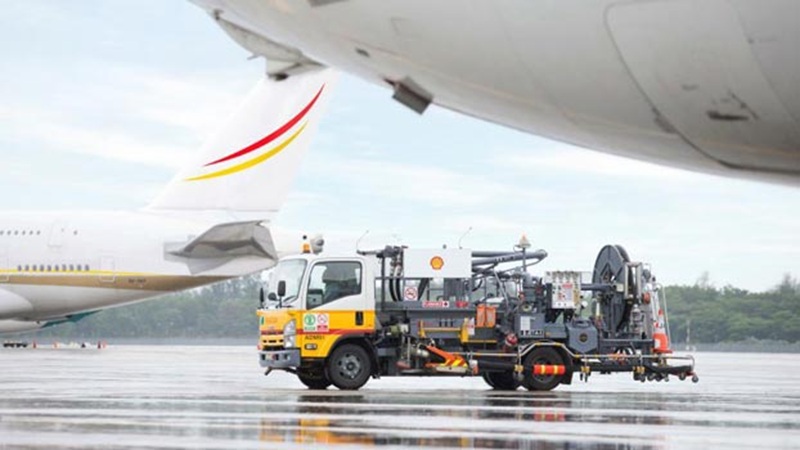
The National Association of Aircraft Pilots and Engineers (NAAPE) has revealed that Nigerian airlines are battling a severe jet fuel crisis, triggered by soaring jet fuel prices and supply shortages.

This is the latest blow to the aviation industry, which escaped an industrial action by airline operators over the price of jet fuel.

The latest development is increasing costs, disrupting flights and creating concerns about operational safety and sustainability.

According to Reuters, the persistent scarcity of jet fuel has triggered ⁠widespread operational challenges, including flight delays, route adjustments and extended crew duty periods, as airlines struggle to manage schedules amid rising costs.

According to the President of the association, Captain Bunmi Gindeh, the fuel shortages were pushing crews beyond planned limits, increasing fatigue and potentially eroding safety margins in an industry governed by strict rest regulations.

According to local carrier Rano Air, it revealed that jet fuel prices had more than quadrupled, as well as made some routes commercially unsustainable, forcing operational adjustments.

Other carriers have also begun rescheduling or cancelling flights and cutting unprofitable routes, industry ‌sources ⁠cited by Reuters said.

This comes at a difficult time for Nigeria’s aviation sector, already strained by foreign-exchange volatility, high aircraft maintenance costs, airport infrastructure strains and fuel price swings.

Airlines group, Airline Operators of Nigeria (AON), last month threatened to suspend operations over what they described as crippling and artificially inflated jet fuel prices.

Nigeria’s airline industry carries millions ⁠of passengers annually across an extensive domestic network and plays a critical role in connecting cities where road travel is often slow or insecure, making reliable air services economically and socially important.

The publication reported that the Nigerian Midstream ⁠and Downstream Petroleum Regulatory Authority (NMDPRA) has said fuel prices would not be capped, adding that any decisions on deregulated products would be formally communicated.

The crisis is worsening existing problems in Nigeria’s aviation sector, including forex instability, expensive aircraft maintenance and weak infrastructure.


Adedapo Adesanya is a journalist, polymath, and connoisseur of everything art. When he is not writing, he has his nose buried in one of the many books or articles he has bookmarked or simply listening to good music with a bottle of beer or wine. He supports the greatest club in the world, Manchester United F.C.

Click to comment

Leave a Reply

Your email address will not be published. Required fields are marked *

Travel/Tourism

Honeywell Group Acquires 14.12% Stake in Ikeja Hotel

Published

on

Ikeja Hotel

By Aduragbemi Omiyale

About 14.12 per cent stake in Ikeja Hotel Plc has been acquired by Honeywell Group Limited, a notice on the Nigerian Exchange (NGX) Limited has revealed.

Honeywell Group took up the part of the hospitality firm through one of its affiliates known as HGL Real Estate Limited.

Ikeja Hotel, in the disclosure filed with the NGX on July 2, 2026, said the stake comprised 305,323,525 units of its equities.

“Ikeja Hotel hereby notifies the Nigerian Exchange Limited and the general public that it has received notification from HGL Real Estate Limited, an affiliate of Honeywell Group Limited, that it has acquired 305,323,525 units of Ikeja Hotel Plc’s shares, representing 14.12 per cent shareholding in the company,” the notice stated.

Ikeja Hotel is one of Nigeria’s leading hospitality investment and hotel management companies with premium hospitality assets.

It operates two leading hospitality organisations in Lagos, the Sheraton Lagos Hotel and Balmoral Convention Centre.

Continue Reading

Travel/Tourism

Lagos Shuts Down 10 Hotels, Restaurants for Environmental Violations

Published

on

LASEPA seals hotels restaurants

By Aduragbemi Omiyale

About 10 hospitality establishments, including hotels and restaurants, were sealed on Wednesday by officials of the Lagos State Environmental Protection Agency (LASEPA).

The affected businesses are located in different locations in the Alimosho Local Government Area of the metropolis, Business Post learned from a statement from the agency.

It was stated that they were sealed by LASEPA for persistent violations of environmental regulations despite repeated warnings, abatement notices, and several opportunities to comply with the agency’s directives.

According to the notice, the enforcement exercise was carried out in line with the directives of the Lagos State government to ensure strict compliance with environmental laws and to safeguard public health.

The affected facilities were said to have breached various environmental regulations, including noise pollution, air pollution, unlawful discharge of untreated effluent, obstruction of official duties, among others.

LASEPA closed the premises of Granduer Meridian at Obasa Akiniyi Street, Oluwaga, Ipaja for non-compliance with the agency’s directives; Lasola (Spazio Bar), located on Ipaja Road, Fatolu Bus Stop, Ipaja, was sealed for noise pollution and non-compliance with directives; Millennium Restaurant, located at Gate Bus Stop, Ipaja, Ayobo, was shut down for non-compliance with directives; O2 Exquisite Suites & Tower on Jimoh Akinremi Street, Jimoh Bus Stop, Akowonjo, was sealed for non-compliance with directives; and Chirozz Hotel & Suites, located on Samuel Street, Akowonjo, by Vulcanizer Bus Stop, Egbeda, was closed for noise pollution and non-compliance with directives.

In addition, House 7 Hotel, located at Remi Akande Street, Egbeda, was sealed for non-compliance with LASEPA’s directives; House 48 on Isiba Oluwo Street, Egbeda, was sealed for non-compliance with directives; Exclusive Hotel, located at Ishan Kimishe, Akesan Bus Stop, was shut down by non-compliance with directives; Sabola Ventures Limited, Iocated at Km 11, LASU–Isheri Road, Igando, was shut down for operating without evidence of an Effluent Treatment Plant (ETP), and discharging untreated effluent into public drains; and City Int’l Motel, located at Chief Olu-Adegbite Street, off Oladun Street, Council Bus Stop, Idimu, was sealed for non-compliance with directives.

Continue Reading

Travel/Tourism

Emirates Deploys Boeing 777-300ERSF

Published

on

Boeing 777-300ERSF

By Modupe Gbadeyanka

Emirates has become the first airline cargo carrier to deploy the Boeing 777-300ERSF passenger-to-freighter converted aircraft.

The aircraft (A6-EBK) will enter commercial service with a flight from Hong Kong to Dubai carrying over 100 tonnes of cargo, a statement from the airline operator stated.

The converted Emirates Boeing 777-300ERSF offers 100 tonnes of payload capacity and 811 m³ of cargo volume, representing a 25 per cent increase in cargo volume over the Boeing 777-F production freighter.

At 47 pallet positions, the converted aircraft also accommodates 10 additional pallet positions when compared with the Boeing 777-F production freighter, making it ideal for transporting volumetric cargo such as e-commerce goods, which currently constitute around 20 per cent of global air cargo tonnage with further growth projected in the next few years.

The converted Boeing 777-300ERSF is the sixth new freighter, following five Boeing 777-F production freighters, to join Emirates SkyCargo’s fleet since March 2026.

As part of its ambitious expansion strategy, Emirates SkyCargo will also be taking delivery of five additional Boeing 777-F aircraft as well as one additional converted Boeing 777-300ERSF by December 2026.

Emirates SkyCargo will also be introducing three additional converted Boeing 777-ERSFs into its fleet in 2027.

“The induction of the first converted Emirates Boeing 777-300ERSF into operational service represents the next step in the expansion of our fleet and operational agility.

“We are optimising our fleet assets by converting older Boeing 777-300ER passenger aircraft to meet the growing demand for air cargo capacity to transport goods rapidly across the world,” Emirates SkyCargo’s Divisional Senior Vice President, Badr Abbas, commented.

“Combined with our growing fleet of Boeing 777-F production freighters, we have already been able to scale our global freighter network from just over 40 destinations in February this year to 62 destinations currently and growing.

“We are providing our global customers with scalable cargo capacity and ultimate flexibility and connectivity when moving cargo to and through our hub in Dubai,” Abbas added.

Continue Reading