
Travel/Tourism
Emirates, Air Peace Enhance Seamless Global Connectivity

By Modupe Gbadeyanka
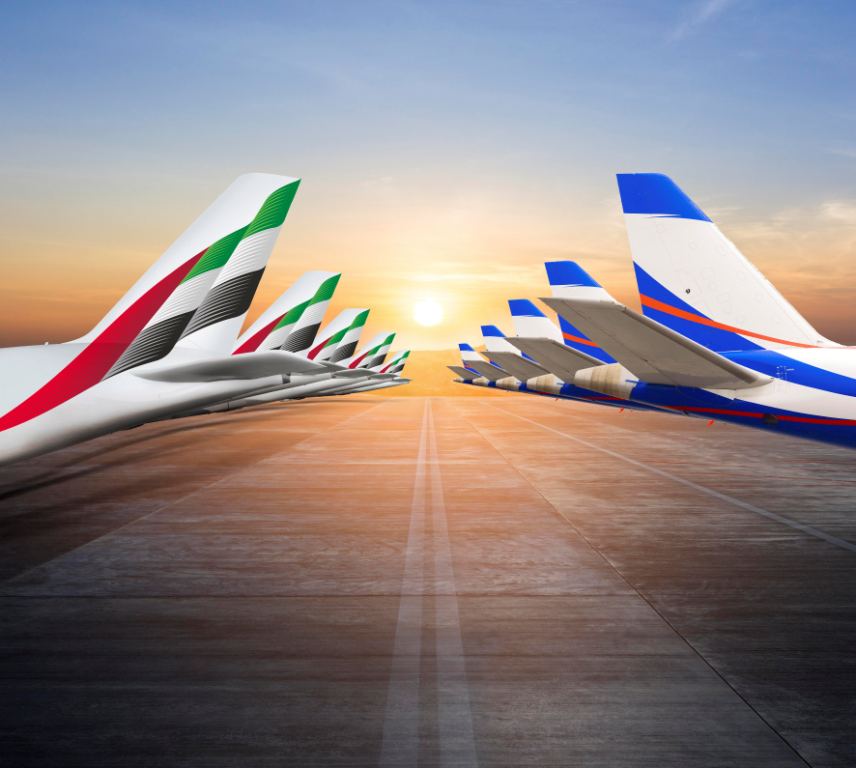
Two key players in the Nigerian aviation industry, Emirates and Air Peace, have activated a bilateral interline agreement aimed to expand air connectivity between Africa, the United Arab Emirates (UAE), and London.
The two airline operators are building on their existing partnership to offer their passengers frictionless, single-ticket travel and with through-checked baggage, on select routes, resulting in greater travel comfort and convenience for customers.
Beyond the 13 cities in Nigeria already available for Emirates passengers on Air Peace’s network, the enhanced interline agreement now enables travellers to connect with Banjul in Gambia and Dakar in Senegal, both via Abidjan; and with Freetown in Sierra Leone and Monrovia in Liberia, both via Accra. The additional gateways allow more passengers in Africa to access Emirates world-class product and services, and vast global network.
The agreement allows Air Peace to connect its extensive West and Central African route system into Emirates’ hub in Dubai, and on key destinations including London Heathrow, London Gatwick and London Stansted, Abidjan, Accra and, of course, Lagos.
With huge demand for travel between Nigeria and the United Kingdom, providing Air Peace passengers with increased choice, flexibility, and global reach.
Emirates operates a Boeing 777-300ER on its Dubai-Lagos route, providing travellers with one of the best experiences in the sky.
Passengers can dine on regionally inspired multi-course menus developed by a team of award-winning chefs complemented by a wide selection of premium beverages, while tuning in to over 6,500 channels of global entertainment – including Nollywood classics – on ice, Emirates’ award-winning inflight entertainment system.
As one of only two airlines operating a First Class cabin into Nigeria, Emirates offers an unrivalled travel experience defined by comfort, privacy and luxurious touches.
With a fleet of over 50 aircraft including Boeing 777s, Boeing 737s, Embraers, Air Peace operates an expanding network of domestic, regional, and international services, connecting major cities across Africa and beyond.
The airline remains committed to strengthening intra-African connectivity, supporting trade and tourism, and contributing meaningfully to economic development across the continent.
“Enhancing our interline partnership with Air Peace allows us to expand our footprint across more of Africa, creating new opportunities for people to fly better with Emirates, while helping international tourists explore more of the region, via Lagos.
“We remain committed to working with strategic partners such as Air Peace to further strengthen Nigeria’s aviation, tourism and trade sectors,” the Chief Commercial Officer for Emirates, Mr Adnan Kazim, said.
His counterpart at Air Peace, Nowel Ngala, while commenting, said, “This interline agreement with Emirates represents a major step in Air Peace’s strategic vision to connect Africa more efficiently to global markets.
“By combining our strong regional presence with Emirates’ extensive international network, we are delivering seamless connectivity, improved travel experience, and greater access to key global destinations for African travellers. This partnership further reinforces Air Peace’s role as a critical bridge between Africa and the global aviation ecosystem.”



By Aduragbemi Omiyale
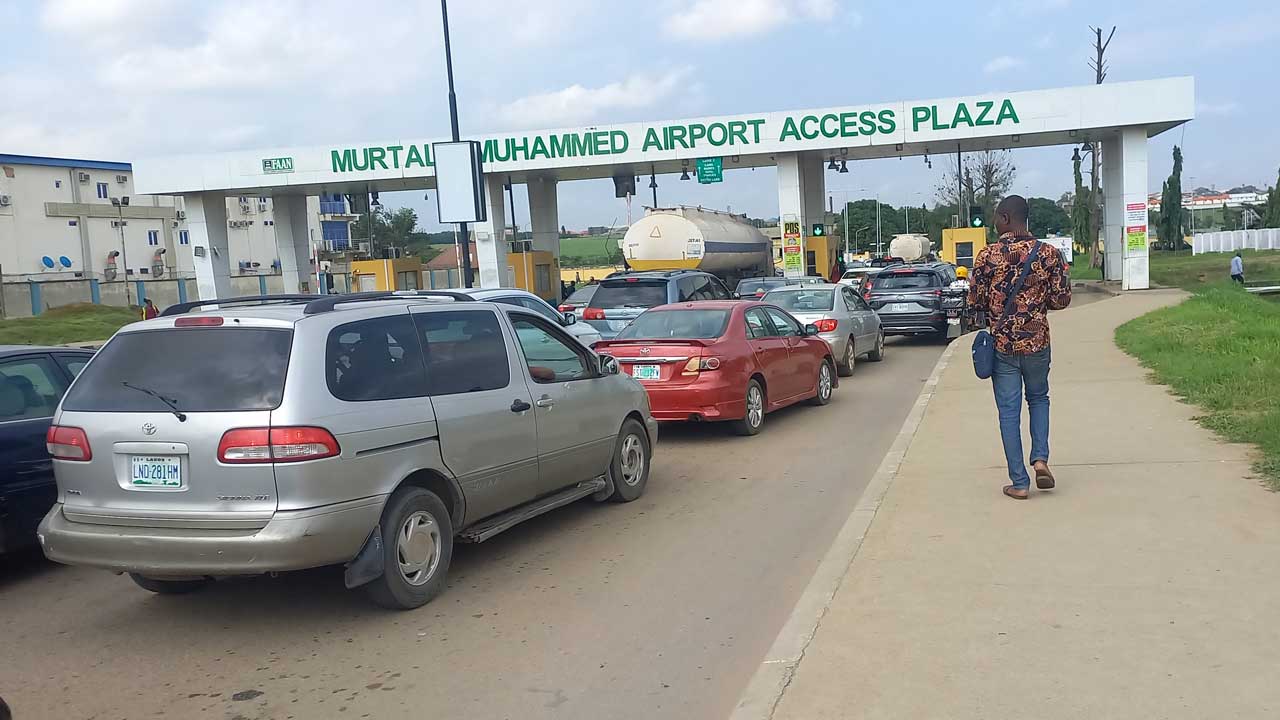
The cashless airport toll gate payment system introduced by the Federal Airports Authority of Nigeria (FAAN) has been suspended by President Bola Tinubu.
At the Federal Executive Council (FEC) meeting held on Wednesday in Abuja, Mr Tinubu directed the agency to immediately return to the status quo, pending the development of a more efficient system.
The Minister of Aviation and Aerospace Development, Mr Festus Keyamo, who announced the suspension after the FEC meeting today, said the action followed gridlock that trailed the new system, which caused passengers to miss their flights.
FAAN had commenced the cashless payment system for airport toll gates across the country in a bid to block revenue leakages and adopt an electronic payment system instead of cash.
But this policy caused traffic gridlock at several airports, especially those in Lagos and Abuja.
“Mr President was very concerned about the welfare of Nigerians and the fact that most Nigerians were losing their flights, missing their flights.
“So, Mr President, out of empathy, directed today that we should suspend the present system because it creates a lot of gridlock, and Nigerians are suffering as a result of it,” Mr Keyamo informed newsmen.
“The major reason why Mr President took this decision is to eliminate the present gridlock that we are experiencing, especially at both the Lagos and Abuja toll gates leading to the airport.
“That’s the major reason, not that the President is happy with the cash system,” he added.
The Minister further said the President directed stakeholders to “go back and, if possible, even engage the private sector to ensure that we establish an electronic system by which we can collect these revenues for the federal government at the gates, to the extent that it will not create the gridlock that we are having right now.”
“We are going to do a hybrid system whereby we can collect cash temporarily and, of course, use the cards that they have collected temporarily for now,” Mr Keyamo added.

By Adedapo Adesanya
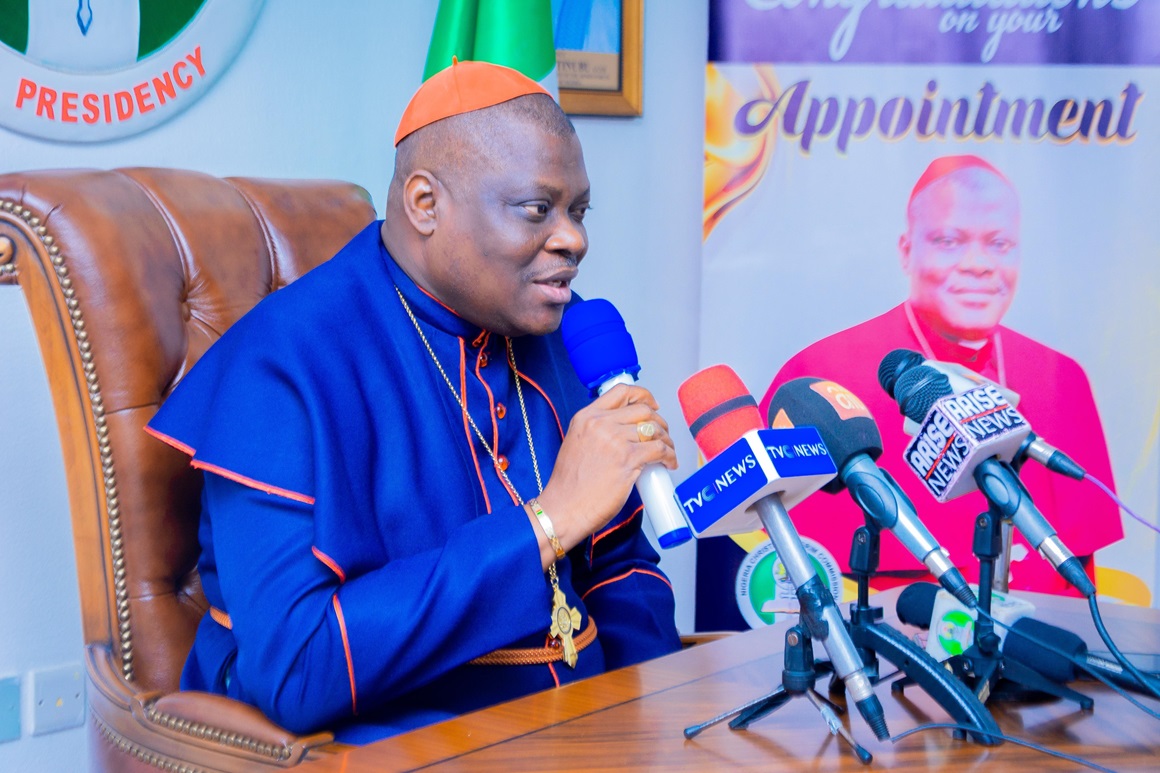
The Nigeria Christian Pilgrim Commission (NCPC) has suspended pilgrimages to Israel and all other Middle East nations owing to the escalation of tensions in the Gulf region.
The Executive Secretary of NCPC, Bishop Stephen Adegbite, said during a press briefing in Lagos on Tuesday that every pilgrimage of the commission, as well as of the private pilgrimage operators, has been suspended until security in Israel and all the Middle East returns to normalcy.
Bishop Adegbite also assured that the over 500 pilgrims that made up the last batch of the 2025 pilgrimage have safely landed in Nigeria on Tuesday.
Recall that the United States and Israel have carried out waves of airstrikes across Iran, and Iran has retaliated with drone and missile attacks against US-aligned countries across the Middle East.
The campaign has killed several of Iran’s top military and political leaders, including the supreme leader, Ayatollah Ali Khamenei.
Iran retaliated the death of its supreme leader by targeting US military assets in several Gulf countries, with missiles reportedly striking sites in Bahrain, Qatar, Kuwait, and the United Arab Emirates (UAE).
The US military has acknowledged the deaths of six service members, while the Iranian Red Crescent Society said more than 500 people have been killed in the country.
This development has made the region unstable and puts Nigerians making pilgrimage to the Middle East at risk.
By Adedapo Adesanya
The Federal Competition and Consumer Protection Commission (FCCPC) says its investigation uncovered how airlines manipulated flight fares and fixed prices arbitrarily during the last Christmas and New Year’s holidays.
The findings, contained in an interim report released on Thursday by the commission’s department of surveillance and investigations, compared domestic airline pricing from the December 2025 festive period with post-peak January 2026 fare levels.
The FCCPC, in a statement signed by its director of corporate affairs, Mr Ondaje Ijagwu, said it established cases of price fixing by local airlines, documented abuse during the festive season, and would soon begin a probe of foreign airlines, following its ongoing country-wide investigation, which was announced earlier in January.
“A review undertaken by the Federal Competition and Consumer Protection Commission (FCCPC) has uncovered patterns of price manipulation perpetrated by some local airlines during the last festive season. The forensic exercise benefitted from data collated by the commission from airlines operating local routes in the country,” the report said.
The report compares domestic airline pricing from the December 2025 festive period with post-peak January 2026 fare levels.
The FCCPC’s preliminary analysis indicated that fares recorded during the December peak period were materially higher than those observed in the post-peak period across several routes despite relative stability in critical operating variables such as fuel price, government taxes and foreign exchange.
“The differences observed in fares therefore appear to reflect airlines’ arbitrary pricing decisions, including yield management and capacity allocation, rather than any variation in regulatory fees,” the report said.
It also noted that route-level analysis showed that higher fares coincided with periods of reduced seat availability during predictable seasonal demand peaks. On some high-density routes, peak fares were clustered within relatively narrow ranges across several operators.
It noted that on certain corridors, such as Abuja-Port Harcourt, peak fares were several times higher than corresponding post-peak levels. “On selected routes, the difference in the price of a single ticket reached approximately N405,000. Median fares across the sampled routes also rose markedly during the festive window when compared with post-peak benchmarks,” it said.
The report identified the relevance of Sections 59, 72, 107, 108, 124 and 127 of the Federal Competition and Consumer Protection Act 2018, which address the prohibition of agreements in restraint of competition, the prohibition of abuse of a dominant position, the offence of price-fixing, conspiracy to commit offences under the Act, the right to fair dealings, and the prohibition of unfair, unreasonable or unjust contract terms.
The FCCPC, however, recognised that seasonal demand pressures, scheduling constraints and fleet utilisation might also affect pricing during the peak travel period. It added that these actors remain under consideration as part of the commission’s ongoing review.
Commenting on the release of the interim report, the executive vice chairman and chief executive officer of the FCCPC, Tunji Bello, said the review was part of the commission’s statutory responsibility to promote competitive markets and safeguard consumers.
“This assessment is intended to provide clarity on pricing behaviour during predictable peak travel periods. The Commission’s role is not to disrupt legitimate commercial activity, but to ensure that market outcomes remain consistent with competition and consumer protection principles under the law,” Mr Bello said.
He noted that the commission was conducting further structural and route-level analysis before reaching any conclusions.
“It is important to emphasise that this is an interim report. Our next action will be dictated by the full facts established at the end of the review exercise. Then, the Commission will decide whether any regulatory guidance, engagement or enforcement steps are necessary, strictly in accordance with the law,” he said.
Bello further announced that foreign airlines would come under investigation by the FCCPC once the ongoing review of local airlines was concluded.
He noted that the probe of the foreign airlines would be in view of widespread complaints of exploitative fares they allegedly charge Nigerians on certain routes compared to fares in neighbouring countries of equal distance.












-
 Feature/OPED6 years ago
Davos was Different this year
-
Travel/Tourism10 years ago
Lagos Seals Western Lodge Hotel In Ikorodu
-

 Showbiz3 years ago
Estranged Lover Releases Videos of Empress Njamah Bathing
-
 Banking8 years ago
Sort Codes of GTBank Branches in Nigeria
-

 Economy3 years ago
Subsidy Removal: CNG at N130 Per Litre Cheaper Than Petrol—IPMAN
-

 Banking3 years ago
Sort Codes of UBA Branches in Nigeria
-

 Banking3 years ago
First Bank Announces Planned Downtime
-

 Sports3 years ago
Highest Paid Nigerian Footballer – How Much Do Nigerian Footballers Earn