Connect with us

Travel/Tourism

Italy Pledges €1.4m Investment to Preserve Kanyaka Island in Moçambique

Published

on

Kanyaka Island

By Kestér Kenn Klomegâh

The tourism handbook or guidebook says Kanyaka is in Maputo, Southern Moçambique (Mozambique). It further says that Kanyaka is situated nearby to Tóbia and Jona. It is an island which attracts tourists for leisure, so the Moçambique government attaches importance to its development and preservation.

Rádio Moçambique reported in early June that the Italian Development Cooperation Agency (IDCA) would invest around €1.4 million in preserving and enhancing the environmental heritage of Kanyaka Island.

Through environmental protection, tourism development and sustainable agriculture projects, the Kanyaka community would benefit from tools to preserve the island’s ecosystem better. The ‘MangAction’ project, within the framework of the ManGrowth initiative, was formally presented to the district of Kanyaka.

Project coordinator Frederica Ferrari said that the three-year project would deliver benefits to the entire island community. The initiative would be managed by a consortium made up of civil society organisations ICEI – Istituto Cooperazione Economica Internazionale, WeWorld Onlus, with Natura Moçambique, IUCN Moçambique and Abiodes (Associação para Desenvolvimento Sustentável).

It aims to preserve and value the environmental heritage for sustainable and resilient development in the Bay of Maputo. The project was launched with the support of the Kanyaka Tour Operators Association (AOTUKA), whose chairman Angelo Manguele said that the biggest benefit of the project would be gaining knowledge of the best ways to preserve the island’s environmental heritage.

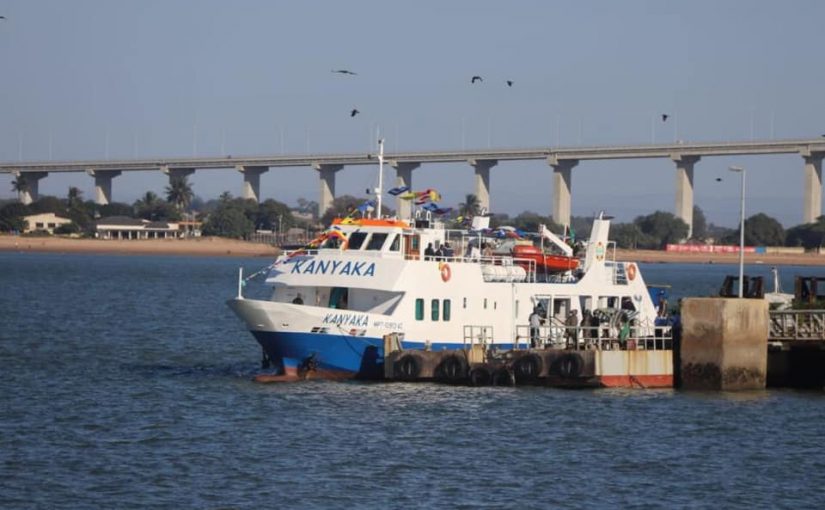
Moçambican President Filipe Nyusi previously inaugurated a new ferry boat that operates between central Maputo and the Island. The boat, named “Kanyaka”, cost $2.7 million and was acquired in Greece. It has the capacity to carry 156 passengers and five tonnes of cargo, including one vehicle. The boat, built in 2008, has a top speed of 14 knots (26 kilometres an hour).

The trip from Maputo to Kanyaka now takes one hour and 45 minutes, compared with two and a half hours on the previous ferry, which could only carry 70 passengers. The islanders requested a new ferry when Nyusi visited Kanyaka.

The new ferry service, the President said, would overcome the common perception that Island “is too far away”. Poor transport links, he added, had made life on the island more expensive and led to shortages in basic goods that must be shipped in from Maputo. The isolation of Inyaka also inhibited its tourism potential.

Nyusi said he was sure that the new ferry would reduce the suffering of the islanders and help improve the business environment in this part of the country. It was important, he added, to guarantee safety and comfort for the 6,000 inhabitants of Inyaka who regularly travel to and from central Maputo.

The boat now ensures regular supplies of basic goods and of medicines and reduces the time needed to take people who fall ill on Island to Maputo hospitals. “The island has a strong tourist potential,” said the President, “and Moçambican and foreign tourists can now visit in less time and with greater comfort. The 12,000 species of the marine ecosystem can be a source for ecotourism.”

The ferry is operated by the company Transmaritima, and Nyusi urged the company’s managers to design package trips for tourists visiting the island. The sustainability of the ferry service depends on the management capacity, not a burden on the government.

The country’s natural environment, wildlife, and historic heritage provide opportunities for beach, cultural and ecotourism. There are many different kinds of dances from tribe to tribe which are usually ritualistic in nature. The Makonde are known for their wood carving and elaborate masks, which are commonly used in traditional dances. Moçambique is located in southeastern Africa, bordered by the Indian Ocean to the east, and has approximately 30 million population.


1 Comment

Leave a Reply

Your email address will not be published. Required fields are marked *

Travel/Tourism

Dangote Refinery Slashes Jet Fuel Price to N1,650 Per Litre

Published

on

aviation fuel Jet A1

By Aduragbemi Omiyale

The price of aviation fuel, also known as Jet A1, has been reduced by Dangote Petroleum Refinery and Petrochemicals to N1,650 per litre from N1,750 per litre.

The company, in a statement, said this price slash was done to ease cost pressures on airlines and ensure an uninterrupted fuel supply across the country.

This is in addition to a 30-day interest-free credit facility backed by bank guarantees (BG) for marketers and airline operators and a shift from a dollar-denominated pricing structure to a naira-based model.

The private refiner also stated that these interventions come amid growing concerns over the rising operational costs faced by domestic carriers, with aviation fuel accounting for a significant portion of airline expenses.

Industry stakeholders have repeatedly warned that escalating Jet A1 prices were placing severe financial strain on operators and threatening the sustainability of flight operations.

The refinery’s decision is expected to provide relief to airline operators by lowering fuel procurement costs, improving operational stability, and supporting efforts to moderate airfares.

Continue Reading

Travel/Tourism

Airlines Face Fresh Turbulence Over Jet Fuel Scarcity

Published

on

Jet Fuel Scarcity

By Adedapo Adesanya

The National Association of Aircraft Pilots and Engineers (NAAPE) has revealed that Nigerian airlines are battling a severe jet fuel crisis, triggered by soaring jet fuel prices and supply shortages.

This is the latest blow to the aviation industry, which escaped an industrial action by airline operators over the price of jet fuel.

The latest development is increasing costs, disrupting flights and creating concerns about operational safety and sustainability.

According to Reuters, the persistent scarcity of jet fuel has triggered ⁠widespread operational challenges, including flight delays, route adjustments and extended crew duty periods, as airlines struggle to manage schedules amid rising costs.

According to the President of the association, Captain Bunmi Gindeh, the fuel shortages were pushing crews beyond planned limits, increasing fatigue and potentially eroding safety margins in an industry governed by strict rest regulations.

According to local carrier Rano Air, it revealed that jet fuel prices had more than quadrupled, as well as made some routes commercially unsustainable, forcing operational adjustments.

Other carriers have also begun rescheduling or cancelling flights and cutting unprofitable routes, industry ‌sources ⁠cited by Reuters said.

This comes at a difficult time for Nigeria’s aviation sector, already strained by foreign-exchange volatility, high aircraft maintenance costs, airport infrastructure strains and fuel price swings.

Airlines group, Airline Operators of Nigeria (AON), last month threatened to suspend operations over what they described as crippling and artificially inflated jet fuel prices.

Nigeria’s airline industry carries millions ⁠of passengers annually across an extensive domestic network and plays a critical role in connecting cities where road travel is often slow or insecure, making reliable air services economically and socially important.

The publication reported that the Nigerian Midstream ⁠and Downstream Petroleum Regulatory Authority (NMDPRA) has said fuel prices would not be capped, adding that any decisions on deregulated products would be formally communicated.

The crisis is worsening existing problems in Nigeria’s aviation sector, including forex instability, expensive aircraft maintenance and weak infrastructure.

Continue Reading

Travel/Tourism

FG Unveils Leasing Initiative to Cut Airlines’ Fleet Acquisition Costs

Published

on

aviation workers

By Adedapo Adesanya

The federal government has approved the establishment of a national aircraft leasing company aimed at easing access to modern fleets for domestic airlines and transforming aviation financing in Nigeria.

The minister of aviation and aerospace development, Mr Festus Keyamo, announced the decision after a meeting of the Federal Executive Council (FEC), describing the move as a significant shift in how Nigerian carriers will acquire and finance aircraft.

Mr Keyamo said the proposed company would operate as a private-sector-driven Special Purpose Vehicle (SPV) with government backing.

“This initiative is a game-changer for our aviation industry. It eliminates the long-standing challenges Nigerian airlines face in accessing aircraft on competitive terms and positions the country as a hub for aviation financing in Africa,” he said.

According to the minister, the new platform will allow airlines to source aircraft through a centralised system, replacing the current model where operators negotiate individually with international lessors, often at higher costs and stricter terms.

Mr Keyamo noted that the government’s role would be largely supportive, providing sovereign guarantees to boost investor confidence, while private sector players drive the project.

“Through the Ministry of Finance Incorporated, the government will hold equity and earn revenue without direct financial investment. Our primary obligation is to provide the confidence investors need, especially in ensuring asset security,” he added.

The initiative, he said, has already begun attracting interest from both local and international investors, signalling early confidence in its viability.

Beyond supporting Nigerian carriers, the leasing company is also expected to extend services across West Africa and the broader continent, positioning Nigeria as a regional hub for aircraft leasing.

Airlines in Nigeria have come into focus in recent weeks due to renewed concerns over the financial sustainability of operators, which almost forced them to suspend operations last month. However, the Bola Tinubu-led government approved a 30 per cent relief on debts owed by local ‌airlines to aviation agencies and ordered talks involving fuel marketers, airlines, and ​regulators to reach a ​fair jet fuel price.

Continue Reading

Trending