Connect with us

Travel/Tourism

Two Firms Battle for Lagos-Ibadan Rail e-Ticketing Contract

Published

on

e-ticketing contract

By Adedapo Adesanya

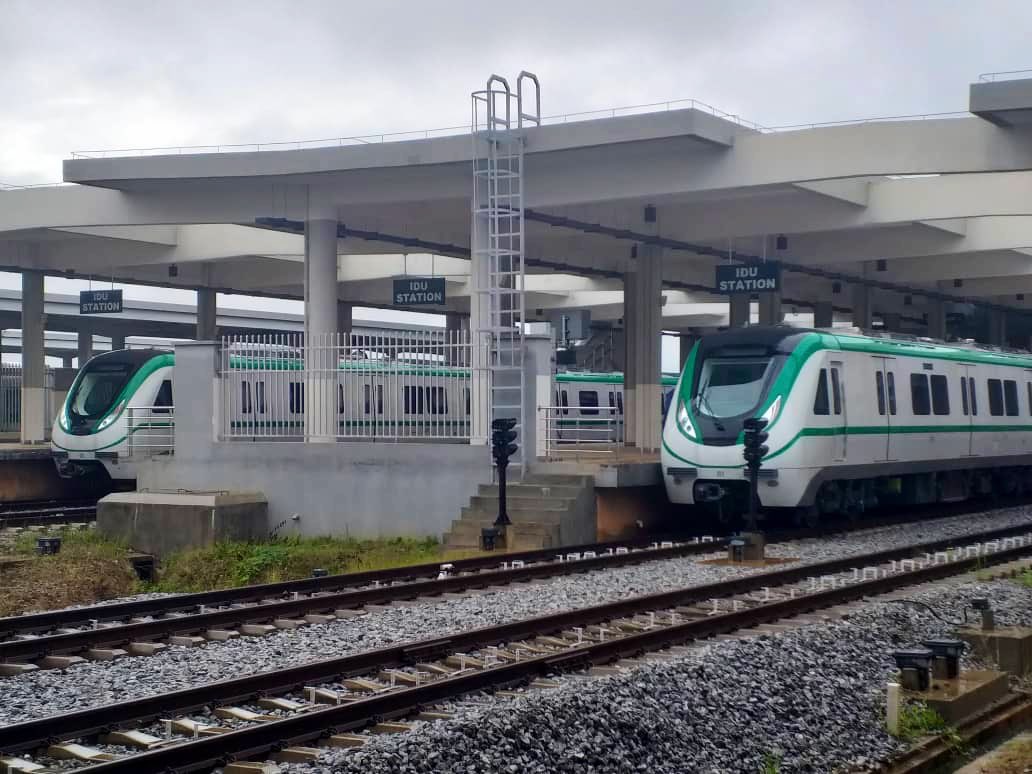
The Nigerian Railways Corporation (NRC) has pre-qualified five firms to submit their technical and financial bids for the provision of e-ticketing solutions for Lagos-Ibadan and Warri Itakpe Standard Gauge railway lines.

Two bidders were shortlisted for the Lagos-Ibadan line e-ticketing contract while three lots were shortlisted for the Warri-Itakpe line.

Euhoria Press Limited and Paragon and Global Software Digital Solutions Limited were shortlisted for Lagos-Ibadan, while the three shortlisted for Warri-Itakpe included Fane International Consult Ltd., Turnaround Engineering Ltd. and Electronic Payplus Ltd.

The Director Procurement of NRC, Mr Ben Iloanusi, explained at the Requests for Proposal (RFP) exercise in Lagos that NRC had issued an RFP that would analyse the technical solution and the financial strength of the bidders.

The Director, Transport Infrastructure of the Infrastructure Concession Regulatory Commission (ICRC), Dr Emmanuel Onwodi, commended NRC for their diligence and transparency in selecting e-ticketing service providers.

Mr Onwodi said that the commission was running a two-stage process with the idea of coming up with a preferred bidder that would go into partnership with the Federal Government to deliver the secure solution for the running of the e-ticketing.

“What we have done before now is the Request for Qualification (RFQ) at the end of the exercise, we have pre-qualified five firms and we have issued them RFPs, meaning that they had asked to submit their technical and financial bids.

“We have not started the evaluation of the bidders yet, we just want to find out if all the requirements such as soft copies of their proposal, three years audited statements, power of attorney, and all documents were written in English to make the interpretation easy.

“Congratulations to all the bidders, they all passed the RFP exercises and now the evaluation team will pick each of the submissions one after the other and evaluate based on merit,” Mr Onwodi said.

He said that after the approval of the evaluation report in line with the approval processes, the authority would invite the successful bidder for negotiations.


Adedapo Adesanya is a journalist, polymath, and connoisseur of everything art. When he is not writing, he has his nose buried in one of the many books or articles he has bookmarked or simply listening to good music with a bottle of beer or wine. He supports the greatest club in the world, Manchester United F.C.

Travel/Tourism

Customs Tackles Airport Delays With Smart Declaration Platform

Published

on

Smart Declaration Platform

By Modupe Gbadeyanka

In a move aimed at improving passenger clearance, compliance and customs operations, the Nigeria Customs Service (NCS) has introduced the Simplified Customs Advanced Declaration System (SCADS).

This platform was launched at the International Wing of the Nnamdi Azikiwe International Airport, Abuja, on Monday, May 18, 2026.

This initiative will simplify baggage declaration for inbound international passengers and reduce manual bottlenecks, improve transparency in revenue assessment and enhance operational efficiency at Nigeria’s international airports.

It allows passengers to declare items before arrival, thereby reducing clearance time while improving compliance and operational integrity.

The introduction of this scheme became necessary following operational challenges encountered on the Service’s previous passenger declaration platform earlier this year, and rather than allow the setbacks to slow operations, customs chose to develop a stronger and more efficient alternative.

“When the earlier platform experienced operational challenges, we chose not to see it as a setback. We saw it as an opportunity to build something better, stronger and more efficient.

“For passengers, this system creates the opportunity for advance declaration before arrival. It means faster clearance, easier compliance and smoother movement through our airports,” the Deputy Comptroller-General of Customs in charge of ICT/Modernisation, Ms Oluyomi Adebakin, said yesterday.

She noted that the system will eliminate subjective revenue assessment by ensuring that duties are automatically generated based on declared items, their quantities, and their actual values.

“When we talk about revenue collection, it is not about collecting more or less. It is about collecting the right revenue. With this system, assessment will now be more objective, accurate and driven by data,” she stated.

Earlier, the Customs Area Controller for FCT Area Command, Comptroller Victoria Alibo, described the selection of the command for the pilot phase as a vote of confidence in its operational capacity.

According to her, the new platform integrates passenger baggage and e-commerce declarations into a single digital framework designed to support global Customs best practices.

“SCADS is designed to simplify declarations, reduce clearance time, eliminate manual bottlenecks and align our operations with international standards,” Ms Alibo said, adding that the pilot phase will run for five days, from Monday, May 18, to Friday, May 22, 2026, during which officers will evaluate the system in a live environment ahead of nationwide deployment.

Continue Reading

Travel/Tourism

Dangote Refinery Slashes Jet Fuel Price to N1,650 Per Litre

Published

on

aviation fuel Jet A1

By Aduragbemi Omiyale

The price of aviation fuel, also known as Jet A1, has been reduced by Dangote Petroleum Refinery and Petrochemicals to N1,650 per litre from N1,750 per litre.

The company, in a statement, said this price slash was done to ease cost pressures on airlines and ensure an uninterrupted fuel supply across the country.

This is in addition to a 30-day interest-free credit facility backed by bank guarantees (BG) for marketers and airline operators and a shift from a dollar-denominated pricing structure to a naira-based model.

The private refiner also stated that these interventions come amid growing concerns over the rising operational costs faced by domestic carriers, with aviation fuel accounting for a significant portion of airline expenses.

Industry stakeholders have repeatedly warned that escalating Jet A1 prices were placing severe financial strain on operators and threatening the sustainability of flight operations.

The refinery’s decision is expected to provide relief to airline operators by lowering fuel procurement costs, improving operational stability, and supporting efforts to moderate airfares.

Continue Reading

Travel/Tourism

Airlines Face Fresh Turbulence Over Jet Fuel Scarcity

Published

on

Jet Fuel Scarcity

By Adedapo Adesanya

The National Association of Aircraft Pilots and Engineers (NAAPE) has revealed that Nigerian airlines are battling a severe jet fuel crisis, triggered by soaring jet fuel prices and supply shortages.

This is the latest blow to the aviation industry, which escaped an industrial action by airline operators over the price of jet fuel.

The latest development is increasing costs, disrupting flights and creating concerns about operational safety and sustainability.

According to Reuters, the persistent scarcity of jet fuel has triggered ⁠widespread operational challenges, including flight delays, route adjustments and extended crew duty periods, as airlines struggle to manage schedules amid rising costs.

According to the President of the association, Captain Bunmi Gindeh, the fuel shortages were pushing crews beyond planned limits, increasing fatigue and potentially eroding safety margins in an industry governed by strict rest regulations.

According to local carrier Rano Air, it revealed that jet fuel prices had more than quadrupled, as well as made some routes commercially unsustainable, forcing operational adjustments.

Other carriers have also begun rescheduling or cancelling flights and cutting unprofitable routes, industry ‌sources ⁠cited by Reuters said.

This comes at a difficult time for Nigeria’s aviation sector, already strained by foreign-exchange volatility, high aircraft maintenance costs, airport infrastructure strains and fuel price swings.

Airlines group, Airline Operators of Nigeria (AON), last month threatened to suspend operations over what they described as crippling and artificially inflated jet fuel prices.

Nigeria’s airline industry carries millions ⁠of passengers annually across an extensive domestic network and plays a critical role in connecting cities where road travel is often slow or insecure, making reliable air services economically and socially important.

The publication reported that the Nigerian Midstream ⁠and Downstream Petroleum Regulatory Authority (NMDPRA) has said fuel prices would not be capped, adding that any decisions on deregulated products would be formally communicated.

The crisis is worsening existing problems in Nigeria’s aviation sector, including forex instability, expensive aircraft maintenance and weak infrastructure.

Continue Reading

Trending