World
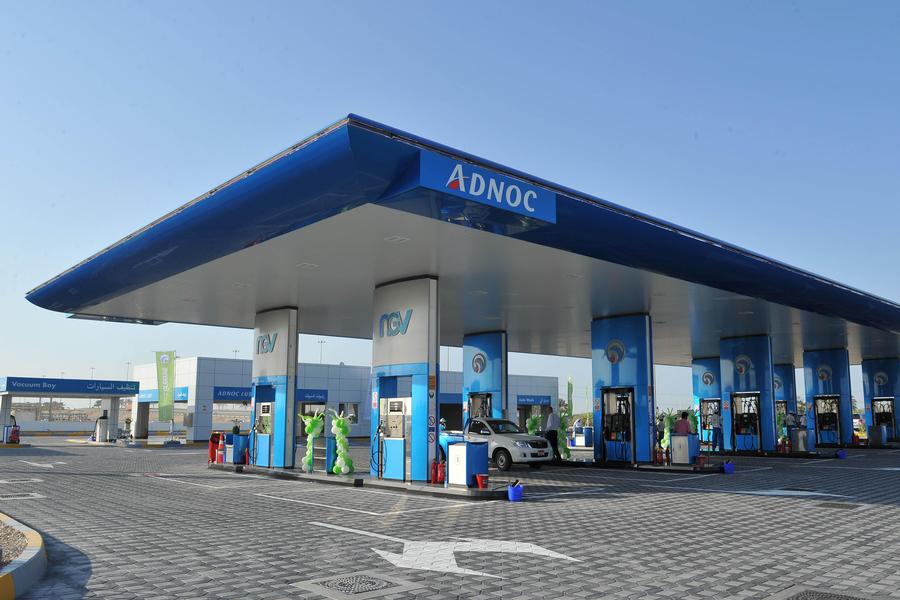
ADNOC Plans $132 Billion CAPEX Program
By Dipo Olowookere
The Abu Dhabi National Oil Company (ADNOC) has announced its intention to launch a new integrated gas strategy and increase its oil production capacity to 4 million barrels per day (mmbpd) by the end of 2020 and 5mmbpd by 2030, following approval from the Supreme Petroleum Council (SPC), the highest governing body of the oil and gas industry in Abu Dhabi.
The company also announced capital investment growth of 132.33 billion between 2019 and 2023 and new discoveries of 1 billion barrels of oil.
ADNOC’s gas strategy will add potential resources that will enable the UAE to achieve gas self-sufficiency, with the aim of potentially transitioning to a net gas exporter. ADNOC also announced new discoveries of gas, totalling 15 trillion standard cubic feet (tscf).
The gas strategy will sustain LNG production to 2040 and allow ADNOC to seize incremental LNG and gas-to-chemicals growth opportunities, where they arise, from the UAE’s dynamic demand-supply position and evolving energy mix.
Speaking at the annual SPC meeting, Sultan Ahmed Al Jaber, UAE Minister of State and ADNOC Group CEO, said: “Our historic gas self-sufficiency strategy marks an important new, accelerated phase in the delivery of ADNOC’s 2030 growth strategy. We will continue to unlock and deliver increased and commercially viable production from our oil and gas reserves, in response to the world’s growing demand for energy.
“The incremental increase in our oil production capacity will enable ADNOC to continue to be a reliable and trusted energy supplier that has the flexibility and capacity to respond and capitalize on the forecasted growth in demand for crude.”
“At the same time, the substantial investments we will make, in the development of new and undeveloped reservoirs, gas caps and unconventional resources, will ensure we can competitively meet the UAE’s growing demand for power generation and industrial use while maintaining our international commercial commitments and seizing incremental LNG and gas-to-chemicals growth opportunities,” Al Jaber added.
ADNOC’s integrated oil and gas strategy underpins its $45 billion downstream investment plans, announced in May, which will see the company triple production of petrochemicals to 14.4 million tons per year by 2025. In May, at its Downstream Investment Forum, ADNOC unveiled a blueprint to create the world’s largest integrated refining and petrochemicals complex in Ruwais, which will enable it to further stretch the value of every barrel it produces.
The discovery of significant new oil reserves endorses the Abu Dhabi government’s decision, earlier this year, to open six geographical oil and gas blocks for competitive bidding. Based on existing data from detailed petroleum system studies, seismic surveys, log files and core samples from hundreds of appraisal wells, estimates suggest these new blocks hold multiple billion barrels of oil and multiple trillion cubic feet of natural gas. The first exploration and production licenses are expected to be awarded in the first quarter of 2019.
The licensing strategy represents a major advance in how Abu Dhabi unlocks new opportunities and maximizes value from its hydrocarbon resources. It is also consistent with ADNOC’s approach to expanding its strategic partnerships across all areas of its business. The successful bidders will enter into agreements granting exploration rights and, provided defined targets are achieved in the exploration phase, be granted the opportunity to develop and produce any discoveries with ADNOC, under terms set out in the bidding package.
Industry projections, Al Jaber highlighted, validate ADNOC’s integrated oil and gas strategy. For the first time, the world is on the verge of consuming 100 million barrels of oil per day, with oil consumption increasing by an additional 10 million barrels per day by 2040, he said. Over the same period, demand for natural gas will increase by 40 percent, while the market for higher-value polymers and petrochemicals will grow by 60 percent.
World
Russia, Tanzania Boost Bilateral Economic Ties
By Kestér Kenn Klomegâh
From Africa’s perspectives on attaining economic sovereignty, Tanzania, located in East Africa, has seriously begun showing the investment model as Russia pledges tremendous support during the meeting of the Russian-Tanzanian intergovernmental commission in Arusha, in mid-May 2026. Russia is undertaking various development projects as well as addressing bilateral issues relating to investment, trade and innovation on the African continent, and described Tanzania as the gateway to the broader East African region.
Step 1: Gazprom is interested in implementing comprehensive gas projects in Tanzania, according to the report issued by the Ministry of Economic Development. It says Gazprom, in addition to selling natural gas, LNG, and petrochemical products, is ready to supply technologies and equipment for gas production, processing, transportation, and sales. It says Gazprom is continuing its work on a pilot project launched last year to supply two mobile gas tankers to Tanzania.
NOVATEK has also indicated its preparedness to participate in natural gas exploration and production projects in Tanzania, and for now, the staff are awaiting information on the date of the fifth round of license allocation for exploration blocks, as well as on the acquisition of blocks outside the tender process—specifically, at the Ntorya field. “Tanzania has significant resource potential, and the economy’s growing demand for electricity and fuel opens up significant opportunities for joint projects. The current situation in the Strait of Hormuz compels us to seek new solutions to ensure that it does not reduce economic growth on the African continent, and particularly in Tanzania,” said Maxim Reshetnikov, head of the Ministry of Economic Development, speaking at a meeting of the Russian-Tanzania intergovernmental commission in Arusha.
Step 2: Russia and Tanzania plan to sign a memorandum of cooperation in tourism in Moscow. In June, as part of the “Travel!” forum in Moscow (June 10-14), the Tanzanian delegation was already given the invitation to participate, noted Reshetnikov while further explaining that Russia is interested in launching direct air service between the two countries, which would “give a powerful boost to tourism development.”
Air Tanzania’s initiative to launch flights from Moscow to Dar es Salaam, with high hopes that Russia and Tanzania will complete the necessary procedures for the entry into force of the new air traffic agreement as quickly as possible. In particular, officials are awaiting notification from the Tanzanian side regarding the entry into force of this agreement.
Air Tanzania will begin flights from Dar es Salaam, Tanzania’s largest city, on May 28. According to the online flight information at the capital’s Vnukovo Airport, flights on this route will include a stopover on the island of Zanzibar. Flights will operate three times a week, on Tuesdays, Thursdays, and Saturdays. The program will run until October 24.
Step 3: Tanzanian President Samia Suluhu Hassan is expected on an official state visit to Russia in June, and that will boost bilateral trade and investment, and provide an additional impetus to developing mutual cooperation.
“In preparation for the upcoming high-level meeting, I propose discussing both promising areas and specific projects… and identifying key areas for further cooperation. In addition to trade, these include energy, transport, industry, agriculture, tourism, science, and education,” Reshetnikov said.
The Tanzanian delegation is expected to participate in the St. Petersburg International Economic Forum, which will be held from June 3 to 6. Usually, at the St. Petersburg forum, the African agenda is of great importance. The programme includes the Russia-Africa Business Dialogue, which, since 2016, has been the annual meeting place for representatives of Russian and African business and official communities. Roscongress Foundation organises it.
World
AFC Backs Future Africa, Lightrock in $100m Tech VC Funding Bet
By Adedapo Adesanya
Infrastructure solutions provider, Africa Finance Corporation (AFC), has committed parts of a $100 million investment to fund managers—Future Africa and Lightrock Africa—to boost African tech venture backing.
The commitment to Lightrock Africa Fund II and Future Africa Fund III is the first tranche of a broader deployment, AFC noted.
The corporation added that it is actively evaluating a pipeline of additional Africa-focused funds spanning a range of strategies and stages, with further commitments expected in the near term.
This is part of its efforts to plug a persistent gap in long-term institutional capital on the continent, which constrains the development and scaling of high-potential technology businesses across the continent, especially with a drop in foreign investments.
“Through this commitment, AFC will deploy catalytic capital in leading Africa-focused technology Funds and, in particular, African-owned fund managers,” it said in a statement on Monday.
AFC aims to address the underrepresentation of local capital in venture funding by catalysing greater participation from African institutional investors and deepening local ownership within the ecosystem.
Despite some success stories on the continent, local institutional capital remains significantly underrepresented across many fund cap tables, with the majority of venture funding continuing to flow from international sources.
AFC’s commitment is designed to shift that dynamic, according to Mr Samaila Zubairu, its chief executive.
“Across the continent, young Africans are not waiting for the digital economy to arrive; they are seizing the moment — adopting technology, creating markets and solving real economic problems faster than infrastructure has kept pace. That is the investment signal.
“AFC’s $100 million Africa-focused Technology Fund will accelerate the convergence of growing demand, rapid technology adoption, youthful demographics and the enabling infrastructure we are building.
“Digital infrastructure is now as fundamental to Africa’s transformation as roads, rail, ports and power — enabling productivity, payments, logistics, services, data and cross-border trade, while creating jobs and industrial scale.”
Mr Pal Erik Sjatil, Managing Partner & CEO, Lightrock, said: “We are delighted to welcome Africa Finance Corporation as an anchor investor in Lightrock Africa II, deepening a strong partnership shaped by our collaboration on high-impact investments across Africa, including Moniepoint, Lula, and M-KOPA.
“With aligned capital, a long-term perspective, and a shared focus on value creation, we are well positioned to support exceptional management teams and scale category-leading businesses that deliver attractive financial returns alongside measurable environmental and social outcomes,” he added.
Adding his input, Mr Iyin Aboyeji, Founding Partner, Future Africa, said: “By investing in AI-native skills, financing productive tools such as phones and laptops, and expanding energy, connectivity and compute infrastructure, we can convert Africa’s greatest asset — its people — into critical participants in the new global economy. AFC’s US$100 million commitment is the anchor this moment demands.
“As our first multilateral development bank partner, AFC is sending a clear signal that digital is as fundamental to Africa’s transformation as agriculture, manufacturing and physical infrastructure. We trust that other development finance institutions, insurers, reinsurers and pension funds will follow AFC’s lead.”
World
Dangote Secures Uganda’s Support for East African Refinery Ambition
By Adedapo Adesanya
Dangote’s East African refinery plan gained momentum as Ugandan President Yoweri Museveni threw his support behind the proposed project following talks with Mr Aliko Dangote.
In a tweet posted on X (formerly Twitter) on May 17, 2026, the Ugandan President announced that he had met with the Nigerian billionaire at Nakasero, and revealed that the meeting centred around the development of a proposed 650,000 barrels per day regional oil refinery in East Africa.
Mr Museveni emphasised adding value by refining oil locally rather than exporting crude, to maximise economic and strategic benefits for the region.
He called for greater regional cooperation and market integration in East Africa, highlighting the importance of large-scale projects for shared prosperity.
Business Post has earlier reported that Kenya has been positioned as the central player following Tanzania’s recent denial of its support of the project.
Mr Dangote said the East African country was his preferred choice due to its established fuel logistics network and port infrastructure serving several neighbouring countries.
In the latest development, the Ugandan president explained that his primary focus remains on value addition.
He detailed why Uganda has historically refrained from exporting raw crude oil, arguing that doing so allows foreign entities to exploit the country’s natural resources and reap the financial rewards of refined products.
“Without refining our oil, it would not make economic or strategic sense to simply export crude oil while others benefit from the finished products,” Mr Museveni stated.
The president expressed strong support for a larger regional refinery, describing it as a crucial step toward “African integration and shared prosperity.”
He further emphasised that East African nations must move past an individualistic mindset and overcome fragmented markets, urging regional cooperation to execute large-scale projects that benefit the entire populace.
“We cannot continue operating in fragmented and weak markets,” Mr Museveni wrote. “If East Africa works together, such projects become more viable and beneficial to our people.”
“Uganda is ready to support the regional refinery initiative while also continuing with the development of our own refinery in Hoima,” he added.
-
Feature/OPED6 years agoDavos was Different this year
-
Travel/Tourism10 years ago
Lagos Seals Western Lodge Hotel In Ikorodu
-
Showbiz3 years agoEstranged Lover Releases Videos of Empress Njamah Bathing
-
Banking8 years agoSort Codes of GTBank Branches in Nigeria
-
Economy3 years agoSubsidy Removal: CNG at N130 Per Litre Cheaper Than Petrol—IPMAN
-
Banking3 years agoSort Codes of UBA Branches in Nigeria
-
Banking3 years agoFirst Bank Announces Planned Downtime
-
Sports3 years agoHighest Paid Nigerian Footballer – How Much Do Nigerian Footballers Earn