Connect with us

World

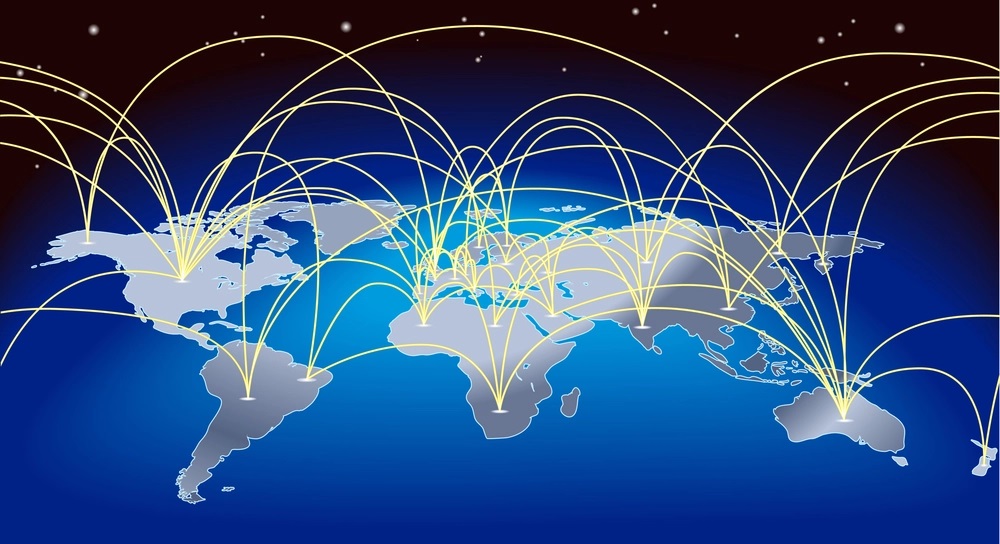
Boosting Global Trade Amidst Current Economic Slowdown

Published

on

global trade

Trade is crucial to bridging economic gaps and boosting infrastructural development. Countries with strong international trade portfolios tend to grow faster, innovate more, and provide higher incomes and economic opportunities for their citizens.

Beyond the integration into the global economy through trade and global value chains that help drive economic growth, open trade also benefits low-income households by allowing consumers to access affordable goods and services.

However, the impact of Russia’s war in Ukraine has been felt by people far beyond the country’s borders, due in part to its effects on trade-in – and the prices of – foodstuff and energy commodities. One year since the war began, the World Trade Organisation (WTO) published a report assessing the conflict’s impact on trade and development. Cereal exportation to Africa, which is germane to food security in the region, declined by almost 15% in 2022, with prices of commodities like wheat increasing by almost 17%.

This trade disruption led the World Trade Organisation (WTO) to readjust its 2023 trade growth projection downwards from 3.4% to 1%, given the continuing reduced global trade demand, general inflation, and geopolitical tensions. The United Nations Conference on Trade and Development (UNCTAD) agreed, lowering their projections for 2023 in their latest Global Trade Update, published in December. Furthermore, Export Development Canada (EDC) published their annual year-end Trade Confidence Index, reporting that trade confidence has declined sharply for Canadian businesses over the past year and continues to decrease among concerns over rising interest rates and a looming global recession.

In Nigeria, a similar slow-down trend in Trade is expected for 2023, considering that the global geopolitical tension and inflation hike will trickle down to the micro-economy as well as the FX illiquidity issues we have been experiencing locally for about 2 years due to revenue drop will further slowdown trade for 2023.

However, amid the challenges militating the flow of international trade in Europe, the Americas, Asia, and Africa could be viable trading partners for the rest of the world in supplying cereals, fertilizer, energy, and manufactured goods, thereby having a thriving trade business for 2023 and beyond.

The Global Trade Review is an annual event where global experts in the trade and commerce industries come together to discuss global trade as it affects the economies of each continent and country and seek solutions to manoeuvre challenges that may be presented. This year’s event, themed “A new dawn: plotting a course for West African trade”, plans to bring together stakeholders and global experts to discuss how Africa as a whole and West Africa as a region can maximize the Trade opportunities that this challenging time has thrown up.

On the African continental stage, Stanbic IBTC Bank’s unique intra-African trade products enabled settlements of international transactions while preventing payment risks associated with the international trade business. This was in addition to providing regional solutions such as the issuance of payment guarantees to exporters without the need for a letter of credit and its related costs to the importer.

As global trade weathers the current challenges, the need for providing cross-border payments remains imperative. Africa is a major trade partner with Europe, China, and other Asian countries; thus, the significance of Stanbic IBTC’s Africa China Agent Proposition (ACAP), a product tailored to providing world-class financial solutions to African importers who transact with China exporters. The payment system makes available exclusive access to approved trade agents responsible for linking African businesses to numerous suppliers and manufacturers across China. The appointed agent provides access to over 10,000 Chinese suppliers and assesses suppliers to ensure that their products meet global standards.

ACAP offers a broad ecosystem of services, solutions, and support, which equips African businesses to leverage trade as well as growth opportunities and ultimately drive Africa’s economic growth. The ecosystem services afford importers from Africa sufficient lead time to place orders for their goods before payment is made. It also helps to ease the cash flow of African importers by providing access to financing while also empowering importers to have end-to-end visibility of the entire importation and logistic process.

Inter-dependencies with other countries at different levels of trade are necessary as no country is self-sufficient in the global economy. Integration into the global economy has proven to be a powerful tool for countries to promote economic growth, development and reduce poverty. Stanbic IBTC also engaged in strategic partnerships with other multilateral and regional organizations such as the African Development Bank, African Export– Bank, ECOWAS Bank for Investment and Development, and Arab Bank for Economic Development in Africa (BADEA) in the facilitation and implementation of the African Continental Free Trade Area (AFCFTA) agreement to the benefits of its clients. Furthermore, it has continued to provide financial guarantees and solutions to small and medium-scale enterprises in the continent, which account for more than 80 per cent of the continent’s economic space.

Similarly, through Stanbic IBTC’s Trade Club solution, there is access to unlimited opportunities for business owners to meet and trade with suppliers anywhere in the world. The Stanbic IBTC Trade Club solution provides financing solutions for domestic or cross-border trade activities. It also provides good exposure for business owners to trade with manufacturers and suppliers worldwide, giving them the necessary exposure for their businesses to thrive. The solution identifies businesses, empowering them with the required trade tools and expertise while linking them with new global trade partnerships they can trust while nurturing their growth through good human relationships.

The Stanbic IBTC Trade Club, using its trade resources, provides relevant tips and the right tools to build your business. It also provides useful information regarding business models, accounting, marketing, and legal aspects that enable businesses to achieve set goals.

With Stanbic IBTC’s unique financial offerings, Africa remains on the part of an economic resurgence that will eventually enable the continent to compete with other economies of the world.


Click to comment

Leave a Reply

Your email address will not be published. Required fields are marked *

World

Africa Takes Centre Stage as Addis Ababa Hosts the World Public Summit

Published

on

Addis Ababa World Public Summit

By Kestér Kenn Klomegâh

For the first time in its history, the World Public Summit will be held on the African continent. On 29–30 July 2026, Addis Ababa, the capital of Ethiopia, will host the World Public Summit. Africa — “A New World: Africa in Shaping a Shared Future.”

The Summit is organised by the World Peoples Assembly in cooperation with African partner organisations. It will bring together leaders of public diplomacy, representatives of international intergovernmental and non-governmental organisations, academics, experts, representatives of the education and cultural sectors, youth leaders, socially responsible businesses, media professionals, and civil society institutions from across Africa and other regions of the world.

The World Public Summit. Africa continues the work initiated during the First World Public Assembly “A New World of Conscious Unity,” held in Moscow in September 2025, and serves as one of the key milestones in preparation for the Second World Public Assembly “A New World: Values That Unite,” which will take place in Moscow on 18–19 September 2026.

Today, Africa is emerging as one of the principal centres of global development. Rapid demographic growth, expanding entrepreneurship, strengthening regional integration, rich cultural heritage, and the growing role of civil society institutions make the continent an increasingly important contributor to the future architecture of international cooperation.

The Summit will focus on issues of genuine sovereignty and sustainable development, public diplomacy, preservation of cultural and historical heritage, international cooperation in education and science, youth engagement, innovation-driven development, creative industries, and the formation of new partnerships among countries and peoples.

The main business programme of the Summit will take place on 30 July 2026 at the headquarters of the United Nations Economic Commission for Africa (UNECA) in Addis Ababa. Holding the Summit at UNECA highlights its pan-African dimension and creates opportunities for broad international dialogue on humanitarian cooperation and public diplomacy.

The programme will include plenary sessions, strategic dialogues, and expert panels dedicated to values-based development, education, culture, youth leadership, innovation, and international cooperation.

Participation has already been confirmed by Professor Saidou Madougou, Director of the Department of Education, Science, Technology and Innovation of the African Union; Rita Bissoonauth, Director of the UNESCO Liaison Office to the African Union and UNECA in Addis Ababa; Zuzana Schwidrowski, Director of the Macroeconomics, Finance and Governance Division of UNECA, as well as ministers, leaders of public organisations, and representatives of the business community from a number of African countries.

On the same day, the ADWA Victory Memorial Museum—Ethiopia’s national memorial complex dedicated to the Victory of Adwa and an important centre for preserving the historical memory of the Ethiopian people—will host the award ceremony of the regional stage of the V International Competition “Leader of Public Diplomacy”, followed by a large-scale cultural programme.

One of the key outcomes of the Summit will be the adoption of the African Communiqué, reflecting proposals and recommendations aimed at strengthening humanitarian, educational, cultural, and public cooperation between African countries and other regions of the world.

The outcomes, initiatives, and recommendations were developed during the World Public Summit. Africa will be presented at the Second World Public Assembly “A New World: Values That Unite”, to be held in Moscow on 18–19 September 2026.

According to Andrey Belyaninov, General Secretary of the World Peoples Assembly, “the Addis Ababa Summit is an important step toward building a new world founded on mutual respect, cultural diversity, dialogue and sustainable development.”

Continue Reading

World

UK Set for Seventh Prime Minister in 10 Years as Keir Starmer Resigns

Published

on

Keir Starmer

By Adedapo Adesanya

The United Kingdom will get its seventh Prime Minister in 10 years as Mr Keir Starmer announced his resignation on Monday.

The Minister said he is stepping down as leader of the governing Labour Party and will leave office within weeks, scarcely two years after being elected in a landslide.

Mr Starmer says he will remain caretaker prime minister until a new Labour leader is chosen by the party.

Mr Starmer made the announcement after facing growing pressure to hand over to a new leader who can try to revive the government’s flagging fortunes.

He led Labour to a landslide election victory in July 2024, but since then, his popularity and that of the party have plummeted.

His departure was triggered by the victory of Mr Andy Burnham in a special election last week. The popular ex-mayor of Greater Manchester planned to challenge the existing PM for the Labour leadership.

Mr Starmer made the announcement outside the prime minister’s 10 Downing St. residence with a brief statement on Monday.

“The question my party is asking now is whether I am best placed to lead us into the next general election,” Mr Starmer said. “I have heard the answer of my parliamentary party to that question, and I accept that answer with good grace.

Mr Starmer is the sixth prime minister in a decade to stand outside 10 Downing Street and announce a premature departure.

It comes the day before Britain marks the 10th anniversary of its vote to leave the European Union, a decision that still affects the country’s economy and politics.

Over the past decade, 10 Downing Street has had six occupants, including Mr David Cameron, who left office in 2016 after the Brexit referendum and was succeeded by Ms Theresa May. She was followed by Mr Boris Johnson, whose tenure covered Brexit and the COVID-19 pandemic. After Mr Johnson came Ms Liz Truss, whose 49-day premiership was the shortest in British history. Mr Rishi Sunak then took office before being succeeded by Mr Starmer, the outgoing occupant of Number 10.

Continue Reading

World

AXIAN Energy Secures $60m for Expansion Across Africa

Published

on

axian energy

By Aduragbemi Omiyale

A financing facility of up to $60 million has been secured by AXIAN Energy, the energy division of the AXIAN Group.

The funding package was provided by MCB, one of the leading financial institutions in the Indian Ocean region.

It comprises a $40 million revolving credit facility with a three-year tenor and extension option, and $20 million in unfunded instruments, providing AXIAN Energy with enhanced financial flexibility, enabling the company to rapidly mobilise resources and seize development opportunities across its target markets.

The energy firm is expected to use the capital to deliver large-scale energy infrastructure projects across Africa.

Over the past two years, AXIAN Energy has significantly accelerated its growth by expanding its renewable energy project pipeline, with solar projects currently under development in Senegal, Benin, Zambia, Côte d’Ivoire, Madagascar, and Burkina Faso.

Building on this momentum, AXIAN Energy now operates a portfolio comprising 350 MW of installed renewable energy capacity, supported by 77 MWh of energy storage capacity, positioning the AXIAN Group as a major contributor to Africa’s energy transition.

The chief executive of AXIAN Energy, Mr Benjamin Memmi, said, “This transaction marks a key milestone in AXIAN Energy’s growth trajectory. It provides us with the financial capacity to sustain the momentum we have built over the past two years, further strengthening our renewable energy portfolio and expanding our presence across new African markets.”

Also commenting, the Global Head of Structured Finance at MCB, Mr Mathieu Delteil, said, “We are proud to support AXIAN Energy in structuring this facility, reaffirming our commitment to enabling transformative projects across Africa.

“By leveraging our sector expertise and deep understanding of regional markets, we have delivered a tailored financing solution that aligns with AXIAN’s long-term renewable energy ambitions.

“This partnership highlights our role as a strategic financial partner, mobilising capital towards investments that drive sustainable growth and accelerate the energy transition across the continent.”

The financing agreement between the two organisations strengthens their long-standing relationship because it is driven by a shared commitment to supporting infrastructure development and economic growth across Africa.

Continue Reading

Trending