Connect with us

World

Bridge Awards Symbolize a Definitive Choice of Life in Russia—Sammy Kotwani

Published

on

Sammy Kotwani

By Kestér Kenn Klomegâh

Under the presidential decree, authorising an initiative to tap the best brains and professionals from abroad to integrate into Russian society, the Agency for Strategic Development plans to hold its first Bridge Awards, which honour the contributions of foreign citizens and repatriates who have made a definitive life choice in favour of Russia. The Bridge Awards was founded by entrepreneur Philip Hutchinson and public figure Guy Eames.

Launched in February 2026, the competition for the awards has attracted a lot of potential candidates from more than 40 countries competing for victory across 12 categories. The highest number of applications came from the United States, totalling 18. There are also a number of candidates from Europe, Asia, and Africa. The “Business” category proved to be the most geographically diverse, drawing applicants from 12 countries.

The Bridge Awards recognise the valuable contributions of foreign citizens and repatriates to the Russian society. It is also dedicated to raising awareness, recognising achievements, and building strong connections with the international community.

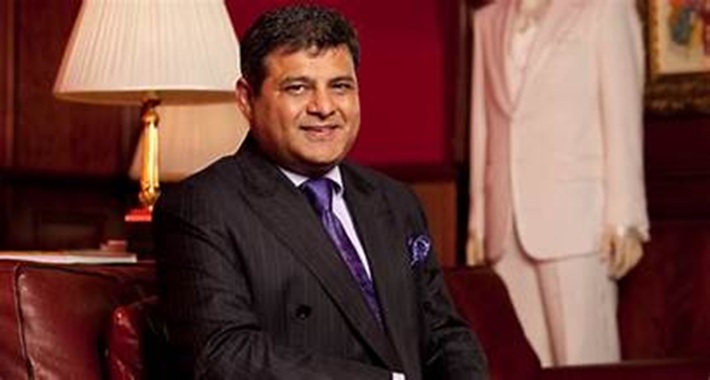
According to the official reports made available, among the winning applicants and world-renowned celebrities for the Business Category were Sammy Manoj Kotwani, President, Indian Business Alliance; President, SITA/Indian National Cultural Centre; President, Overseas Friends of BJP Russia; and Founder, Imperial Tailoring Company.

In this conversation, Sammy Kotwani talks about how he has lived and worked in Russia for more than three decades, his entrepreneurial achievements, and his contributions to Russian society. Here are the interview excerpts:

What really motivates you to participate in the first competition for Bridge Awards?

For me, the Bridge Awards are not only a competition. They are a recognition of a life journey. I have lived and worked in Russia for more than three decades. Russia gave me the opportunity to build my business, serve the Indian community, promote Indian culture, and create real business connections between India and Russia.

My motivation is very simple: I want to show that a foreign citizen can love Russia, respect its people, contribute to its economy, and at the same time remain deeply connected to his own roots and motherland.

Through the Indian Business Alliance, through cultural activities, through India–Russia business forums, through meetings with governors and regional leaders, my work has always been to build bridges — not only between governments, but between people, entrepreneurs, regions, cultures, and families.

So, when I heard about the Bridge Awards, I felt that this platform represents exactly what I have tried to do for many years: turn friendship into action, and respect into real cooperation.

You were selected by the Jury for the business category. What are the implications of this category?

Being selected in the business category is a very meaningful honour because business is where friendship becomes practical.

India and Russia already have strong political trust, historic goodwill, and a strategic partnership. But the real question today is: how do we convert this goodwill into trade, investment, joint ventures, logistics solutions, industrial cooperation, and regional development?

That is why the business category is important. It recognises those who are not only speaking about cooperation, but actually working on the ground to make it happen.

For me personally, it reflects the work of the Indian Business Alliance in connecting Indian entrepreneurs with Russian regions, supporting business missions, encouraging investment, discussing opportunities with governors, and identifying practical sectors such as textiles, pharmaceuticals, logistics, food processing, energy, technology, education, tourism, and skilled manpower.

This category is not only about personal achievement. It is about responsibility. It means we must continue to create platforms where Indian and Russian businesses can meet, trust each other, and build long-term partnerships.

Do you think the “Time to Live in Russia” programme has good future prospects for foreign citizens who choose to relocate and live in Russia?

Yes, I believe the “Time to Live in Russia” programme has strong future potential, provided it remains practical, transparent, and welcoming.

Many foreign professionals, entrepreneurs, investors, teachers, doctors, engineers, cultural workers, and skilled specialists are looking for countries where they can build a meaningful life. Russia has space, resources, education, culture, business opportunities, and strong regional potential.

But relocation is not only about visas or documents. A person who comes to Russia needs guidance, integration, language support, business orientation, community support, and confidence that he or she can build a stable future.

This is where such a programme can become very powerful. If it helps talented foreigners understand Russia better, settle smoothly, respect Russian society, and contribute to the economy, then it can become a serious instrument of international cooperation.

From the Indian perspective, I see strong potential. Many Indians are skilled in technology, medicine, education, trade, textiles, pharmaceuticals, engineering, hospitality, and entrepreneurship. If the right mechanism is created, India and Russia can benefit greatly from this human bridge.

How would you characterise the International Bridge Awards by the Agency for Strategic Initiatives and decreed by President Vladimir Putin?

I would characterise the Bridge Award as a timely and visionary initiative. In today’s world, countries need more than formal diplomacy. They need people who understand both sides, who can translate culture into trust, and trust into practical cooperation.

The Bridge Award gives recognition to such people — foreign citizens and repatriates who have chosen Russia not only as a place to live, but as a place to contribute.

For me, this award carries a very important message: Russia values those who sincerely work for its development, its international friendships, and its multicultural society.

The involvement of the Agency for Strategic Initiatives gives the award a serious institutional direction. It shows that this is not just a symbolic gesture, but part of a larger vision — to make Russia a place where international talent, entrepreneurs, cultural leaders, and public figures can participate in national development.

I believe this award can become a powerful platform for public diplomacy. It can show the world that Russia is open to sincere partners, serious professionals, and people who are ready to build, not just observe.

For me, as an Indian who has lived in Russia for many years, the word “bridge” is very personal. A bridge connects two banks. It allows people to cross, meet, understand, and build together. That is exactly what India and Russia need today—more bridges, more trust, more implementation, and more human connection.


Click to comment

Leave a Reply

Your email address will not be published. Required fields are marked *

World

Nigeria Leads Africa in Equity Funding as Startup Investment Hits $254m in H1 2026

Published

on

Investment-Worthy Startups

By Adedapo Adesanya

Nigeria regained its position as Africa’s leading destination for equity startup investment in the first half of 2026, raising $214 million in equity financing and a total of $254 million across equity and debt, according to the latest Africa: The Big Deal report.

The report, titled H1 2026: Mapping the Money, showed that Nigeria ranked second on the continent in total funding, behind Egypt, which attracted $327 million, while Kenya and South Africa followed with $126 million and $83 million, respectively.

However, the report noted that Egypt’s top position was largely driven by a single fundraising by electric mobility company Spiro, which secured $327 million, including $270 million in equity and $57 million in debt. Excluding debt financing, Nigeria emerged as Africa’s largest equity funding market in the first six months of the year.

According to the breakdown by Africa: The Big Deal, Nigeria’s equity funding of $214 million was higher than Egypt’s $183 million, while South Africa and Kenya attracted $66 million and $46 million, respectively.

Beyond funding value, Nigeria also led the continent in the number of startups that raised at least $100,000 during the review period, reclaiming the top spot after what the report described as an “underwhelming” second half of 2025.

The publication observed that Nigeria’s fundraising performance has remained relatively stable over the past few years and exceeded the $250 million mark for the first time since 2022, pointing to renewed investor confidence in the country’s startup ecosystem.

It also found that while the Big Four startup markets—Nigeria, Egypt, Kenya and South Africa—continued to dominate Africa’s investment landscape, their combined share of total funding stood at 58 per cent in the first half of 2026.

“Zooming back on the Big Four (110 out of 190 $100k+ deals, i.e. 58%), Nigeria is head and shoulders above its peers, with Egypt and Kenya almost tying, and South Africa in fourth position again,” the report noted.

The report highlighted contrasting performances among the continent’s largest startup ecosystems. While Nigeria and Egypt maintained strong funding momentum, Kenya recorded its weakest funding performance since early 2021 after a strong second half of 2025, and South Africa failed to attract $100 million in funding during the period despite leading the continent a year earlier.

Africa: The Big Deal also noted a broader shift in investor behaviour, with funding increasingly concentrated in larger transactions while early-stage investments continued to decline. According to the publication, the drop in smaller funding rounds reflects growing concerns about limited capital available for early-stage startups across Africa.

Continue Reading

World

SCRYPT Expands Stablecoin Settlement Infrastructure to East Africa

Published

on

SCRYPT stablecoin

By Aduragbemi Omiyale

Accessing the US Dollar in the East Africa region has now been made easier with the expansion of the stablecoin settlement infrastructure of SCRYPT.

This development enables banks, payment providers and corporate treasury teams to move value into and out of the continent in real time.

Businesses paying international suppliers frequently have to convert local currency into USD before purchasing stablecoins for settlement, incurring FX conversions and spreads before any payment is made.

But SCRYPT is eliminating this intermediate conversion by enabling direct settlement corridors for local African currencies into stablecoins.

This development allows businesses to move from local currency to stablecoin settlement in a single licensed transaction, without first sourcing rationed bank dollars, as stablecoins are increasingly becoming settlement infrastructure rather than an investment product.

The expansion adds settlement support across four African currencies: the Kenyan shilling (KES), Tanzanian shilling (TZS), Rwandan franc (RWF) and Ugandan shilling (UGX). Each corridor is delivered through the same full-stack infrastructure our clients already use for trading, custody and treasury operations.

Speaking on this, the chief executive of SCRYPT, Norman Wooding, said, “Across Africa, stablecoin adoption is driven by economic need, not speculation.

“Businesses here are not chasing yield; they are trying to pay suppliers and manage treasury without losing margin to a banking system that rations dollars. Licensed, fair-rate dollar access is the clearest proof of what this infrastructure is for.”

Also commenting, the Managing Director of Markets & Trading at SCRYPT, Mr Gabriel Titopoulos, said, “Until now, reaching stablecoins from local African currencies meant buying scarce dollars and incurring several layers of conversion costs.

“SCRYPT removes this friction. Firms and payment providers can now settle straight from local currencies through live corridors, with local partners.”

Continue Reading

World

African Graduates Association Promoting Multifaceted Initiatives With Russian Educational Institutions

Published

on

Francois Ngan Professor Vladimir Filippov African Graduates Association

By Kestér Kenn Klomegâh

In preparations for the third Russia-Africa Summit, scheduled for late October 2026, Dr Francois Ngan, deputy chairman of the Union of Associations of African Graduates of Soviet and Russian Universities, during an official working visit, has held a consultative meeting with Professor Vladimir Filippov, the President of the Russian University of Peoples’ Friendship (RUDN), and former Minister of Higher Education of Russia, Chairman of the National Commission for Accreditation of Higher Education.

RUDN is an educational institution established in 1960, primarily to provide higher education to Third World students. It has now become a popular multidisciplinary spot for many students, especially from developing countries. The university offers various academic programmes and has research infrastructure that comprises laboratories and interdisciplinary centres. The university is named after the former Congolese leader, Patrice Lumumba.

Dr Francois Ngan and Professor Filippov discussed the importance of the Graduates Association as a continental platform dedicated to strengthening unity, cooperation, and promoting shared progress among African graduates who studied in the former Soviet Union and in the Russian Federation. They also reviewed multifaceted initiatives that could bring together alumni associations from across Africa, whose members obtained education and professional training, and cultural experiences in Soviet and Russian institutions of higher learning.

Professor Filippov expressed optimism in addressing emerging challenges as a result of shifting geopolitical changes, emphasised strategic cooperation in the educational sphere with Africa, in general, and with the Republic of Cameroon, in particular, and further about the integration of African students during their studies in the Russian Federation.

The meeting also touched on academic and scientific work, the possibility of rewriting a scientific thesis, and the official organisation of transferring versions translated into six languages ​​for the library of RUDN. Significant questions relating to Russia’s educational opportunities, collaborations and partnerships involving African countries were thoroughly discussed.

The Union of Associations of African Graduates of Soviet and Russian Universities was created under one continental umbrella to promote friendship, for professional networking, to engage in cultural exchange, and with particular emphasis on forging strategic cooperation between Africa and Russia.

Continue Reading