
World
COP27: UNICEF Says 27.7 million Children Affected by Flood in Nigeria, Others

By Adedapo Adesanya
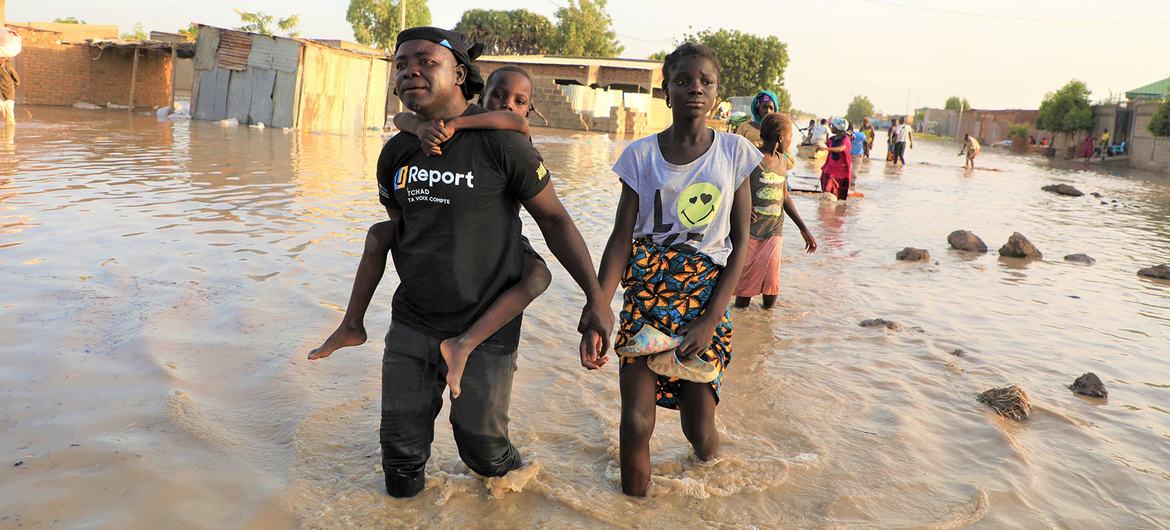
The United Nations Children Fund (UNICEF) has warned that this year brought overwhelming flooding to at least 27.7 million children in 27 countries worldwide, including Nigeria.
A large majority of the 27.7 million children affected by flooding in 2022 are among the most vulnerable and are at high risk of a multitude of threats, including death by drowning, disease outbreaks, lack of safe drinking water, malnutrition, disruption in learning, and violence.
The Head of the UNICEF delegation for COP27, Ms Paloma Escudero, said —“We are seeing unprecedented levels of flooding all around the world this year, and with it, an explosion in threats to children. The climate crisis is here. In many places, the flooding is the worst it has been in a generation or several. Our children are already suffering at a scale their parents never did.”
The aftermath of floods is often more deadly for children than the extreme weather events that caused the flooding.
In 2022, floods have contributed to the increased spread of major killers of children, such as malnutrition, malaria, cholera and diarrhoea, and this has led to more than 1 in 9 children under the age of five in Pakistan being admitted to health facilities in flood-affected areas of Sindh and Balochistan found to be suffering from severe acute malnutrition.
In Chad, 465,030 hectares of farmland were destroyed, worsening the already dire food insecurity situation.
In Malawi, torrential rains and flooding by tropical storm Ana in January 2022 caused extensive damage to water and sanitation systems, which created the perfect conditions for a cholera outbreak. The outbreak has claimed the lives of 203 people, out of which 28 are children. To date, 1,631 children have been infected with cholera.
Together with other climate shocks and conflict, floods have caused the projected number of children in South Sudan to face high levels of food insecurity to surpass the rates seen during the conflict in 2013 and 2016.
Additionally, the United Nations recently warned that some communities are likely to face starvation if humanitarian assistance is not sustained and climate adaptation measures are not scaled-up.
An estimated 840,000 children were displaced by floods in Nigeria in recent months, while countries like Pakistan and South Sudan have faced their share of disasters.
The agency noted that 126 schools in Cameroon were affected by floods, depriving 38,813 children of access to education, while heavy rains and flooding in Yemen triggered floods causing extensive damage to shelters in displacement sites while up to 73,854 households were affected, and 24,000 households were displaced.
“COP27 provides an opportunity to chart a credible roadmap with clear milestones for finance for climate adaptation and solutions for loss and damage,” said Ms Escudero noted. “Young people from the most affected places on Earth are drowning in climate inaction. Enough is enough. Lives are on the line – children need action now.”
UNICEF urged leaders to take immediate action to protect children from climate devastation by adapting the critical social services they rely on. Adaptation measures, like creating water, health and education systems that stand up to flooding and drought, will save lives.
UNICEF also urged parties to find solutions to support those who will face climate losses and damages beyond the limits of what communities can adapt to. UNICEF called on governments to close the finance gap to address these irreversible changes for children.



By Kestér Kenn Klomegâh
The Arab Republic of Egypt, a country spanning the northeast corner of Africa and the southwest corner of Asia, has a highly strategic location and attracts multifaceted interests of foreign players. For decades, Russia has established diplomatic relations with Egypt and has consistently sustained diverse ties with this country. It is no secret that Russia’s lust for the region is primarily due to the strategic importance of the Mediterranean Sea for investment and economic cooperation with the Maghreb region.
Determined to strengthen, particularly, economic cooperation, Russian President Vladimir Putin has maintained regular contacts with his colleague, President of Egypt, Abdel Fattah el-Sisi, mostly discussing both bilateral cooperation and broader regional developments. The current world’s geopolitical development, for instance, the United States-Israeli war on Iran in the Middle East, constitutes one theme both leaders frequently review, attempting to find long-term solutions.
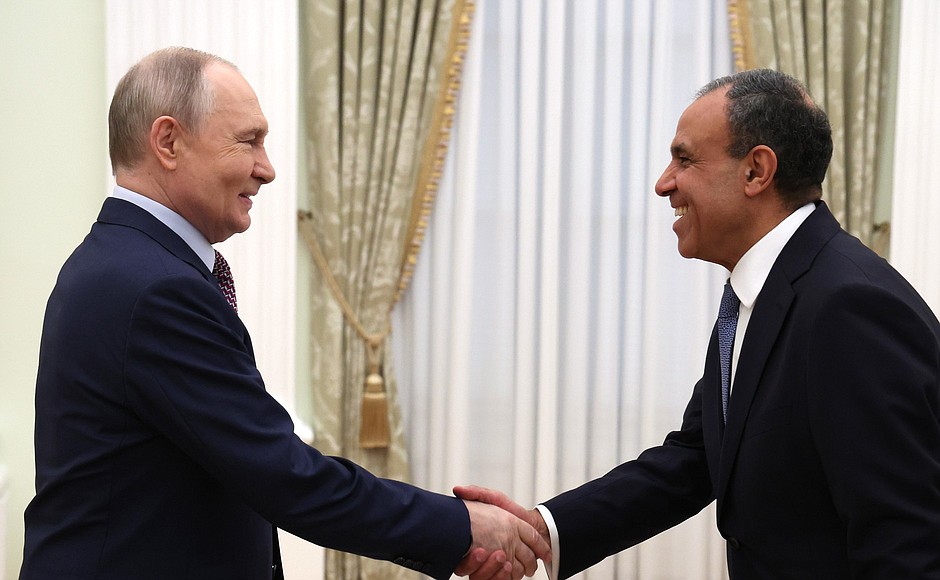
On April 2, Putin met with the Minister of Foreign Affairs, Emigration, and Egyptian Expatriates of the Arab Republic of Egypt, Badr Abdelatty, in the Kremlin – the seat of Russia’s presidency. In attendance during the official talks on the Russian side were Foreign Minister Sergei Lavrov and Presidential Aide Yury Ushakov, while Egypt was represented by Ambassador Extraordinary and Plenipotentiary to the Russian Federation Hamdy Shaaban. Ultimately, there is no need to overstate the importance of this meeting.
Russia’s footprints are expanding in Egypt, highlighting the growing industrial investment and the strengthening of bilateral manufacturing ties by undertaking projects to ensure energy security. At the same time, maintaining regular dialogue remains very important for both leaders.
Putin, speaking with the three-member delegation in the Kremlin, underlined the fact that there are many promising initiatives underway, many of which are already being implemented. He has previously spoken in detail about the construction of a nuclear power plant and the construction of an industrial zone, and over ten major Russian companies have expressed interest in participating in this project.
Nuclear Plants in El-Dabaa, Egypt
The construction of nuclear plants in the city of El-Dabaa, about 320 kilometres northwest of Cairo, the capital of Egypt. It is the first nuclear power plant in Egypt, and will have four VVER-1200 reactors, making Egypt the only country in the region to have a Generation III+ reactor. On November 19, 2015, Egypt and Russia signed an initial agreement, under which Russia agreed to build and finance Egypt’s first nuclear power plant. These are now being carried out, not as a charity project, but with a loan of $28 billion. According to reports, Russia will finance 85% as a state loan of $25 billion, and Egypt will provide the remaining 15% in the form of instalments. The Russian loan has a repayment period of 22 years, with an annual interest rate of 3%.
At the meeting, Putin also raised the construction of an industrial zone in Egypt. There are many appealing and related opportunities in this, regarding having an industrial zone to be located on the banks of the Suez Canal. The industrial zone is also entering a new phase, as Russian auto-manufacturing enterprises are advancing distinctive plans to expand local vehicle production, reinforcing the country’s role as a regional manufacturing hub. The move reflects broader economic linkages between Russia and Africa, particularly in industrial development and supply chain integration.
Conveying Greetings and Reviewing the Middle East Situation
Naturally, the situation in the region remains a shared concern, according to Putin, and further hope that the ongoing conflict will be promptly resolved. “As you know, President Trump also addressed this issue yesterday. Let me reiterate that we are prepared to make every effort to help stabilise the situation and, as they say in such cases, return it to normal,” he stressed during the meeting. In this context, it is particularly important to know Egypt’s assessment as a key country in the Middle East.
Putin reminded the delegation of another Russia-Africa summit, which is planned for October 2026. With high hopes that Egypt will be represented by a strong, high-level delegation. Should the Egyptian President’s schedule allow, he would, of course, ahead of the summit, be very pleased to welcome him to Moscow. Jointly chaired by Vladimir Putin and Abdel Fattah el-Sisi, the first Russia-Africa summit, an important acute phase of the developments with Africa, under the motto of ‘For Peace, Security and Development’, was held for the first time in October 2019, in Sochi, a city located on the Black Sea coast. The idea to hold a Russia-Africa forum was initiated by President Putin at the BRICS (Brazil, Russia, India, China and South Africa) summit in Johannesburg in July 2018.
The head of the Egyptian Foreign Ministry, as traditionally expected, conveyed greetings from President El-Sisi to the Russian president and handed over a written message. President el-Sisi places great value on all aspects of the bilateral cooperation, and is extremely grateful for constructive collaboration on the El Dabaa Nuclear Power Plant, which represents a key milestone in the partnership. Despite the challenges, it is evident that the project is moving forward and will be completed by 2028.
In summary, as Egypt and Russia are reliable and time-tested partners, Putin plans to promote strategic projects, particularly in trade, economics, energy, and food security. With over 107 million inhabitants, Egypt is the most populous country in the Arab world, the third-most populous country in Africa, and the 15th-most populous in the world.

By Kestér Kenn Klomegâh
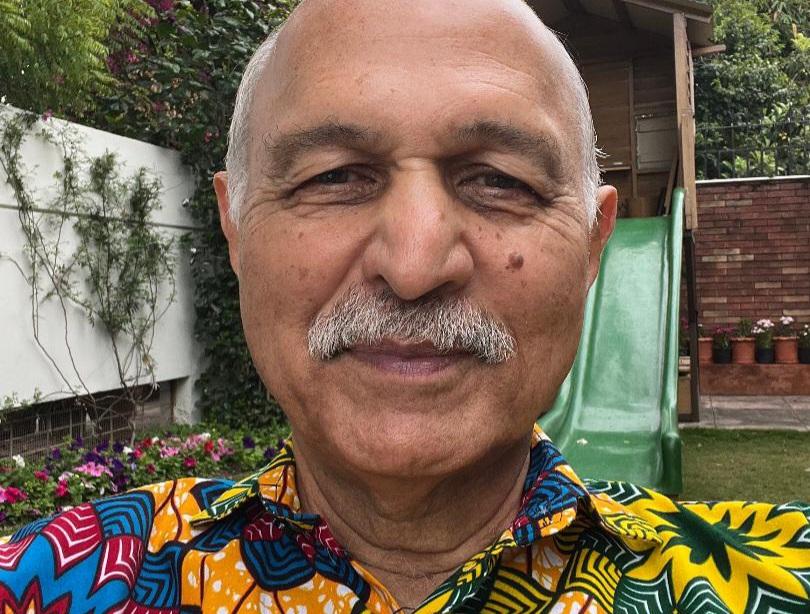
In an interview, Senator Mushahid Hussain, President of Pakistan-Africa Institute for Development and Research (PAIDR), explicitly offers a few important insights into the US-Israeli war on Iran and its implications for BRICS+ and Africa. Here are the interview excerpts:
What’s your interpretation of the US-Israel war on Iran, in the context of developments in the Middle East region?
The US-Israel illegal and unwarranted war on Iran was spearheaded by [Benjamin] Netanyahu (Prime Minister of Israel) and actively supported by [Donald] Trump (President of USA) as a Joint Operation with three fundamental goals: a) decimate the Islamic Revolutionary Regime; b) reshape the Middle East as part of Zionism’s ‘Greater Israel’ Project; c) preclude any possibility of establishing a Palestinian State with Jerusalem as its capital.
What is your assessment of Iran’s joining BRICS+ in 2025, China’s and Russia’s roles as members of this association, in this US-Israel war with Iran?
China and Russia have played, by and large, a low-key diplomatic role in supporting Iran but without any active political initiatives. BRICS is divided from within, as India is keen to curry favour with the USA and avoids close association with BRICS since the time that Trump attacked BRICS last year. But China & Russia are clear political beneficiaries of the war as American prestige is at an all-time low, having got entangled in an unwinnable war, resulting in weakening of the US ‘sole superpower’ image.
As an Asian expert, how would you characterise Africa’s reactions? And do you think that reactions were objectively authentic, basing perspectives broadly on Arab and Middle East contributions to Africa’s development?
Africa’s reactions to the war are primarily through the prism of the Global South, viewing Iran as resisting American-Israeli hegemonic designs, as, for example, manifested in two examples: South Africa’s rejection of American pressures to wean South Africa away from its support for Iran. Plus, Somalia joined Pakistan and China in supporting the Russian resolution in the UN Security Council seeking an immediate ceasefire and negotiations to halt the War, despite strident Western/US opposition to the Russian resolution.
By Adedapo Adesanya
The Director-General (DG) of the World Trade Organisation (WTO), Mrs Ngozi Okonjo-Iweala, has said the global trading system is experiencing the worst disruptions in the past 80 years.
The trade body chief warned about the consequences as the WTO ministerial conference opened Thursday in Cameroon.
“The world order and the multilateral system we know has irrevocably changed,” she said, adding: “We cannot deny the scale of the problems confronting the world today.”
The organisation’s 166 members appear deeply divided as trade ministers gather in the Cameroonian capital for the WTO’s top conference, amid global economic turmoil linked to the Middle East war.
Over four days in Yaounde, WTO members will try to revitalise an institution weakened by geopolitical tensions, stalled negotiations, and rising protectionism — against the backdrop of the war in the Middle East, which poses a serious threat to international trade.
“The scale of the problems confronting the world today, even before the conflict in the Gulf, destabilised trade in energy, fertiliser and food,” Mrs Okonjo-Iweala said.
“National governments and international institutions alike have been struggling to navigate rising geopolitical tensions, intensifying climate pressures, and rapid technological change.
“Accompanying these shifts has been an increasingly loud questioning of multilateralism,” she added.
Mrs Okonjo-Iweala said these disruptions were just one symptom of broader upheavals shaking the international order created after World War II to prevent a repeat of the disasters of the first half of the 20th century.
“It feels appropriate that at the moment when the world is in turmoil with conflict in the Middle East, Sudan, Ukraine, and elsewhere, at this time of great disruption and uncertainty, we have gathered in Africa to discuss the road ahead for the global trading system,” she said.
“Africa is the continent of the future.”
WTO ministerial conferences are typically held every two years. The current edition in Yaounde is the second to be held in Africa, after Nairobi (Kenya) in 2015.
-
 Feature/OPED6 years ago
Davos was Different this year
-
Travel/Tourism10 years ago
Lagos Seals Western Lodge Hotel In Ikorodu
-

 Showbiz3 years ago
Estranged Lover Releases Videos of Empress Njamah Bathing
-
 Banking8 years ago
Sort Codes of GTBank Branches in Nigeria
-

 Economy3 years ago
Subsidy Removal: CNG at N130 Per Litre Cheaper Than Petrol—IPMAN
-

 Banking3 years ago
Sort Codes of UBA Branches in Nigeria
-

 Banking3 years ago
First Bank Announces Planned Downtime
-

 Sports3 years ago
Highest Paid Nigerian Footballer – How Much Do Nigerian Footballers Earn