Connect with us

World

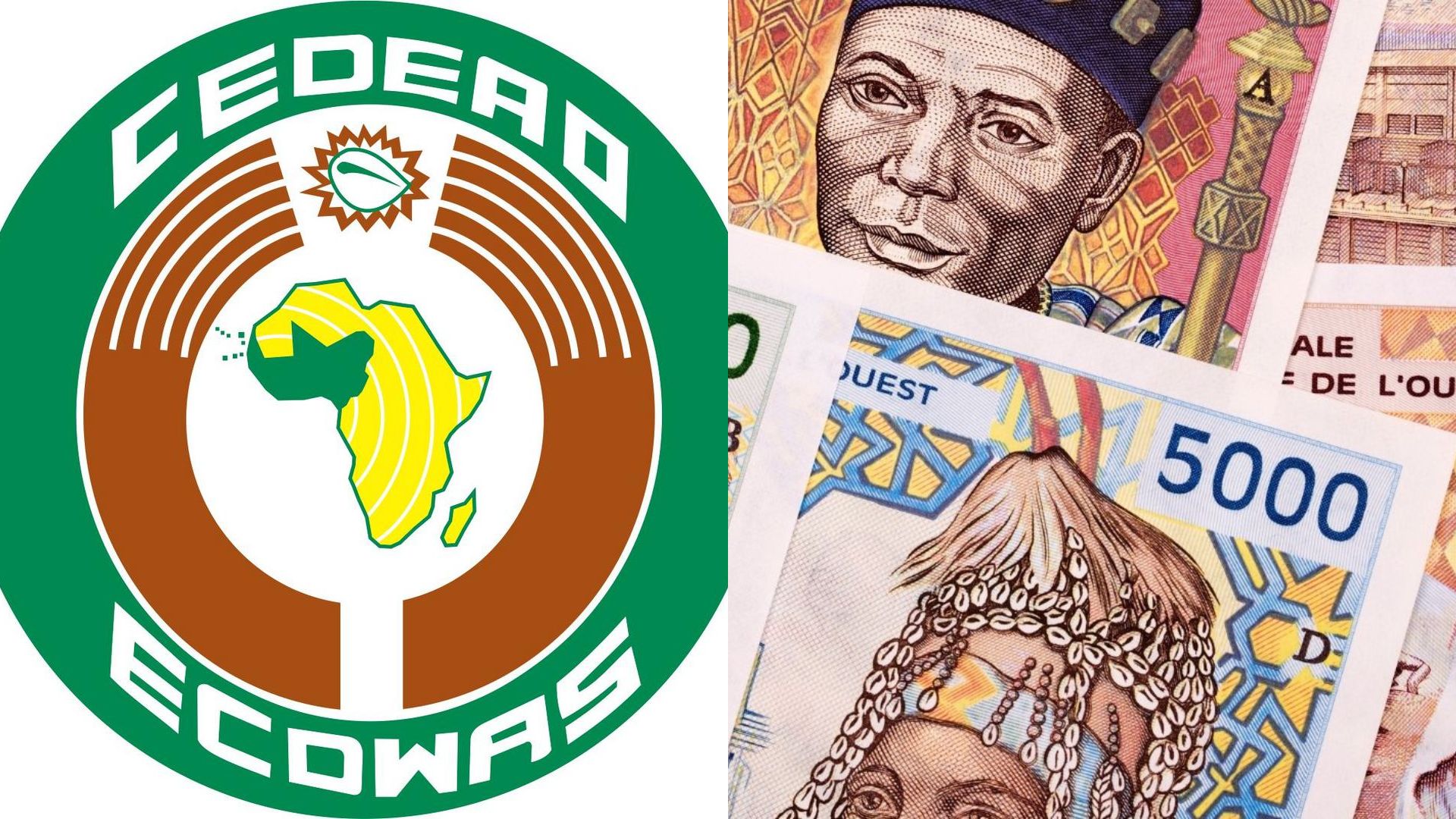
ECOWAS May Suspend Single Currency Plan Indefinitely

Published

on

ECOWAS Single Currency

By Adedapo Adesanya

The Economic Community of West African States (ECOWAS) is planning to halt its single currency initiative – ECO – after years of struggles to actualise the plan.

Previously, the currency was expected to be launched in 2020 but has faced several pushbacks, including the COVID-19 pandemic and had to be suspended the plan in 2021, with the bloc saying it was looking at 2022 to 2026 to create conditions that will enable it to stabilise the economies.

A feasible date of 2027 was previously reported but that may not be the case anymore, according to a statement by Mr Edwin Melvin Snowe Junior, Co-chair of the ECOWAS joint committees on Social Affairs, Gender and Women Empowerment, Legal Affairs and Human Rights, Political Affairs, Peace, Security and African Peer Review Mechanism (MAEP), Legal and Human Rights, Trade Customs and Free Movement, in Banjul, Gambia at the weekend.

The ECOWAS single currency initiative was first proposed in the late 1990s and the idea gained more attention in 2000 when the West African Monetary Zone (WAMZ) was established to work towards creating a single currency for the region.

The Eco was envisioned to become a cornerstone of economic growth and development for the 15 member states of ECOWAS, as it is expected to simplify transactions, reduce the hassle of currency exchange, and promote a more integrated and prosperous West African region.

However, the initiative has hit a rock and seems to be dead following some political challenges.

Speaking on the struggles in actualising the single currency initiative, MP Snowe Junior said there had been some political challenges.

“The single currency is a work in progress. It has its political implications. There has been a lot of political situation that has to be addressed. It’s not that we don’t have good economists or analysts who can understand and implement it.

“We have had little or less problems from the English-speaking zone but because we have the French CFA with the reserve in France and then you have the BCEAO bank as another federal bank for the French-speaking country, we have to integrate the currency.

“So, it still needs a lot of political will and that is why the last three countries that had coup d’état are talking about changing their currencies because their reserve is in France and not in West Africa or Africa.”

He said the regional bloc was now proposing a single currency for the Anglophone countries and another one for the Francophone countries in the region as a replacement for Eco.

“That is why sometimes we propose that Nigeria, which is the hub of our region, in addition to Ghana, Liberia, Gambia and Sierra Leone, that is the five English-speaking countries, could have one currency for now,” he said.

“Then, the Francophone countries could have another currency. Then you can ask Guinea Bissau and Cape Verde to join either the Francophone or Anglophone so that we have two currencies for now.

“And then, over the years, those two currencies can migrate into a single currency.”

He said political instability in the region had halted the consideration of the proposals of two currencies for the region but assured that focus would be shifted back to the issue as soon as possible.

“We have been more concerned with putting the region back together, resolving the security situation in the region and then we can put back the single currency issue on the front burner,” he said.


Adedapo Adesanya is a journalist, polymath, and connoisseur of everything art. When he is not writing, he has his nose buried in one of the many books or articles he has bookmarked or simply listening to good music with a bottle of beer or wine. He supports the greatest club in the world, Manchester United F.C.

Click to comment

Leave a Reply

Your email address will not be published. Required fields are marked *

World

Africa Takes Centre Stage as Addis Ababa Hosts the World Public Summit

Published

on

Addis Ababa World Public Summit

By Kestér Kenn Klomegâh

For the first time in its history, the World Public Summit will be held on the African continent. On 29–30 July 2026, Addis Ababa, the capital of Ethiopia, will host the World Public Summit. Africa — “A New World: Africa in Shaping a Shared Future.”

The Summit is organised by the World Peoples Assembly in cooperation with African partner organisations. It will bring together leaders of public diplomacy, representatives of international intergovernmental and non-governmental organisations, academics, experts, representatives of the education and cultural sectors, youth leaders, socially responsible businesses, media professionals, and civil society institutions from across Africa and other regions of the world.

The World Public Summit. Africa continues the work initiated during the First World Public Assembly “A New World of Conscious Unity,” held in Moscow in September 2025, and serves as one of the key milestones in preparation for the Second World Public Assembly “A New World: Values That Unite,” which will take place in Moscow on 18–19 September 2026.

Today, Africa is emerging as one of the principal centres of global development. Rapid demographic growth, expanding entrepreneurship, strengthening regional integration, rich cultural heritage, and the growing role of civil society institutions make the continent an increasingly important contributor to the future architecture of international cooperation.

The Summit will focus on issues of genuine sovereignty and sustainable development, public diplomacy, preservation of cultural and historical heritage, international cooperation in education and science, youth engagement, innovation-driven development, creative industries, and the formation of new partnerships among countries and peoples.

The main business programme of the Summit will take place on 30 July 2026 at the headquarters of the United Nations Economic Commission for Africa (UNECA) in Addis Ababa. Holding the Summit at UNECA highlights its pan-African dimension and creates opportunities for broad international dialogue on humanitarian cooperation and public diplomacy.

The programme will include plenary sessions, strategic dialogues, and expert panels dedicated to values-based development, education, culture, youth leadership, innovation, and international cooperation.

Participation has already been confirmed by Professor Saidou Madougou, Director of the Department of Education, Science, Technology and Innovation of the African Union; Rita Bissoonauth, Director of the UNESCO Liaison Office to the African Union and UNECA in Addis Ababa; Zuzana Schwidrowski, Director of the Macroeconomics, Finance and Governance Division of UNECA, as well as ministers, leaders of public organisations, and representatives of the business community from a number of African countries.

On the same day, the ADWA Victory Memorial Museum—Ethiopia’s national memorial complex dedicated to the Victory of Adwa and an important centre for preserving the historical memory of the Ethiopian people—will host the award ceremony of the regional stage of the V International Competition “Leader of Public Diplomacy”, followed by a large-scale cultural programme.

One of the key outcomes of the Summit will be the adoption of the African Communiqué, reflecting proposals and recommendations aimed at strengthening humanitarian, educational, cultural, and public cooperation between African countries and other regions of the world.

The outcomes, initiatives, and recommendations were developed during the World Public Summit. Africa will be presented at the Second World Public Assembly “A New World: Values That Unite”, to be held in Moscow on 18–19 September 2026.

According to Andrey Belyaninov, General Secretary of the World Peoples Assembly, “the Addis Ababa Summit is an important step toward building a new world founded on mutual respect, cultural diversity, dialogue and sustainable development.”

Continue Reading

World

UK Set for Seventh Prime Minister in 10 Years as Keir Starmer Resigns

Published

on

Keir Starmer

By Adedapo Adesanya

The United Kingdom will get its seventh Prime Minister in 10 years as Mr Keir Starmer announced his resignation on Monday.

The Minister said he is stepping down as leader of the governing Labour Party and will leave office within weeks, scarcely two years after being elected in a landslide.

Mr Starmer says he will remain caretaker prime minister until a new Labour leader is chosen by the party.

Mr Starmer made the announcement after facing growing pressure to hand over to a new leader who can try to revive the government’s flagging fortunes.

He led Labour to a landslide election victory in July 2024, but since then, his popularity and that of the party have plummeted.

His departure was triggered by the victory of Mr Andy Burnham in a special election last week. The popular ex-mayor of Greater Manchester planned to challenge the existing PM for the Labour leadership.

Mr Starmer made the announcement outside the prime minister’s 10 Downing St. residence with a brief statement on Monday.

“The question my party is asking now is whether I am best placed to lead us into the next general election,” Mr Starmer said. “I have heard the answer of my parliamentary party to that question, and I accept that answer with good grace.

Mr Starmer is the sixth prime minister in a decade to stand outside 10 Downing Street and announce a premature departure.

It comes the day before Britain marks the 10th anniversary of its vote to leave the European Union, a decision that still affects the country’s economy and politics.

Over the past decade, 10 Downing Street has had six occupants, including Mr David Cameron, who left office in 2016 after the Brexit referendum and was succeeded by Ms Theresa May. She was followed by Mr Boris Johnson, whose tenure covered Brexit and the COVID-19 pandemic. After Mr Johnson came Ms Liz Truss, whose 49-day premiership was the shortest in British history. Mr Rishi Sunak then took office before being succeeded by Mr Starmer, the outgoing occupant of Number 10.

Continue Reading

World

AXIAN Energy Secures $60m for Expansion Across Africa

Published

on

axian energy

By Aduragbemi Omiyale

A financing facility of up to $60 million has been secured by AXIAN Energy, the energy division of the AXIAN Group.

The funding package was provided by MCB, one of the leading financial institutions in the Indian Ocean region.

It comprises a $40 million revolving credit facility with a three-year tenor and extension option, and $20 million in unfunded instruments, providing AXIAN Energy with enhanced financial flexibility, enabling the company to rapidly mobilise resources and seize development opportunities across its target markets.

The energy firm is expected to use the capital to deliver large-scale energy infrastructure projects across Africa.

Over the past two years, AXIAN Energy has significantly accelerated its growth by expanding its renewable energy project pipeline, with solar projects currently under development in Senegal, Benin, Zambia, Côte d’Ivoire, Madagascar, and Burkina Faso.

Building on this momentum, AXIAN Energy now operates a portfolio comprising 350 MW of installed renewable energy capacity, supported by 77 MWh of energy storage capacity, positioning the AXIAN Group as a major contributor to Africa’s energy transition.

The chief executive of AXIAN Energy, Mr Benjamin Memmi, said, “This transaction marks a key milestone in AXIAN Energy’s growth trajectory. It provides us with the financial capacity to sustain the momentum we have built over the past two years, further strengthening our renewable energy portfolio and expanding our presence across new African markets.”

Also commenting, the Global Head of Structured Finance at MCB, Mr Mathieu Delteil, said, “We are proud to support AXIAN Energy in structuring this facility, reaffirming our commitment to enabling transformative projects across Africa.

“By leveraging our sector expertise and deep understanding of regional markets, we have delivered a tailored financing solution that aligns with AXIAN’s long-term renewable energy ambitions.

“This partnership highlights our role as a strategic financial partner, mobilising capital towards investments that drive sustainable growth and accelerate the energy transition across the continent.”

The financing agreement between the two organisations strengthens their long-standing relationship because it is driven by a shared commitment to supporting infrastructure development and economic growth across Africa.

Continue Reading

Trending