World
FAO to Lift 49m Out of Global Food Poverty in 2021
By Adedapo Adesanya
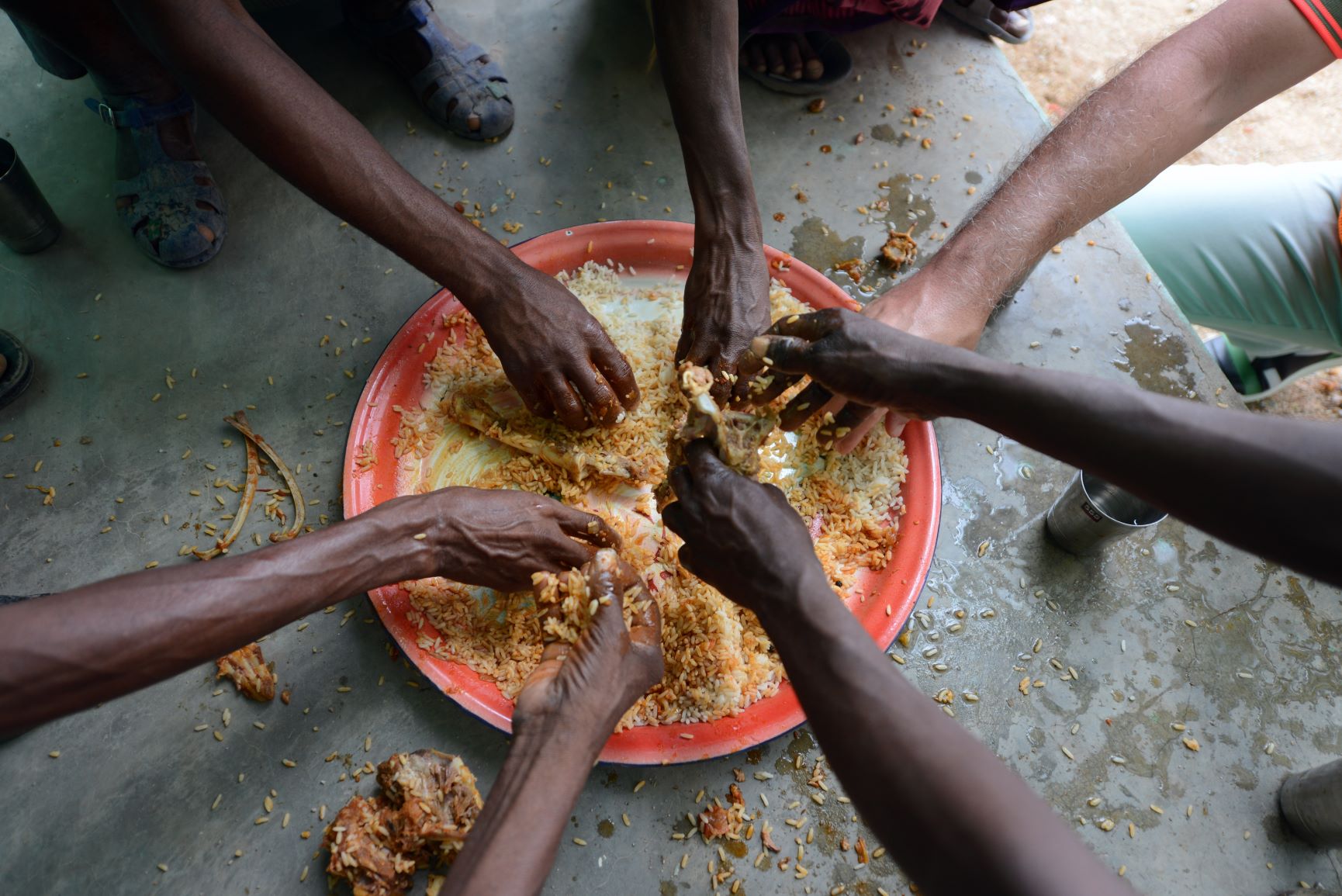
As the COVID-19 pandemic, conflict and climate-related crises drive acute levels of hunger higher, the United Nations’ Food and Agriculture Organization is seeking $1.1 billion in 2021 to save the lives and livelihoods of some of the world’s most food-insecure people.
In 2021, FAO is aiming to reach more than 48.9 million people who rely on agriculture for their survival and livelihoods through interventions by boosting local food production and nutrition, while strengthening the capacity and resilience of communities to prepare for and cope with crises, as well as providing post-disaster livelihoods support to help people resume production.
According to FAO’s latest data, country after country has recorded new food insecurity figures and the total number of people who experienced acute food insecurity at crisis or worse levels in 2020 is expected to exceed 2019’s high of 135 million people.
This year’s Global Report on Food Crises, to be launched by the Global Network against Food Crises in April, will underscore the severity of the situation.
Speaking on the situation, Mr Dominique Burgeon, Director of FAO’s Emergencies and Resilience Division said, “the shocks of the past year will reverberate long into 2021 and beyond, and we need to urgently scale up actions to avert a worst-case scenario.”
The agency is of extreme concern that an estimated 30 million people are in Integrated Food Security Phase Classification (IPC) Phase 4 or Emergency levels of acute hunger, who are already experiencing excess mortality and the irreversible loss of vital livelihood assets.
FAO noted that hundreds of thousands of girls, boys, women, and men are at extreme risk of acute food insecurity in several countries with many living in conflict zones where humanitarian access is restricted or challenging.
“Millions are living on the precipice – one stress or shock away from rapid deterioration. With or without famine declarations, we need to act now,” Mr Burgeon added.
The UN agency explained that agriculture is critical as nearly four out of five people live in rural areas and rely on some form of agricultural production for their livelihoods.
The most severe manifestation of acute hunger remains a largely rural phenomenon so averting famine must therefore begin in rural areas and include large-scale and collective action to save livelihoods and lives.
It noted that it has already provided critical livelihood support to safeguard the livelihoods of over 24 million people against the socio‑economic impacts of COVID-19.
Through initiatives like desert locust control operations, there has been a significant impact in the Greater Horn of Africa and Yemen where over 3.1 million tonnes of cereal, worth $939 million, enough to feed more than 20.8 million people for a year and protect more than 1.5 million pastoral households have been protected.
With FAO’s support, those affected can have the means and the capacity to produce the food needed to stave off acute hunger.
The agency noted that in 2021, it will focus on providing assistance to highly food-insecure communities in more than 30 countries including the Democratic Republic of the Congo, Ethiopia, Somalia, South Sudan, Syria, and Yemen.
Yemen is suffering the world’s worst humanitarian crisis as a consequence of conflict and economic collapse. Farmers have also had to deal with desert locusts and natural disasters. FAO aims to reach 6.3 million people with high-impact interventions combining cash and agricultural livelihoods support and promoting community resilience.
In Syria, 12 million people will benefit from restoring agricultural livelihoods and value chains while in Ethiopia, the organisation aims to assist 6.7 million people facing acute hunger and another 6 million people in South Sudan to improve their food security, resilience and agricultural production.
About this, Mr Burgeon said, “We will continue investing in the most vulnerable people and their livelihoods so that they can lead their future recovery and pull themselves out of acute hunger.”
World
Germany Acquires Equity Stake in ATIDI to Strengthen Economic Partnership With Africa
By Aduragbemi Omiyale
About $32 million has been put into the African Trade and Investment Development Insurance (ATIDI) by Germany through KfW Development Bank.
This funding package allows the European nation to become a D2-class shareholder of ATIDI, a status dedicated to Export Credit Agencies and Non-African Public Entities.
Of this amount, $18.4 million is funded from BMZ budget resources, with the remaining $13.6 million coming from KfW’s own resources. As such, it will assume the obligations and benefits related to its new shareholding status, including representation in ATIDI Governance and decision-making structures, and equally participating towards improving German trade and investments in Africa in alignment with the G20 Compact with Africa (CwA 2.0).
KfW’s subscription in ATIDI is the culmination of a dynamic partnership between the two organisations.
On behalf of the German Federal Ministry of Economic Cooperation and Development (BMZ), KfW has supported several countries’ membership in ATIDI with over $100 million in financing, thus strengthening the organisation’s capital base and expanding its ability to mitigate risk and mobilise private investment across African markets.
The new equity participation adds a direct shareholding to this long‑standing cooperation.
KfW is the 13th Institutional shareholder in Africa’s premier development insurer, further strengthening the organisation’s capital base and its capacity to support trade and investment across the continent.
At the official signing of the subscription agreement in Nairobi, Kenya, a member of the executive board of KfW, Ms Christiane Laibach, said, “Our membership is executed on behalf of the Federal Republic of Germany. It is only the latest culmination of a successful cooperation that has enabled the ATIDI membership of several African states and has created innovative insurance solutions to attract foreign investment on the continent.”
The chief executive of ATIDI, Mr Manuel Moses, said, “This milestone is iconic in many ways. First, it elevates our already dynamic bond with KfW and creates more opportunities for German investors looking to engage in Africa. It is also a recognition of ATIDI’s earned status as Africa’s top development insurer and the acknowledgement of the soundness of our business. Last, it underscores the power of partnerships in a global context increasingly marked by volatility and uncertainty. ATIDI will spare no effort to make this partnership a successful one.”
Established in 1948, KfW is Germany’s state-owned promotional and development bank and a key implementing partner of BMZ in international financial cooperation. Its shareholding in ATIDI is expected to stimulate up to $500 million in trade and investment between German companies and African markets.
Over the past 25 years, ATIDI has grown to become Africa’s premier provider of development insurance and one of its highest-rated financial organisations. It leverages its partnerships with leading multilaterals and regional bodies, including the African Union, the World Bank Group, COMESA, the European Investment Bank (EIB), and the Norwegian Agency for Development Cooperation (NORAD), to offer innovative credit and investment insurance products that foster sustainable and transformational growth across the continent.
World
Essent Slashes Contact Centre Technology Costs by 50%
By Modupe Gbadeyanka
The Netherlands’ largest energy provider, Essent, has cut the technology costs of its contact centre infrastructure by half.
The organisation, which serves 2.5 million customers, recorded zero critical incidents post-migration and improved agent workplace satisfaction by 36 per cent.
The migration was delivered in partnership with AI-first customer experience transformation specialists, Sabio Group, and was completed in under 12 weeks for an operation spanning over 1,000 agents across two locations.
Agents were forced to juggle multiple disconnected screens simultaneously — a workflow that was as inefficient as it was stressful.
“Our agents were constantly working with different screens — multiple chat instances open at once, multiple agent desktop instances. It was messy, and in some cases, quite stressful,” SAFe Product Manager for Customer Interaction, Omnichannel and Digital Transformation at Essent, Michiel Kouijzer, stated.
“A lot of colleagues were saying I was mad for even suggesting this approach. It kind of feels like a victory on a personal level that it did work out. You just have to be a little ambitious — and have the right expert partner who can make it work,” Kouijzer added.
With stable cloud infrastructure now firmly in place, Essent is turning its attention to the capabilities that were impossible in its legacy environment: AI-powered call summarisation, agentic customer self-service, and next-generation workforce optimisation.
Rather than a reckless ‘big bang’ cutover that could have affected service to millions of households, Sabio engineered a phased migration strategy — beginning with Essent’s SME segment to validate technical readiness before scaling to the full enterprise operation.
“This project showcases Sabio’s unique position in the contact centre technology landscape. We’re not just moving Essent to the cloud — we’re establishing a foundation for continuous improvement in their customer experience delivery,” the Country Manager for Sabio Group Benelux, Wouter Bakker, commented.
World
Africa: A New Market for Russian Business
By Kestér Kenn Klomegâh
On April 11, the presentation of the book “Africa: a new market for Russian business” took place, which aroused lively diverse interests among business representatives, entrepreneurs and employees of federal structures of Russia. The event was dedicated to discussing the prospects of Russian companies entering the African market and became a platform for the exchange of views and experiences.
Participating guests, packed in the small hall, included:
– representatives of business circles,
– entrepreneurs interested in new directions of development,
– employees of federal agencies curating foreign economic activity.
The presentation was held in a constructive and friendly atmosphere. The author of the book, Serge Fokas Odunlami, detailed the key ideas and conclusions presented in the publication. Particular attention was paid to the practical aspects of operating in the African market, as well as the analysis of opportunities and risks for Russian companies.
During the lively discussion, participants asked questions, shared their experiences and made suggestions for developing cooperation with African countries. This format allowed not only to get acquainted with the content of the book, but also to discuss topical issues of expanding business relations.
Meaning of the book: The publication, “Africa: a new market for Russian business” offers readers not only analytical, but also practical recommendations on investment and market trends, and how to enter the African market. The book will be a useful tool for those considering Africa as a promising destination for investment and business development.
The presentation of the book became a significant event for the Russian business community interested in expanding cooperation with Africa. Serge Fokas Odunlami introduced the participants to the new edition, which is a comprehensive business guide that gives an impetus for dialogue and implementation of joint entrepreneurial projects and corporate initiatives across Africa.
-
Feature/OPED6 years agoDavos was Different this year
-
Travel/Tourism10 years ago
Lagos Seals Western Lodge Hotel In Ikorodu
-
Showbiz3 years agoEstranged Lover Releases Videos of Empress Njamah Bathing
-
Banking8 years agoSort Codes of GTBank Branches in Nigeria
-
Economy3 years agoSubsidy Removal: CNG at N130 Per Litre Cheaper Than Petrol—IPMAN
-
Banking3 years agoSort Codes of UBA Branches in Nigeria
-
Banking3 years agoFirst Bank Announces Planned Downtime
-
Sports3 years agoHighest Paid Nigerian Footballer – How Much Do Nigerian Footballers Earn