Connect with us

World

Honest View Award: Moscow Rewards Best Foreign Journalists, Bloggers

Published

on

Honest View Journalism Award

By Kestér Kenn Klomegâh

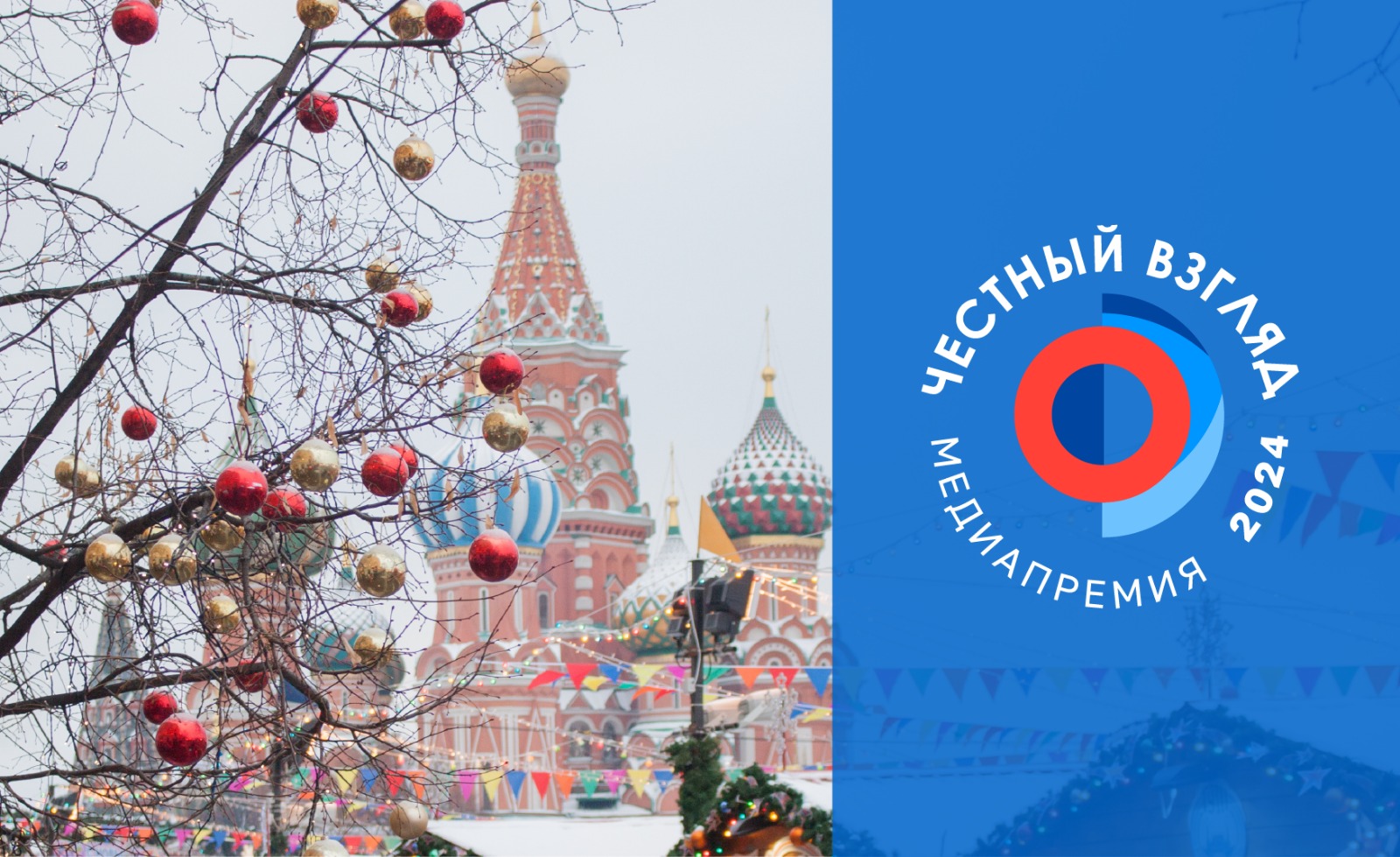
On December 3, Moscow prepares to hold its ground-breaking International Honest View Award for foreign journalists and bloggers in a planned ceremony.

The 2024 award has collected a record number of applications for all three years of its existence – 488 competition materials from 59 countries, including Argentina, Germany, Israel, India, Iran, Canada, China, Norway, Romania, Serbia, Slovakia, Turkey, 19 African countries and all CIS countries.

The goal of the Honest View Award is to identify the best materials from foreign media and authors who cover humanitarian, cultural and economic initiatives of the Russian Federation abroad, as well as joint global, interregional and inter-country projects with Russia. According to the organizers, the world is in demand for objective information about Russia, its international activities and projects abroad.

The competition for foreign media is annually held in order to identify, popularize and promote the best journalistic experience in covering the humanitarian activities of the Russian Federation abroad. The surge in the applications, as compared to the previous years, demonstrated a growing interest in reporting on Russia, especially in the context of the changing geopolitical situation.

This is not the limit: based on the dynamics of growing interest in the contest in the previous two years, the Organizing Committee has expanded the geography to all the continents – especially since the contest was receiving attention from international associations that unite journalists from different regions and strive to maintain high standards of the profession.

It is also aimed at inspiring and motivating foreign journalists to join the movement for multipolar change and make a departure away from criticisms to promote Russia’s image abroad. The works of foreign journalists and bloggers were evaluated by the members of an Expert Council and the Media Award Jury.

The most popular nomination was “Best Material on International Cultural Partnership with Russia” – 159 applications were received. 132 authors are competing for the victory in the nomination “Best Material on Social and Humanitarian Topics” and 103 materials have been submitted in the nomination for “Best Material in the Genre of Journalism and Documentary” after the deadline on 25th September 2024, according to reports.

One of the innovations of the award in 2024 is the nomination for young journalists aged 18-25, and it has found its audience: more than 15% of the applications received for the competition were submitted by applicants under 25. This year’s innovation – the nomination “Best Material by Young Journalists about the Russian Federation” – attracted 54 young and aspiring journalists aged 18-25 to the competition. The most talented and active participants will be invited to Moscow in early December to attend the Media School, which includes lectures, master classes and trainings by Russian and foreign experts on international issues, global challenges, mastering modern journalism formats and mass communication technologies in the context of covering international humanitarian projects.

Another innovation of this year included the special nomination for the author of the material covering cooperation within EAEU, BRICS and other international projects and initiatives. The winner in this category was selected by the Competition Jury together with one of the Award’s partners. The final results of the award will be announced at the award ceremony for the winners and laureates on 3rd December 2024 in Moscow.

Reference: The Honest View Media Award is being held for the third year and has already become a platform for uniting journalists and bloggers from all over the world. In 2022, 118 journalists from 28 countries participated in the award. Participants from Uzbekistan, Montenegro, Tajikistan, Belarus, and Iran were the winners of the competition. In 2023, the geography of the award expanded, and the number of participants doubled: 250 works from 51 countries were received.

In 2024, journalists and bloggers from 59 countries submitted applications for the competition, including Abkhazia, Azerbaijan, Argentina, Armenia, Bangladesh, Belarus, Benin, Burkina Faso, Gabon, Ghana, Guinea, Germany, Greece, Egypt, Zambia, Zimbabwe, Israel, India, Iran, Kazakhstan, Cameroon, Canada, Kyrgyzstan, China, Congo, Costa Rica, Kyrgyzstan, Latvia, Lebanon, Malaysia, Mali, Morocco, Moldova, Mongolia, Norway, Paraguay, Peru, Romania, Senegal, Serbia, Syria, Slovakia, Tajikistan, Thailand, Togo, Tunisia, Turkmenistan, Turkey, Uganda, Uzbekistan, Finland, CAR, Chad, Montenegro, Ecuador, Ethiopia, South Africa, South Ossetia.

The organizer of the award and media school is the Federal Agency for the Commonwealth of Independent States, Compatriots Living Abroad, and International Humanitarian Cooperation (Rossotrudnichestvo). The operator of the competition and media school is the AGT Communications Agency, one of the leaders in the communications industry of Russia and the CIS countries.


Click to comment

Leave a Reply

Your email address will not be published. Required fields are marked *

World

Outcome of Russia-Congo Strategic Talks

Published

on

Russia-Congo Strategic Talks

By Kestér Kenn Klomegâh

Congolese President Denis Sassou Nguesso tightly embraced and shook hands with President Vladimir Putin, signalling the highest level of cordial friendship, and later settled down for official talks focusing on strengthening the multifaceted Russian-Congolese comprehensive strategic economic partnership, including in the context of the upcoming high-level third Russia-Africa Summit scheduled for October 2026.

In St George’s Hall of the Grand Kremlin Palace, Putin told his Congolese counterpart, Denis Nguesso, and the delegation that there were “good prospects for developing relations in a variety of areas” and reminded them that the full-fledged relations between Russia and the Congo have been making strides. Russian companies are ready and eager to work in the country’s market, primarily because the political situation has been stable, which is good for business. The Intergovernmental commissions are operational.

Denis Nguesso’s official visit, from April 28 to 29, has immense significance for the Kremlin. Moscow is stepping up to tackle important corporate investments ranging from an industrial and technological standpoints, which open pathways for knowledge transfer, human capital development, and Congo’s integration into defence innovation value chains. At the geo-strategic level, Moscow is seemingly positioning itself as a regional security hub and as an incredible partner, particularly in Congo, while strengthening a broader strategic influence in the central African region.

On the agenda, Russia will begin design work this year for the construction of an oil product pipeline in Congo, under an agreement signed in 2024. The Pointe-Noire – Loutete – Moluko-Tresho oil product pipeline that Russia plans to build in the African country under an intergovernmental agreement is supposed to go into operation by the end of 2029.

It was reported earlier that Russia is hoping to create a channel for shipping oil products that is protected from sanctions by building this pipeline in the Congo, as well as becoming a strategic partner in ensuring the energy security of the whole region. The agreement on the project, which was signed in Moscow on September 28, 2024, provides for the creation of favourable conditions to carry out the pipeline’s construction.

Under the agreement, the authorised organisations responsible for the implementation of the project are Zakneftegazstroy-Prometei LLC and the National Petroleum Company of Congo (SNPC), which is the client of the project. They will form a joint venture to carry out the project in which the Russian side will own a 90% stake and the Congolese side will hold 10%.

A build-own-operate-transfer concession agreement will be signed with the joint venture to build and operate the pipeline for 25 years, with a guaranteed price for transport that will ensure the utilisation of the pipeline and a return on investment in the project. The Russian Ambassador to Congo, Georgy Chepik, said earlier that the pipeline will run between the country’s two largest cities, Pointe-Noire and the capital Brazzaville.

In particular, the two sides discussed the prospects of implementing joint projects and forging mutual cooperation prospects in a wide range of areas, including geological prospecting, energy, logistics, agriculture, trade, and manufacturing. The sides also “noted readiness to gradually increase their transport cooperation. The Republic of Congo is seen as a key logistics hub in Central Africa and a crucial participant in a promising international transport route between Russia and the African continent,” the statement said.

Nearly 80% of the population still lives in abject poverty, even though the country boasts huge resources. Congo is the fourth-largest oil producer in the Gulf of Guinea, providing the country with a high degree of potential prosperity, despite its internal ethnic conflicts and economic disparity. It has a large untapped mineral wealth and large untapped metal, gold, iron, and phosphate deposits. In 2018, the Republic of the Congo joined the Organisation of Petroleum Exporting Countries (OPEC).

Historical records show that Denis Nguesso, several times as a civil servant during the Soviet era, and as president, visited Russia, including participation in the two Russia-Africa Summits held in Sochi and St. Petersburg, and consequently was gifted with a collage of photographs and Pravda newspaper clips documenting these visits. President Putin has also awarded him with the Order of Honour, while Moscow State University of International Relations (MGIMO) gifted him with a Doctorate Degree. The document, published on the Kremlin website, for instance, says Nguesso has been honoured with the award “for his major contribution to boosting and strengthening relations between the Russian Federation and the Republic of the Congo.”

Congolese Denis Nguesso, who has shuttled frequently between his city and Moscow, underlined the fact that bilateral relations have been developing for many decades. These are ties of solidarity and cooperation that bind the two parties in all areas, including security, defence, and the economy. He emphasised the point that the time has arrived to act more concretely, to accelerate the implementation of the jointly elaborated programme. Both parties will have the opportunity to sign more bilateral agreements in Brazzaville in September 2026, before the new Russia-Africa summit, to be held in Moscow.

The third Summit is expected to solidly reaffirm the development of relations between African states and the Russian Federation. For decades, Russia has supported Africa’s ideals for freedom, independence and sovereignty. Next, Russia-Africa cooperation has a big future. Africa is rich in resources. And Russia contributes to efforts to ease the debt burden that African countries are facing. The total debt Russia has cancelled, previously and so far, stands at $23 billion, according to reports.

In addition, Russia and African states have coordinated efforts for building a new, fairer global architecture, and further working together to protect international law, the UN Charter and the central role of that global organisation, while at the same time, trying to coordinate their positions on the main issues on the international agenda. African regional structures have substantially enhanced these geopolitical profiles, and within the general objectives of the African Union.

Continue Reading

World

Germany Acquires Equity Stake in ATIDI to Strengthen Economic Partnership With Africa

Published

on

ATIDI KfW Development Bank

By Aduragbemi Omiyale

About $32 million has been put into the African Trade and Investment Development Insurance (ATIDI) by Germany through KfW Development Bank.

This funding package allows the European nation to become a D2-class shareholder of ATIDI, a status dedicated to Export Credit Agencies and Non-African Public Entities.

Of this amount, $18.4 million is funded from BMZ budget resources, with the remaining $13.6 million coming from KfW’s own resources. As such, it will assume the obligations and benefits related to its new shareholding status, including representation in ATIDI Governance and decision-making structures, and equally participating towards improving German trade and investments in Africa in alignment with the G20 Compact with Africa (CwA 2.0).

KfW’s subscription in ATIDI is the culmination of a dynamic partnership between the two organisations.

On behalf of the German Federal Ministry of Economic Cooperation and Development (BMZ), KfW has supported several countries’ membership in ATIDI with over $100 million in financing, thus strengthening the organisation’s capital base and expanding its ability to mitigate risk and mobilise private investment across African markets.

The new equity participation adds a direct shareholding to this long‑standing cooperation.

KfW is the 13th Institutional shareholder in Africa’s premier development insurer, further strengthening the organisation’s capital base and its capacity to support trade and investment across the continent.

At the official signing of the subscription agreement in Nairobi, Kenya, a member of the executive board of KfW, Ms Christiane Laibach, said, “Our membership is executed on behalf of the Federal Republic of Germany. It is only the latest culmination of a successful cooperation that has enabled the ATIDI membership of several African states and has created innovative insurance solutions to attract foreign investment on the continent.”

The chief executive of ATIDI, Mr Manuel Moses, said, “This milestone is iconic in many ways. First, it elevates our already dynamic bond with KfW and creates more opportunities for German investors looking to engage in Africa. It is also a recognition of ATIDI’s earned status as Africa’s top development insurer and the acknowledgement of the soundness of our business. Last, it underscores the power of partnerships in a global context increasingly marked by volatility and uncertainty. ATIDI will spare no effort to make this partnership a successful one.”

Established in 1948, KfW is Germany’s state-owned promotional and development bank and a key implementing partner of BMZ in international financial cooperation. Its shareholding in ATIDI is expected to stimulate up to $500 million in trade and investment between German companies and African markets.

Over the past 25 years, ATIDI has grown to become Africa’s premier provider of development insurance and one of its highest-rated financial organisations. It leverages its partnerships with leading multilaterals and regional bodies, including the African Union, the World Bank Group, COMESA, the European Investment Bank (EIB), and the Norwegian Agency for Development Cooperation (NORAD), to offer innovative credit and investment insurance products that foster sustainable and transformational growth across the continent.

Continue Reading

World

Essent Slashes Contact Centre Technology Costs by 50%

Published

on

Essent Energy provider

By Modupe Gbadeyanka

The Netherlands’ largest energy provider, Essent, has cut the technology costs of its contact centre infrastructure by half.

The organisation, which serves 2.5 million customers, recorded zero critical incidents post-migration and improved agent workplace satisfaction by 36 per cent.

The migration was delivered in partnership with AI-first customer experience transformation specialists, Sabio Group, and was completed in under 12 weeks for an operation spanning over 1,000 agents across two locations.

Agents were forced to juggle multiple disconnected screens simultaneously — a workflow that was as inefficient as it was stressful.

“Our agents were constantly working with different screens — multiple chat instances open at once, multiple agent desktop instances. It was messy, and in some cases, quite stressful,” SAFe Product Manager for Customer Interaction, Omnichannel and Digital Transformation at Essent, Michiel Kouijzer, stated.

“A lot of colleagues were saying I was mad for even suggesting this approach. It kind of feels like a victory on a personal level that it did work out. You just have to be a little ambitious — and have the right expert partner who can make it work,” Kouijzer added.

With stable cloud infrastructure now firmly in place, Essent is turning its attention to the capabilities that were impossible in its legacy environment: AI-powered call summarisation, agentic customer self-service, and next-generation workforce optimisation.

Rather than a reckless ‘big bang’ cutover that could have affected service to millions of households, Sabio engineered a phased migration strategy — beginning with Essent’s SME segment to validate technical readiness before scaling to the full enterprise operation.

“This project showcases Sabio’s unique position in the contact centre technology landscape. We’re not just moving Essent to the cloud — we’re establishing a foundation for continuous improvement in their customer experience delivery,” the Country Manager for Sabio Group Benelux, Wouter Bakker, commented.

Continue Reading

Trending