Connect with us

World

Housing Deficit: Ghana Must Adopt Sustainability—Consultant

Published

on

Paul Ocran

A consultant and auditor to SGS Ghana, Mr Paul Ocran, has advised Ghanaian government and private sector to adopt sustainability measures in their quest to bridge the housing deficit.

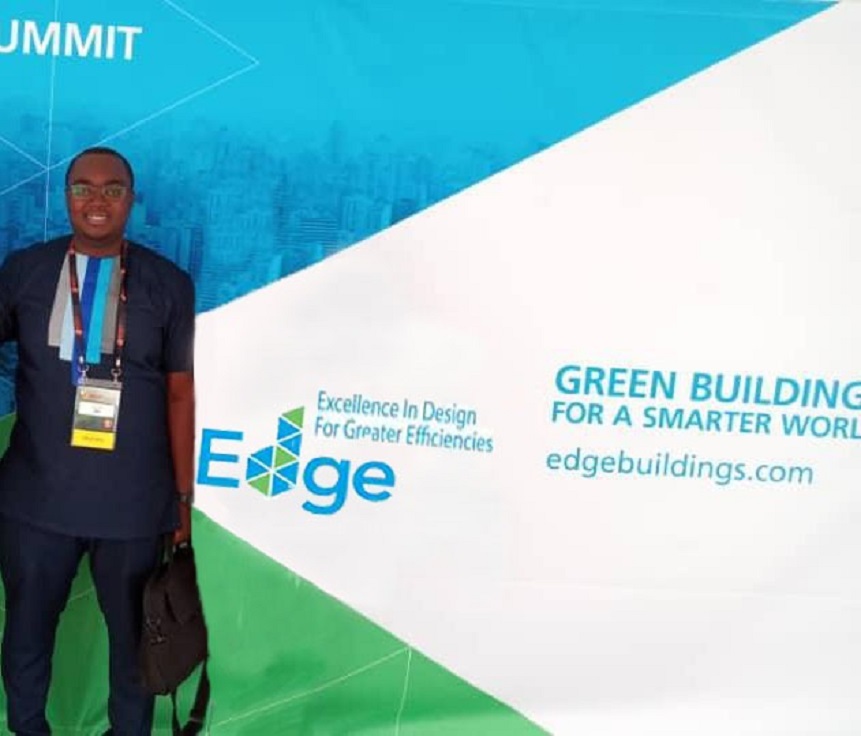
In a chat with News Ghana, Mr Ocran said more Ghanaian design professionals should be aware of EDGE, a free software application that enables them to model the environmental impacts of their building projects in more than 150 countries, including Ghana. An innovation of IFC, a member of the World Bank Group, EDGE is supported by Switzerland’s State Secretariat for Economic Affairs (SECO).

EDGE can be used on smart phones, tablets or computers, providing access to design professionals to help clients certify their projects at the design stage as well as after completion. The software has significant advantages over the conventional way of designing.

“When we look at the housing deficit of more than two million units, questions come to mind,” Ocran said. “How can the government and the private sector work together to ensure the gap is overcome in a sustainable way? Should housing needs be met, what will the effect be on our natural resources? We must think ahead to how we are going to save energy and water,” he said.

Ghana’s housing deficit is said to have hit two million units, according to the Minister for Works and Housing, Samuel Atta Akyea. This implies the need to build 190,000 to 200,000 units of houses each year for the next 10 years to bridge the gap, which is expected to cost $3.4 billion.

The government announced an ambitious plan to establish a GH¢1 billion mortgage and housing finance to leverage private capital while providing affordable housing for Ghanaians. Though the plan was announced in the 2019 Budget Statement and Economic Policy presented by the Finance Minister, Ken Ofori-Atta to the country’s parliament, the government is yet to implement it. Given the anticipated rapid increase of the housing sector, building sustainably and minimising the pressure on resources is a key concern.

“EDGE is a practical solution for governments, real estate developers, and private individuals because it helps quantify the value of energy and water savings a building can have when environmentally-friendly choices are selected,” said Ocran. “Proactive developers can stand out in the market if their projects are EDGE certified. EDGE gives the project a green brand and verifies the savings in terms of reduced impacts. Developers can use EDGE as a way to demonstrate the value and quality of a property.”

With an EDGE-certified property, each homeowner receives a certificate as proof that they have purchased or are renting an apartment that is resource efficient. Industry professionals such as Ocran describe the EDGE software as an innovation that puts a powerful resource into the hands of designers to access real-time feedback about how to create green buildings.

According to Mr Ocran, assessing the sustainability of your building in the past required bringing on board environmental consultants, energy consultants, and water consultants. EDGE provides an integrated service to help model all aspects of the project. Additionally, the extra cost that it takes to build green is revealed together with the payback period through reduced operational costs.

“With EDGE, you can quickly and accurately access the data on the sustainability of your building. Previously you needed multiple professionals and software applications to achieve the same result. That’s the innovation EDGE brings to the market.”

Several high-profile buildings have achieved EDGE certification. These include Atlantic Tower, located at the Airport City enclave, two offices located at the Tema Port Expansion Area and the new Terminal 3 located in the Tema Port.

Also, the 363-key Pullman Hotel, which is going to be the largest in the country when completed in 2021, is currently aiming to achieve EDGE certification.

Source: News Ghana

Dipo Olowookere is a journalist based in Nigeria that has passion for reporting business news stories. At his leisure time, he watches football and supports 3SC of Ibadan. Mr Olowookere can be reached via [email protected]

Click to comment

Leave a Reply

Your email address will not be published. Required fields are marked *

World

SCRYPT Expands Stablecoin Settlement Infrastructure to East Africa

Published

on

SCRYPT stablecoin

By Aduragbemi Omiyale

Accessing the US Dollar in the East Africa region has now been made easier with the expansion of the stablecoin settlement infrastructure of SCRYPT.

This development enables banks, payment providers and corporate treasury teams to move value into and out of the continent in real time.

Businesses paying international suppliers frequently have to convert local currency into USD before purchasing stablecoins for settlement, incurring FX conversions and spreads before any payment is made.

But SCRYPT is eliminating this intermediate conversion by enabling direct settlement corridors for local African currencies into stablecoins.

This development allows businesses to move from local currency to stablecoin settlement in a single licensed transaction, without first sourcing rationed bank dollars, as stablecoins are increasingly becoming settlement infrastructure rather than an investment product.

The expansion adds settlement support across four African currencies: the Kenyan shilling (KES), Tanzanian shilling (TZS), Rwandan franc (RWF) and Ugandan shilling (UGX). Each corridor is delivered through the same full-stack infrastructure our clients already use for trading, custody and treasury operations.

Speaking on this, the chief executive of SCRYPT, Norman Wooding, said, “Across Africa, stablecoin adoption is driven by economic need, not speculation.

“Businesses here are not chasing yield; they are trying to pay suppliers and manage treasury without losing margin to a banking system that rations dollars. Licensed, fair-rate dollar access is the clearest proof of what this infrastructure is for.”

Also commenting, the Managing Director of Markets & Trading at SCRYPT, Mr Gabriel Titopoulos, said, “Until now, reaching stablecoins from local African currencies meant buying scarce dollars and incurring several layers of conversion costs.

“SCRYPT removes this friction. Firms and payment providers can now settle straight from local currencies through live corridors, with local partners.”

Continue Reading

World

African Graduates Association Promoting Multifaceted Initiatives With Russian Educational Institutions

Published

on

Francois Ngan Professor Vladimir Filippov African Graduates Association

By Kestér Kenn Klomegâh

In preparations for the third Russia-Africa Summit, scheduled for late October 2026, Dr Francois Ngan, deputy chairman of the Union of Associations of African Graduates of Soviet and Russian Universities, during an official working visit, has held a consultative meeting with Professor Vladimir Filippov, the President of the Russian University of Peoples’ Friendship (RUDN), and former Minister of Higher Education of Russia, Chairman of the National Commission for Accreditation of Higher Education.

RUDN is an educational institution established in 1960, primarily to provide higher education to Third World students. It has now become a popular multidisciplinary spot for many students, especially from developing countries. The university offers various academic programmes and has research infrastructure that comprises laboratories and interdisciplinary centres. The university is named after the former Congolese leader, Patrice Lumumba.

Dr Francois Ngan and Professor Filippov discussed the importance of the Graduates Association as a continental platform dedicated to strengthening unity, cooperation, and promoting shared progress among African graduates who studied in the former Soviet Union and in the Russian Federation. They also reviewed multifaceted initiatives that could bring together alumni associations from across Africa, whose members obtained education and professional training, and cultural experiences in Soviet and Russian institutions of higher learning.

Professor Filippov expressed optimism in addressing emerging challenges as a result of shifting geopolitical changes, emphasised strategic cooperation in the educational sphere with Africa, in general, and with the Republic of Cameroon, in particular, and further about the integration of African students during their studies in the Russian Federation.

The meeting also touched on academic and scientific work, the possibility of rewriting a scientific thesis, and the official organisation of transferring versions translated into six languages ​​for the library of RUDN. Significant questions relating to Russia’s educational opportunities, collaborations and partnerships involving African countries were thoroughly discussed.

The Union of Associations of African Graduates of Soviet and Russian Universities was created under one continental umbrella to promote friendship, for professional networking, to engage in cultural exchange, and with particular emphasis on forging strategic cooperation between Africa and Russia.

Continue Reading

World

Russia to Support Industrial Growth, Technological Advancement and Supply Chain Resilience across Africa

Published

on

Russia Supply Chain Africa

By Kestér Kenn Klomegâh

With the heightening of geopolitical rivalry and competition, a new Russia-Africa working group has emerged as a significant institutional mechanism and plans to focus on facilitating and monitoring strategic investments, industrialisation, and infrastructural development—the Strategic Action Plan 2023-2026—that was outlined during the second Russia-Africa summit, in St.Petersburg, the second largest city in the Russian Federation.

While substantial progress has, largely, lagged on the multidimensional economic front with Africa primarily due to its internal difficulties and the complexity of relations with its former Soviet neighbours, Russian officials believe there still remains huge untapped potential in strengthening bilateral cooperation. As planned, President Vladimir Putin has already signed an executive order that directs Moscow to host the forthcoming third Russia-Africa summit in October 2026.

On June 30, a regular meeting of the Business Council on Africa was held under the chairmanship of the head of the Russian Foreign Ministry. It was dedicated to issues of trade, economic and investment cooperation with Africa. The group discussed the current state and prospects for the implementation of policy initiatives with an emphasis on assisting the countries of the continent, strengthening their economic, energy, technological and food sovereignty, as well as training specialists for Africa.

Foreign Minister Sergey Lavrov has reiterated that Russia-Africa relations primarily depend on an understanding of the importance of collective action based on the principles of equality, mutual respect and resolving common tasks. In the past few years, Russia-Africa cooperation has been noticeably strengthening. “We are deepening political dialogues, developing bilateral contacts with African countries, promoting cordial cooperation between ministries and departments, and expanding humanitarian exchanges. We are also continuing the structural diversification of trade partnerships and economic dimensions.”

“Next on the agenda is the launch of diplomatic missions in The Gambia, Liberia, Togo, and the Union of the Comoros,” Lavrov said at a meeting of the Business Council under the Russian foreign minister. Lavrov noted that Russian embassies began operating in three other African countries in 2025: Niger, Sierra Leone, and South Sudan. A new Department for Partnership with Africa was also established. According to the top diplomat, “expanding Russia’s diplomatic presence on the continent contributes to developing relations.”

There are already 45 Russian embassies operating in Africa. The Russian foreign minister noted that Moscow is quickly rebuilding its presence in African countries, which sharply declined during the collapse of the Soviet Union. “There will be literally four or five countries left where we still need to establish full-fledged embassies, and then, we will have 100 per cent coverage of the entire African continent with our diplomatic presence,” Lavrov emphasised.

After the first summit in October 2019, the Foreign Ministry also created the Secretariat of the Russia-Africa Partnership Forum. Its main tasks include controlling the roadmap to Africa’s multidimensional cooperation and guiding potential Russian investors to the continent. This also underscored the priority and post-Soviet solidarity Russia currently attaches to its policy towards Africa, within the growing framework of the emerging new architecture of multipolarity in the Global South.

In an interview in June 2026, the director of the Department of Partnership with Africa at the Foreign Ministry, Tatyana Dovgalenko, shared a few insights in the lead-up to the third summit. Furthermore, Dovgalenko explained that Russia would move away from security to concentrate more on economic issues, especially to team up with African colleagues to streamline mechanisms for implementing projects that will ensure food security and agriculture, and help Africa in installing processing facilities to support its self-sufficiency. She also emphasised energy and vital infrastructures, and the third direction was to simultaneously work more coherently with sub-regional organisations.

Over the past few years, bilateral relations have been increasing. There are positive dynamics in trade turnover, estimated at $30 billion. Steps are being taken to build payment systems, preferably in national currencies, while Russia looks to open four more diplomatic offices, bringing the total to 48 across Africa. Russia is currently training 37,000 African students, but only approximately 1/3 on state scholarships in Russia’s educational institutions. “We are ready to share valuable experiences of building a sovereign development model with African partners to achieve self-reliant economic growth based on their own resources and capabilities. Russia aims at creating processing capabilities and localising production, and provides access to advanced technological solutions,” underlined Dovgalenko in her interview with New Eastern Outlook.

For African countries that have endured difficult decades on the path to political independence, it is now important to take full control over the untapped resources, direct income and revenue toward stimulating the national economic sector, rather than paying for the well-being of the Western “golden billion” during this changing geopolitical era, according to Dovgalenko.

According to reports, the forthcoming Russia-Africa summit will have an economic agenda, including the digital economy, technology, artificial intelligence, healthcare, investment, and settlements in global trade. Of course, the agenda will also cover Africa’s political aspects. But if African friends bring along any specific ideas, Russia will give them serious attention. In addition, with continuity and consistency, pay increased attention to expanding ties with Africa’s regional integration associations.

Going forward, the focus will be on translating strong trade relations into deeper investment partnerships, fostering technology collaboration, strengthening industrial linkages and contributing towards the shared objectives set by the leadership of both African countries and Russia. At the third summit, the above-mentioned specific initiatives will be further designed. In this regard, the key document, the new action plan for the next three-year period (2027-2029), is intended to reflect dynamic realities in the future relations of Russia and Africa

Continue Reading