Connect with us

World

Museveni Wins Uganda Presidential Election for Sixth Term

Published

on

yoweri museveni uganda

By Adedapo Adesanya

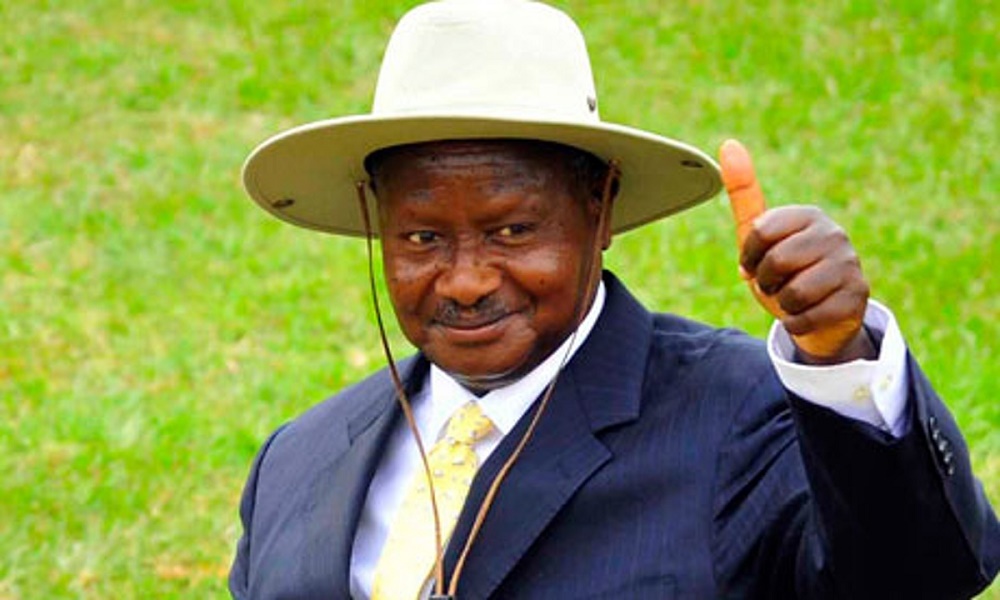
Ugandan President, Mr Yoweri Museveni, has won the controversial presidential election with 58.6 per cent of the votes cast, according to the country’s electoral commission.

The incumbent will now serve a sixth term as president of the East African nation following some of the worst pre-election violence since the 76-year-old took office in 1986.

His main opposition, Bobi Wine, has alleged vote-rigging throughout the process and had strong support in urban centres where frustration with unemployment and corruption remain high.

The result, which was announced by the Ugandan election commission chairman, Mr Simon Mugenyi Byabakama, showed that the turnout was 57.22 per cent of the almost 18 million registered voters.

Mr Byabakama urged the voters to remain calm and “accept the outcome of these elections” while reminding those celebrating to be mindful of the COVID-19 pandemic.

Mr Wine, a 38-year-old former pop star, whose campaign drew support from Ugandan youthful population seeking change, has dismissed the election as a “complete sham”.

The election took place after one of the most violent campaigns in years, with harassment and arrests of the opposition, attacks on the media and the deaths of at least 54 people.

Mr Wine and other opposition candidates were often harassed, and more than 50 people were killed when security forces halted riots in November after he was arrested.

Although Mr Museveni won the premier seat, at least 15 of his cabinet ministers including the vice president Edward Ssekandi were voted out, with many losing to candidates from Mr Wine’s party, according to local media.

Mr Wine, real name Kyagulanyi Ssentamu, claimed victory on Friday and said he had video evidence of vote-rigging and insisted every legal option is on the table to challenge the election results.

He was beaten up and arrested several times during the election campaign but was never convicted of any charge. He later wore a flak jacket and said he feared for his life.

Ahead of the election, in preparation for protests and possible violence in the aftermath of whoever emerged winner, the country’s telecommunications regulator had blocked all social media platforms and messaging apps.

In a letter sent to internet providers, the Uganda Communications Commission said popular services like Facebook and WhatsApp must be suspended until further notice.

Following the outcome of the election, analysts expect supporters of Mr Wine and his National Unity Platform party to voice their outrage in country-wide demonstrations.


Adedapo Adesanya is a journalist, polymath, and connoisseur of everything art. When he is not writing, he has his nose buried in one of the many books or articles he has bookmarked or simply listening to good music with a bottle of beer or wine. He supports the greatest club in the world, Manchester United F.C.

Click to comment

Leave a Reply

Your email address will not be published. Required fields are marked *

World

Russia to Support Industrial Growth, Technological Advancement and Supply Chain Resilience across Africa

Published

on

Russia Supply Chain Africa

By Kestér Kenn Klomegâh

With the heightening of geopolitical rivalry and competition, a new Russia-Africa working group has emerged as a significant institutional mechanism and plans to focus on facilitating and monitoring strategic investments, industrialisation, and infrastructural development—the Strategic Action Plan 2023-2026—that was outlined during the second Russia-Africa summit, in St.Petersburg, the second largest city in the Russian Federation.

While substantial progress has, largely, lagged on the multidimensional economic front with Africa primarily due to its internal difficulties and the complexity of relations with its former Soviet neighbours, Russian officials believe there still remains huge untapped potential in strengthening bilateral cooperation. As planned, President Vladimir Putin has already signed an executive order that directs Moscow to host the forthcoming third Russia-Africa summit in October 2026.

On June 30, a regular meeting of the Business Council on Africa was held under the chairmanship of the head of the Russian Foreign Ministry. It was dedicated to issues of trade, economic and investment cooperation with Africa. The group discussed the current state and prospects for the implementation of policy initiatives with an emphasis on assisting the countries of the continent, strengthening their economic, energy, technological and food sovereignty, as well as training specialists for Africa.

Foreign Minister Sergey Lavrov has reiterated that Russia-Africa relations primarily depend on an understanding of the importance of collective action based on the principles of equality, mutual respect and resolving common tasks. In the past few years, Russia-Africa cooperation has been noticeably strengthening. “We are deepening political dialogues, developing bilateral contacts with African countries, promoting cordial cooperation between ministries and departments, and expanding humanitarian exchanges. We are also continuing the structural diversification of trade partnerships and economic dimensions.”

“Next on the agenda is the launch of diplomatic missions in The Gambia, Liberia, Togo, and the Union of the Comoros,” Lavrov said at a meeting of the Business Council under the Russian foreign minister. Lavrov noted that Russian embassies began operating in three other African countries in 2025: Niger, Sierra Leone, and South Sudan. A new Department for Partnership with Africa was also established. According to the top diplomat, “expanding Russia’s diplomatic presence on the continent contributes to developing relations.”

There are already 45 Russian embassies operating in Africa. The Russian foreign minister noted that Moscow is quickly rebuilding its presence in African countries, which sharply declined during the collapse of the Soviet Union. “There will be literally four or five countries left where we still need to establish full-fledged embassies, and then, we will have 100 per cent coverage of the entire African continent with our diplomatic presence,” Lavrov emphasised.

After the first summit in October 2019, the Foreign Ministry also created the Secretariat of the Russia-Africa Partnership Forum. Its main tasks include controlling the roadmap to Africa’s multidimensional cooperation and guiding potential Russian investors to the continent. This also underscored the priority and post-Soviet solidarity Russia currently attaches to its policy towards Africa, within the growing framework of the emerging new architecture of multipolarity in the Global South.

In an interview in June 2026, the director of the Department of Partnership with Africa at the Foreign Ministry, Tatyana Dovgalenko, shared a few insights in the lead-up to the third summit. Furthermore, Dovgalenko explained that Russia would move away from security to concentrate more on economic issues, especially to team up with African colleagues to streamline mechanisms for implementing projects that will ensure food security and agriculture, and help Africa in installing processing facilities to support its self-sufficiency. She also emphasised energy and vital infrastructures, and the third direction was to simultaneously work more coherently with sub-regional organisations.

Over the past few years, bilateral relations have been increasing. There are positive dynamics in trade turnover, estimated at $30 billion. Steps are being taken to build payment systems, preferably in national currencies, while Russia looks to open four more diplomatic offices, bringing the total to 48 across Africa. Russia is currently training 37,000 African students, but only approximately 1/3 on state scholarships in Russia’s educational institutions. “We are ready to share valuable experiences of building a sovereign development model with African partners to achieve self-reliant economic growth based on their own resources and capabilities. Russia aims at creating processing capabilities and localising production, and provides access to advanced technological solutions,” underlined Dovgalenko in her interview with New Eastern Outlook.

For African countries that have endured difficult decades on the path to political independence, it is now important to take full control over the untapped resources, direct income and revenue toward stimulating the national economic sector, rather than paying for the well-being of the Western “golden billion” during this changing geopolitical era, according to Dovgalenko.

According to reports, the forthcoming Russia-Africa summit will have an economic agenda, including the digital economy, technology, artificial intelligence, healthcare, investment, and settlements in global trade. Of course, the agenda will also cover Africa’s political aspects. But if African friends bring along any specific ideas, Russia will give them serious attention. In addition, with continuity and consistency, pay increased attention to expanding ties with Africa’s regional integration associations.

Going forward, the focus will be on translating strong trade relations into deeper investment partnerships, fostering technology collaboration, strengthening industrial linkages and contributing towards the shared objectives set by the leadership of both African countries and Russia. At the third summit, the above-mentioned specific initiatives will be further designed. In this regard, the key document, the new action plan for the next three-year period (2027-2029), is intended to reflect dynamic realities in the future relations of Russia and Africa

Continue Reading

World

BRICS Facing Political Divergences, Suspends its Future Expansion

Published

on

BRICS Countries

By Kestér Kenn Klomegâh

At the 12th Primakov Readings conference held in Moscow on June 24, Russia’s Foreign Minister, Sergey Lavrov, categorically emphasised that BRICS (Brazil, Russia, India, China and South Africa) has suspended its future ambitions of expansion, citing divergences and rising perceptions over emerging geopolitical changes between members of the BRICS association. BRICS has experienced tectonic appreciation for its latest expansion from five to ten members, and for creating ‘partner membership’ status for 13 countries. While this was considered a significant achievement under Russia’s chairmanship in 2024, it has now turned into an obstacle confronting BRICS.

Lavrov acknowledged this key obstacle, sharp differences and disputes, as tarnishing the image and hindering, to some degree, the progress of the BRICS association. Primakov Readings was held to underline one of its aspirations, that is, to advance the growing question of multipolarity. In order to make a noticeable headway in establishing a new world order, it is necessary to rope in the East and the Global South to denounce the “rules-based order” and hegemony of the United States and Europe. BRICS, thus, conveniently, provides a platform for these countries to raise their voice and interaction in multilateral institutions and organisations. Acting collectively, they could considerably participate and expectedly rise to the global stage.

In his speech, Lavrov reiterated that the United States and the West in general have not accepted the objective reality of an emerging multipolar world order. They prefer propping up their weakening positions by forcing others to side with them, imposing sanctions, enacting bans, issuing threats and taking other illegitimate measures to force the Global Majority to play their game.

Lavrov, however, raised his genuine criticism: The West persists in its refusal to abide by the universally recognised international norms as outlined in the UN Charter, and has never fully respected them, in fact, even if everyone signing and ratifying the Charter undertakes to fully comply with its norms in their entirety and interconnection. This includes the sovereign equality of states and non-interference in domestic affairs, as well as respecting and guaranteeing human rights regardless of race, sex, language, or religion, to quote the UN Charter.

To unlock the potential of new powerhouses in Asia, Africa, and Latin America, a comprehensive agreement was initiated between China and Russia, as staunch driving forces behind BRICS, to increase its numerical strength by proposing new membership for BRICS. It all started with a pretext by inviting South Africa to join BRICS in 2010, then, under Russia’s presidency in 2024, the association moved from five to ten, by total membership.

Nevertheless, after only a couple of years, the planned ‘membership drive’ ultimately proved to be an obstacle to be managed within the current framework of BRICS. For China and Russia, this is a matter of regulatory principle – apparently, it will certainly not produce any positive results. In the end, to logically suspend BRICS’ future expansion. Without mincing words, Lavrov noted this point clearly: “We continue to comprehensively develop them while trying to stimulate the trilateral RIC – Russia-India-China – group. That format was shaped about 30 years ago at the initiative of Yevgeny Primakov and formed the core of BRICS. In our associations, cooperation is based on mutual respect and readiness to search for consensus solutions even when this is a challenging task. These things happen, and quite often. But the solutions we eventually find are guaranteed to serve common interests. That is why the number of countries willing to join the operations of BRICS and the SCO keeps growing, namely, in Central and Southeast Asia, Africa and Latin America,” Lavrov said.

Mentioning BRICS during the Primakov Readings forum in late June 2026 was quite important, as Yevgeny Primakov anticipated the evolutionary social development trends during his time. After the collapse of the Soviet era in 1991, we can see that the number of  BRICS member states has almost doubled. While explaining these latest developments, that the number of full members has increased from five to ten, Lavrov further pointed out that “this is not how it happened when BRIC accepted South Africa, and the addition of one country posed questions that needed to be clarified to ensure forward movement. When BRICS turned into a group of ten, it was decided to give the new members time to adjust to each other. I believe that it is a correct decision.”

During the meeting of the BRICS Council of Foreign Ministers in India, discussions were held, in practical terms, a difficult conversation between Iranian and Emirati members. This happened in the hottest period of the Gulf confrontation, but eventually, it was managed to coordinate a joint document, despite the highly emotional opinions expressed by both sides. This was one case in point.

But, according to Lavrov’s explanation, other examples go deeper, to clashing economic interests. That is why it has been decided against pushing for further expansion for a few years. But the partner countries attend these events, which is creating grounds for giving BRICS a more universal dimension.

As for the agenda, BRICS is not an organisation, but rather an informal association. This is its strong side, because it would be wrong to create a rigid structure, at least at the current stage, especially a global structure rather than a continental or regional one. Many find this confusing. At least Russia won’t propose formalising BRICS, with the same structural status as the United Nations (UN).

Interesting to note and remind here, in an interview with Sky News Arabia on September 20, 2024, Lavrov expressed scepticism but was straight to the point about the strategic expansion of BRICS. Under Russia’s BRICS presidency, five countries – Ethiopia, Egypt, Iran, Saudi Arabia and the United Arab Emirates became the second wave of the newest members to join BRICS.

Tracking down the history, operations and achievements, Lavrov acknowledged, in his interview, that BRICS is consolidating its positions and cooperating with some countries. At the same time, this association is facing serious challenges. It is necessary to promote collaboration based on a balance of interests, and most importantly, BRICS functions based on consensus. The consensus principle primarily aims at finding agreements that reflect the mutual accord of all participants. In practical terms, the more partners, the harder it is to search for accord. It takes more time to finalise any consensus-based agreement than a vote-based solution.

According to Lavrov, BRICS expansion has sparked debates and discussions over the past several years. The foreign minister indicated, and repeatedly explained, the “suspension” of membership in BRICS was primarily due to internal differences, perceptions and approach to geopolitical changes. As stipulated by the guidelines, there are no concrete criteria or rules for admission except using the flexible term “consensus” – a general agreement at summits, which was utilised in the selection process.

At the Primakov Readings, previously held in June 2024, the key point was an announcement by Sergey Lavrov over the ‘suspension’ of new membership. Then, in mid-June 2024, Lavrov hosted the BRICS Foreign Ministers Council in Russia’s Nizhny Novgorod. The BRICS Foreign Ministers decided to suspend admission of new members, and this step was reflected in the final documents.

At present, the annual agenda is determined by the rotating presidency of BRICS. However, practice shows that every successive presiding country strives to ensure continuity. For example, during India’s presidency, BRICS members have been actively working to implement the initiatives which Russia presented during the Kazan summit in autumn 2024. Therefore, it is true that many countries are willing to join the group, which is an inspiring fact. However, BRICS looks for new forms of partner engagement and will, most probably, expand the informal association again.

As a show of indivisible and close-partnered bilateral relationship, Russian President Vladimir Putin and Chinese leader Xi Jinping, without the least hesitancy, underlined this final decision to postpone BRICS expansion, at the summit in Kazan, capital of the autonomous Tatarstan Republic of the Russian Federation.

Continue Reading

World

Africa Takes Centre Stage as Addis Ababa Hosts the World Public Summit

Published

on

Addis Ababa World Public Summit

By Kestér Kenn Klomegâh

For the first time in its history, the World Public Summit will be held on the African continent. On 29–30 July 2026, Addis Ababa, the capital of Ethiopia, will host the World Public Summit. Africa — “A New World: Africa in Shaping a Shared Future.”

The Summit is organised by the World Peoples Assembly in cooperation with African partner organisations. It will bring together leaders of public diplomacy, representatives of international intergovernmental and non-governmental organisations, academics, experts, representatives of the education and cultural sectors, youth leaders, socially responsible businesses, media professionals, and civil society institutions from across Africa and other regions of the world.

The World Public Summit. Africa continues the work initiated during the First World Public Assembly “A New World of Conscious Unity,” held in Moscow in September 2025, and serves as one of the key milestones in preparation for the Second World Public Assembly “A New World: Values That Unite,” which will take place in Moscow on 18–19 September 2026.

Today, Africa is emerging as one of the principal centres of global development. Rapid demographic growth, expanding entrepreneurship, strengthening regional integration, rich cultural heritage, and the growing role of civil society institutions make the continent an increasingly important contributor to the future architecture of international cooperation.

The Summit will focus on issues of genuine sovereignty and sustainable development, public diplomacy, preservation of cultural and historical heritage, international cooperation in education and science, youth engagement, innovation-driven development, creative industries, and the formation of new partnerships among countries and peoples.

The main business programme of the Summit will take place on 30 July 2026 at the headquarters of the United Nations Economic Commission for Africa (UNECA) in Addis Ababa. Holding the Summit at UNECA highlights its pan-African dimension and creates opportunities for broad international dialogue on humanitarian cooperation and public diplomacy.

The programme will include plenary sessions, strategic dialogues, and expert panels dedicated to values-based development, education, culture, youth leadership, innovation, and international cooperation.

Participation has already been confirmed by Professor Saidou Madougou, Director of the Department of Education, Science, Technology and Innovation of the African Union; Rita Bissoonauth, Director of the UNESCO Liaison Office to the African Union and UNECA in Addis Ababa; Zuzana Schwidrowski, Director of the Macroeconomics, Finance and Governance Division of UNECA, as well as ministers, leaders of public organisations, and representatives of the business community from a number of African countries.

On the same day, the ADWA Victory Memorial Museum—Ethiopia’s national memorial complex dedicated to the Victory of Adwa and an important centre for preserving the historical memory of the Ethiopian people—will host the award ceremony of the regional stage of the V International Competition “Leader of Public Diplomacy”, followed by a large-scale cultural programme.

One of the key outcomes of the Summit will be the adoption of the African Communiqué, reflecting proposals and recommendations aimed at strengthening humanitarian, educational, cultural, and public cooperation between African countries and other regions of the world.

The outcomes, initiatives, and recommendations were developed during the World Public Summit. Africa will be presented at the Second World Public Assembly “A New World: Values That Unite”, to be held in Moscow on 18–19 September 2026.

According to Andrey Belyaninov, General Secretary of the World Peoples Assembly, “the Addis Ababa Summit is an important step toward building a new world founded on mutual respect, cultural diversity, dialogue and sustainable development.”

Continue Reading

Trending