World
Ramaphosa Insists Land Reform Key to Stability in South Africa
By Modupe Gbadeyanka
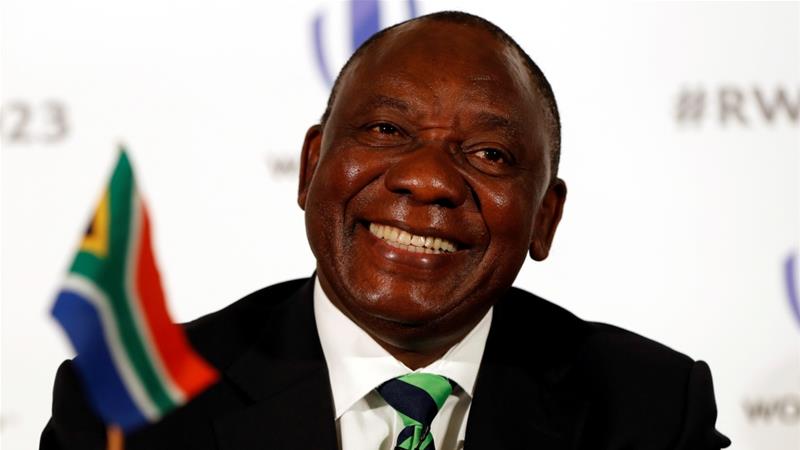
President Cyril Ramaphosa of South African has maintained that a programme of land redistribution is required to heal the historical “festering wound” of land dispossession and enable the transformation and development without which the former apartheid nation will experience instability.
Replying to Questions for Oral Reply in the National Assembly on Wednesday, 22 August 2018, President Ramaphosa urged Members of Parliament, as leaders of society, to focus on stability in the country and on the achievement of development through transformation.
President Ramaphosa answered MPs’ questions as part of government’s accountability to Parliament as democratically elected representatives of the electorate.
Land Reform
On the 31st of July – in my capacity as the President of the African National Congress – I announced that the ANC would propose an amendment to the Constitution that would provide clarity on the circumstances under which expropriation without compensation could be effected.
The proposal is informed, among other things, by the views of our people in public hearings and by the members of the ANC.
It is based on an understanding that the Constitution, as it currently stands, allows for expropriation without compensation in certain circumstances.The proposal is intended to make explicit what is currently implicit in the Constitution.
This announcement does not undermine nor does it preempt the outcome of the public consultation process.
Much like the pronouncements of other political parties – including the pronouncements by the Honourable Leader of the Opposion – this position will guide the contribution of its Members in the Parliamentary process.
Once Parliament has adopted a position on the matter, it will become government’s responsibility to implement.
As I indicated during the 2018 State of the Nation Address, government is determined that land reform should be implemented in a way that increases agricultural production, improves food security and ensures that the land is returned to those from whom it was taken under colonialism and apartheid.
I have appointed an Inter-Ministerial Committee on Land Reform, led by the Deputy President, which has been tasked with coordinating measures to accelerate the redistribution of land, the extension of security of tenure, the provision of agricultural support and the redress of spatial inequality.
This should take place within a broad and comprehensive land redistribution and agricultural development programme.
The acceleration of land redistribution is necessary not only to redress a grave historical injustice, but also to bring more producers into the agricultural sector and to make more land available for cultivation.
In dealing with just and equitable compensation in the case of expropriation, for example, Section 25 calls for an equitable balance between the public interest and those affected.
It lists among the relevant circumstances to be considered in deciding on such a balance, such things as the history of the acquisition of the property, its current use, and the extent of direct state investment in the property.
The late Andre van der Walt, one of South Africa’s leading constitutional property scholars, has argued that Section 25 (3) makes non-compensation permissible in appropriate circumstances.
Furthermore, Section 25 (8) of the Property Clause explicitly states: “No provision of this section may impede the state from taking legislative and other measures to achieve land, water and related reform, in order to redress the results of past racial discrimination”.
The intention of the proposed amendment is to strengthen the property rights of all South Africans and to reinforce the transformative nature of our Constitution.
It gives greater force to the requirement in the Bill of Rights, which says: “The state must take reasonable legislative and other measures within its available resources, to foster conditions which enable citizens to gain access to land on an equitable basis.”
It will provide certainty to those who own land, to those who need land and to those who are considering investing in our economy.
For its part, government will continue to pursue a comprehensive approach to land and agrarian reform that ensures transformation, development and stability.
World
Africa Takes Centre Stage as Addis Ababa Hosts the World Public Summit
By Kestér Kenn Klomegâh
For the first time in its history, the World Public Summit will be held on the African continent. On 29–30 July 2026, Addis Ababa, the capital of Ethiopia, will host the World Public Summit. Africa — “A New World: Africa in Shaping a Shared Future.”
The Summit is organised by the World Peoples Assembly in cooperation with African partner organisations. It will bring together leaders of public diplomacy, representatives of international intergovernmental and non-governmental organisations, academics, experts, representatives of the education and cultural sectors, youth leaders, socially responsible businesses, media professionals, and civil society institutions from across Africa and other regions of the world.
The World Public Summit. Africa continues the work initiated during the First World Public Assembly “A New World of Conscious Unity,” held in Moscow in September 2025, and serves as one of the key milestones in preparation for the Second World Public Assembly “A New World: Values That Unite,” which will take place in Moscow on 18–19 September 2026.
Today, Africa is emerging as one of the principal centres of global development. Rapid demographic growth, expanding entrepreneurship, strengthening regional integration, rich cultural heritage, and the growing role of civil society institutions make the continent an increasingly important contributor to the future architecture of international cooperation.
The Summit will focus on issues of genuine sovereignty and sustainable development, public diplomacy, preservation of cultural and historical heritage, international cooperation in education and science, youth engagement, innovation-driven development, creative industries, and the formation of new partnerships among countries and peoples.
The main business programme of the Summit will take place on 30 July 2026 at the headquarters of the United Nations Economic Commission for Africa (UNECA) in Addis Ababa. Holding the Summit at UNECA highlights its pan-African dimension and creates opportunities for broad international dialogue on humanitarian cooperation and public diplomacy.
The programme will include plenary sessions, strategic dialogues, and expert panels dedicated to values-based development, education, culture, youth leadership, innovation, and international cooperation.
Participation has already been confirmed by Professor Saidou Madougou, Director of the Department of Education, Science, Technology and Innovation of the African Union; Rita Bissoonauth, Director of the UNESCO Liaison Office to the African Union and UNECA in Addis Ababa; Zuzana Schwidrowski, Director of the Macroeconomics, Finance and Governance Division of UNECA, as well as ministers, leaders of public organisations, and representatives of the business community from a number of African countries.
On the same day, the ADWA Victory Memorial Museum—Ethiopia’s national memorial complex dedicated to the Victory of Adwa and an important centre for preserving the historical memory of the Ethiopian people—will host the award ceremony of the regional stage of the V International Competition “Leader of Public Diplomacy”, followed by a large-scale cultural programme.
One of the key outcomes of the Summit will be the adoption of the African Communiqué, reflecting proposals and recommendations aimed at strengthening humanitarian, educational, cultural, and public cooperation between African countries and other regions of the world.
The outcomes, initiatives, and recommendations were developed during the World Public Summit. Africa will be presented at the Second World Public Assembly “A New World: Values That Unite”, to be held in Moscow on 18–19 September 2026.
According to Andrey Belyaninov, General Secretary of the World Peoples Assembly, “the Addis Ababa Summit is an important step toward building a new world founded on mutual respect, cultural diversity, dialogue and sustainable development.”
World
UK Set for Seventh Prime Minister in 10 Years as Keir Starmer Resigns
By Adedapo Adesanya
The United Kingdom will get its seventh Prime Minister in 10 years as Mr Keir Starmer announced his resignation on Monday.
The Minister said he is stepping down as leader of the governing Labour Party and will leave office within weeks, scarcely two years after being elected in a landslide.
Mr Starmer says he will remain caretaker prime minister until a new Labour leader is chosen by the party.
Mr Starmer made the announcement after facing growing pressure to hand over to a new leader who can try to revive the government’s flagging fortunes.
He led Labour to a landslide election victory in July 2024, but since then, his popularity and that of the party have plummeted.
His departure was triggered by the victory of Mr Andy Burnham in a special election last week. The popular ex-mayor of Greater Manchester planned to challenge the existing PM for the Labour leadership.
Mr Starmer made the announcement outside the prime minister’s 10 Downing St. residence with a brief statement on Monday.
“The question my party is asking now is whether I am best placed to lead us into the next general election,” Mr Starmer said. “I have heard the answer of my parliamentary party to that question, and I accept that answer with good grace.
Mr Starmer is the sixth prime minister in a decade to stand outside 10 Downing Street and announce a premature departure.
It comes the day before Britain marks the 10th anniversary of its vote to leave the European Union, a decision that still affects the country’s economy and politics.
Over the past decade, 10 Downing Street has had six occupants, including Mr David Cameron, who left office in 2016 after the Brexit referendum and was succeeded by Ms Theresa May. She was followed by Mr Boris Johnson, whose tenure covered Brexit and the COVID-19 pandemic. After Mr Johnson came Ms Liz Truss, whose 49-day premiership was the shortest in British history. Mr Rishi Sunak then took office before being succeeded by Mr Starmer, the outgoing occupant of Number 10.
World
AXIAN Energy Secures $60m for Expansion Across Africa
By Aduragbemi Omiyale
A financing facility of up to $60 million has been secured by AXIAN Energy, the energy division of the AXIAN Group.
The funding package was provided by MCB, one of the leading financial institutions in the Indian Ocean region.
It comprises a $40 million revolving credit facility with a three-year tenor and extension option, and $20 million in unfunded instruments, providing AXIAN Energy with enhanced financial flexibility, enabling the company to rapidly mobilise resources and seize development opportunities across its target markets.
The energy firm is expected to use the capital to deliver large-scale energy infrastructure projects across Africa.
Over the past two years, AXIAN Energy has significantly accelerated its growth by expanding its renewable energy project pipeline, with solar projects currently under development in Senegal, Benin, Zambia, Côte d’Ivoire, Madagascar, and Burkina Faso.
Building on this momentum, AXIAN Energy now operates a portfolio comprising 350 MW of installed renewable energy capacity, supported by 77 MWh of energy storage capacity, positioning the AXIAN Group as a major contributor to Africa’s energy transition.
The chief executive of AXIAN Energy, Mr Benjamin Memmi, said, “This transaction marks a key milestone in AXIAN Energy’s growth trajectory. It provides us with the financial capacity to sustain the momentum we have built over the past two years, further strengthening our renewable energy portfolio and expanding our presence across new African markets.”
Also commenting, the Global Head of Structured Finance at MCB, Mr Mathieu Delteil, said, “We are proud to support AXIAN Energy in structuring this facility, reaffirming our commitment to enabling transformative projects across Africa.
“By leveraging our sector expertise and deep understanding of regional markets, we have delivered a tailored financing solution that aligns with AXIAN’s long-term renewable energy ambitions.
“This partnership highlights our role as a strategic financial partner, mobilising capital towards investments that drive sustainable growth and accelerate the energy transition across the continent.”
The financing agreement between the two organisations strengthens their long-standing relationship because it is driven by a shared commitment to supporting infrastructure development and economic growth across Africa.
-
Feature/OPED6 years agoDavos was Different this year
-
Travel/Tourism10 years ago
Lagos Seals Western Lodge Hotel In Ikorodu
-
Showbiz3 years agoEstranged Lover Releases Videos of Empress Njamah Bathing
-
Banking8 years agoSort Codes of GTBank Branches in Nigeria
-
Economy3 years agoSubsidy Removal: CNG at N130 Per Litre Cheaper Than Petrol—IPMAN
-
Banking3 years agoSort Codes of UBA Branches in Nigeria
-
Banking3 years agoFirst Bank Announces Planned Downtime
-
Sports3 years agoHighest Paid Nigerian Footballer – How Much Do Nigerian Footballers Earn