

World
Russia’s Vaccine Matters to the World

By Kester Kenn Klomegah
President Vladimir Putin has praised the entire healthcare system and particularly the hard-working team of scientists and specialists from different institutions for their efforts at research and creating a series of coronavirus vaccines for use against the coronavirus both at home and abroad.
Three vaccines already registered in Russia, two of them – Sputnik V and EpiVacCorona – are produced in large quantities by Russian pharmaceutical companies and are currently used for vaccination. It is additionally planned to roll out another one – CoviVac.
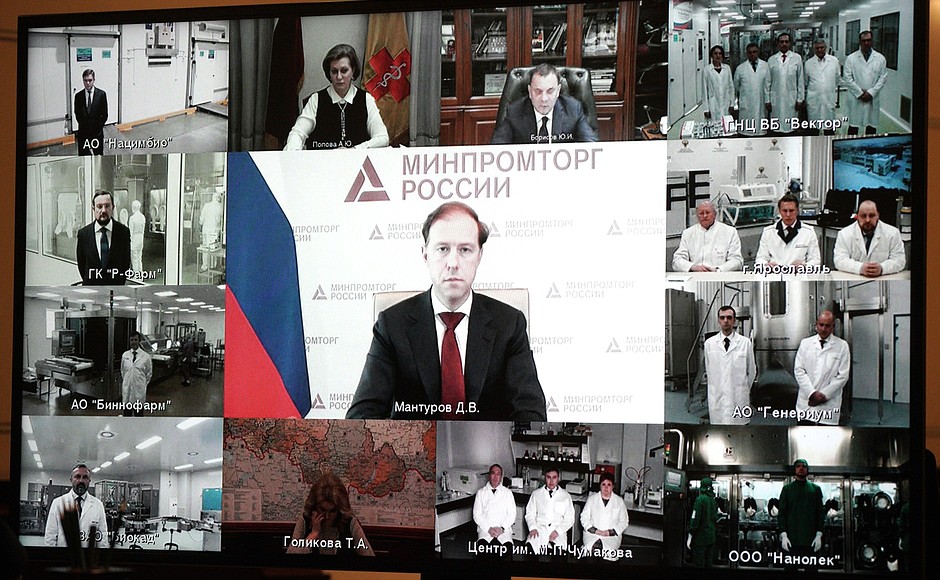
Despite the pandemic-related challenges, the domestic pharmaceutical companies, in conjunction with research institutes, have managed to accomplish a multitude of objectives in order to deploy new vaccine production sites in a short amount of time, Putin said during a videoconference meeting focused on increasing the manufacturing capacity of COVID-19 vaccines and the progress of vaccination in Russia.
Unreservedly made reference to staff qualities such as consistent and effective hard-work, truly selfless work and responsible attitude, and further urged them to continue making relentless efforts in stabilising the spread of the coronavirus infections and in protecting the life and health of millions of people in the country.
Putin further noted that the implementation of a wide range of preventive measures, including widespread vaccination, has played a significant role in normalising the epidemic situation.
Overall, 6.3 million Russians have taken the first part of the vaccine, of these 4.3 million have been vaccinated in full, that is, they have received both vaccine components.
“We can safely say, and the practical results indisputably corroborate, the fact that the Russian vaccines are absolutely safe and dependable. Our success is recognised abroad as well. The number of countries using the Sputnik V vaccine is expanding fast, more countries around the world are showing interest in our vaccine with 55 countries having authorised its use,” he told the meeting.
In addition, Russia now has a number of contracts with foreign manufacturers, – these are foreign manufacturers who will be producing our vaccine on their territory – have been signed for the number of doses needed to vaccinate 700 million people per year.
The latest, it has signed a contract with an Indian company for doses to vaccinate 100 million people. Indisputably, working with 55 countries means a total population of 1.4 billion. There are plans to expand the number of partner countries and that will reach an estimated 2.5 billion people.
While Russia and its pharmaceutical companies are considering the dynamics of the global market and the demand for Russian-made vaccines, and expanding their production capacities, it equally places emphasis on domestic needs, supplying and vaccinating Russian citizens with vaccines, is an absolute priority.
It is estimated that at least 60 per cent of all adults in the country must be vaccinated for complete stabilisation. This requires 69.8 million sets of vaccine doses. At any rate, there are more than 20 million Sputnik V doses, according to the Russian president, quoting his Prime Minister Mikhail Mishustin.
In his contribution at the meeting, Minister of Industry Denis Manturov informed that under the plan, 12.5 million sets of the vaccine must be produced in March. The planned figure for April is 17 million. It is planned to continue building up production so as to have over 80 million two-component doses by the first six months.
According to him, all these amounts will be primarily used to vaccinate Russian citizens. In order to meet the global demand for Russian vaccines, his ministry is working on scaling up the production of vaccines and on transferring technology abroad. It already has comprehensive agreements on this with manufacturers in 10 countries.
Healthcare Minister Mikhail Murashko informed the meeting about organisations that keep monitoring the virus’s mutations, including those in Russia. “We are analysing the efficiency of medicines for preventing the disease caused by various strains. This work is ongoing continuously and involves several agencies,” he said, and further mentioned the need to increase the speed of vaccination.
By the end of March, our healthcare facilities will receive over 6.5 million doses of Sputnik V. We expect that a total of some 30 million doses will be delivered in April and May. As of now, there are 4,500 stationary vaccination stations across Russia and plans to increase this figure, as well as over 1,000 mobile stations.
Participating in the meeting, Pharmstandard Chairman of the Board Viktor Kharitonin also discussed the production capability of the vaccine and pointed to the successful completion of the transfer of laboratory technology, scaled and fine-tuned the manufacturing technology abroad.
“It should be specifically pointed out that, thanks to our cooperation with the Russian Direct Investment Fund, we have started supplying the vaccine to foreign markets. We have already transferred the production technology to Kazakhstan and Belarus and continue working with other countries, including India and Italy. In Italy, Sputnik V was highly praised by both scientists and our colleagues from pharmaceutical companies,” added Kharitonin.
Taking his turn, Chairman of the Board of the R-Pharm Group Alexei Repik talked about efforts that are currently focused on the creation and manufacturing of new forms of the vaccine that will be easier to use and also to transport. He noted that it will increase the attractiveness of the vaccines on foreign markets, including countries with a hot climate: the Middle East, Africa and Latin America.
“Our factory is now producing the first registration batches of a promising lyophilic form of the vaccine created by our experts. It has proved stable at temperatures between +2 and +8 C. We are now studying its stability at room temperature. There are grounds to believe that we will succeed. This form will allow us to make the vaccine available in hard-to-reach regions of the country, which is especially important ahead of the spring and summer period,” informed Alexei Repik.
Director of the Gamaleya National Research Centre for Epidemiology and Microbiology Alexander Gintsburg also highlighted a few aspects of the vaccine production and about documents for registration. According to him, the Gamaleya Research Centre also addresses the problem of expanding the production of the Sputnik Light vaccine.
In addition, as the holder of the registration certificate, the Centre assumes all responsibility for quality control of this vaccine at all enterprises where it is manufactured in this country and abroad.
Moreover, the Centre is directly involved in launching contractual production that is mostly organised by the Russian Direct Investment Fund. The Centre has prepared the entire package of documents for registering the Sputnik Light vaccine in 55 countries. Considering that each country has its own regulatory system, this is not a fixed package of documents that will apply everywhere, therefore it has to adapt it to every country’s regulatory system.
He further spoke about The Lancet, a highly prestigious and popular medical journal, that published two articles on the results of scientific data and clinical trials. This provides important scientific evidence proving the vaccine’s efficacy, this has completely eliminated the Western academic community’ scepticism regarding the vaccines’ quality and efficacy.
Alexander Gintsburg explained a little about children’s vaccination. According to him, children must be divided into several age groups. Russian experts and specialists in paediatric immunology are working in this direction. He said that a vaccine has been developed, patented, and are currently launching clinical trials of Sputnik V’s intranasal form. This is a very gentle and patient-friendly form of vaccination for children, especially little children, who can be traumatised when they see a syringe or when possible side effects arise. The first experiments show that the intranasal form is completely free from any side effects.
CEO of the Russian Direct Investment Fund (RDIF) Kirill Dmitriev stressed patent protection and protecting intellectual rights for Russian made vaccines and other medical products. “Our patent protection is very strong. We submitted applications early on, much earlier than other countries, and thus got a headstart. Accordingly, the Gamaleya Institute owns the innovations that are available even at these foreign sites, which include over 20 partner companies in 10 countries,” he told the meeting.
On foreign cooperation, “Mr President, I would like to thank you, because it was your idea to build production partnerships with various countries, and 20 manufacturers from over 10 countries responded. For them, it’s about vaccine safety and independence, and Russia was the only country to have come up with this offer. Thank you very much. They are very grateful to you for this,” Kirill Dmitriev said in appreciation.
Director-General of the Vektor State Research Centre of Virology and Biotechnology Rinat Maksyutov discussed various research operations. Vektor is the only WHO COVID-19 reference laboratory in Russia. It not only conducts the entire range of viral studies of the novel coronavirus but is also monitoring its genetic mutations across the country on a regular basis.
“By now, we have found over 5,300 genetic variations across the genome. In the overwhelming number of cases, the replacement does not change the epidemiological characteristics of the virus. At the same time, we have also found over 50 variations of the British strain, three cases of the South African strain and over 20 unique variations of the virus that must be thoroughly studied,” he said.
According to Rinat Maksyutov, the Research Centre Vektor is studying these variations of the virus in accordance with a special algorithm. “We are studying the virus’s stability on various surfaces; we are also using unique equipment, which has no analogues throughout the world, to study the ability of the virus to be transmitted between living organisms. We have found that the British strain of the novel coronavirus can be effectively neutralised by serum taken from those who had COVID and those vaccinated with Sputnik V or EpiVacCorona,” he told the meeting.
Director-General of the Chumakov Federal Scientific Centre for the Research and Development of Immune and Biological Products (Russian Academy of Sciences) Aidar Ishmukhametov spoke about their engagement and involvement in research and production of medical products, tracing its roots to the Soviet Union.
The Chumakov Centre is one of the oldest facilities in the Russian Federation and the oldest vaccine developer in Russia. That in the 1960s, this centre’s achievements helped the country deal with polio. The centre back then developed a unique vaccine that supplied to the entire world, including the United States, Europe, Japan and many other countries. In fact, now this facility, the Institute of Poliomyelitis, is well-known around the world.
It is continuing this tradition. As of today, it has developed and produced five vaccines, including for tick-borne encephalitis, rabies and the yellow fever vaccine that is supplied to almost 50 countries, which is perhaps Russia’s biggest export in the pharmaceutical industry.
This type of organisation that has a research and development facility at its core that can outline the task and release a certain number of batches of the vaccine consisting of tens of millions [of doses], on one hand, and well-coordinated work with research institutes and the search for partners, on the other hand, is a very efficient model.
“We did not intend to work exclusively on the coronavirus vaccine. It was important to us to maintain the same production volume and supply vaccines according to the national vaccination calendar as well as deliver on the exports. So we needed to fit this new objective into our existing model. We inherited this research and development facility from the Soviet Union where it was a leader in this industry, and we are developing it,” he underlined the importance of his institution at the meeting.
CEO of the National Immunobiological Company, Rostec State Corporation, Andrei Zagorsky, however, noted that vaccine production is growing steadily. He highlighted the question of warehousing (storage), freezer facility and shipping to the regions. This is carried out in close cooperation with the manufacturing sites, as well as cargo recipients in the regions. These tasks are fulfilled on schedule, he said.
“We monitor the entire production process, especially the temperature, all the way from production, transport, acceptance to a warehouse, storage at the warehouse, to shipment to a recipient region. All products are transported in thermal containers, which can keep temperatures at 18 degrees below zero Celsius for about five days,” he added, speaking at the meeting.
Deputy Prime Minister Tatyana Golikova concluded with high appreciation. The meeting ended with a clear understanding of what direction should be moving to overcome the coronavirus pandemic and at the same time, extend assistance to foreign countries that are in need.
She, however, reiterated that, in a fairly short time, despite the difficulties and amid the challenging pandemic of 2020, all her colleagues have indeed accomplished something that seemed almost impossible, worked 24/7 and made Russia the leader in the production and use of vaccines, primarily, for the public in Russia.
Kester Kenn Klomegah is a versatile researcher and a passionate contributor. Most of his well-resourced articles are reprinted elsewhere in a number of reputable foreign media.


By Kestér Kenn Klomegâh
At the end of an extensive consultation with African foreign ministers, Russian Foreign Minister, Sergey Lavrov, has emphasized that Moscow would advance its economic engagement across Africa, admittedly outlining obstacles delaying the prompt implementation of several initiatives set forth in Strategic Action Plan (2023-2026) approved in St. Petersburg during the Russia-Africa Summit.
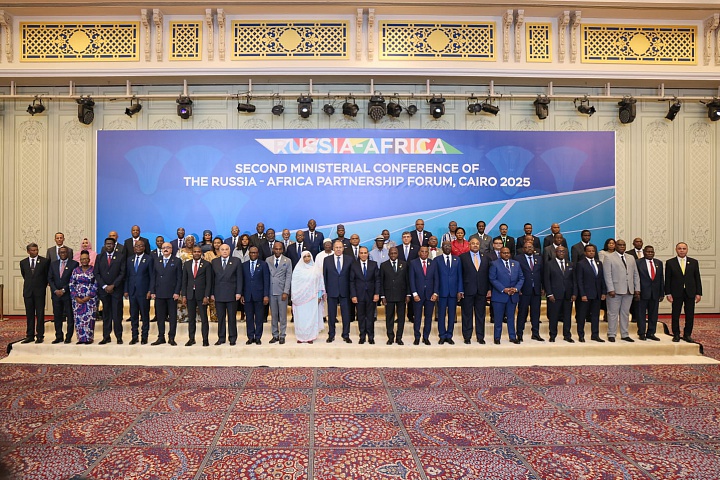
The second Ministerial Conference, by the Russian Foreign Ministry with support from Roscongress Foundation and the Arab Republic of Egypt, marked an important milestone towards raising bilateral investment and economic cooperation.
In Cairo, the capital city of the Arab Republic of Egypt, Lavrov read out the final resolution script, in a full-packed conference hall, and voiced strong confidence that Moscow would achieve its strategic economic goals with Africa, with support from the African Union (AU) and other Regional Economic blocs in the subsequent years. Despite the complexities posed by the Russia-Ukraine crisis, combined with geopolitical conditions inside the African continent, Moscow however reiterated its position to take serious steps in finding pragmatic prospects for mutual cooperation and improve multifaceted relations with Africa, distinctively in the different sectors: in trade, economic and investment spheres, education and culture, humanitarian and other promising areas.
The main event was the plenary session co-chaired by Russian Foreign Minister Sergey Lavrov and Egyptian Minister of Foreign Affairs, Emigration, and Egyptians Abroad Bashar Abdelathi. Welcome messages from Russian President Vladimir Putin and Egyptian President Abdelhak Sisi were read.
And broadly, the meeting participants compared notes on the most pressing issues on the international and Russian-African agendas, with a focus on the full implementation of the Russia-Africa Partnership Forum Action Plan for 2023-2026, approved at the second Russia-Africa Summit in St. Petersburg in 2023.
In addition, on the sidelines of the conference, Lavrov held talks with his African counterparts, and a number of bilateral documents were signed. A thematic event was held with the participation of Russian and African relevant agencies and organizations, aimed at unlocking the potential of trilateral Russia-Egypt-Africa cooperation in trade, economic, and educational spheres.
With changing times, Africa is rapidly becoming one of the key centers of a multipolar world order. It is experiencing a second awakening. Following their long-ago political independence, African countries are increasingly insisting on respect for their sovereignty and their right to independently manage their resources and destiny. Based on these conditions, it was concluded that Moscow begins an effective and comprehensive work on preparing a new three-year Cooperation and Joint Action Plan between Russia and Africa.
Moreover, these important areas of joint practical work are already detailed in the Joint Statement, which was unanimously approved and will serve as an important guideline for future work. According to reports, the Joint Statement reflects the progress of discussions on international and regional issues, as well as matters of global significance.
Following the conference, the Joint Statement adopted reflects shared approaches to addressing challenges and a mutual commitment to strengthening multifaceted cooperation with a view to ensuring high-quality preparation for the third Russia-Africa Summit in 2026.
On December 19-20, the Second Ministerial Conference of the Russia-Africa Partnership Forum was held in Cairo, Egypt. It was held for the first time on the African continent, attended by heads and representatives of the foreign policy ministries of 52 African states and the executive bodies of eight regional integration associations.


By Adedapo Adesanya
Social media platform, TikTok’s Chinese owner ByteDance has signed binding agreements with United States and global investors to operate its business in America.
Half of the joint venture will be owned by a group of investors, including Oracle, Silver Lake and the Emirati investment firm MGX, according to a memo sent by chief executive, Mr Shou Zi Chew.
The deal, which is set to close on January 22, 2026 would end years of efforts by the US government to force ByteDance to sell its US operations over national security concerns.
It is in line with a deal unveiled in September, when US President Donald Trump delayed the enforcement of a law that would ban the app unless it was sold.
In the memo, TikTok said the deal will enable “over 170 million Americans to continue discovering a world of endless possibilities as part of a vital global community”.
Under the agreement, ByteDance will retain 19.9 per cent of the business, while Oracle, Silver Lake and Abu Dhabi-based MGX will hold 15 per cent each.
Another 30.1 per cent will be held by affiliates of existing ByteDance investors, according to the memo.
The White House previously said that Oracle, which was co-founded by President Trump’s supporter Larry Ellison, will license TikTok’s recommendation algorithm as part of the deal.
The deal comes after a series of delays.
Business Post reported in April 2024 that the administration of President Joe Biden passed a law to ban the app over national security concerns, unless it was sold.
The law was set to go into effect on January 20, 2025 but was pushed back multiple times by President Trump, while his administration worked out a deal to transfer ownership.
President Trump said in September that he had spoken on the phone to China’s President Xi Jinping, who he said had given the deal the go ahead.
The platform’s future remained unclear after the leaders met face to face in October.
The app’s fate was clouded by ongoing tensions between the two nations on trade and other matters.
By Kestér Kenn Klomegâh
Despite the complexities posed by Russia-Ukraine crisis, United States has been taking conscious steps to improve commercial relations with Russia. Unsurprisingly, Russia, on the other hand, is also moving to restore and normalise its diplomacy, negotiating for direct connections of air-routes and passionate permission to return its diplomats back to Washington and New York.
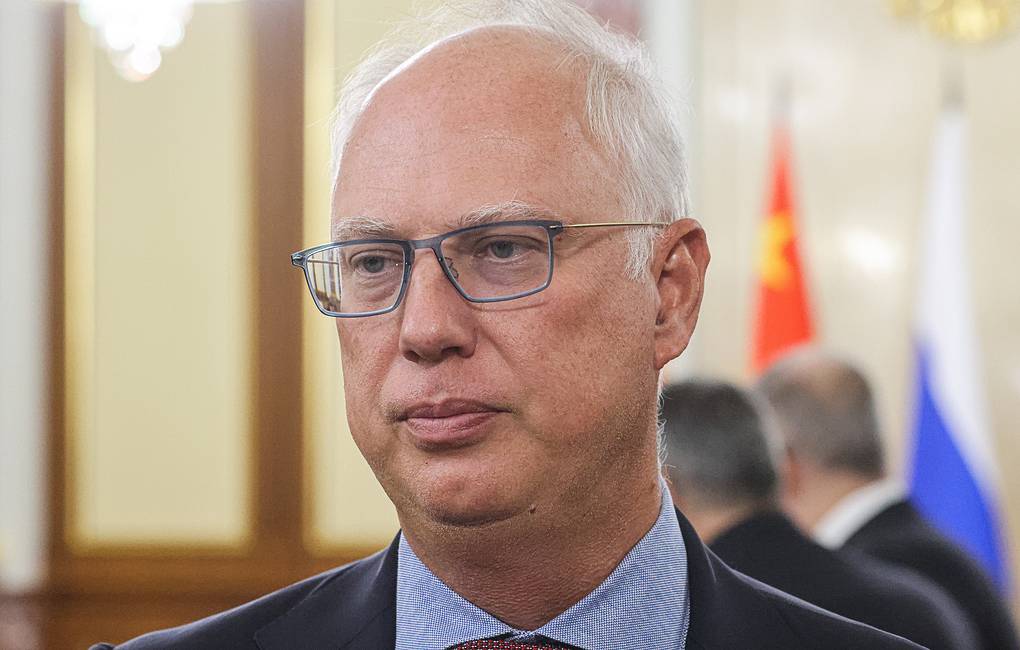
In the latest developments, Kirill Dmitriev, Chief Executive Officer of the Russian Direct Investment Fund (RDIF), has been appointed as Russian President’s Special Envoy to United States. This marked an important milestone towards raising bilateral investment and economic cooperation. Russian President Vladimir Putin tasked him to exclusively promote business dialogue between the two countries, and further to negotiate for the return of U.S. business enterprises. According to authentic reports, United States businesses lost $300+ bn during this Russia-Ukraine crisis, while Russia’s estimated 1,500 diplomats were asked to return to Moscow.
Strategically in late November 2025, the American Chamber of Commerce in Russia (AmCham) has awarded Kirill Dmitriev, praised him for calculated efforts in promoting positive dialogue between the United States and Russia within the framework decreed by President Vladimir Putin. Chief Executive Officer of Russian Direct Investment Fund (RDIF) Kirill Dmitriev is the Special Representative of the Russian President for Economic Cooperation with Foreign Countries. Since his appointment, his primary focus has been on United States.
“Received an American Chamber of Commerce award ‘For leadership in fostering the US-Russia dialogue,’” Dmitriev wrote on his X page, in late November, 2025. According to Dmitriev, more than 150 US companies are currently operating in Russia, with more than 70% of them being present on the Russian market for over 25 years.
In addition, Chamber President Sergey Katyrin and American Chamber of Commerce in Russia (AmCham) President Robert Agee have also been discussing alternatives pathways to raise bilateral business cooperation. Both have held series of meetings throughout this year, indicating the the importance of sustaining relations as previously. Expectedly, the Roscongress Foundation has been offered its platforms during St. Petersburg International Economic (SPIEF) for the American Chamber of Commerce (AmCham).
On December 9, Sergey Katyrin and Robert Agee noted that, despite existing problems and non-economic obstacles, the business communities of Russia and the United States proceed from the necessity of maintaining professional dialogue. Despite the worsening geopolitical conditions, Sergey Katyrin and Robert Agee noted the importance of preserving stable channels of trade and pragmatic prospects for economic cooperation. These will further serve as a stabilizing factor and an instrument for building mutual trust at the level of business circles, industry associations, and the expert community.
The American Chamber of Commerce (AmCham) will be working in the system of the Chamber of Commerce and Industry (CCI) in the Russian Federation, which currently comprises 57,000 legal entities, 130 regional chambers and a combined network of representative offices covering more than 350 points of presence.
According to reports obtained by this article author from the AmCham, promising sectors for Russian-American economic cooperation include healthcare and the medical industry, civil aviation, communications/telecom, natural resource extraction, and energy/energy equipment. The United States and Russia have, more or less, agreed to continue coordinating their work to facilitate the formation of a more favorable environment for Russian and American businesses, reduce risks, and strengthen business ties. Following the American-Russian Dialogue, a joint statement and working documents were adopted.










-
 Feature/OPED6 years ago
Davos was Different this year
-
Travel/Tourism9 years ago
Lagos Seals Western Lodge Hotel In Ikorodu
-

 Showbiz3 years ago
Estranged Lover Releases Videos of Empress Njamah Bathing
-
 Banking7 years ago
Sort Codes of GTBank Branches in Nigeria
-

 Economy3 years ago
Subsidy Removal: CNG at N130 Per Litre Cheaper Than Petrol—IPMAN
-

 Banking3 years ago
First Bank Announces Planned Downtime
-

 Banking3 years ago
Sort Codes of UBA Branches in Nigeria
-

 Sports3 years ago
Highest Paid Nigerian Footballer – How Much Do Nigerian Footballers Earn