
World
SADC Scribe Calls for Scaling up Sustainable Development in Southern Africa

By Kester Kenn Klomegah
Southern African Development Community (SADC), an organization made up of 16 member states, was established in 1980.
It has as its mission to promote sustainable and equitable economic growth and socio-economic development through efficient, productive systems, deeper cooperation and integration, good governance and durable peace and security so that the region emerges as a competitive and effective player in international relations and the world economy.
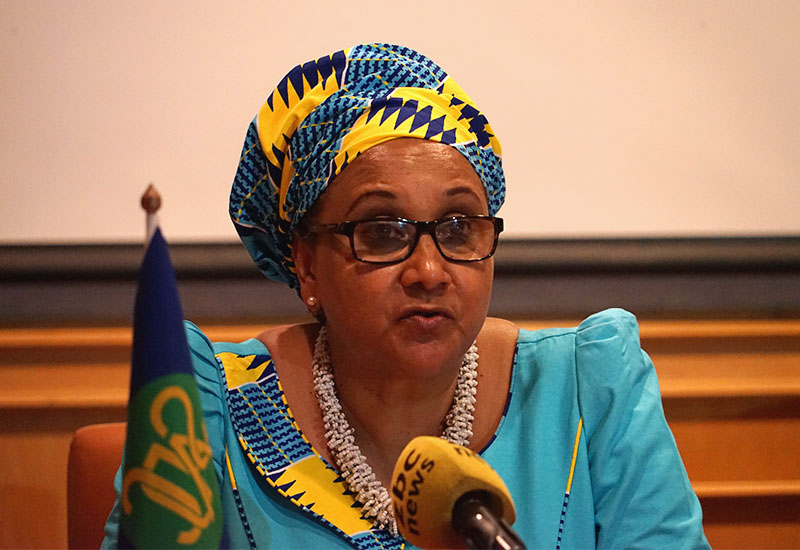
In September 2013, Ms Lawrence Stargomena Tax began as the fourth Executive Secretary of the organization. According to the official information, her second term of office ends in August 2021.
As Executive Secretary, her key responsibilities include engaging all the members as an economic bloc, overseeing and implementing various programmes and projects in the Southern African region.
She has a diverse employment career, including holding a top position as the Permanent Secretary at the Tanzanian Ministry of Foreign Affairs and East African Cooperation from 2008 to 2013, thereafter appointed as the Executive Secretary of the Southern African Development Community (SADC) at the 33rd Summit of the Heads of State and Government held in Lilongwe, Malawi.
In this insightful and wide-ranging farewell interview with Kester Kenn Klomegah in May, Executive Secretary Lawrence Stargomena Tax discussed the most significant achievements and challenges in deepening cooperation and promoting socio-economic development as well as peace and security, and further makes suggestions for the future of Southern Africa. Here are the interview excerpts:
What would you say, in a summarized assessment about your work, especially achievements and challenges, during your term of office as Executive Secretary of the Southern African Development Community (SADC)?
The Southern African Development Community (SADC) Secretariat is the Principal Executive Institution of SADC, and the SADC Executive Secretary leads the SADC Secretariat as mandated by Articles 14 and 15 of the Treaty establishing SADC.
Functions of the SADC Executive Secretary include overseeing: strategic planning for the Organisation; management, coordination and monitoring of SADC programmes; coordination and harmonization of policies and strategies; mobilization of resources; representation and promotion of SADC; and promotion of SADC regional integration and cooperation.
Achievements: SADC has recorded numerous achievements since its establishment, some of which were recorded during my term of office, from September 2013 to date 2021.
The functions of the Executive Secretary notwithstanding, the recorded milestones are a result of collective efforts by the Member States, the Secretariat, and other stakeholders, as well as teamwork by the staff of the secretariat.
Eight (8) years is quite a long time, as such several achievements and milestones were recorded during the eight years of my tenure in office, allow me to highlight some of the key ones as follows:
Consolidation of democracy, and sustenance of peace and security in the region. The SADC region remains stable and peaceful, notwithstanding, isolated challenges. This is attributed to solid systems and measures in place, such as our regional early warning, preventive and mediation mechanisms, which facilitate timely detection and re-dress of threats and challenges, and effective deployments of SADC electoral observation missions.
Examples during my tenure of office, include SADC preventive mission to the Kingdom of Lesotho, SADC peace and political support to the Democratic Republic of Congo, SADC mediation in Madagascar, SADC facilitation in Lesotho, and effective deployment of electoral observation Missions to the SADC Member States. To mitigate and address threats posed by cybercrime and terrorism, cybercrime and anti-terrorism strategy was adopted in 2016. The strategy is being implemented at regional and national levels.
In the historical-political space, the Southern African Liberation struggles were documented through the Hashim Mbita Publication, a publication that comprehensively and authentically documents the struggles in the three SADC languages, English, French and Portuguese. The Publication enables all, especially the youth to understand and appreciate the history and the Southern African Liberation.
Forging a long-term direction of SADC through the adoption of the SADC Vision 2050, which is transposed on the Regional Indicative Strategic Development Plan (RISDP) 2020-2030. Vision 2050 sets out the long-term aspirations of SADC over the next thirty (30) years, while the RISDP 2020-30 outlines a development trajectory for the Region for ten (10) years to 2030. Vision 2050 is based on a firm foundation of Peace, Security and Democratic Governance, and premised on three inter-related pillars, namely Industrial Development and Market Integration; Infrastructure Development in support of Regional Integration; and Social and Human Capital Development. This also goes hand in hand with frontloading of Industrialization that aims at transforming SADC economies technologically and economically. Industrialization remains SADC main economic integration agenda since April 2015, when the SADC Industrialization Strategy and Roadmap 2015-2063 was approved.
By addressing the supply-side constraints as part of the implementation of the SADC industrialization strategy, cross border trade continues to grow, and the business environment has been improving, where the cost of doing business has been declining steadily and gradually. In addition, values chains were profiled, specifically in three priority sectors, namely mineral beneficiation, pharmaceutical and agro-processing, and a number of value chains have been developed and are being implemented. The Industrialization Strategy has also recognized the private sector as a major player in SADC industrialization and regional integration as a whole.
The adoption of the SADC Simplified Trade Regime Framework in 2019, which has contributed to the enhancement of trade facilitation, and adoption of the SADC Financial Inclusion and Small and Medium Enterprises (SMEs) Strategy that has enhanced financial inclusion in the Member States. Ten Member States have so far developed financial inclusion strategies, and there has been an 8 per cent improvement in financial inclusion to a tune of 68 per cent.
Introduction and operationalization of the SADC Real Time Gross Settlement System (RTGS), a multi-currency platform, which went live in October 2018. All Member States except Comoros are participating in the SADC-RTGS and a total of 85 banks are participating in the system. The SADC-RTGS has enabled the Member States to settle payments among themselves in real-time compared to previously when it used to take several days for banks to process cross border transactions. As of December 2020, 1,995,355 transactions were settled in the System, representing the value of South African Rands (ZAR) 7.81 Trillion.
Approval of the establishment of the SADC Regional Development Fund in 2015 which aims at mobilizing funds for key infrastructure and industrialization projects.
Realization of targets set in the SADC Regional Infrastructure Development Master Plan (RIDMP) that was approved in 2012, including the establishment of One-Stop Border Posts which entails joint control and management of border crossing activities by agents of the adjoining countries, using shared facilities, systems and streamlined procedure. These include:
One-Stop Border Posts at Chirundu Border between Zambia and Zimbabwe, and Nakonde -Tunduma border between Tanzania and Zambia; a third One-Stop Border Post, about to be operationalised is at Kazungula Border between Botswana and Zambia, where the road-rail bridge has been completed.
Cross-border infrastructure projects, both hard and soft, that have facilitated assimilated, cost-effective, unified and efficient trans-national infrastructure networks and services were developed and are being implemented. These projects include cross-border transmission links in the several Member States using optical fibre technology, thereby, allowing landlocked Member States such as Botswana, Eswatini, Lesotho, Malawi, Zambia and Zimbabwe to connect to the submarine cables on either or both the east and west coast of Africa. Five (5) Member States (Botswana, Eswatini, Namibia, South Africa and Tanzania) have achieved the 2025 SADC Broadband Target to cover 80% of their population, and eight (8) Member States, namely Angola, Botswana, Eswatini, Mauritius, Mozambique, Namibia, South Africa, Tanzania, have put in place National Broadband Plans or Strategies.
The installation and commissioning of more than 18300 Megawatts (MW) between 2014 and 2020 to meet the increasing power demand in the region. Connecting the remaining three (3) mainland Member States namely Angola, Malawi and the United Republic of Tanzania to the Southern African Power Pool remains a priority, and to this effect, the Zambia-Tanzania Interconnector is at the construction phase.
The adoption of the Regional Water Climate Change Adaptation Strategy and Flood Early Warning System in 2015. This has contributed to improvements in climate and weather forecasting, whereby a Southern African Regional Climate Outlook Forum has been established. The forum provides a platform for the Member States to review and discuss the socio-economic impacts and potential impacts of the climate outlook, including on food security, health, water and hydropower management, and disaster risk management.
The adoption of the SADC Disaster Preparedness and Response Strategy and Fund (2016-2030), which has contributed to the enhancement of regional disaster management and responses capacity.
A number of administrative milestones were also recorded during my tenure of office, including, institutional reforms, policy reviews, change management towards enhanced cooperate governance and effective delivery. Among others, the SADC Organization Structure was reviewed and streamlined in 2016 to deliver on the technological and economic transformation of the region, in line with the SADC Industrialization Strategy 2015-2063; and a number of policies and strategies, and guidelines were developed to enhance cooperate governance and change management.
As the first female Executive Secretary, since I joined the SADC Secretariat, Gender mainstreaming and Women empowerment were among the areas that I paid dedicated attention to. In this regard, all policies that were developed during my tenure mainstreamed gender and engendered women empowerment. A SADC Framework for Achieving Gender Parity in Political and Decision-Making positions was developed and provides strategies, and guidelines for strengthening the implementation of the SADC Protocol on Gender and Development in order to ensure that at least 50 per cent of all decision-making positions at all levels would be held by women by 2030, and progress is encouraging.
The Region also continued to intensify the fight against HIV and AIDS, TB and Malaria. To this effect, harmonized minimum standards for the prevention, treatment and management of the diseases were developed to promote health, through support for the control of communicable diseases; and preparedness, surveillance and responses during emergencies.
Here are the challenges: Challenges are expected in any organization, the most important thing is to address them timely and effectively. Challenges that I encouraged included:
A multi-cultural operating environment. This needed a high level of patience, and approaches that will facilitate inclusiveness and ownership. The challenges sometimes affected speed in terms of delivery, as one had to get a clear understanding of the issues at hand and devise appropriate problem-solving approaches.
Another problem is balancing diverse interests by the Member States. Sixteen (16) Member States is not a small number, each will have its own priorities and interests, which sometimes are not necessarily the same across the region or regional priorities. This needs one to be analytical and a quick thinker, applying negotiation and convincing skills.
The Region has also experienced a multiplicity of natural disasters with varying frequency and magnitude of impact, which sometimes occurred at an unprecedented scale, for example, Tropical Cyclone Idai with its devastating impacts, including loss of lives, displacement of people, and massive destruction to properties. In response, SADC strengthened the regional disaster preparedness and response coordination and resilience-building mechanisms, and more efforts are ongoing in this area.
The tail-end of my term of office encountered challenges associated with the COVID-19 pandemic, which still remains a major concern and a challenge globally, and in almost all SADC Member States. On the response side, SADC has exhibited determination, solidarity and has undertaken several coordinated regional responses and put in place various harmonized measures to fight the pandemic and mitigate its socio-economic impacts. These include regulations for facilitation of cross border movement of essential goods, services and transport, which were speedily developed and adopted, and were also harmonized at the Tripartite level bringing on board the Common Market for Eastern and Southern Africa (COMESA) and the East African Community (EAC).
These measures contributed to the containment of the spread of COVID-19 and facilitated the continuity of socio-economic activities and livelihood of SADC citizens. The SADC Secretariat also carried out an in-depth assessment of the socio-economic impacts of COVID-19 on SADC economies. The assessment revealed a number of sectoral impacts. Based on the assessment, measures to address the challenges have been put in place at national and regional levels, and at the SADC Secretariat.
Whereas the region has progressed in terms of its objectives, it is yet to achieve its ultimate goal of ensuring economic well-being, improvement of the standards of living and quality of life for the people of Southern Africa. Achieving this aspiration remains a challenge to be progressively tackled to the end.
The southern African region is unique in terms of stability and investment climate, but there are also differences in political culture, policies and approach toward development issues. How did you find “a common language” for all the 16 SADC leaders?
The common language of SADC revolves around basic tenets which include history, values and common agenda. Historically, the region has common principles and values. Dating back to the migration era, you will note that some of the parts of the SADC region are inhabited by the Bantu people who share some cultural similarities. Politically, the region united and stood in solidarity against colonialism a resolve that led to the liberation struggle that brought the Member States together (resulting in the formation of the Front Line States, then the Southern Africa Development Coordination Conference) to fight and break from colonialism.
In terms of values, SADC believes in mutual respect and equality. Although the Member States differ in size, wealth or development, they treat each other as equal sovereign states. Secondly, Member States make decisions through consensus, without anyone imposing on the other.
Lastly, SADC, like any other organization has a common agenda as spelt out in its Treaty, Article 5, which, among others, aims at “promoting sustainable and equitable economic growth and social-economic development that will ensure poverty alleviation with the ultimate objective of its eradication, enhance the standard and quality of life of the people of Southern Africa and support the socially disadvantaged through regional integration.” Based on the common agenda, a vision, and policies and strategies have been developed to guide the implementation and realization of the common agenda.
Therefore, notwithstanding some differences in political culture, national policies and approaches towards development issues, the history of the region, the shared principles and values embraced by the organization, and its common agenda have always enabled the Region and the Member States to find a common ground, language and interest as a region, that is for all the 16 SADC Member States and SADC Leaders.
You have always advocated for an increased economic partnership and for sustainable development in the region. Do you agree that there is still insufficiently developed infrastructure in the industrial sector and other sectors in the region? How can the situation, most probably, be improved in the long term?
SADC recognises that a seamless and robust infrastructural network will create the requisite capacity for sustained economic growth, industrialisation and development. Measures to enhance infrastructure in the industrial sector and other sectors are in place and being implemented as part of the SADC industrialization Strategy 2015-2063, and the SADC Regional Infrastructure Development Master Plan of 2012. It should however be noted that while steady progress is being recorded, investments in these areas require substantial resources and partnership between Public and Private Sectors. Estimates by the African Development Bank (AfDB), published in its African Economic Outlook of 2018, reveal that Africa’s annual infrastructure requirements amount to $130bn – $170bn, with a financing gap in the range of $68bn–$108bn. SADC, therefore, invites investors from within and outside the region to partner in these strategic areas for mutual benefits.
SADC has also established the Project Preparation and Development Facility (PPDF). The purpose of the PPDF funding is to enhance delivery on infrastructure development in the SADC Region, by bringing projects to bankability and as such facilitate investments by the private sector and/or cooperating partners.
SADC is also in a process of operationalizing the SADC Regional Development Fund that will, among others, mobilize funds for key infrastructure and industrialization projects.
How do you assess the economic potential in the region? What foreign players have shown keen interest and/or already playing significant roles in SADC? Within the context of AfCFTA, what may further attract them?
The SADC region is endowed with diverse natural resources, including almost all of the key minerals for feed-stocks into regional manufacturing, agriculture, construction, power and other sectors.
The Region has been cooperating with both the private sector and international cooperation partners to implement its various policies and strategies to ensure that the region benefits from its own economic potential. Entering into force of the AfCFTA provides an opportunity to SADC in collaboration with the Common Market for Eastern and Southern Africa (COMESA) and the East African Community (EAC) to expedite the operationalization of the COMESA-EAC-SADC Tripartite Free Trade Area as a necessary pillar for the AfCFTA, and thus expanded cross-border and international investments and trade.
In spite the degree of development complexities, you have SADC in your heart. Do you feel you have left something undone for the region? What are your last words, expert views and suggestions for ensuring sustainable social and economic growth in the region and for the future of SADC?
SADC is about cooperation and regional integration, and this is a continuous process, not an event. With the progress made, the gains need to be sustained, while at the same time accelerating and deepening integration progressively in areas that are either ongoing or yet to be embarked upon, including taking a bold decision and establishing the long-overdue SADC Customs Union and expeditiously operationalize the SADC Development Fund.
Here are my last words. I call upon SADC to remain focused and bring about the envisaged sustainable social and economic growth for the benefit of SADC citizens, in line with the trajectory set by SADC Vision 2050 and Regional Indicative Strategic Development Plan 2020-30, as supported by the SADC Industrialization Strategy and Roadmap 2015 – 2063, and the SADC Regional Infrastructure Development Master Plan 2012. Member States should continue implementing these initiatives.





By Kestér Kenn Klomegâh
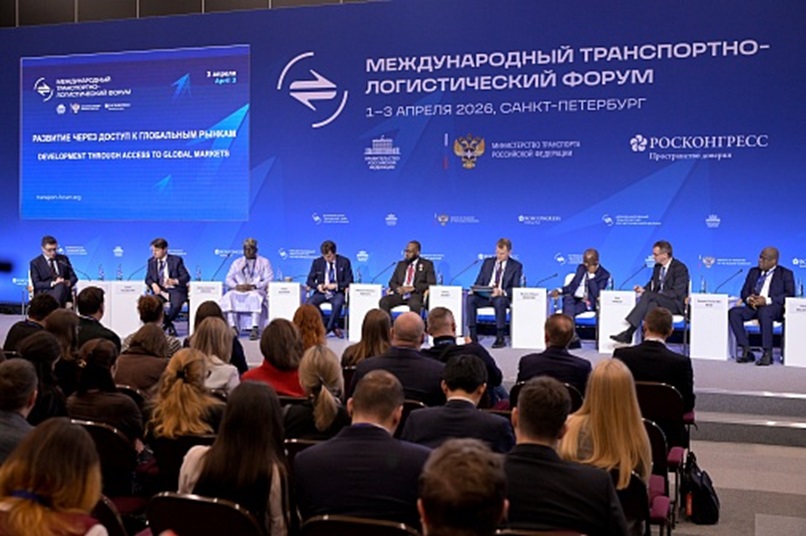
At the plenary session under the theme “Development Through Access to Global Markets” organised during the first International Transport and Logistics Forum held in St. Petersburg, both Russian and African speakers have acknowledged, in their high-quality presentations, the importance of fostering understanding of transport innovations, shifting investment and the possibility of addressing current infrastructure challenges for economic growth.
In promoting comprehensive cooperation in the transport and logistics sphere, Deputy Minister of Transport of the Russian Federation, Dmitry Zverev, stressed that the African continent is one of the fastest-growing regions of the world, demonstrating an average GDP growth rate of 4.5% per year.
According to expert projections, by 2050, Africa’s population will reach 2.5 billion people. To ensure logistical links, it is necessary to build a clear and understandable dialogue with partners, working simultaneously at two levels: at the level of governments, through intergovernmental agreements, and at the level of co-business partnerships. Russian transport corridors guarantee the stability of supplies. Today, there are issues of food security, fertiliser supply and formation of new chains, and other emerging geopolitical challenges facing Africa.
As the guest/main speaker, Zverev explained that Russian companies such as FESCO, RZD, GLONASS and Avtodor are actively involved in this process. This is a unique experience sharing technology and infrastructure solutions in significant volumes. “And frankly, that’s an important image distinction of Russia: we’re not just exporting or selling something – we’re offering technologies and cooperation. Together with technologies, we provide training and prepare national personnel who will work on their transport infrastructure in the future,” asserted Zverev.
Minister of Energy and Infrastructure of the United Arab Emirates, Suhail Mohammed Al Mazrouei, spoke of his country’s decision to invest significant money in the development of its railway infrastructure, with work already underway to connect to Oman by rail and open up new opportunities for freight transportation to Africa and Asia.
“We continue to invest in the development of our country’s logistics network and alternative routes. Russia is an important exporter of raw materials, and development in its regions will contribute to economic growth across the globe. Central Asia is also emerging as a key player, and we are investing in the region’s infrastructure and connecting China to the global economy through Russia and the Middle East,” he said.
Minister Delegate for Maritime Economy of the Ministry of Maritime Economy, Fisheries, and Coastal Protection of the Togolese Republic, Kokou Edem Tengue, spoke of the importance of understanding the African perspective on changing maritime routes as the situation around the Suez Canal and the Strait of Hormuz creates new opportunities for West Africa.
The Port of Lomé, the largest container port in Sub-Saharan Africa, handles approximately 30 million tonnes of goods annually, and its importance for the region is difficult to overstate. “We are actively working with Mali, Burkina Faso, and Niger; the Port of Lomé is a key logistics hub for the landlocked nations of the Sahel,” he said. “It should be noted that Africa relies on chemical fertilisers and grain produced in Russia. We believe that the Port of Lomé could be a part of new sea routes between Africa and Russia.”
In his speech, Minister of Transport of the United Republic of Tanzania, Makame Mnyaa Mbarawa, reported on the active modernisation of the Dar es Salaam port. Previously, the depth of the water was 9–12 meters; now it has increased to 12–15 meters. An increase in the number of operators operating in the port is planned. Thanks to these measures, cargo turnover increased significantly, and ship handling times decreased from 10 days to 2–3. This is an important achievement, after all, speed is a key factor for investors.
However, the port cannot function in isolation; it needs modern rail infrastructure. Tanzania’s government is leading the construction of a new railway to Kigoma, and then into Burundi and south, creating a reliable transportation artery. Dar es Salaam will become a gateway to Burundi, Rwanda, Malawi and Zambia, which depend on cargo flow through this port. Therefore, the development of the port and associated railway is of strategic importance in the region.
“In parallel, the modernisation of the TAZARA railway is going on – a historic artery that requires an upgrade. The private sector is actively involved in this work. After revitalisation, this line will become a key link between Dar es Salaam port and Zambia, he stated. The Government of Tanzania will make every effort to implement these projects and will work closely with the private sector. We invite Russian companies – both state and private – to participate in logistics projects and port infrastructure modernisation.”
As far as road safety in Niger is concerned, the country is facing various challenges that require finding ways to improve the situation, according to the Speaker from Niger, Abdurakhaman Amadou. Within the framework of the discussion, he also noted that an important step was to upgrade the car park and road network. As Niger has no access to the sea, the emphasis is on road traffic to ensure the country’s supply.
“We have access to the port of Lome in the Togolese Republic, which remains neutral towards us. However, the Caton port is closed for us, which created serious difficulties as 80% of our exports and imports passed through it. Recently, the situation has started to improve due to the construction of a railway by Nigeria, which will provide us with access to its ports,” Abdurakhaman informed.
In addition, diplomatic relations with Algeria have been restored after a long hiatus, which opens an exit to the Mediterranean. The conference of Islamic states confirmed the intention to build a grand railway linking Dakar and Djibouti across the entire continent from west to east. This railway will partially pass through Niger, which will be an important step in the development of the region’s transportation infrastructure.
President Vladimir Putin, in a message to participants, organisers, and attendees of the International Transport and Logistics Forum, says that Russia is ready to share its experience through joint science and technology programmes and, of course, by training specialists able to ensure the development of transport and logistics in the 21st century, using a new technological foundation. The Transport and Logistics forum was held for the first time on April 1-3 in St. Petersburg, the second-largest city in the Russian Federation.
By Kestér Kenn Klomegâh
The Arab Republic of Egypt, a country spanning the northeast corner of Africa and the southwest corner of Asia, has a highly strategic location and attracts multifaceted interests of foreign players. For decades, Russia has established diplomatic relations with Egypt and has consistently sustained diverse ties with this country. It is no secret that Russia’s lust for the region is primarily due to the strategic importance of the Mediterranean Sea for investment and economic cooperation with the Maghreb region.
Determined to strengthen, particularly, economic cooperation, Russian President Vladimir Putin has maintained regular contacts with his colleague, President of Egypt, Abdel Fattah el-Sisi, mostly discussing both bilateral cooperation and broader regional developments. The current world’s geopolitical development, for instance, the United States-Israeli war on Iran in the Middle East, constitutes one theme both leaders frequently review, attempting to find long-term solutions.
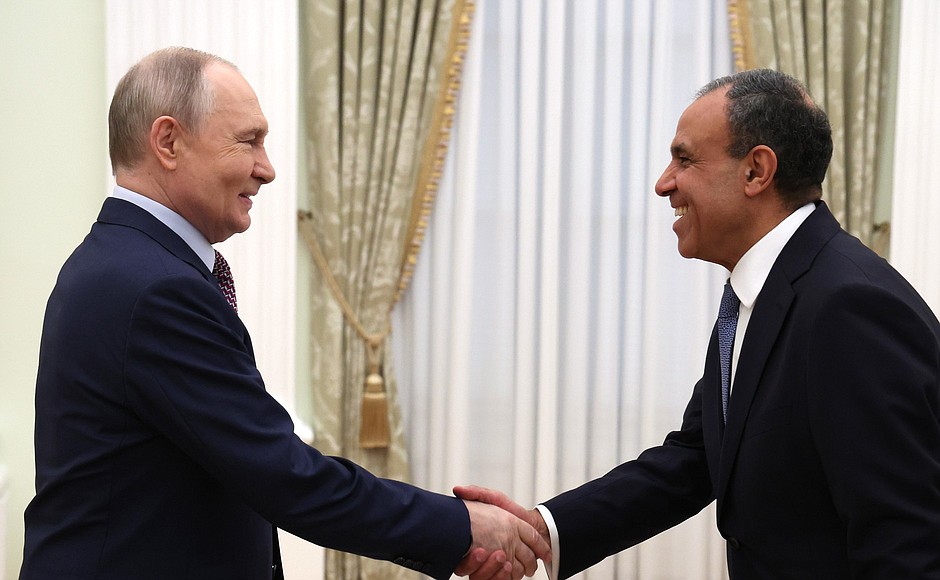
On April 2, Putin met with the Minister of Foreign Affairs, Emigration, and Egyptian Expatriates of the Arab Republic of Egypt, Badr Abdelatty, in the Kremlin – the seat of Russia’s presidency. In attendance during the official talks on the Russian side were Foreign Minister Sergei Lavrov and Presidential Aide Yury Ushakov, while Egypt was represented by Ambassador Extraordinary and Plenipotentiary to the Russian Federation Hamdy Shaaban. Ultimately, there is no need to overstate the importance of this meeting.
Russia’s footprints are expanding in Egypt, highlighting the growing industrial investment and the strengthening of bilateral manufacturing ties by undertaking projects to ensure energy security. At the same time, maintaining regular dialogue remains very important for both leaders.
Putin, speaking with the three-member delegation in the Kremlin, underlined the fact that there are many promising initiatives underway, many of which are already being implemented. He has previously spoken in detail about the construction of a nuclear power plant and the construction of an industrial zone, and over ten major Russian companies have expressed interest in participating in this project.
Nuclear Plants in El-Dabaa, Egypt
The construction of nuclear plants in the city of El-Dabaa, about 320 kilometres northwest of Cairo, the capital of Egypt. It is the first nuclear power plant in Egypt, and will have four VVER-1200 reactors, making Egypt the only country in the region to have a Generation III+ reactor. On November 19, 2015, Egypt and Russia signed an initial agreement, under which Russia agreed to build and finance Egypt’s first nuclear power plant. These are now being carried out, not as a charity project, but with a loan of $28 billion. According to reports, Russia will finance 85% as a state loan of $25 billion, and Egypt will provide the remaining 15% in the form of instalments. The Russian loan has a repayment period of 22 years, with an annual interest rate of 3%.
At the meeting, Putin also raised the construction of an industrial zone in Egypt. There are many appealing and related opportunities in this, regarding having an industrial zone to be located on the banks of the Suez Canal. The industrial zone is also entering a new phase, as Russian auto-manufacturing enterprises are advancing distinctive plans to expand local vehicle production, reinforcing the country’s role as a regional manufacturing hub. The move reflects broader economic linkages between Russia and Africa, particularly in industrial development and supply chain integration.
Conveying Greetings and Reviewing the Middle East Situation
Naturally, the situation in the region remains a shared concern, according to Putin, and further hope that the ongoing conflict will be promptly resolved. “As you know, President Trump also addressed this issue yesterday. Let me reiterate that we are prepared to make every effort to help stabilise the situation and, as they say in such cases, return it to normal,” he stressed during the meeting. In this context, it is particularly important to know Egypt’s assessment as a key country in the Middle East.
Putin reminded the delegation of another Russia-Africa summit, which is planned for October 2026. With high hopes that Egypt will be represented by a strong, high-level delegation. Should the Egyptian President’s schedule allow, he would, of course, ahead of the summit, be very pleased to welcome him to Moscow. Jointly chaired by Vladimir Putin and Abdel Fattah el-Sisi, the first Russia-Africa summit, an important acute phase of the developments with Africa, under the motto of ‘For Peace, Security and Development’, was held for the first time in October 2019, in Sochi, a city located on the Black Sea coast. The idea to hold a Russia-Africa forum was initiated by President Putin at the BRICS (Brazil, Russia, India, China and South Africa) summit in Johannesburg in July 2018.
The head of the Egyptian Foreign Ministry, as traditionally expected, conveyed greetings from President El-Sisi to the Russian president and handed over a written message. President el-Sisi places great value on all aspects of the bilateral cooperation, and is extremely grateful for constructive collaboration on the El Dabaa Nuclear Power Plant, which represents a key milestone in the partnership. Despite the challenges, it is evident that the project is moving forward and will be completed by 2028.
In summary, as Egypt and Russia are reliable and time-tested partners, Putin plans to promote strategic projects, particularly in trade, economics, energy, and food security. With over 107 million inhabitants, Egypt is the most populous country in the Arab world, the third-most populous country in Africa, and the 15th-most populous in the world.

By Kestér Kenn Klomegâh
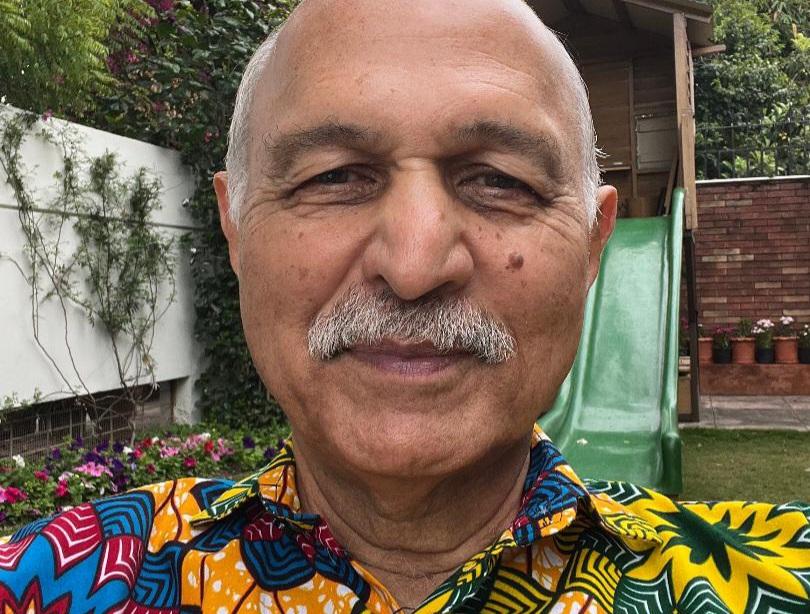
In an interview, Senator Mushahid Hussain, President of Pakistan-Africa Institute for Development and Research (PAIDR), explicitly offers a few important insights into the US-Israeli war on Iran and its implications for BRICS+ and Africa. Here are the interview excerpts:
What’s your interpretation of the US-Israel war on Iran, in the context of developments in the Middle East region?
The US-Israel illegal and unwarranted war on Iran was spearheaded by [Benjamin] Netanyahu (Prime Minister of Israel) and actively supported by [Donald] Trump (President of USA) as a Joint Operation with three fundamental goals: a) decimate the Islamic Revolutionary Regime; b) reshape the Middle East as part of Zionism’s ‘Greater Israel’ Project; c) preclude any possibility of establishing a Palestinian State with Jerusalem as its capital.
What is your assessment of Iran’s joining BRICS+ in 2025, China’s and Russia’s roles as members of this association, in this US-Israel war with Iran?
China and Russia have played, by and large, a low-key diplomatic role in supporting Iran but without any active political initiatives. BRICS is divided from within, as India is keen to curry favour with the USA and avoids close association with BRICS since the time that Trump attacked BRICS last year. But China & Russia are clear political beneficiaries of the war as American prestige is at an all-time low, having got entangled in an unwinnable war, resulting in weakening of the US ‘sole superpower’ image.
As an Asian expert, how would you characterise Africa’s reactions? And do you think that reactions were objectively authentic, basing perspectives broadly on Arab and Middle East contributions to Africa’s development?
Africa’s reactions to the war are primarily through the prism of the Global South, viewing Iran as resisting American-Israeli hegemonic designs, as, for example, manifested in two examples: South Africa’s rejection of American pressures to wean South Africa away from its support for Iran. Plus, Somalia joined Pakistan and China in supporting the Russian resolution in the UN Security Council seeking an immediate ceasefire and negotiations to halt the War, despite strident Western/US opposition to the Russian resolution.
-
 Feature/OPED6 years ago
Davos was Different this year
-
Travel/Tourism10 years ago
Lagos Seals Western Lodge Hotel In Ikorodu
-

 Showbiz3 years ago
Estranged Lover Releases Videos of Empress Njamah Bathing
-
 Banking8 years ago
Sort Codes of GTBank Branches in Nigeria
-

 Economy3 years ago
Subsidy Removal: CNG at N130 Per Litre Cheaper Than Petrol—IPMAN
-

 Banking3 years ago
Sort Codes of UBA Branches in Nigeria
-

 Banking3 years ago
First Bank Announces Planned Downtime
-

 Sports3 years ago
Highest Paid Nigerian Footballer – How Much Do Nigerian Footballers Earn