World
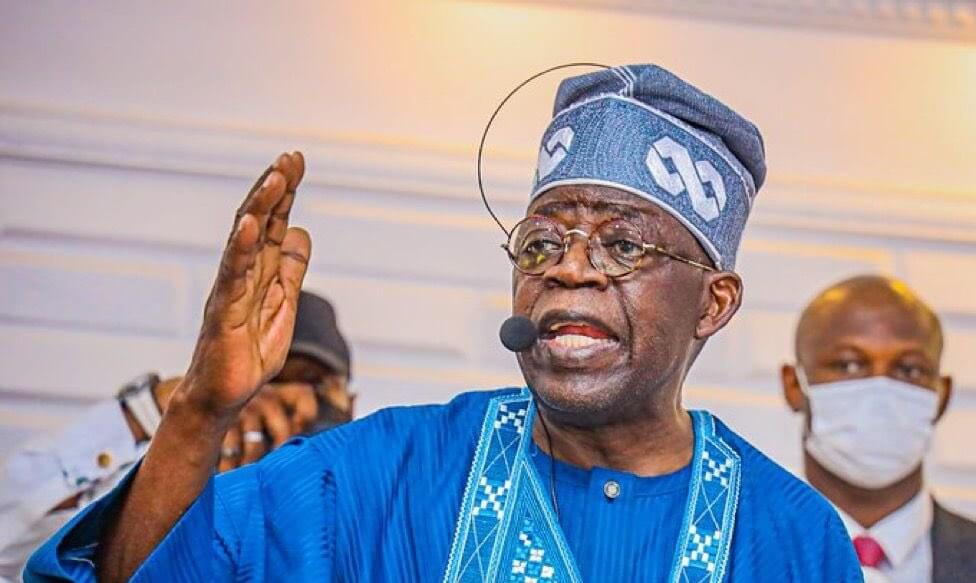
Tinubu Urges Equitable Capital Access for Developing Countries
By Adedapo Adesanya
President Bola Tinubu has called for equitable access to capital for developing countries, saying such will provide the much-needed resources for development.
Speaking at the 19th Summit of Heads of State and Government of the Non-Aligned Movement at the weekend in Kampala, Uganda, the Nigerian leader, however, pointed out that the developing world is not looking for sympathy or begging, but fair and equal opportunity.
Chaired by Ugandan President, Mr Yoweri Kaguta Museveni, this year’s summit was attended by many presidents and heads of government.
The Non-Aligned Movement is the largest gathering of countries, second only to the United Nations General Assembly.
Mr Tinubu noted that the combined population of the 120 countries that make up the Non-Aligned Movement is over 4.4 billion or about 55 per cent of the world’s population, yet the total financial resources available to all these countries are much less than that of some countries.
The total budgetary resources for the 120 countries is less than $3.5 trillion, which is less than the budget of the United States alone. Whereas the aggregate public debt of less than $6.6 trillion, mostly at higher interest rates and shorter tenor, is about one-sixth of one or a few developed countries, he said.
These startling statistics, according to the Nigerian leader, are a piece of clear evidence that the Non-Aligned countries suffer from a lack of access to capital and resources for development.
“More often than not, public debt available to developing countries is far more expensive and not substantial enough to make an impact. Therefore, we wish to advocate a financing mechanism and equitable capital market access that can provide adequate financial resources to the Global South,” he said.
Represented by the Minister of Budget and Economic Planning, My Atiku Bagudu, President Tinubu also listed the challenges facing the world currently including climate change, conflict and wars, terrorism, and widening inequality.
“All these are happening as we are battling to come out of the COVID-19 pandemic. No one nation can tackle these multidimensional challenges,” he said, stressing that this calls for greater collaboration between and among member states as they struggle to achieve sustainable development goals.
According to him, the theme of the summit which is “Deepening Cooperation for Shared Global Affluence” bore relevance concerning the current trend of wars, proliferation of small arms and light weapons, threat of use of nuclear weapons and the dangerous polarization between developed countries, similar to the era of cold war.
“In this regard, we must recommit to the foundational principles of Non-Aligned Movement to better assure global peace and security,” he said.
World
AfDB President Sees More African Nations Regaining Investment-Grade Ratings
By Adedapo Adesanya
The President of the African Development Bank (AfDB), Mr Sidi Ould Tah, says more African countries are likely to regain or achieve investment-grade credit ratings by next year as reforms begin to deliver results and economic growth accelerates.
Several African sovereigns have already been upgraded in recent months, including Nigeria. However, Nigeria is not yet near investment-grade status.
In May, S&P Global Ratings upgraded Nigeria’s sovereign credit ratings to ‘B’ with a stable outlook, citing structural reforms under President Bola Tinubu and key drivers like higher oil production and improved fiscal revenue.
The country is still five notches from investment-grade. Under S&P’s rating scale, the progression follows— B → B+ → BB- → BB → BB+ → BBB- (investment grade).
S&P raised Morocco to investment grade last year and increased South Africa by one level to BB in November. Ghana, Zambia, the Ivory Coast and Kenya have also benefited from positive rating action linked to fiscal, debt and economic reforms.
“We’re quite confident that the continent will continue to grow very strongly and that African countries will be better rated in the coming years,” Mr Ould Tah said in an interview with Bloomberg.
“We’ve seen Morocco receive investment grade during the last few months, and we expect other countries by next year to get toward that,” he added.
The outlook reflects improving fiscal positions and reforms implemented across countries on the continent, even as the conflict in the Middle East threatens to slow economic growth and raise costs for energy-importing nations. Better credit ratings can help countries borrow at lower rates and fund development projects.
The AfDB projects the continent’s gross domestic product expansion will accelerate to 4.4 per cent next year, if the conflict in the Middle East does not extend for a longer period. It expects the continent to slow to 4.2 per cent this year.
The war in Iran has benefited oil producers such as Nigeria, Angola and Gabon, while exerting pressure on the fiscal positions of net energy importers such as South Africa, Kenya, Ghana and Senegal.
Mr Ould Tah said the bank is ready to support countries facing budget constraints and high debt burdens due to the impact of the Iran crisis, including increasing credit lines to them.
“The board of directors of the bank will examine in the coming days how the bank can increase the volume of resources it will provide to its member countries in this specific situation,” he said.
World
State Duma Reviews Africa’s Food Security
By Kestér Kenn Klomegâh
Within the framework of the Expert Council on Africa at Russia’s State Duma, the lower chamber of parliamentarians, during its annual round-table conference, held in late May 2026, focused concretely on food security in Africa.
Under the chairmanship of Deputy Speaker of the State Duma, Alexander Babakov, the council’s round-table session on Russian-African cooperation in the field of ensuring food security, introduction of closed cycle technologies in agricultural and bioeconomy projects, was held in the State Duma.
Opening the meeting, Alexander Babakov noted the importance of continuing cooperation with African countries already in the new convocation of the State Duma, to which elections will be held in September 2026. “I am sure that right from the beginning of the work of the new convocation, the theme of cooperation between Russia and African countries will work as an example for circulation and use in other areas,” he said.
Member of the Committee on the Development of the Far East and the Arctic, deputy chairman of the Expert Council on Africa, Nikolai Novichkov, in his speech stressed the importance of a gradual transition to trade with African high-tech countries. “Our African partners are interested in producing and processing food locally, including earning a living on it,” the parliamentarian stated.
Director of the Department of Partnership with Africa at the Russian Foreign Ministry, Tatiana Dovgalenko, drew attention to the continued importance of the humanitarian component of Russian-African cooperation, which, despite efforts, “unforeseen, including and along the lines of specialised UN agencies, the number of hungry people in the world, according to experts, has been growing over the past few years.” According to Dovgalenko, the food crisis is localised in about 10 countries, four of which are in Africa.
As first deputy chairman of the Committee on International Affairs, Alexei Chepa noted, the food crisis and a number of other serious threats on the African continent are today exacerbated by a complex international situation, with the United States and Israel versus Iran causing rising energy prices worldwide. “This has also reflected on the cost of fertilisers that needed to be purchased previously. Even if prices fall in a few months, the yield still won’t. And there will be problems in Africa. At the same time, we understand that population growth in the coming years will be at Africa’s expense,” Chepa underlined in his contribution at the meeting.
Alexei Chepa also mentioned the special role of security enhancement in Africa, including in countering extremism and terrorism.
As part of the continuation of the work of the roundtable to promote cooperation with African countries in ensuring food security, the introduction of closed-loop technologies in agricultural and bioeconomics projects was discussed. As a traditional procedure, some recommendations are addressed to the Government of the Russian Federation.
In addition to representatives of the State Duma, diplomats, scientists, experts from related fields, representatives of the Government of the Russian Federation and the business community took part in the round-table discussion.
World
African Union Postpones India-Africa Forum Summit 2026
By Kestér Kenn Klomegâh
The fourth India-Africa Forum Summit (IAFS-IV), originally scheduled for May 28 to May 31, 2026, in New Delhi, has been deferred to a later date due to the high risks of the Ebola virus, emerging and rapidly spreading from the Democratic Republic of Congo (DRC), in the central African region.
The African Union and Indian authorities jointly decided to postpone the summit to ensure the health safety of African leaders, stakeholders, corporate executives and entrepreneurs, amid public concerns over participants travelling from the virus-infested continent to New Delhi, India.
The India-Africa business dialogue is designed to strengthen bilateral partnerships, while facilitating networks for building not just real conversations but accessing new models of transacting corporate business and remoulding investments. It has three-fold dimensions: strategic partnerships, getting new clients and potential investors. An entirely significant collaboration that opens new markets.
Too often, businesses focus only on visibility and forget the power of relationships. But growth rarely happens alone. It happens through collaboration, trusted partnerships, and being in spaces where serious conversations happen naturally.
India-Africa has previously held a series of such high-level meetings with key trade and economic institutions in Africa as part of efforts to strengthen bilateral trade, investment cooperation and private-sector partnerships between India and Africa. These engagements aimed at identifying new economic opportunities and supporting the expansion of Indian-based companies into promising African markets.
Key Details & Context
Postponement Status: Following joint consultations, both sides mutually agreed to convene the summit at a later date. No rescheduled date has been announced at this time.
Summit Objectives: The summit, the first gathering since 2015, aims at deepening strategic multifaceted ties, focusing on South-South cooperation, technology transfers, capacity building, and healthcare resilience.
Official Information:
- Tracking the latest developments, both the Government of the Republic of India and the African Union have been working closely on the convening of the Fourth India–Africa Forum Summit (IAFS IV), initially scheduled to take place in New Delhi from 28–31 May 2026.
- The two sides exchanged views on the evolving health situation in parts of Africa and reaffirmed the importance of continued cooperation in strengthening public health preparedness and response capacities across the continent, including through support to Africa CDC and relevant national institutions.
- India reaffirmed its solidarity with the peoples and Governments of Africa and expressed its readiness to contribute to Africa CDC-led efforts aimed at addressing the evolving health situation, in line with the shared commitment to an Africa-led response.
- Recognising the importance of ensuring the full participation and engagement of African leaders and stakeholders, and mindful of the emerging public health situation on the continent, consultations were held between the Government of India, the Chairperson of the African Union, and the African Union Commission regarding the holding of the Summit and associated activities.
- Following these consultations, the two sides agreed that it would be advisable to convene the Fourth India–Africa Forum Summit at a later date.
- New dates for the Summit and its associated meetings will be finalised through mutual consultations and communicated in due course.
- India and Africa reaffirmed their longstanding partnership founded on solidarity, mutual respect, South–South cooperation, and a shared commitment to peace, development, prosperity, and the well-being of their peoples.
Previous Editions of the India–Africa Forum Summit
1st India–Africa Forum Summit
New Delhi, India – 2008
The first edition was held in New Delhi from 4–8 April 2008. It marked the launch of the India–Africa strategic partnership framework and resulted in the adoption of the Delhi Declaration and the India–Africa Framework for Cooperation.
2nd India–Africa Forum Summit
Addis Ababa, Ethiopia – 2011
The second edition was held in Addis Ababa in May 2011. Leaders focused on expanding cooperation in trade, infrastructure, human resource development, agriculture and peace and security.
3rd India–Africa Forum Summit
New Delhi, India – 2015
Theme: “Reinvigorated Partnership – Shared Vision” This edition was historic because all African countries were invited, making it one of India’s largest diplomatic gatherings with African leaders.
About the India–Africa Forum Summit: The first three Summits were held in New Delhi (2008 and 2015) and Addis Ababa (2011), resulting in important outcomes such as the Delhi Declaration and the Africa–India Framework for Cooperation. The India–Africa Forum Summit (IAFS) is the highest institutional platform for dialogue and cooperation between India and African countries, held under the leadership of the African Union.
-
Feature/OPED6 years agoDavos was Different this year
-
Travel/Tourism10 years ago
Lagos Seals Western Lodge Hotel In Ikorodu
-
Showbiz3 years agoEstranged Lover Releases Videos of Empress Njamah Bathing
-
Banking8 years agoSort Codes of GTBank Branches in Nigeria
-
Economy3 years agoSubsidy Removal: CNG at N130 Per Litre Cheaper Than Petrol—IPMAN
-
Banking3 years agoSort Codes of UBA Branches in Nigeria
-
Banking3 years agoFirst Bank Announces Planned Downtime
-
Sports3 years agoHighest Paid Nigerian Footballer – How Much Do Nigerian Footballers Earn