World
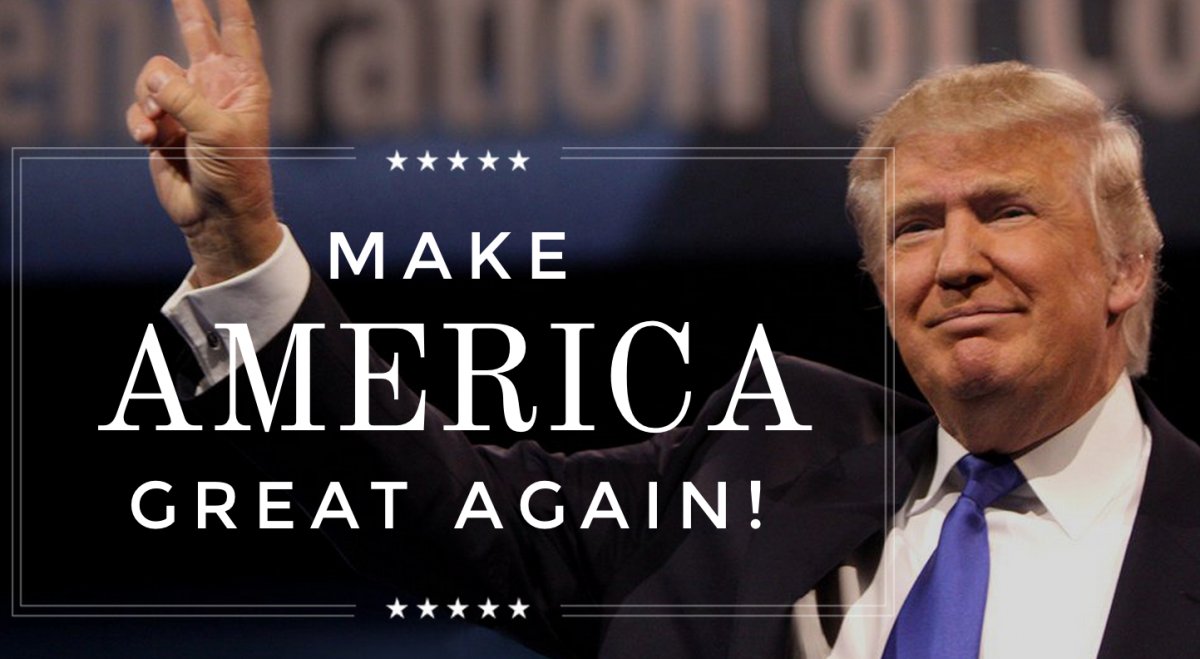
Trump Emerges US President-Elect, Beats Clinton

By Dipo Olowookere
Republican candidate in the 2016 US presidential election, Mr Donald Trump, has won the keenly contested poll.
Mr Trump defeated his closest rival, Mrs Hilary Clinton of the Democratic Party to win the race to the White House.
With victory over Mrs Clinton, Mr Trump will become the 45th US president when he is sworn-in early next year.
The Republican swept the states of Florida, North Carolina and Ohio, which had earlier been noted as the battlegrounds of the two major candidates in the election.
The results have come as shock to Mrs Clinton’s supporters, who had thought she would clear the votes following her lead in the opinion polls before the exercise.
Mr Trump’s utterances before the poll had also made some of his key party members withdraw their supports for the political newcomer.
However, Mr Trump’s sweeping of votes in Wisconsin dashed the hopes of Mrs Clinton, raking 270 out of 538 electoral-college votes required to clinch the White House prize.
Reacting to the result, Mr Trump said, “It is time for us to come together as one united people,” adding that his opponent, Mrs Clinton, “has worked very long and very hard over a long period of time, and we owe her a major debt of gratitude for her service to our country.”
Mrs Clinton was formerly US First Lady when her husband, Mr Bill Clinton governed the country. She also served as US Secretary of State under President Barak Obama.
World
Medar Boquete Becomes First Congolese to Receive Pushkin Medal
By Kestér Kenn Klomegâh
November 2025, will go down in history as a significant date for the Democratic Republic of the Congo and the Free University of Kinshasa (ULK). During the official ceremony presenting state awards and prizes of the President of the Russian Federation in the Kremlin, Medar Bompoko Boquete, Chairman of the Executive Board of the Free University of Kinshasa (ULK), was awarded the Pushkin Medal, becoming the first Congolese to receive this prestigious award.
The Pushkin Medal, established in the Russian Federation, is one of the most renowned awards in the fields of culture, education, and the humanities. It is awarded to individuals who have made significant contributions to the development of cultural and educational ties with Russia, as well as to strengthening friendship and international cooperation. This award highlights the importance of academic, linguistic, and cultural exchanges in strengthening ties between Russia and African countries.
Medar Bompoko Boquete was recognized for his contribution to the promotion of the Russian language and culture at ULK, as well as for his active work in strengthening educational and cultural ties between the DR Congo and Russia. For several years, he has promoted student and faculty exchanges, scientific cooperation, and knowledge sharing between the countries, contributing to the international recognition of the DR Congo.
The ceremony, held as part of the National Unity Day celebrations, brought together distinguished Russian and international representatives. The awarding of the Pushkin Medal to an African scholar, and in particular the first Congolese, is a powerful symbol of intercultural dialogue and mutual respect between countries. It also demonstrates the key role of education and culture in strengthening diplomatic and social ties on the international stage.
Award Details:
Awardee: Medar Bompoko Boquete
Position: Chairman of the Executive Board, Free University of Kinshasa (ULK)
Award: Pushkin Medal
Reason for the Award: Contribution to strengthening cultural and educational unity and developing cultural ties between the DR Congo and Russia
Award Location: The Kremlin, Moscow, Russia
This official recognition from Russia is not only a personal honor for Medar Bompoko Boquete but also an important symbol for the DR Congo, demonstrating the country’s achievements in education, culture, and scientific cooperation. The award opens new opportunities for academic and cultural interaction between Congolese and Russian institutions and inspires future generations to develop similar initiatives.
The awarding of the Pushkin Medal to Medar Bompoko Boquete was a historic event in relations between the DR Congo and Russia and symbolizes the long-term strengthening of cultural and educational ties between the two countries.
World
Amnesty International Calls for Internet Restoration as Crisis Grips Tanzania
By Adedapo Adesanya
Human rights group, Amnesty International, has called for restoration of internet services following shutdown by Tanzanian authorities following the country’s general elections on October 29.
Authorities imposed nationwide internet restrictions on election day disrupting mobile data services and blocking access to social media platforms across major networks.
The October 29 vote handed President Samia Suluhu Hassan a second term with over 97 per cent of the votes.
She was sworn in after the disputed polls on Monday. Protests have since rocked the East African country.
On Monday November 3, Tanzanians reported partial resumption in some cities, but this has impacted the country’s economy, disrupting bank operations and communication.
In a statement, Amnesty International’s Deputy Director for East and Southern Africa, Mr Vongai Chikwanda, called for the return of full internet services in the country.
“For close to a week now, many people in Tanzania have suffered nationwide internet and electricity shutdowns. Amnesty International is particularly alarmed by reports that amidst the blackouts, security forces have used excessive force to suppress and disperse ongoing post-election protests, resulting in the deaths and injuries of protesters.
“This is the third time in less than a year that Tanzanian authorities have resorted to an internet blockade to silence dissenting voices. Authorities must immediately refrain from suppressing protests and instead respect, protect, and facilitate the right to peaceful assembly. They must immediately and unconditionally release all those arrested solely for exercising their right to peaceful assembly.”
So far, over 700 people have been reportedly killed by post-election violence in the East African nation.
The group said Tanzanian authorities should “promptly, thoroughly, independently, impartially, transparently and effectively investigate all killings by security agents and bring to justice in fair trials those suspected of being responsible.”
“Authorities must also provide victims and their families with access to justice and effective remedies,” it added.
“The authorities must also allow both local and international media to freely report on the human rights situation in the country and refrain from restricting access to information, both online and offline including by immediately restoring internet access and access to basic public services. The ongoing restrictions are making it difficult to verify information, and to document election-related human rights violations.”
World
Russia-Africa Expo-2025: Spotlighting Africa’s Economic Potential for Russian Investors
By Kestér Kenn Klomegâh
Designed as an investment and entrepreneurial platform, the ‘Russia-Africa Expo-2025. Made in Africa’ held in Moscow, in mid-October, attracted state officials, investors and business people from Africa and Russia who are highly-interested in mutually beneficial dialogue and developing business collaboration. Sharing the same platform, the participants tried to find answers to the critical questions including why do Russian entrepreneurs want to work on mega-projects with partners from Africa. For Africans, their concern was to export basic agricultural products, handmade crafts and artifacts to the Russian market from contemporary Africa. On the other side, Russians are increasingly in search of profitable businesses across the continent, amid renewed debates and narratives over Russia’s low economic representation in the African discourse. For decades, the continent’s stories have largely been filtered through external lenses—often highlighting Africa’s development progress especially transforming as the last frontier with an economic power.
According to the organizers, ‘Russia-Africa Expo 2025. Made in Africa’ was a unique space to foster economic and commercial exchanges. The organizers described it as “the solid platform for entrepreneurs to deliberate business collaborations, expertise and innovations, and to transform ideas into tangible opportunities for both Russian and African entrepreneurs.” It was the second edition of Russia-Africa Expo, aimed at promoting the continent’s economic influence and, at least, to project the exceptional visibility by African and diaspora actors. In this exclusive interview, Louis Gouend, Founder and Chief Executive of African Business Club (ABC) and Chairman of the Commission for Work with African Diasporas of the Russian-African Club of Moscow State University named after M.V. Lomonosov, discussed the main results of the week-long corporate entrepreneurial gathering and hightlighted Russia’s comparative stakes and perspectives with African partners. Here are the interview excerpts:
How confident are Russian investors in developing the African market in the current geopolitical environment?
Russian business confidence in working with Africa has reached a qualitatively new level. Whereas previously these were fruitless attempts at market exploration, today we see a fully formed strategy. More than 200 Russian companies represented at the Russia-Africa Expo-2025 forum, not only from the raw materials sector, but also from IT, pharmaceuticals, agriculture, and education.
Key indicator: at the financial instruments session, Payment Agent A7 and representatives of the Russian Export Center (REC)presented specific products for the African market with state guarantees. These aren’t just words – this year alone, the volume of transactions through these mechanisms has grown by 40%. Russian entrepreneurs understand that Western sanctions have created a unique window of opportunity to reshape relations with Africa.
How are trade and economic relations developing after the two Russia-Africa summits?
We have gone from political declarations to concrete projects. Trade turnover reached $23 billion last year, but its structure is more important: while grain and fertilizer accounted for 80% of the total last year, today the share of machinery and equipment (15%), IT solutions (7%), and educational services is rapidly growing.
After Expo-2025, we clearly identify three trends:
– Diversification: from raw materials to technologies and joint ventures
– Localization: establishing assembly plants and distribution centers in Africa
– Financial architecture: developing alternative payment systems
What are the prospects for African exporters in the Russian market?
The situation is changing dramatically. At the “Made-in-Africa” pitch session, 15 African companies signed memorandums of understanding on supplies to Russia. Ethiopian coffee suppliers plan to capture 5% of the Russian premium coffee market by 2026.
Russia is simplifying customs procedures for African products, according to a representative of the Ministry of Industry and Trade. By 2025, imports of African goods are expected to grow by 25%, particularly in the following categories:
– Coffee and cocoa
– Fruits and nuts
– Pharmaceutical raw materials
– Natural cosmetics
Which countries and industries were most significant in the discussions?
The most active countries were:
– Ethiopia: as a hub for East Africa (logistics, agribusiness)
– Nigeria: energy and IT
– Cameroon: agriculture, distribution, and culture
– Burkina Faso: medicine, fruit processing, and the film industry
– Côte d’Ivoire: fertilizers, cocoa, financial services, and culture
– Mali: education and development of Russian-African women’s entrepreneurship
– Rwanda: mining
– Gambia: pharmaceuticals, healthcare, and construction
Key areas of cooperation:
- Energy and mining – 35% of projects discussed
- Agribusiness and food security – 25%
- Digitalization and IT – 20%
- Education and training – 15%
- Pharmaceuticals and healthcare – 5%
What noticeable challenges remain, and what agreements have been reached?
Despite significant progress, systemic challenges remain. Key among these remain logistics infrastructure, the need to develop financial mechanisms adapted to current realities, and the importance of bridging the information gap between business communities.
Following the Russia-Africa Expo-2025, a qualitative shift in the approach to cooperation can be observed. Fundamental agreements were reached on the creation of new institutions for interaction designed to make cooperation systemic. A series of framework agreements and memoranda of understanding were signed between key players from the private and public sectors of both sides. These documents lay the foundation for the implementation of specific projects in priority sectors, such as agriculture, energy, digitalization, and personnel training.
The main outcome was not only the creation of a full-fledged partnership ecosystem, where joint working groups and development institutions will ensure the sustainability of cooperation in the long term, but also the creation of a new platform for ongoing communication between entrepreneurs from Russian and African small and medium-sized businesses.
-
Feature/OPED6 years agoDavos was Different this year
-
Travel/Tourism9 years ago
Lagos Seals Western Lodge Hotel In Ikorodu
-
Showbiz3 years agoEstranged Lover Releases Videos of Empress Njamah Bathing
-
Banking7 years agoSort Codes of GTBank Branches in Nigeria
-
Economy2 years agoSubsidy Removal: CNG at N130 Per Litre Cheaper Than Petrol—IPMAN
-
Banking3 years agoFirst Bank Announces Planned Downtime
-
Sports3 years agoHighest Paid Nigerian Footballer – How Much Do Nigerian Footballers Earn
-
Banking3 years agoSort Codes of UBA Branches in Nigeria