World
Trump’s Tariffs, Russia and Africa Trade Cooperation in Emerging Multipolar World
By Kestér Kenn Klomegâh
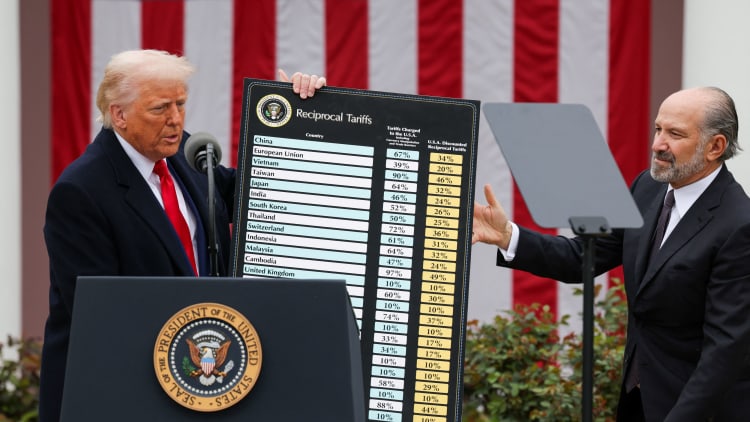
With geopolitical situation heightening, trade wars are also becoming increasingly prominent. The 47th United States President Donald Trump has introduced trade tariffs, splashed it over the world. China, an Asian trade giant and an emerging economic superpower, has its highest shared.
South Africa, struggling with its fragile foreign alliances, is seriously navigating the new United States economic policy and trade measures, at least to maintain its membership in the African Growth and Opportunities Act (AGOA) which is going to expire in September 2025.
It is a well-known fact that AGOA waived duties on most commodities from Africa in order to boost trade in American market. The AGOA also offers many African countries trade preferences in the American market, earning huge revenues for their budgets. Financial remittances back to Africa also play mighty roles across the continent from the United States.
That however, the shifting geopolitical situation combined with Trump’s new trade policies and Russia’s rising interest in Africa, the overarching message for African leaders and business corporate executives is to review the level of degree how to appreciably approach and strengthen trade partnership between Africa and Russia.
The notion of a new global order and frequently phrased multipolar world, indicating the construction of a fairer architecture of interaction, in practical terms, has become like a relic and just as a monumental pillar. Even as we watch the full-blown recalibration of power, the geopolitical reshuffling undoubtedly creates the conditions for new forms of cooperation.
In this current era of contradictions and complexities we are witnessing today, we must rather reshape and redefine rules and regulations to facilitate bilateral and multilateral relations between African countries and Russia, if really Russia seeks to forge post-Soviet strategic economic cooperation with Africa.
In fact, post-Soviet in the sense that trade is not concentrate on state-to-state but also private – including, at least, medium scale businesses. The new policy dealing with realities of the geopolitical world, distinctively different from Soviet-era slogans and rhetorics of ‘international friendship and solidarity’ of those days.
Bridging Africa and Russia, at least in the literal sense of the word, necessitates partial departure from theoretical approach to implementing several bilateral and multilateral decisions, better still agreements reached at previous summits and conferences during the past decade.
Understandably Africa has a stage, Russia termed ‘the struggle against neo-colonial tendencies’ and mounting the metal walls against the ‘scrambling of resources’ across Africa. Some experts argued that Africa, at the current stage, has to develop its regions, modernize most the post-independence-era industries to produce exportable goods, not only for domestic consumption. Now the emphasis is on pushing for prospects of a single continental market, the African Continental Free Trade Agreement (AfCFTA).
This initiative, however, must be strategically and well-coordinated well, and here I suggest integration and cooperation starting at country-wide basis to regional level before it broadly goes to the entire continent, consisting 54 independent states.
These are coordinated together as African Union (AU), which in January 2021 initiated the African Continental Free Trade Agreement (AfCFTA). With this trading goals in mind, Africa as a continent has to integrate, promote trade and economic cooperation, engage in investment and development. In that direction, genuine foreign partners are indiscriminately required, foreign investment capital in essential for collaboration as well as their entrepreneurial skills and technical expertise.
For instance, developing relations with Asian giants such China and India, the European Union and the United States. A number of African countries are shifting to the BRICS orbit, in search for feasible alternative opportunities, for the theatrical trade drama. In the Eurasian region and the former Soviet space, Kazakhstan and Russia stand out, as potential partners, for Africa.
Foreign Affairs Minister Sergey Lavrov has said, at the podium before the staff and students at Moscow State Institute of International Affairs in September, that trade between Russia and Africa would grow further as more and more African partners continued to show interest in having Russians in the economic sectors in Africa. This provides greater competition between the companies from Western countries, China, and Russia. With competition for developing mineral resources in Africa, it is easier and cheaper for African colleagues to choose partners.
As far back in October 2010, Russian Foreign Affairs Ministry posted an official report on its website that traditional products from least developed countries (including Africa) would be exempted from import tariffs. The legislation stipulated that the traditional goods are eligible for preferential customs and tariffs treatment.
Thereafter, Minister Sergey Lavrov has reiterated, in speeches, trade preferences for African exporters, but terribly failed to honour these thunderous promises. Notwithstanding the above granting trade preferences, there prevailing multitude of questions relating to the pathways of improving trade transactions, and removing obstacles including those Soviet-era rules and regulations.
Logistics is another torny hurdle. Further to this, Russian financial institutions can offer credit support that will allow to localize Russian production in Africa’s industrial zones, especially southern and eastern African regions that show some stability and have good investment and business incentives.
In order to operate more effectively, Russians have to risk by investing, recognize the importance of cooperation on key investment issues and to work closely on the challenges and opportunities on the continent. On one hand, analyzing the present landscape of Africa, Russia can export its technology and compete on equal terms with China, India and other prominent players. On the other hand, Russia lacks the competitive advantage in terms of finished industrial (manufactured) products that African consumers obtain from Asian countries such as China, India, Japan and South Korea.
Compared to the United States and Europe, Russia did very little after the Cold War and it is doing little even today in Africa. On 27th–28th July 2023, St Petersburg hosted the second Russia-Africa summit. At the plenary session, President Vladimir Putin underscored the fact that there was, prior to the collapse of the Soviet, there were over 330 large infrastructure and industrial facilities in Africa, but most were lost. Regarding trade, Putin, regrettably, noted Russia’s trade turnover with the African countries increased in 2022 and reached almost US$18 billion, (of course, that was 2022).
Arguably, Russia’s economic presence is invisible across Africa. It currently has insignificant trade statistics. Until the end of the first quarter of 2025, Russia still has a little over $20 billion trade volume with Africa. Statistics on Africa’s trade with foreign countries vary largely.
For example, the total United States two-way trade in Africa has actually fallen off in recent years, to about $60 billion, far eclipsed by the European Union with over $240 billion, and China more than $280 billion, according to a website post by the Brookings Institution.
According to the African Development Bank, Africa’s economy is growing faster than those of any other regions. Nearly half of Africa is now classified as middle income countries, the numbers of Africans living below the poverty line fell to 39 percent as compared to 51 percent in 2023, and around 380 million of Africa’s 1.4 billion people are now earning good incomes – rising consumerism – that makes trade profitable.
Nevertheless, there is great potential, as African leaders and entrepreneurial community are turing to Russia for multifaceted cooperation due to the imperialist approach of the United States and its hegemonic stand triggered over the years, and now with Trump new trade tariffs and Washington’s entire African policy.
China has done its part, Russia has to change and adopt new rules and regulations, pragmatic approach devoid of mere frequent rhetorics. It is important discussing these points, and to shamelessly repeat that both Russia and Africa have to make consistent efforts to look for new ways, practical efforts at removing existing obstacles that have impeded trade over the years.
Sprawling from the Baltic Sea to the Pacific Ocean, Russia is a major great power and has the potential to become a superpower. Russia can regain part of its Soviet-era economic power and political influence in present-day Africa.
Certainly, the expected superpower status has to be attained by practical multifaceted sustainable development and by maintaining an appreciably positive relations with Africa. We have come a long way, especially after the resonating first summit (2019 and high-praised second summit (2023), several bilateral agreements are yet to be implemented. The forthcoming Russia – Africa Partnership summit is slated for 2026, inside Africa and preferably in Addis Ababa, Ethiopia.
Kestér Kenn Klomegâh is a frequent and passionate contributor. During his professional career as a researcher specialising in Russia-Africa policy, which spans nearly two decades, he has been detained and questioned several times by Russian federal security services for reporting facts. Most of his well-resourced articles are reprinted in a number of reputable foreign media.
World
Russia, Tanzania Boost Bilateral Economic Ties
By Kestér Kenn Klomegâh
From Africa’s perspectives on attaining economic sovereignty, Tanzania, located in East Africa, has seriously begun showing the investment model as Russia pledges tremendous support during the meeting of the Russian-Tanzanian intergovernmental commission in Arusha, in mid-May 2026. Russia is undertaking various development projects as well as addressing bilateral issues relating to investment, trade and innovation on the African continent, and described Tanzania as the gateway to the broader East African region.
Step 1: Gazprom is interested in implementing comprehensive gas projects in Tanzania, according to the report issued by the Ministry of Economic Development. It says Gazprom, in addition to selling natural gas, LNG, and petrochemical products, is ready to supply technologies and equipment for gas production, processing, transportation, and sales. It says Gazprom is continuing its work on a pilot project launched last year to supply two mobile gas tankers to Tanzania.
NOVATEK has also indicated its preparedness to participate in natural gas exploration and production projects in Tanzania, and for now, the staff are awaiting information on the date of the fifth round of license allocation for exploration blocks, as well as on the acquisition of blocks outside the tender process—specifically, at the Ntorya field. “Tanzania has significant resource potential, and the economy’s growing demand for electricity and fuel opens up significant opportunities for joint projects. The current situation in the Strait of Hormuz compels us to seek new solutions to ensure that it does not reduce economic growth on the African continent, and particularly in Tanzania,” said Maxim Reshetnikov, head of the Ministry of Economic Development, speaking at a meeting of the Russian-Tanzania intergovernmental commission in Arusha.
Step 2: Russia and Tanzania plan to sign a memorandum of cooperation in tourism in Moscow. In June, as part of the “Travel!” forum in Moscow (June 10-14), the Tanzanian delegation was already given the invitation to participate, noted Reshetnikov while further explaining that Russia is interested in launching direct air service between the two countries, which would “give a powerful boost to tourism development.”
Air Tanzania’s initiative to launch flights from Moscow to Dar es Salaam, with high hopes that Russia and Tanzania will complete the necessary procedures for the entry into force of the new air traffic agreement as quickly as possible. In particular, officials are awaiting notification from the Tanzanian side regarding the entry into force of this agreement.
Air Tanzania will begin flights from Dar es Salaam, Tanzania’s largest city, on May 28. According to the online flight information at the capital’s Vnukovo Airport, flights on this route will include a stopover on the island of Zanzibar. Flights will operate three times a week, on Tuesdays, Thursdays, and Saturdays. The program will run until October 24.
Step 3: Tanzanian President Samia Suluhu Hassan is expected on an official state visit to Russia in June, and that will boost bilateral trade and investment, and provide an additional impetus to developing mutual cooperation.
“In preparation for the upcoming high-level meeting, I propose discussing both promising areas and specific projects… and identifying key areas for further cooperation. In addition to trade, these include energy, transport, industry, agriculture, tourism, science, and education,” Reshetnikov said.
The Tanzanian delegation is expected to participate in the St. Petersburg International Economic Forum, which will be held from June 3 to 6. Usually, at the St. Petersburg forum, the African agenda is of great importance. The programme includes the Russia-Africa Business Dialogue, which, since 2016, has been the annual meeting place for representatives of Russian and African business and official communities. Roscongress Foundation organises it.
World
AFC Backs Future Africa, Lightrock in $100m Tech VC Funding Bet
By Adedapo Adesanya
Infrastructure solutions provider, Africa Finance Corporation (AFC), has committed parts of a $100 million investment to fund managers—Future Africa and Lightrock Africa—to boost African tech venture backing.
The commitment to Lightrock Africa Fund II and Future Africa Fund III is the first tranche of a broader deployment, AFC noted.
The corporation added that it is actively evaluating a pipeline of additional Africa-focused funds spanning a range of strategies and stages, with further commitments expected in the near term.
This is part of its efforts to plug a persistent gap in long-term institutional capital on the continent, which constrains the development and scaling of high-potential technology businesses across the continent, especially with a drop in foreign investments.
“Through this commitment, AFC will deploy catalytic capital in leading Africa-focused technology Funds and, in particular, African-owned fund managers,” it said in a statement on Monday.
AFC aims to address the underrepresentation of local capital in venture funding by catalysing greater participation from African institutional investors and deepening local ownership within the ecosystem.
Despite some success stories on the continent, local institutional capital remains significantly underrepresented across many fund cap tables, with the majority of venture funding continuing to flow from international sources.
AFC’s commitment is designed to shift that dynamic, according to Mr Samaila Zubairu, its chief executive.
“Across the continent, young Africans are not waiting for the digital economy to arrive; they are seizing the moment — adopting technology, creating markets and solving real economic problems faster than infrastructure has kept pace. That is the investment signal.
“AFC’s $100 million Africa-focused Technology Fund will accelerate the convergence of growing demand, rapid technology adoption, youthful demographics and the enabling infrastructure we are building.
“Digital infrastructure is now as fundamental to Africa’s transformation as roads, rail, ports and power — enabling productivity, payments, logistics, services, data and cross-border trade, while creating jobs and industrial scale.”
Mr Pal Erik Sjatil, Managing Partner & CEO, Lightrock, said: “We are delighted to welcome Africa Finance Corporation as an anchor investor in Lightrock Africa II, deepening a strong partnership shaped by our collaboration on high-impact investments across Africa, including Moniepoint, Lula, and M-KOPA.
“With aligned capital, a long-term perspective, and a shared focus on value creation, we are well positioned to support exceptional management teams and scale category-leading businesses that deliver attractive financial returns alongside measurable environmental and social outcomes,” he added.
Adding his input, Mr Iyin Aboyeji, Founding Partner, Future Africa, said: “By investing in AI-native skills, financing productive tools such as phones and laptops, and expanding energy, connectivity and compute infrastructure, we can convert Africa’s greatest asset — its people — into critical participants in the new global economy. AFC’s US$100 million commitment is the anchor this moment demands.
“As our first multilateral development bank partner, AFC is sending a clear signal that digital is as fundamental to Africa’s transformation as agriculture, manufacturing and physical infrastructure. We trust that other development finance institutions, insurers, reinsurers and pension funds will follow AFC’s lead.”
World
Africa ‘Reawakening’ In Emerging Multipolar World
By Kestér Kenn Klomegâh
In this interview, Gustavo de Carvalho, Programme Head (Acting): African Governance and Diplomacy, South African Institute of International Affairs (SAIIA), discusses at length aspects of Africa’s developments in the context of shifting geopolitics, its relationships with external countries, and expected roles in the emerging multipolar world. Gustavo de Carvalho further underscores key issues related to transparency in agreements, financing initiatives, and current development priorities that are shaping Africa’s future. Here are the interview excerpts:
Is Africa undergoing the “second political re-awakening” and how would you explain Africans’ perceptions and attitudes toward the emerging multipolar world?
We should be careful not to overstate novelty. African states exercised real agency during the Cold War, too, from Bandung to the Non-Aligned Movement. What has actually shifted is the structure of the international system around the continent. The unipolar moment has faded, the menu of partners has widened, and a generation of policymakers under fifty operates without the inhibitions of either the Cold War or the immediate post-Cold War period. African publics, however, are more pragmatic than multipolar rhetoric assumes. Afrobarometer’s surveys across more than thirty countries consistently show citizens evaluating external partners on tangible outcomes such as infrastructure, jobs and security, rather than on civilisational narratives. China is generally associated with positive economic influence, the United States retains the strongest pull as a development model, and Russia, despite a louder political profile, registers a smaller and more geographically concentrated footprint. Multipolarity is not a destination Africans are arriving at. It is a working environment that creates more options and more risks at once.
Do you think it is appropriate to use the term “neo-colonialism” referring to activities of foreign players in Africa? By the way, who are the neo-colonisers in your view?
The term has analytical value when used carefully, and loses it when deployed selectively against whichever power one wishes to embarrass. Nkrumah’s 1965 formulation was precise: political independence accompanied by continued external control over economic and political life. The honest test is whether contemporary patterns reproduce that asymmetry, irrespective of the capital from which they originate. The structural picture is well documented. Africa still exports primary commodities and imports manufactured goods. Intra-African trade hovers around fifteen per cent of total trade, well below Asian or European levels. African sovereigns pay a measurable risk premium on debt that exceeds what fundamentals alone justify. Applied consistently, the lens directs attention to opaque resource-for-infrastructure contracts, security-for-mineral bargains, debt agreements with confidentiality clauses, and aid architectures that bypass African institutions. That description fits legacy French commercial arrangements in francophone Africa, Chinese mining concessions in the DRC, Russian-linked gold extraction in the Central African Republic and Sudan, Gulf-backed port and farmland deals along the Red Sea, and Western corporate practices that have not always met the standards their governments preach. Naming a single neo-coloniser tells us more about the speaker’s politics than about the structure.
How would you interpret the current engagement of foreign players in Africa? Do you also think there is geopolitical competition and rivalry among them?
Competition is real and intensifying, and the proliferation of Africa-plus-one summits is the clearest indicator. Russia has held two summits, in Sochi in 2019 and St Petersburg in 2023. The EU, Turkey, Japan, India, the United States, South Korea, Saudi Arabia and the UAE all host their own variants. Trade figures give a more honest sense of weight than diplomatic theatre. China-Africa trade reached around 280 billion dollars in 2023, United States-Africa trade sits in the 60 to 70 billion range, and Russia-Africa trade is roughly 24 billion, heavily concentrated in grain, fertiliser and arms. Describing the continent as a chessboard, however, understates how African states themselves are shaping these dynamics, sometimes through skilful diversification and sometimes through security bargains that entail longer-term costs. The Sahel illustrates the latter starkly. Between 2020 and 2023, Mali, Burkina Faso and Niger expelled French forces, downgraded their relationships with ECOWAS and the UN stabilisation mission, and welcomed Russian security contractors. ACLED data shows civilian fatalities from political violence rising rather than falling across the same period. Substituting providers without strengthening domestic institutions does not produce sovereignty. It changes the terms of dependence.
Do you think much depends on African leaders and their people (African solutions to African problems) to work toward long-term, sustainable development?
The principle is correct, and it is regularly weaponised in two unhelpful directions. External actors invoke it to justify withdrawing from responsibilities they continue to hold, particularly over financial flows and arms transfers that pass through their own jurisdictions. Some African leaders invoke it to deflect legitimate scrutiny of governance failings, repression or corruption. Genuine African agency requires more than rhetoric. The AU’s operating budget remains modest in absolute terms, and external partners still cover a significant share of programmatic activities, which shapes what gets funded. The African Standby Force, conceived in 2003, remains only partially operational more than two decades on. The African Continental Free Trade Area, in force since 2021, has rolled out more slowly than drafters hoped because the political will to lower national barriers lags the speeches. Long-term development depends on African leaders financing more of their own security and development priorities, on publics holding them accountable, and on a clearer-eyed view of what foreign forces can deliver. Whether the actors are Russian-linked contractors in the Sahel and Central African Republic, Western counter-terrorism deployments, or others, external security providers tend to address symptoms while leaving the political and economic drivers of insecurity intact.
Often described as a continent with huge, untapped natural resources and large human capital (1.5 billion), what then specifically do African leaders expect from Europe, China, Russia and the United States?
Expectations differ across the three relationships, and that differentiation is itself a marker of agency. From China, leaders expect infrastructure financing, sustained commodity demand, and a partnership that does not condition itself on domestic governance reforms. FOCAC commitments have delivered visible results in ports, railways and power generation, though Beijing itself has shifted toward smaller, more selective lending since around 2018. From Russia, expectations are narrower because the economic footprint is. Moscow’s offer is political backing in multilateral forums, arms transfers, grain and fertiliser supply, civilian nuclear cooperation in a handful of cases, and security partnerships, including those involving private military formations. The record of those security arrangements in the Central African Republic, Mali, Sudan and Mozambique deserves a sober assessment on its own terms, because the human and political costs are documented and uneven. From the United States, leaders look for market access through instruments such as AGOA, whose post-2025 future has generated significant uncertainty, alongside private capital, technology partnerships and a posture that treats the continent as more than a counter-terrorism theatre. The priorities across all three relationships are essentially the same: transparency in the terms of agreements, arrangements that preserve future policy space, and partnerships that build domestic productive capacity rather than substitute for it. The continent’s leverage in this multipolar moment is real, but it is not permanent. It will be squandered if used to rotate among external dependencies rather than reduce them.
-
Feature/OPED6 years agoDavos was Different this year
-
Travel/Tourism10 years ago
Lagos Seals Western Lodge Hotel In Ikorodu
-
Showbiz3 years agoEstranged Lover Releases Videos of Empress Njamah Bathing
-
Banking8 years agoSort Codes of GTBank Branches in Nigeria
-
Economy3 years agoSubsidy Removal: CNG at N130 Per Litre Cheaper Than Petrol—IPMAN
-
Banking3 years agoSort Codes of UBA Branches in Nigeria
-
Banking3 years agoFirst Bank Announces Planned Downtime
-
Sports3 years agoHighest Paid Nigerian Footballer – How Much Do Nigerian Footballers Earn