World
West African Mining Sector Gets Major Boost with New SGS Lab
The mining industry in Ghana and the entire West African Sub region will soon receive a major boost following the establishment of a world-class Geochemical Laboratory at Tarkwa in the Western region of Ghana by SGS Ghana Limited.
The facility will complement the existing facilities available in the country by ensuring that clients receive full scale geochemical analytical services at the highest quality and promptness that is required.
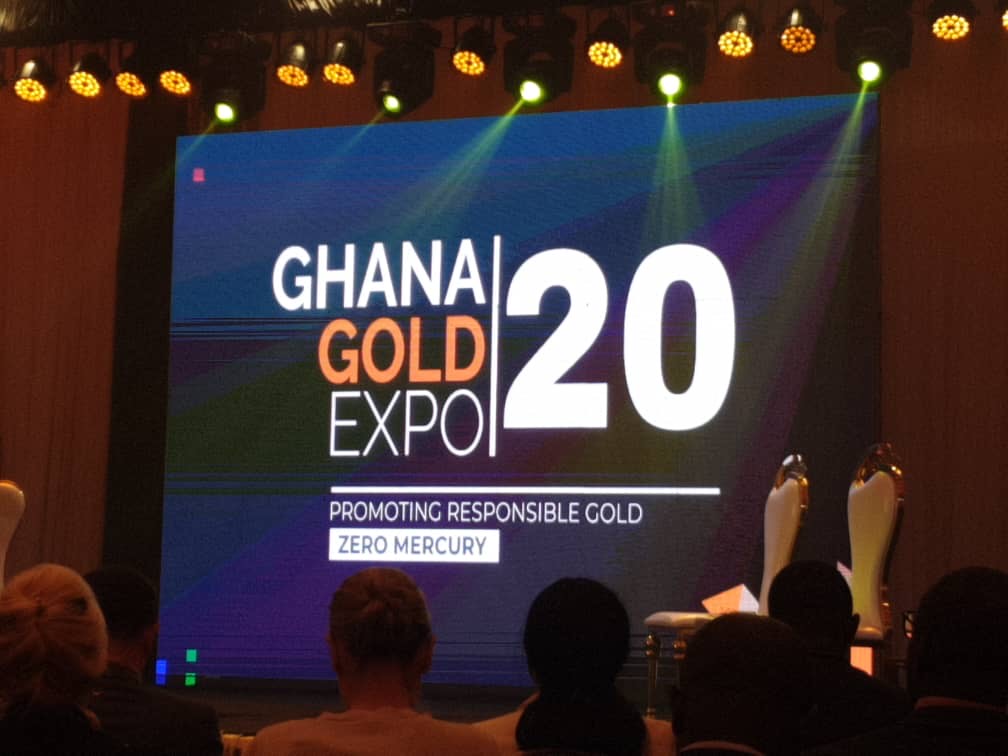
The Client Liaison Manager of SGS Ghana at Tarkwa, Wilfred Appiah who made the announcement at the just ended maiden edition of the Ghana Gold Expo held in Takoradi said, the facility is one of SGS Ghana’s top-notch laboratories in the sub region.
With a network of what some have described as super labs, clients in the mining industry can enjoy various standardised and validated methods and techniques using state of the art equipment that spurs growth and reaches desired targets timeously.
Players in the mining industry can also get enhanced services offered by sister labs for MMI (Mobile Metal Ion) analysis, multi-element analyses by ICP-AES, ICP-MS and XRF. SGS also invested in FAST technology (Field Analytical Services & Testing) using the pXRF, FTIR and ED-XRF scanning instruments for mineralogical sample analyses. Carbon and Sulphur analyses are offered from SGS Maslab in Tema which is also fed from the new SGS environmental feeder, lab recently opened in Cyanide area in Tarkwa.
Mr Appiah noted that SGS Ghana is part of the global entity SGS, which is recognised as a global benchmark for quality and integrity and the world’s leading inspections, verification, testing and certification company with offices worldwide including Accra, Tema, Tarkwa, Takoradi, Damang, Ahafo, Akyem and Obuasi.
SGS which was established in 1878 in Europe, opened its Ghana operations in 1960 in Ghana and provide services in the following sectors; Oil, Gas and Chemicals, Agriculture, Food and Life, Certification and Business Enhancement, Environment, Health and Safety, Government and Institutions, Industrial and Minerals. The company has a network of 2,600 offices and laboratories and more than 94,000 employees around the world.
The Convenor of the Ghana Gold Expo, Dr. Steven Blessing Ackrah expressed excitement about the new facility adding that it was a good effort at ensuring responsible mining as the theme of the Expo indicates; “Promoting Responsible Gold Mining and Zero Mercury.”
“Contributions to the facilities in Ghana, such as the Geochemical Laboratory in Tarkwa by SGS continue to place Ghana favourably for responsible gold mining in the region,” he added.
He observed that the enthusiasm and overwhelming representation by stakeholders in the mining industry was testament to the “strength of gold in the current market and the high level of interest in doing business in Ghana”.
Gold price have hit $1667 as of March 11 and have shown strong recent gains amid stock market crises worldwide.
Henry Treku who is charge of Strategy and Partnerships for Ghana Gold Expo also noted that the high level investors who attended the expo are in the right place at the right time if they were interested in producing gold responsibly and sustainably. “Ghana is good for such opportunities,” he stressed.
He thanked SGS for sharing the news about the new laboratory and extending an invitation to key stakeholders to witness the world-class facility.
However, we have been informed that due to the Covid 19 outbreak, and the recent press release of 2 cases in Ghana, SGS was compelled to postpone the opening function which was scheduled to be held on the March 18 in Tarkwa.
World
SCRYPT Expands Stablecoin Settlement Infrastructure to East Africa
By Aduragbemi Omiyale
Accessing the US Dollar in the East Africa region has now been made easier with the expansion of the stablecoin settlement infrastructure of SCRYPT.
This development enables banks, payment providers and corporate treasury teams to move value into and out of the continent in real time.
Businesses paying international suppliers frequently have to convert local currency into USD before purchasing stablecoins for settlement, incurring FX conversions and spreads before any payment is made.
But SCRYPT is eliminating this intermediate conversion by enabling direct settlement corridors for local African currencies into stablecoins.
This development allows businesses to move from local currency to stablecoin settlement in a single licensed transaction, without first sourcing rationed bank dollars, as stablecoins are increasingly becoming settlement infrastructure rather than an investment product.
The expansion adds settlement support across four African currencies: the Kenyan shilling (KES), Tanzanian shilling (TZS), Rwandan franc (RWF) and Ugandan shilling (UGX). Each corridor is delivered through the same full-stack infrastructure our clients already use for trading, custody and treasury operations.
Speaking on this, the chief executive of SCRYPT, Norman Wooding, said, “Across Africa, stablecoin adoption is driven by economic need, not speculation.
“Businesses here are not chasing yield; they are trying to pay suppliers and manage treasury without losing margin to a banking system that rations dollars. Licensed, fair-rate dollar access is the clearest proof of what this infrastructure is for.”
Also commenting, the Managing Director of Markets & Trading at SCRYPT, Mr Gabriel Titopoulos, said, “Until now, reaching stablecoins from local African currencies meant buying scarce dollars and incurring several layers of conversion costs.
“SCRYPT removes this friction. Firms and payment providers can now settle straight from local currencies through live corridors, with local partners.”
World
African Graduates Association Promoting Multifaceted Initiatives With Russian Educational Institutions
By Kestér Kenn Klomegâh
In preparations for the third Russia-Africa Summit, scheduled for late October 2026, Dr Francois Ngan, deputy chairman of the Union of Associations of African Graduates of Soviet and Russian Universities, during an official working visit, has held a consultative meeting with Professor Vladimir Filippov, the President of the Russian University of Peoples’ Friendship (RUDN), and former Minister of Higher Education of Russia, Chairman of the National Commission for Accreditation of Higher Education.
RUDN is an educational institution established in 1960, primarily to provide higher education to Third World students. It has now become a popular multidisciplinary spot for many students, especially from developing countries. The university offers various academic programmes and has research infrastructure that comprises laboratories and interdisciplinary centres. The university is named after the former Congolese leader, Patrice Lumumba.
Dr Francois Ngan and Professor Filippov discussed the importance of the Graduates Association as a continental platform dedicated to strengthening unity, cooperation, and promoting shared progress among African graduates who studied in the former Soviet Union and in the Russian Federation. They also reviewed multifaceted initiatives that could bring together alumni associations from across Africa, whose members obtained education and professional training, and cultural experiences in Soviet and Russian institutions of higher learning.
Professor Filippov expressed optimism in addressing emerging challenges as a result of shifting geopolitical changes, emphasised strategic cooperation in the educational sphere with Africa, in general, and with the Republic of Cameroon, in particular, and further about the integration of African students during their studies in the Russian Federation.
The meeting also touched on academic and scientific work, the possibility of rewriting a scientific thesis, and the official organisation of transferring versions translated into six languages for the library of RUDN. Significant questions relating to Russia’s educational opportunities, collaborations and partnerships involving African countries were thoroughly discussed.
The Union of Associations of African Graduates of Soviet and Russian Universities was created under one continental umbrella to promote friendship, for professional networking, to engage in cultural exchange, and with particular emphasis on forging strategic cooperation between Africa and Russia.
World
Russia to Support Industrial Growth, Technological Advancement and Supply Chain Resilience across Africa
By Kestér Kenn Klomegâh
With the heightening of geopolitical rivalry and competition, a new Russia-Africa working group has emerged as a significant institutional mechanism and plans to focus on facilitating and monitoring strategic investments, industrialisation, and infrastructural development—the Strategic Action Plan 2023-2026—that was outlined during the second Russia-Africa summit, in St.Petersburg, the second largest city in the Russian Federation.
While substantial progress has, largely, lagged on the multidimensional economic front with Africa primarily due to its internal difficulties and the complexity of relations with its former Soviet neighbours, Russian officials believe there still remains huge untapped potential in strengthening bilateral cooperation. As planned, President Vladimir Putin has already signed an executive order that directs Moscow to host the forthcoming third Russia-Africa summit in October 2026.
On June 30, a regular meeting of the Business Council on Africa was held under the chairmanship of the head of the Russian Foreign Ministry. It was dedicated to issues of trade, economic and investment cooperation with Africa. The group discussed the current state and prospects for the implementation of policy initiatives with an emphasis on assisting the countries of the continent, strengthening their economic, energy, technological and food sovereignty, as well as training specialists for Africa.
Foreign Minister Sergey Lavrov has reiterated that Russia-Africa relations primarily depend on an understanding of the importance of collective action based on the principles of equality, mutual respect and resolving common tasks. In the past few years, Russia-Africa cooperation has been noticeably strengthening. “We are deepening political dialogues, developing bilateral contacts with African countries, promoting cordial cooperation between ministries and departments, and expanding humanitarian exchanges. We are also continuing the structural diversification of trade partnerships and economic dimensions.”
“Next on the agenda is the launch of diplomatic missions in The Gambia, Liberia, Togo, and the Union of the Comoros,” Lavrov said at a meeting of the Business Council under the Russian foreign minister. Lavrov noted that Russian embassies began operating in three other African countries in 2025: Niger, Sierra Leone, and South Sudan. A new Department for Partnership with Africa was also established. According to the top diplomat, “expanding Russia’s diplomatic presence on the continent contributes to developing relations.”
There are already 45 Russian embassies operating in Africa. The Russian foreign minister noted that Moscow is quickly rebuilding its presence in African countries, which sharply declined during the collapse of the Soviet Union. “There will be literally four or five countries left where we still need to establish full-fledged embassies, and then, we will have 100 per cent coverage of the entire African continent with our diplomatic presence,” Lavrov emphasised.
After the first summit in October 2019, the Foreign Ministry also created the Secretariat of the Russia-Africa Partnership Forum. Its main tasks include controlling the roadmap to Africa’s multidimensional cooperation and guiding potential Russian investors to the continent. This also underscored the priority and post-Soviet solidarity Russia currently attaches to its policy towards Africa, within the growing framework of the emerging new architecture of multipolarity in the Global South.
In an interview in June 2026, the director of the Department of Partnership with Africa at the Foreign Ministry, Tatyana Dovgalenko, shared a few insights in the lead-up to the third summit. Furthermore, Dovgalenko explained that Russia would move away from security to concentrate more on economic issues, especially to team up with African colleagues to streamline mechanisms for implementing projects that will ensure food security and agriculture, and help Africa in installing processing facilities to support its self-sufficiency. She also emphasised energy and vital infrastructures, and the third direction was to simultaneously work more coherently with sub-regional organisations.
Over the past few years, bilateral relations have been increasing. There are positive dynamics in trade turnover, estimated at $30 billion. Steps are being taken to build payment systems, preferably in national currencies, while Russia looks to open four more diplomatic offices, bringing the total to 48 across Africa. Russia is currently training 37,000 African students, but only approximately 1/3 on state scholarships in Russia’s educational institutions. “We are ready to share valuable experiences of building a sovereign development model with African partners to achieve self-reliant economic growth based on their own resources and capabilities. Russia aims at creating processing capabilities and localising production, and provides access to advanced technological solutions,” underlined Dovgalenko in her interview with New Eastern Outlook.
For African countries that have endured difficult decades on the path to political independence, it is now important to take full control over the untapped resources, direct income and revenue toward stimulating the national economic sector, rather than paying for the well-being of the Western “golden billion” during this changing geopolitical era, according to Dovgalenko.
According to reports, the forthcoming Russia-Africa summit will have an economic agenda, including the digital economy, technology, artificial intelligence, healthcare, investment, and settlements in global trade. Of course, the agenda will also cover Africa’s political aspects. But if African friends bring along any specific ideas, Russia will give them serious attention. In addition, with continuity and consistency, pay increased attention to expanding ties with Africa’s regional integration associations.
Going forward, the focus will be on translating strong trade relations into deeper investment partnerships, fostering technology collaboration, strengthening industrial linkages and contributing towards the shared objectives set by the leadership of both African countries and Russia. At the third summit, the above-mentioned specific initiatives will be further designed. In this regard, the key document, the new action plan for the next three-year period (2027-2029), is intended to reflect dynamic realities in the future relations of Russia and Africa