
General
Court Remands Whistleblower, Blogger in Prison


By Dipo Olowookere
An online publisher, Mr Tega Oghenedoro, otherwise known as Fejiro Oliver, was on Friday remanded in prison by a Federal High Court sitting in Lagos.
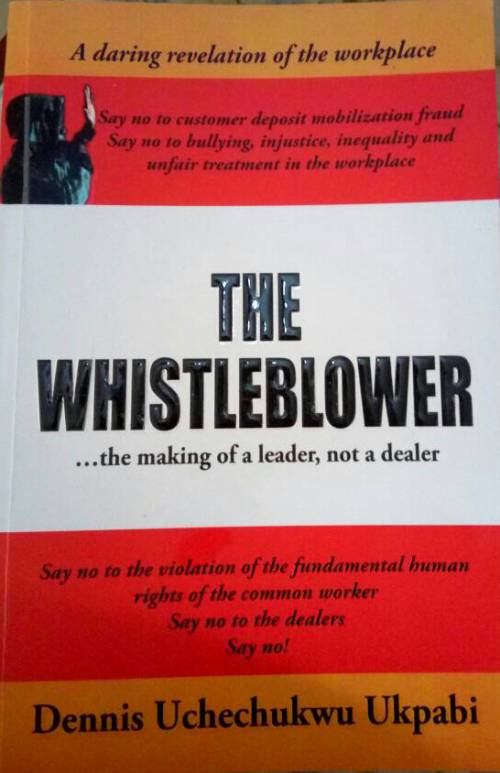
Mr Oliver was arraigned by the police yesterday alongside a former employee of Sterling Bank, Mr Dennis Ukpabi, author of the book titled The Whistleblower, where he accused the few members of staff of the lender of involving in fraud and infidelity.
Mr Ukpabi said in his book that in November 2014, Sterling Bank Plc introduced a ‘Deposit Mobilization Scheme’ for its entire staff as an incentive to encourage them to source and mobilize deposits from members of the public, promising to reward the most outstanding staff who sourced the highest amount of deposit above the given target with a brand new Ford SUV and 1 percent of the total sum realized.
He narrated that four staff at the corporate headquarters of Sterling Bank Plc namely Adekanla Desalu, Eguru Nyenke, Janet Akpan and Kojusola Ajao colluded and conspired to defraud the bank by pulling together deposits into an account belonging to one of them, Kojusola Ajao, after monitoring funds from dormant accounts belonging to existing customers of the bank and paying it in Ajao’s name in other to win the prize.
He said Ms Ajao was announced by the bank as the winner of the Deposits Mobilization Scheme and on March 10, 2015, was awarded with the sum of N997,000 which was about 1 percent of the total amount mobilized and also given a brand new Ford SUV.
He alleged that immediately she received the money, she transferred and shared it among her three other colleagues with Desalu getting N269,250; Nyenke N240,000; and Akpan N238,500.
Following several emails sent to different management staffs of the bank by the whistleblower, the bank’s Audit Department was asked to investigate the alleged fraud, upon which the four staff were found culpable, leading to Ajao’s sack and the retrieval of the Ford Jeep from her.
Although the three others were placed on three-month suspension, Nyenke was promoted immediately after serving her suspension, a development linked to her alleged amorous affair with the bank’s Executive Director in charge of Operations and Services, Yemi Odubiyi, Mr Ukpabi alleged.
But when it was discovered that Mr Ukpabi was behind the anonymous emails that exposed the bank fraud, the authorities reportedly denied him his due promotion and prevented him from embarking on a Sick Leave for which he duly applied. The situation eventually led to his resignation and publishing of the “The Whistle Blower.”
The Nigerian blogger got involved in the matter when he reportedly used his medium, Secrets Reporters, to publish articles relating to the matter.
Those involved petitioned the Deputy Inspector General of Police in charge of the Force Criminal Investigation Department in Abuja, alleging “threat to life, malicious publication and defamation of character.”
The police swung into action, arresting both Mr Ukpabi and Mr Oliver and charged them to court for cyber stalking.
At the court on Friday, the prosecuting counsel, a Superintendent of Police, Mr J. Oloruntoba, arraigned the men on a five-count charge bothering on alleged acts of “Cyber Stalking” punishable under the provisions of Section 24 of the Cyber Crimes (Prohibition and Prevention, etc.) Act 2015.
However, the defendants pleaded not guilty to all the charges, but their counsels could not secure the bail.
Consequently, the trial judge, Justice Mohammed Idris, ordered the suspects to be remanded at the Ikoyi Prisons and asked one of the defendants’ counsels, Mr Inibehe Effiong, to bring a formal application for bail and promised to hear it expeditiously.
Additional information from Sahara Reporters



By Modupe Gbadeyanka
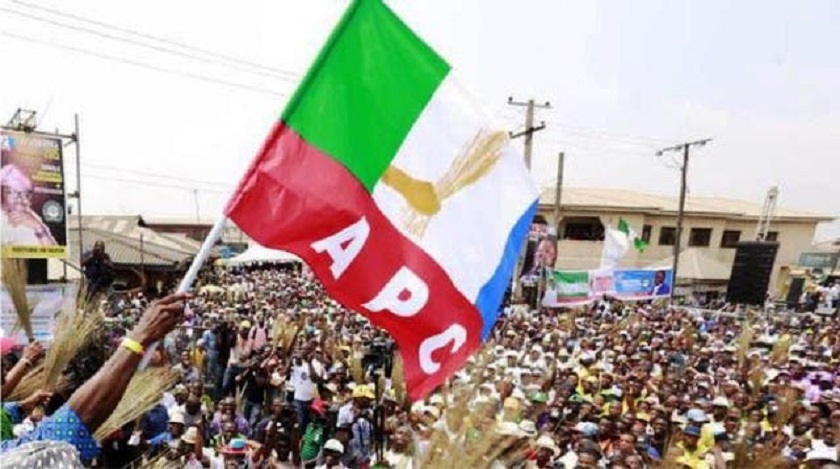
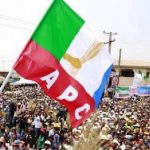
The ward congress of the All Progressives Congress (APC) in Oluyole Local Government Area of Oyo State on Saturday left several party members injured after a violence clash erupted.
According to reports, one of the injured persons was Mr Idowu Oyawale, who served as the campaign Director General of a House of Representatives member in the last general elections, Ms Tolulope Akande-Sadipe.
It was disclosed that he sustained severe injuries during the exercise and is currently receiving treatment at an undisclosed hospital.
The ward congress was organised by the ruling party to elect ward executives across the local government’s wards.
However, it was disrupted at Olomi Ward 7 by suspected heavily-armed political thugs allegedly linked to a member of the party.
It was claimed that the thugs invaded the congress venue at Olomi Basic School 1, dispersing party members and officials supervising the exercise, with stones, clubs and other weapons.
Eyewitnesses said tensions escalated unprovoked over delegates’ lists and ward executive positions. The disagreement reportedly degenerated into physical altercations before the violent attacks on some party members.
It was learnt that security operatives led a tactical team to restore order, peace, and disperse the attackers.
Reacting to the incident, some party leaders and elders condemned the violence, describing it as unfortunate and capable of undermining the credibility of the internal democratic process.
The leaders have called on party chieftains and President Bola Tinubu to immediately order an investigation into the violent attacks.

By Princess Yanney
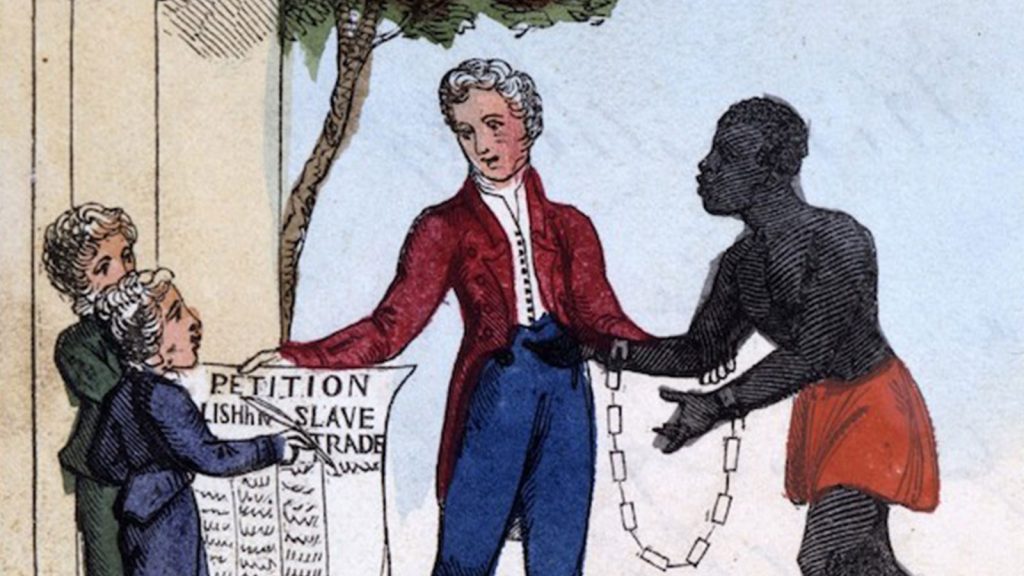
One message stood out; one particular briefing gave clarity and hope for better days ahead. Africa will be heard; willingly or unwillingly, and the resolution thereof will no longer be a hope for years to come, but a reality to actualise. At a press conference during the 39th AU Summit in Addis Ababa, Ghana’s President John Dramani Mahama urged African leaders to adopt a common continental strategy on the legacy of slavery and racialised chattel enslavement, which he described as “the gravest crime against humanity.”
In this context, one must understand; Reparations matter because colonialism was not simply an episode of foreign rule. It was an economic system. African land was seized, labour was coerced, institutions were reshaped to serve external interests, and entire economies were redesigned around the export of raw materials.
Long before independence, the transatlantic slave trade had already stripped the continent of people, skills and social stability, creating permanent demographic and developmental damage. Colonial rule then consolidated this destruction into a durable global structure of inequality.
President Mahama explained that Ghana’s proposed AU resolution, which received broad support from member states, was carefully drafted with extensive consultations involving the AU Committee of Experts on Reparations, legal experts, academic institutions and diaspora organisations. He said the resolution’s wording was deliberately chosen to reflect historical accuracy, legal credibility, and moral clarity.
“Ghana has undertaken extensive consultations to strengthen the resolution. We’ve engaged with UNESCO, the Global Group of Experts on Reparations, the Pan-African Lawyers Union, academic institutions, the African Union Committee of Experts on Reparations and the African Union Legal Experts Reference Group. We hosted the inaugural joint meeting of the African Union Committee of Experts on Reparations and the African Union Legal Experts Reference Group in Accra earlier this month to further refine the text of the resolution. We also began engagement with the diaspora at the Ghana Diaspora Summit held in December last year.”
Hence, come March 25, the resolution will be presented by one man, who will echo the voice of millions of African people and people of African descent. Because truly, a united Africa demanding reparations is not an Africa asking to be included in an unequal system, but rather, an Africa asserting its right to help redesign it. President Mahama stressed that the initiative goes beyond symbolism, providing a legal and moral foundation for reparatory justice and sustained engagement with the global community. The resolution is designed to facilitate dialogue with the United Nations and international partners while affirming Africa’s demand for recognition and accountability for centuries of exploitation and injustice.
“Informal consultations on the draft text are expected to take place between 23rd February and 12th March 2026. Our objective is simple: to build a broad consensus behind this resolution. The initiative is not directed at any nation; it is directed towards truth, recognition and reconciliation.”
He reiterated. Truth is, a united Africa is a strong global force that cannot be stopped or interrupted. But a divided Africa is an Africa liable to imperialism and Western domination. It is therefore a priority for all African people to join hands and stand together to ensure the aims of these resolutions are achieved.
“We call upon all member states to support and co-sponsor this resolution. The adoption of this resolution will not erase history, but it will acknowledge it. The trafficking in enslaved Africans and racialised chattel enslavement were foundational crimes that have shaped the modern world, and their consequences continue to manifest in structural inequality, racial discrimination and economic disparity.
Recognition is not about division; it is about moral courage. Adoption of the resolution will not be the end. Following the adoption, Ghana will continue engagement with the United Nations Secretary General, the African Union Commission, relevant UN bodies and interested member states,” said John Dramani Mahama as he called for unity.
The importance of today’s reparations consensus lies in its recognition that Africa’s underdevelopment is not an internal failure to be corrected through aid, reforms or external advice. It is the historical and continuing outcome of dispossession. Reparations, therefore, respond to a concrete injury, not an abstract moral wrong. Again, Reparations matter because colonialism was not simply an episode of foreign rule. It was an economic system. African land was seized, labour was coerced, institutions were reshaped to serve external interests, and entire economies were redesigned around the export of raw materials.
Long before independence, the transatlantic slave trade had already stripped the continent of people, skills and social stability, creating permanent demographic and developmental damage. Colonial rule then consolidated this destruction into a durable global structure of inequality. Which is why today’s fight, today’s struggle, is of utmost importance. It is a correction of a historical inhumane error. One that has to be amended and corrected, beginning with recognition.
“This is about a sustained dialogue on reparatory justice and healing. Distinguished ladies and gentlemen, this initiative presents us with a historic opportunity, an opportunity to affirm the truth of our history, an opportunity to recognise the gravest injustice in human history, and an opportunity to lay a stronger foundation for genuine reconciliation and equality. While the past cannot be undone, it can be acknowledged, and acknowledgement is the first step towards justice.” – John Dramani Mahama expressed to the media and all who were gathered to witness the briefing under the theme, “Ancestral Debt, Modern Justice: Africa’s United Case For Reparations”.

By Adedapo Adesanya
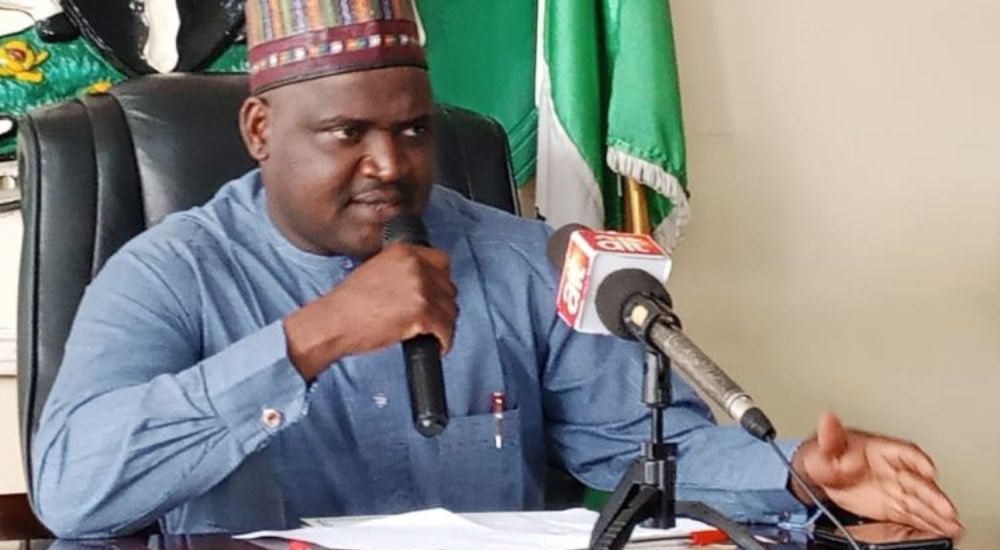
The Independent National Electoral Commission (INEC) has announced the candidate of the All Progressives Congress (APC), Mr Christopher Maikalangu, as the winner of the Abuja Municipal Area Council (AMAC) election, held on Saturday.
The results for the keenly observed municipal chairmanship poll were announced at the INEC area office in Karu at about 4:30 a.m on Sunday.
The Collation Officer for AMAC, Mr Andrew Abue, said that Mr Maikalangu, who is the incumbent AMAC chairman, was returned elected, having scored the highest number of votes cast, 40,295 out of the total number of valid votes of 62,861 in the election.
“That Maikalangu of the APC, having certified the requirements of the law, is hereby declared the winner and is returned elected,” he declared.
Mr Abue stated that the African Democratic Congress (ADC) came second with 12,109 votes, while the Peoples Democratic Party (PDP) polled 3,398 votes.
According to him, a professor, the rejected votes were 2,336, and the total valid votes were 62,861, while the total votes cast were 65,197.
He added that the number of registered voters in AMAC was 837,338, while the total number of accredited voters was 65,676.
According to him, the scores of the political parties and their candidates that contested the AMAC chairmanship election are:
Agbon Vaniah of the Accord (A) – 403 votes
Nemiebika Tamunomiesam of the Action Alliance (AA) – 108 votes
Paul Ogidi of African Democratic Congress (ADC) – 12,109 votes
Richard Elizabeth of the Action Democratic Party (ADP) – 588 votes
Christopher Maikalangu of the All Progressives Congress (APC) – 40,295 votes
Eze Chukwu of the All Progressives Grand Alliance (APGA) – 1,111 votes
Chukwu Promise of the Allied Peoples Movement (APM) – 122 votes
Ugoh Michael of the Action Peoples Party(APP) – 32 votes
Thomas Happiness of the Boot Party (BP) – 43 votes
Jibrin Alhassan of the New Nigeria Peoples Party (NNPP) – 1,694 votes
Samson Usani of the National Rescue Movement (NRM) – 73 votes
Dantani Zanda of the Peoples Democratic Party (PDP) – 3,398 votes
Iber Shimakaha of the Peoples Redemption Party (PRP) – 90 votes
Simon Obinna of the Social Democratic Party (SDP) – 2,185 votes
Madaki Robert of the Young Progressives Party (YPP) – 421 votes
Swani Buba of the Zenith Labour Party (ZLP) – 189 votes.






-
 Feature/OPED6 years ago
Davos was Different this year
-
Travel/Tourism10 years ago
Lagos Seals Western Lodge Hotel In Ikorodu
-

 Showbiz3 years ago
Estranged Lover Releases Videos of Empress Njamah Bathing
-
 Banking8 years ago
Sort Codes of GTBank Branches in Nigeria
-

 Economy3 years ago
Subsidy Removal: CNG at N130 Per Litre Cheaper Than Petrol—IPMAN
-

 Banking3 years ago
Sort Codes of UBA Branches in Nigeria
-

 Banking3 years ago
First Bank Announces Planned Downtime
-

 Sports3 years ago
Highest Paid Nigerian Footballer – How Much Do Nigerian Footballers Earn