

Education
Sahara Group Reaffirms Commitment to Literacy, Skills Development

By Modupe Gbadeyanka
The ability to read and write is not only a fundamental human right but in the 21st century, it is an essential tool for human survival. Like Darwin propounded in his theory of evolution by Natural Selection, species that fail to acquire the abilities [skills] and features for survival or competitiveness in an ever-evolving world will die – commonly referred to as survival of the fittest. Survival of the fittest refers to the ability of a species to survive and reproduce its kind.
Literacy, at the very least, in its most basic form, the ability to read and write – is a critical evolutionary feature for any human in the 21st century. It is becoming unthinkable that any human can make any significant impact or progress in the times that we live without the most basic form of education.
The International Literacy Day is a day set aside every year to remind world leaders and policymakers of the importance of education/literacy to the development of a people and the growth of a nation.
Globally, it is estimated that at least 750 million adults, including 102 million young people (15-24 years old), lack basic literacy skills. Further estimates show that six out of ten children and adolescents (617 million) are not achieving minimum proficiency levels in reading and mathematics. These are alarming statistics for the survival prospects of these millions of people. If they are to make it to the next generation, they must acquire these literacy skills for survival.
Literacy is the basis for lifelong learning and plays a crucial foundational role in the creation of sustainable, prosperous and peaceful societies. In addition, it equips people with the abilities/skills to make a living and develop key resources for their growth and development.
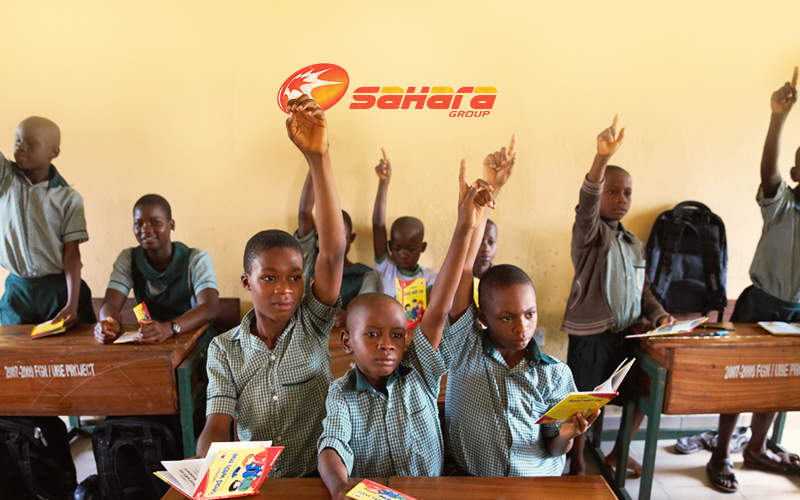
According to Bethel Obioma, Head, Corporate Communications, Sahara Group, the leading energy, and infrastructure conglomerate has invested in and supported various projects and programmes aimed at improving youth and child literacy across Sahara’s locations in Asia, Europe, Africa, and the Middle East.
In 2014 and 2015, Sahara Foundation implemented a book drive aimed at improving the interest of children in reading. The intention was to build up an interest in the children to learn early the importance of life-long learning. Staff members also volunteered to read to children in those schools. “The sessions remain evergreen in the minds of the children, providing the foundation for a strong bond between Sahara and the beneficiaries. Helping people pursue and realize their dreams is a venture that Sahara is passionate about,” Obioma said.
In addition, undergraduates of the University of Lagos, through AIESEC Lagos were supported in their drive to equip other young students with the knowledge of the Sustainable Development Goals (SDGs) and how it relates to their development.
Sahara Foundation’s support for the Vocational Centre in Surulere represents a sustainable platform for propagating skills acquisition and development. At the centre, young people are equipped with vocational skills in catering, hairdressing, photography, and ICT among others. Sahara’s core support for the centre was for the upgrade of the industrial kitchen to a modern one for the beneficiaries to acquire skills that they need to become self-sufficient catering entrepreneurs. Through our support for this centre, over 1000 young caterers have benefitted with more than half of them becoming gainfully employed or business owners.
In a bid to develop the skills of young people at scale, Sahara Foundation launched the Saharahub digital platform to empower millions of young people from around the world with the needed skills for improved lives.
This year, Sahara Foundation in partnership with Realizing Education for Development (READ) International are empowering 30 young men and women in Dar es Salaam, Tanzania, with entrepreneurship skills and built their vocational capacities. The support to these beneficiaries includes startup capital, vocational training, business advisory and post-training support as well market access. In line with our Extrapreneurship framework, the goal is to ensure that the supported beneficiaries – all youths – are able to start and sustain successful businesses while empowering other young Tanzanians as their business grows.
Oluseyi Ojurongbe, Sahara Foundation said the energy giant would continue to seek avenues for promoting literacy and skills development.
“At Sahara, we believe that education essential to economic sufficiency. As such, we support education and execute literacy and education programmes. The subject of literacy (and skills development) is so important to us that from inception, Education and Capacity Building has been one of the four pillars of our Personal and Corporate Social Responsibility focus. We have and will continue to support the literacy and skills development of young people.”






By Modupe Gbadeyanka
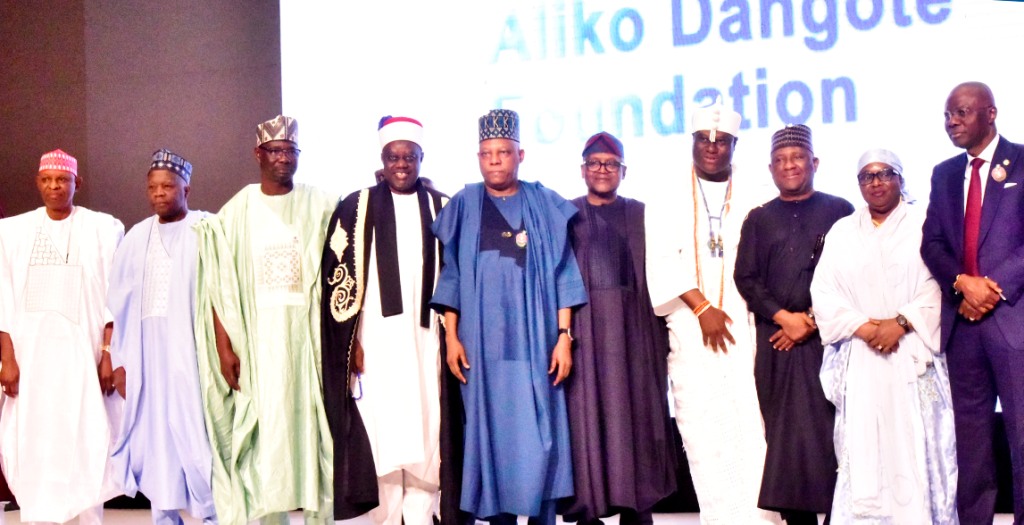
The N1 trillion scholarship programme of the Aliko Dangote Foundation (ADF) for about 1.3 million Nigerian students has been applauded by the federal government, the state governments and the others.
The scheme was designed to expand access to education and promote academic excellence across Nigeria. Starting in 2026, the initiative will support over 1.3 million students from all 774 local government areas, with N100 billion committed annually for 10 years.
It targets Nigeria’s most vulnerable learners and is structured into three categories: Aliko Dangote STEM Scholars – 30,000 undergraduates in public universities and polytechnics will receive tuition support of up to ₦600,000 per year; Aliko Dangote Technical Scholars – 5,000 TVET trainees will get essential study materials and technical tools; MHF Dangote Secondary School Girls Scholars – 10,000 girls in public schools will receive uniforms, books, and learning supplies, prioritizing states with high out-of-school rates.
The programme would be implemented in partnership with NELFUND, JAMB, NIMC, NUC, NBTE, WAEC, and NECO. It would be based on merit, with beneficiaries chosen through a fully digital system.
Vice President Kashim Shettima praised the organisation for the intervention, saying it demonstrates the critical role of private-sector actors in national development.
He noted that Nigeria’s demographic growth makes urgent investment in education indispensable, warning that “a population becomes a liability only when it is uneducated.”
“Aliko Dangote, through his far-reaching philanthropy, has set in motion the single largest private-sector education support intervention in the history of this country. What he has done here today is a lesson to each of us. This is nation-building in its purest form,” Mr Shettima said.
The Governor of Lagos State, Mr Babajide Sanwo-Olu, speaking on behalf of the 36 state governors, also commended the initiative and pledged the governors’ full support.
The Minister of Education, Mr Tunji Alausa, described the initiative as “pure human capital development,” saying it aligns with the President Bola Tinubu administration’s education sector renewal plan of transforming Nigeria from resource-based economy to a knowledge-based economy and is significant because every local government area will benefit.
He said by the end of the first decade of the execution of the scholarship programme, it is estimated that over 170,000 girl-child would have gone to school.
On his part, Mr Dangote said the intervention is aimed at Nigeria’s most vulnerable learners, noting that financial hardship, not lack of talent, is the primary reason many drop out of school.
“This is not only charity. This is a strategic investment in Nigeria’s future. Every child we keep in school strengthens our economy. Every student we support reduces inequality. Every scholar we empower becomes a future contributor to national development.
“Our young people are not asking for handouts. They are asking for opportunities. They are asking for a chance to learn, to grow, to compete and to succeed. And we believe they deserve that chance,” he stated.
“No young person should have their future cut short because of financial hardship. We are stepping forward to ensure students stay in school and pursue their ambitions.
“This initiative is more than financial aid—it is an investment in human capital, with ripple effects on economies, societies, and future generations. When a student gets a scholarship, entire communities stand to benefit,” the business mogul added.
By Modupe Gbadeyanka
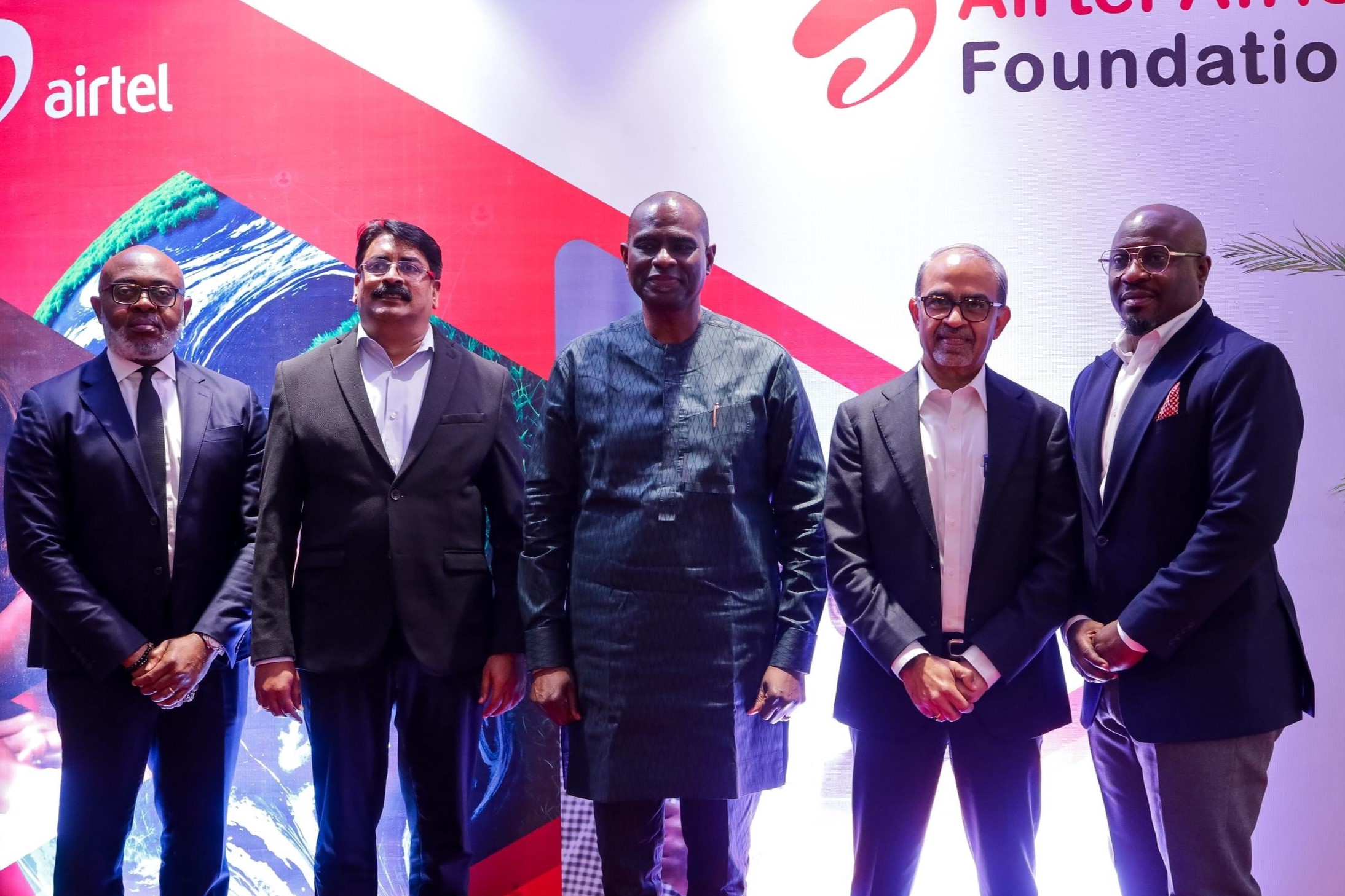
Entries for the Undergraduate Tech Scholarship in Nigeria by Airtel Africa Foundation have opened and applicants can register via candidate.scholastica.ng/schemes/airtelfellowship2025.
This programme forms part of the foundation’s F.E.E.D. agenda, which promotes Financial Empowerment, Education, Environmental Protection, and Digital Inclusion, with a focus on creating pathways for talented young people who face financial barriers.
The scheme, according to a statement from the not-for-profit organisation, provides full tuition, accommodation support, and essential study materials for 100-level students with strong academic potential.
Applications are open to students pursuing courses such as Information Technology, Computer Science, Software Engineering, Data Science, Cyber Security, Artificial Intelligence, and other ICT-related disciplines at participating universities: University of Lagos, University of Nigeria Nsukka, Ahmadu Bello University, University of Benin, Obafemi Awolowo University, University of Ilorin, and Tai Solarin University of Education.
Applicants must be enrolled in 100-level, have scored at least 230 in JAMB, and hold a minimum of five credits in WAEC, including English and Mathematics, in a single sitting.
Required documents include Joint Admissions and Matriculation Board (JAMB) results, university admission letter, West African Examination Council (WAEC) certificate, student identity card, and academic transcript or university results.
Qualified students across the listed institutions have been encouraged to apply and position themselves for a stronger start in the technology sector.
the chairman of Airtel Africa Foundation, Mr Segun Ogunsanya, said the scholarship demonstrates the organisation’s commitment to nurturing Africa’s next generation of digital leaders.
“Young Africans are brimming with talent and ambition. What many need is a fair chance to pursue their education without financial pressure.
“This scholarship reflects our belief that investing in their growth will strengthen communities, empower families, and expand the continent’s digital future,” the former chief executive of Airtel Africa Plc, noted.
On his part, the chief executive of Airtel Nigeria, Mr Dinesh Balsingh, said, “Education is one of the most powerful tools for national development.
“As an organisation, Airtel is determined to build a platform for aspiring young Nigerians to learn, innovate and lead in the country’s expanding technology landscape.”

By Aduragbemi Omiyale
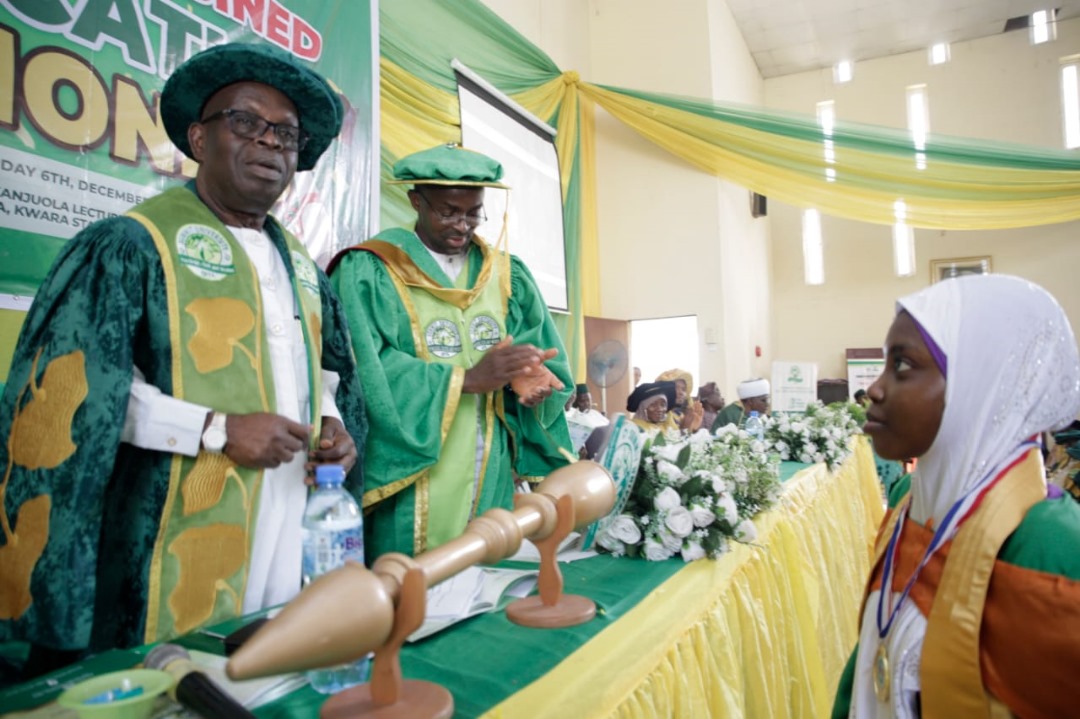
Approval has been given to Summit University, Offa, Kwara, to operate a Campus FM Radio State, the chancellor of the higher institution of learning, Mr Sulaiman Adebola Adegunwa, said.
Speaking at the combined 5th and 6th convocation ceremony of the school at the Alhaja Adiat Abegbe Makanjuola Lecture Theatre, Mr Adegunwa, who doubles as the chairman of Rite Foods Limited, disclosed that the “notification was received a few days ago.”
“This development will help us reach our community more effectively and position the university as a champion of the knowledge economy.
“It will empower us to combat knowledge, poverty and the rising challenge of misinformation in society,” he noted.
He also identified investment in quality education as a catalyst for sustainable socio-economic development, adding that the dedication and financial commitment of stakeholders have continued to strengthen the university’s foundation and growth trajectory.
He appealed to well-meaning individuals to support the institution in its drive for sustainable development.
“This event marks a key milestone for our university. It honours our graduates and celebrates our shared success. An investment in knowledge pays the best dividend. The journey we have embarked upon with Summit University stands as one of the most rewarding investments.
“Our dividend from this investment is not only for today; it is also for posterity. Let us join hands to lift Summit University high, open doors to quality education, and change the world for the better,” he said.
Reflecting on the institution’s progress, the chancellor noted that the school has experienced remarkable growth since he assumed office as the pioneer chancellor in December 2023.
“Since the last convocation, undergraduate programmes have increased from eight to 16. Additionally, six academic programmes recently underwent reaccreditation, and full accreditation was secured from the National Universities Commission (NUC).
“I commend the university management, governing council, and board of trustees. The growth we see today is a testament to your hard work and strategic planning. Your commitment has strengthened the foundation of this university,” he said.
Mr Adegunwa highlighted the significant infrastructural advancement that had taken place in the University since its last convocation ceremony in 2023, adding that foundation for four major building was laid and one was already completed and ready for use while two were nearing completion.
“At this point, I sincerely appreciate Mosun Belo-Olusoga and other donors whose support continues to strengthen this university. Your generosity is a catalyst for our progress. May Almighty Allah bless you abundantly,” he said, revealing that preparations were underway for the verification of the university’s resources for new programmes in the College of Law and the College of Health Sciences.
“All documentation and agreements have been concluded, and we are hopeful that by the next convocation, both colleges will be fully operational,” he disclosed.
At the convocation ceremony, the school conferred honorary doctorate degrees (Honoris Causa) on Aderemi Muyideen Makanjuola and Lateefat Olufunke Gbajabiamila, as well as a posthumous honorary doctorate degree in Business Administration on the late Tiamiyu Adebisi Olatinwo, among other awardees.
In his remarks, the Vice Chancellor and Chief Academic Officer, Prof. Abiodun Musa Aibinu expressed appreciation to the Chancellor for donating the ongoing Senate Building project, which he said is now 30 per cent completed, noting that upon completion, the structure would significantly enhance the university’s infrastructure.
He announced that a total of 319 students graduated: 26 with first-class honours, 164 with second-class upper division, 108 with second-class lower division, 25 with third-class, and one with a pass.










-
 Feature/OPED6 years ago
Davos was Different this year
-
Travel/Tourism9 years ago
Lagos Seals Western Lodge Hotel In Ikorodu
-

 Showbiz3 years ago
Estranged Lover Releases Videos of Empress Njamah Bathing
-
 Banking7 years ago
Sort Codes of GTBank Branches in Nigeria
-

 Economy3 years ago
Subsidy Removal: CNG at N130 Per Litre Cheaper Than Petrol—IPMAN
-

 Banking3 years ago
First Bank Announces Planned Downtime
-

 Banking3 years ago
Sort Codes of UBA Branches in Nigeria
-

 Sports3 years ago
Highest Paid Nigerian Footballer – How Much Do Nigerian Footballers Earn