

Feature/OPED
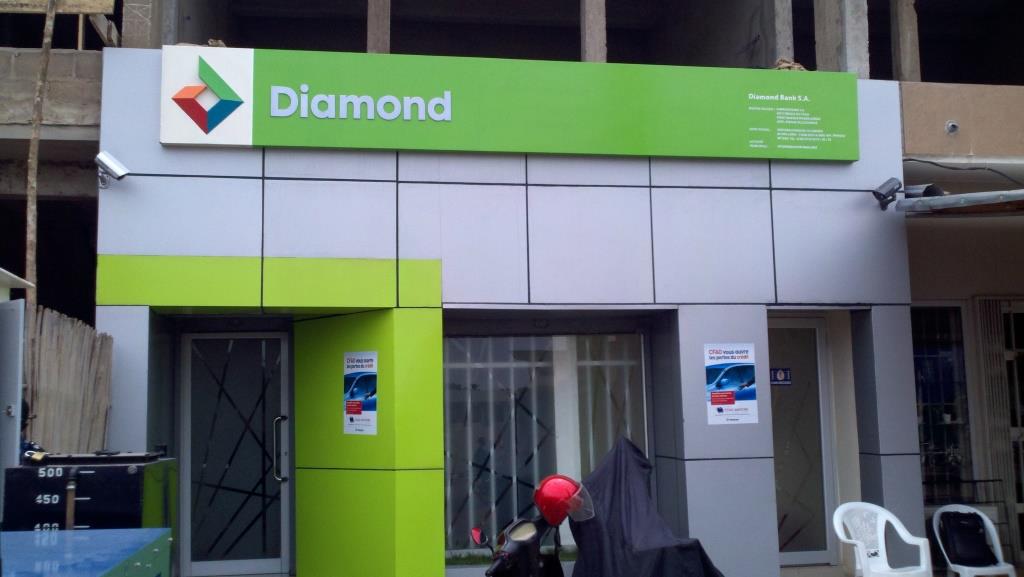
Diamond Bank: Battling for Survival Under Uzoma Dozie


By Bamidele Ogunwusi
The last four years have not been years with more of good news for Diamond Bank, one of Nigeria’s wholly indigenous banks that emerged in the banking architecture of the country in December 1990.
Since it started operations in 1991, the bank has challenged the market environment by introducing new products, innovative technology and setting new benchmarks through international standards. At a point, the bank was Nigeria’s fastest growing retail bank.
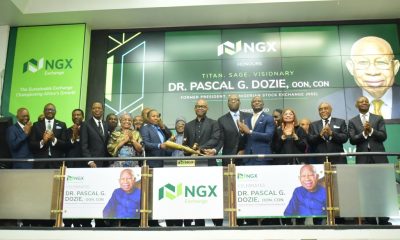
For fourteen years, the bank was under the control of its founder, Mr Pascal Dozie, who was also the Chief Executive Officer of the bank. The fourteen years, according to many stakeholders, were the formative years of the bank and the bank indeed rose to the occasion churning out several innovations.
He relinquished the Chief Executive position to Mr Emeka Onwuka at the end of 2005. His exit would however be heralded with improved performance of the bank, which recorded a profit of N5.445 billion for the year 2005.
Onwuka, who took over effectively from January 2006 and handed it over to Alex Otti in 2011 and later to the son of the founder, Uzoma Dozie in March 2014.
The Otti’s years as Managing Director of the bank was referred to as the golden era and the most productive in the history of the bank.
Diamond Bank in Numbers
The period between 1991 and 2000, the bank tried to make its mark in the murky waters of the banking industry in the country and from 2000 the bank began to see improvements in its performance.
In 2001, the bank reported a loss after tax of N467.819 million while there was an improvement in its performance the following year when it reported a loss after tax of N134.960 million. This greatly improved in 2003 when it posed a profit after tax of N903.411 million.
This steadily grew to N7.086 billion at the end of 2007 financial year. It was N2.508 billion in 2004, N5.44 billion in 2005 and N3.977 billion in 2006.
This leaped to N12.821 billion in 2008, while bad loans brought the operations of the bank on its knees in the subsequent two financial years when profit dropped to N1.328 billion in 2009, a loss of N11.214 billion in 2010, another loss after tax of N13.940 billion in 2011.
There was, however, a resurgence in 2012 when the bank posted a profit after tax of N22.108 billion , the first full year in the Alex Otti’s leadership of the bank.
Under Dr. Otti’s leadership, Diamond Bank made a remarkable return to profitability with impressive growth across all performance indicators year-on-year.
After writing off toxic risk assets, which resulted in the loss of N16 billion in 2011, the lender posted a profit before tax of N28.36 billion in 2012 and N32.5 billion in 2013. The bank also saw its total assets rise from N564.9 billion in February 2011 to N1.18 trillion by December 31, 2012 and N1.52 trillion on December 31, 2013.
He is credited with creating the office of the Chief Risk Officer and designating an Executive Director to head the department. He also spear-headed the expansion of the bank by doubling the full staff count from around 2,000 in 2010 to over 4,000 as at mid-2014, even as he vigorously grew the bank’s footprints from a network of 210 branches in 2011 to over 265 branches three years later. It was also under his watch that the bank established an international subsidiary in the United Kingdom, in addition to expansion in Francophone West Africa (Senegal, Togo, and Ivory Coast).
It is to be noted that the Central Bank only recently classified the bank as one of the eight systematically important banks in Nigeria under his watch.
Since the current MD, Uzoma Dozie took over the leadership of the bank in March 2014; the bank’s fortune has been nose-diving.
Many saw his emergence as desperation on the side of the Dozie’s family to ensure that the leadership of the bank returns to the family.
Pascal Dozie was the Executive Director in charge of Lagos Businesses between 2011 and 2013 until his appointment as Deputy Managing Director in April 2013 and charged with the responsibility of overseeing the Retail Banking Directorate of the Bank.
He has attended various specialist and executive development courses in Nigeria and overseas
Following the resignation of Alex Otti, Uzoma Dozie was unanimously appointed by the Board as the Group Managing Director/Chief Executive Officer of the Bank effective November 1, 2014 while the appointment was approved by the Central Bank of Nigeria in December 2014.
In 2015, the bank’s profit after tax went down from N28.36 billion to N5.656 billion. It went down further to N3.499 billion in 2016 and a loss of N9.011 billion in 2017.
In 2017, noticing that it could no longer continue to cope with losses from its subsidiaries, the bank sold its West African operations in Benin, Togo, Cote d’Ivoire and Senegal to Manzi Finances S.A., a Cote d’Ivoire-based financial services holding company.
The bank said the sale of these operations was to enable it focus its resources exclusively on Nigeria as it is poised to capitalise on the positive macro fundamentals inherent in the Nigerian market.
Commenting on the transaction, Diamond Bank’s CEO Uzoma Dozie said: “After 18 years of building the Diamond Bank franchise in other markets in West Africa, the time has come to fully apply our resources to Nigeria. This, Dozie said aligns with Diamond Bank’s strategic objective: to be the fastest growing and most profitable technology-driven retail banking franchise in Nigeria”.
Aside the sale of these operations, the bank is also on the verge of selling its United Kingdom’s operations.
The lender struck a deal with British industrialist, Sanjeev Gupta, earlier this year, after selling its West African subsidiaries last year.
In May, Diamond Bank posted a 2017 loss, its first time in the red in six years after selling assets to conserve capital and to focus on its home market.
Its half-year 2018 pre-tax profit declined by 69 per cent to N2.92bn, hurting its shares, which further fell by 1.60 per cent on Tuesday.
The bank said it expected loan growth to return; growing five per cent this year after credit declined in the first half by 3.6 per cent.
A Bank in Coma
With the latest S&P Global Ratings downgrade of Diamond Bank, it is evident that the fortunes of the bank, which was once one of Nigeria’s top banks about a decade ago has strangely deteriorated into a bank in a coma.
Diamond Bank was downgraded On Weaker-Than-Expected Asset Quality; Outlook Negative
S&P believes that the bank’s provisioning needs will be higher than it initially expected, which will put pressure on the bank’s capitalisation.
Additionally, its foreign-currency liquidity position also remains vulnerable, due to a large upcoming Eurobond maturity in May 2019.
“As a result, we are lowering our global scale ratings on Diamond Bank to ‘CCC+/C’ from ‘B-/B’ and our Nigeria national scale ratings to ‘ngBB-/ngB’ from ‘ngBBB-/ngA-3’.
The negative outlook reflects pressure on the bank’s capitalization and foreign-currency liquidity,” The foremost rating agency said.
The rating action by S&P considers Diamond Bank to be currently dependent on favorable business, financial, and economic conditions to meet its financial obligations.
It said it believed that the bank will have to set aside higher provisions than they initially expected, following the adoption of International Financial Reporting Standard No. 9 (IFRS 9), which implies weaker asset quality than expected and exerts significant pressure on the bank’s capitalization,” The report said
It went further to say that “Following the bank’s successful disposal of its West African subsidiaries, and imminent disposal of its U.K. subsidiary, it expects it to convert its license into a national banking license. The license conversion would mean a lower minimum capital adequacy ratio (10% versus 15% currently) and lower risk of breach. However, the timing is uncertain, and it considers that there is significant pressure on its capital position. Moreover, four of the bank’s 13 board members have resigned recently, which could create instability if left unresolved in the near term.
“As at Dec. 31, 2017, the bank’s regulatory capital adequacy ratio reached 16.7 per cent. It dropped to 16.3 per cent in Sept. 30, 2018, on the back of IFRS 9 implementation and amortization of tier-2 capital instruments. The initial implementation of IFRS 9 resulted in the bank taking a Nigerian naira (NGN) 2.5 billion (approximately $7 million) deduction from retained earnings at June 30, 2018.”
The agency believes that the bank will have to take higher provisions for IFRS 9, using the N31 billion of regulatory risk reserves that it holds under the local prudential guidelines. Based on peers’ experience and the bank’s weak asset-quality indicators, it estimate the impact will significantly exceed the regulatory risk reserves and estimates that their risk-adjusted capital (RAC) ratio will reach 3.4%-3.9 per cent in the next 12-24 months compared with 5.3 per cent at year-end 2017.
The impact, according to S&P, will be somewhat tempered by the capital gain when the sale of the bank’s U.K. subsidiary is finalized.
“We expect the bank’s credit losses to average 5 per cent over the same period, while nonperforming loans (NPLs; including impaired loans and loans more than 90 days overdue but not impaired) will remain above 35% in the next 12-24 months after reaching 40 per cent at Sept. 30, 2018.
“Overall, we think the bank will display losses in the next 12-24 months. In May 2019, Diamond Bank will have to repay its maturing Eurobond principal of $200 million. The bank plans to use its foreign-currency liquidity and the proceeds from the sale of its U.K. subsidiary for the repayment, among other sources. Any delays or unexpected developments could exert downward pressure on the ratings.
”Following the recent resignation of board members, the bank could face some outflows of deposits, but the granularity of its deposit base and its historically good retail franchise are mitigating factors.
“The negative outlook reflects the pressure on the bank’s capitalization from weaker-than-expected asset-quality indicators and on its foreign-currency liquidity due to a large upcoming maturity in May 2019. We could lower the ratings if provisioning needs proves higher than what we currently expect, leading to a decline in capitalization as measured by our RAC ratio (below 3%) or a breach in the local regulatory requirements.”
Financial experts believe that the declaration by S&P may have further put the bank in a more precarious situation and many are calling on the management to look into the system of the bank and proffer solution.
Cyril Ampka, an Abuja-based financial expert, believes that the dwindling fortune of the bank was not unconnected with the decision of the “owners” of the bank to keep the management of the bank in the family.
“If you look at the time the bank started having this problem you will see that it coincide with the emergence of Mr Uzoma Dozie as the Managing Director of the bank. The decision of the owners of the bank to still keep leadership of the bank within the family is not favourable to the fortune of the bank,” he said.
Though the bank claimed it now controls 40 per cent of the volume of Unstructured Supplementary Service Data (USSD) transactions in the banking sector but there are indications that the bank is losing several of its clients in most parts of the South-East and South-South to another Tier 2 bank.
No Merger Talk
Reacting to a report that the bank is in discussion with Access Bank over a possible merger or takeover, Uzoma Uja, Diamond Bank’s Company Secretary, said it was not in discussion with any financial institution at the moment on any form of merger or acquisition.
Uja said that the attention of Diamond Bank had been drawn to the rumour in the media stating that the bank was purportedly in discussion with Access Bank to acquire the bank.
“We wish to state categorically that the bank is not in discussion with any financial institution at the moment on any form of merger or acquisition.
“We trust that the above clarifies the position of the bank with regards to the rumour on the various media platforms,” Uja said.
However, recent analysis by proshare had revealed a concern around the survival of the bank and the need for the CBN to act decisively on its financial stability mandate; given the disposition and realities of its Tier 1 banks, a few that had its own hands full in dealing with legacy challenges apart from new operating environmental issues.
The bank had to content with a CBN levy over a disputed role with regards to MTN Nigeria causing it to issue a notice on CBN Levy on the London Stock Exchange on Sep 07, 2018
Sometime later in September 2018, as the Nigerian Stock Exchange (NSE) issued letters and was set to suspend Skye Bank, Unity Bank and Fortis Microfinance for non-submission of its financials in violation of the post-listing rules. A day before the ultimatum expired, the CBN Governor wrote in to ask the NSE to stay action on these institutions because the CBN was involved in serious discussions for which such an action by the NSE may complicate/jeopardize.
It noted that the withdrawal of license of Skye Bank Plc, and issuing a new one to Polaris Bank, equally left a lot of unanswered questions about the investor protection mandate of the Securities & Exchange Commission (SEC) and of NSE’s observance of its post listing rules which, at the heart of it, dealt with the investor-market trust and integrity issue.
Consequently, it observed that if in the case of the stress test conducted by CBN, which they found out had three (3) banks failing the minimum regulatory liquidity ratio of 30%, but that the non-disclosure of the names of such banks in a controlled manner presented signaling challenges.
“If in the case of Diamond Bank, with its sheer size and base, has its capital eroded due to huge NPLs with no proactive approach to its resolution plans; and continues to engage in communications juggling, what signals should the markets pick from the state of affairs of such an institution?”
The hole created in the capital gap is quite huge and to fill the hole will require, according to the analysts. Significant haircut from the CBN; Forbearance of accounts (including NPL’s) against the bank; and A fresh injection of capital that could easily come from an ‘acquisition’.
Note: The headline of this story was cast by Business Post but the article was culled from Daily Independent Newspaper







By Ohore Emmanuel Ufuoma
The Early Years classrooms have effectively become surrogate homes where educators now tie shoelaces, calm separation anxiety, supervise naps, enforce discipline, and provide comfort after minor injuries, which ought to be duties that should be performed by parents.
The extended work hours from 8 a.m. to 6 p.m. for six days a week, economic realities, and the proliferation of all-day, weekend-inclusive early learning programs have repositioned schools as the primary environment for early childhood development.
For a typical four-year-old, 9.5 hours in school account for about 75% of waking weekday time. With Saturday sessions added, the home is reduced to a space for meals, sleep, and brief routines.
The mandate of Early Years teachers has expanded far beyond academics. Current practice requires them to handle physical care, emotional regulation, and behavioural guidance concurrently.
Daily responsibilities include toileting assistance, feeding, conflict mediation, fatigue monitoring, and maintaining individual routines for 15–20 pupils.
The parent-child dynamic shifts when parents deliberately delegate care of the child, and even punishment, to educators. While parents set apart evenings and weekends for practical tasks, like food, homework, and bathing.
Psychologists term it “contact without connection.” Although parents are physically present, time is divided and focused on tasks.
Children are more obedient and organised in class than they are at home, according to teachers. Parents describe the contrary. The pattern shows an expected result: the parent becomes the outlet for exhaustion, while the educator becomes the authority figure.
The labour market triggered the transfer of responsibilities between parents and educators.
Dual-income households are now the norm in major cities, and flexible work remains limited outside tech and finance.
Child caregiver costs compound the issue. Full-time caregiver care often costs almost half of a salary. Parents opt for schools with extended hours in order to kill two birds with one stone.
For educational centres, extended-day programs create parent-like responsibilities, and staffing, training, and compensation should reflect that. In leading centres, professional development in attachment theory and stress management is becoming standard.
For parents, the emphasis should be on quality rather than quantity.
Policymakers are beginning to prioritise employment rules that permit parental presence during early childhood and accessible, flexible daycare. Strong early attachment is associated with higher scholastic success and fewer behavioural problems in later life.
The Early Years teacher and the parents have not replaced each other. Both parties are only responding to a system that demands more hours in the workplace with fewer hours at home.
There has been a paradigm shift in the upbringing of children. The teachers now perform functions once meant for the family unit.
Intentional parenting inside the small windows has been left in the hands of caregivers.
Instead of the classroom remaining a place of learning, it has become the only home children know.
Ohore Emmanuel Ufuoma is an MBA student at Tokat Gaziosmanpaşa University, Turkey

By Quintin Roberts
When banks and financial institutions upgrade their physical security systems, they are making decisions that will affect operations for years. Branch formats are changing, cyber risks are increasing, and security teams are being asked to support more sites, more data, and more business functions. The challenge is keeping pace with change in a way that holds up over time.
A modern physical security strategy needs to go beyond protection. It needs to give teams a clearer view across branches, support consistent governance, and provide the flexibility to adapt as technology and operational needs change. The following considerations focus on foundational choices that help banks build security operations that are resilient and can grow with the business.
Choose open architecture to preserve long-term flexibility
Banks and financial institutions often manage a mix of legacy systems, newer technologies, and location-specific requirements. A proprietary system can limit scalability, options for devices, and which systems can connect across the organisation. Over time, this can increase costs and make it harder to modernise without replacing infrastructure that still has value.
Open architecture gives decision-makers more choice and preserves flexibility. It allows financial institutions to select the cameras, access control devices, sensors, analytics, and other technologies that best fit each location and adapt them as their needs change.
This allows teams to modernise in phases. For example, an institution may standardise video management across many sites while keeping existing cameras in place, then replace hardware over time.
Decide how to deploy your security system
Some banks want to keep core systems on-premises at major sites. Others prefer cloud-managed services for smaller branches, remote locations, or new sites that need faster deployment and less local infrastructure. Many need a mix of both. Deployment flexibility gives them the freedom to choose where systems run, how data is stored, and how services are managed.
This is especially important for institutions with different regulatory requirements, bandwidth limitations, and internal IT policies. A flexible deployment model helps banks modernise at their own pace while maintaining control over performance, cybersecurity, compliance, and cost.
Unify operations to improve visibility across branches
Managing video surveillance, access control, intrusion, and other systems separately slows down response time and makes investigations harder. Operators may need to sign into different applications, search through data in different ways, and manually piece together what happened. Across hundreds of branches, these inefficiencies can add up quickly.
A unified security platform gives teams one operating picture across systems and sites. A local team can respond faster to an incident at a single location, while a central security operations centre can monitor trends, support remote sites, and apply consistent procedures across the network.
A unified system that creates a shared context makes incorporating analytics or AI-driven capabilities more effective, further accelerating searches, identifying patterns, and reducing overall investigation time.
Put cybersecurity and governance at the forefront
Physical security systems are connected to the broader IT environment. Devices all need to be managed as part of the bank’s cyber risk profile. If systems are outdated or inconsistently configured across branches, they can create unnecessary exposure and make long-term management harder. When cybersecurity and governance are a foundational part of the system, encryption, authentication, user permissions, system updates, audit trails, retention policies, and privacy controls are applied consistently across locations.
A centralised approach makes this consistency sustainable. It provides accountability for banks, helping teams keep track of who accessed which systems, who changed permissions, how long video is retained, and how evidence is shared. This is important for meeting regulatory expectations and adapting security operations over time. Further, consistent policies make organisational risk management more effective by standardising how risk is handled across the organisation, adding to future resilience.
Automate workflows for better risk mitigation and investigations
Investigations often involve information from several systems and locations. A suspicious ATM transaction may need to be matched with video, or an access event may need to be reviewed alongside intrusion activity. If that information sits in separate systems, investigations take longer and are harder to document.
Unified systems connect the relevant context across video, access control, license plate recognition, and other systems. This supports faster investigations and helps teams share evidence internally or with law enforcement while maintaining the chain of custody.
Improve business operations using physical security data
Physical security systems collect valuable operational data every day, from occupancy levels to device health. A unified platform can turn this data into useful insights, helping security teams identify recurring issues and improve resource planning. Other departments can use the same information to improve customer experience, branch operations, and facility management.
For example, occupancy and queue data help banks understand when branches are busiest. Device health monitoring enables teams to identify maintenance needs before systems fail. And with centralised reporting, leadership can see patterns across the full branch network rather than relying on isolated site-level reports.
Making the right choices for the long term
As banks modernise their physical security infrastructure, long-term resilience will depend on foundational choices. Strategies based on open architecture, deployment flexibility, unification, cybersecurity, governance, and data all help financial institutions build systems that can adapt well into the future.
Quintin Roberts is the Regional Sales Manager for Genetec Africa
Feature/OPED
Strengthening Partnerships Through Dialogue: Okomu’s Engagement with Extension 1 Communities

Corporate organisations have been described as an Open Social System wherein the input of the organisations comes from the environment and the output goes back to the environment. In this equation, therefore, proactive and socially responsible organisations must constantly interface with its environment where the surrounding communities are significant stakeholders.
In line with this thought, Okomu Oil Palm Company constantly engages with all its neighbouring communities on a quarterly basis to discuss issues of mutual concern and to resolve any issues that may degenerate into grievances. Through regular stakeholder meetings, the company continues to foster open communication, address concerns, and strengthen relationships with communities within the company’s concessions. Recently, the company engaged communities around its Extension 1 plantation, including Okomu village, Udo, Madagbayo, Safarogbo, Gbelebu, Inikorogha, and Ofunama, Gbole-Uba.
These engagement meetings serve as an important platform for community leaders, youth representatives, women’s groups, and company representatives to discuss matters affecting the well-being and development of the communities. The sessions reflect Okomu’s commitment to maintaining a transparent and mutually beneficial relationship with its host communities.
During the meetings, representatives from the various communities highlighted issues of importance to residents, including infrastructure needs, educational support, employment opportunities, environmental concerns, and community welfare. Company representatives listened attentively to these concerns, provided updates on ongoing initiatives, and outlined measures being taken to address identified challenges.
A key feature of the engagements was the emphasis on collaboration. Community leaders acknowledged the importance of maintaining open channels of communication and working closely with the company to achieve shared development goals. Discussions focused not only on challenges but also on opportunities for greater partnership and community participation in development initiatives.
One of the key highlights of the meetings was the discussion surrounding Okomu’s collaboration with the Foundation for Partnership Initiatives in the Niger Delta (PIND) an NGO that is focused on human capital development Community members were briefed again on the objectives of the partnership, and the areas of PIND intervention and its potential to create meaningful opportunities for economic empowerment, skills development, and improved livelihoods within host communities.
Health, Safety and Environment (HSE) awareness sessions were also conducted during the meetings. Community members received valuable information on safety practices, environmental stewardship, and measures aimed at promoting healthier and safer communities. The sessions encouraged residents to play an active role in maintaining a safe environment while supporting sustainable practices within their communities.
The meetings also provided an opportunity for the company to share updates on ongoing projects and interventions designed to improve the quality of life within the host communities. Through these engagements, Okomu reaffirmed its dedication to responsible corporate citizenship and its long-standing commitment to supporting the growth and development of neighbouring communities.
As the discussions concluded, participants expressed appreciation for the opportunity to engage directly with company representatives and contribute to conversations that impact their communities. The meetings reinforced the value of dialogue, mutual respect, and partnership in building stronger and more resilient communities.
Okomu remains committed to sustaining these engagements and working alongside its neighbouring communities to create lasting social and economic value. By listening, responding, and collaborating, the company continues to strengthen the bonds that support shared progress and sustainable development across the Extension 1 communities.

-
 Feature/OPED6 years ago
Davos was Different this year
-
Travel/Tourism10 years ago
Lagos Seals Western Lodge Hotel In Ikorodu
-

 Showbiz4 years ago
Estranged Lover Releases Videos of Empress Njamah Bathing
-
 Banking8 years ago
Sort Codes of GTBank Branches in Nigeria
-

 Economy3 years ago
Subsidy Removal: CNG at N130 Per Litre Cheaper Than Petrol—IPMAN
-

 Banking4 years ago
Sort Codes of UBA Branches in Nigeria
-

 Banking3 years ago
First Bank Announces Planned Downtime
-

 Sports3 years ago
Highest Paid Nigerian Footballer – How Much Do Nigerian Footballers Earn