

Banking
Diamond Bank, Access Bank Merger and the Big Obstacle

By Dipo Olowookere
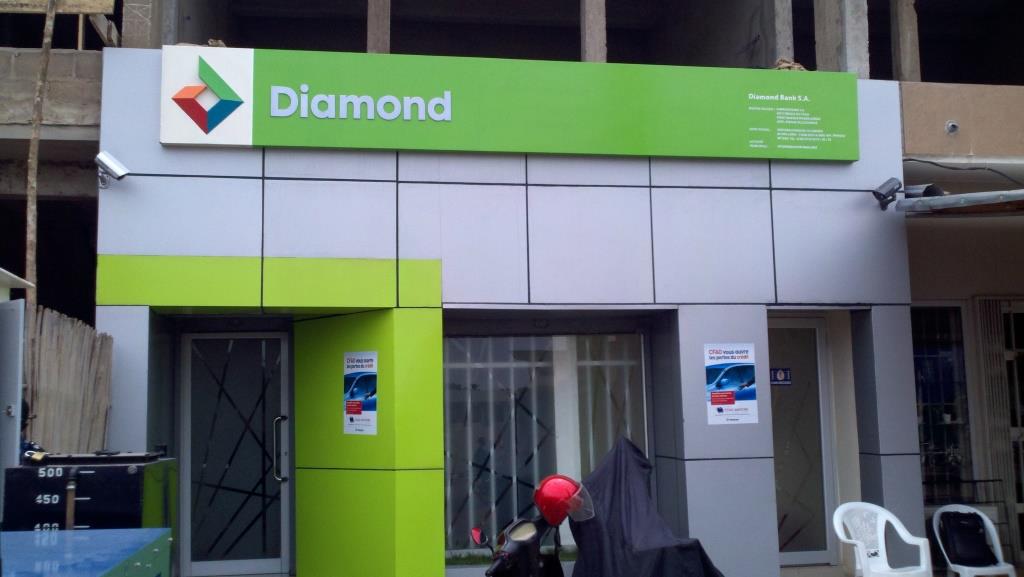
One news item that has dominated the capital market space in Nigeria at the moment is the merger between Diamond Bank and Access Bank.
The merger between both parties was confirmed yesterday after initial denials by both banks, while the deal is expected to be finalised before the end of June 30, 2019.
It is important to note that both financial institutions are trading their equities on the floor of the Nigerian Stock Exchange (NSE).
In a release on Monday by Diamond Bank, its board said, “Based on the agreement reached by the boards of the two financial institutions, Diamond Bank shareholders will receive a consideration of N3.13 per share, comprising of N1.00 per share in cash and the allotment of 2 new Access Bank ordinary shares for every 7 Diamond Bank ordinary shares held as at the Implementation Date.
“The offer represents a premium of 260 percent to the closing market price of N0.87 per share of Diamond Bank on the Nigerian Stock Exchange as of December 13, 2018, the date of the final binding offer.”
This deal, according to the Chief Executive Officer of Diamond Bank, Mr Uzoma Dozie, “will create one of Africa’s leading financial institutions.”
Mr Dozie said, “There is clear strategic rationale for the proposed merger and strong complementarities between the two institutions,” noting that, “While Diamond Bank has pioneered Nigeria’s largest technology-led retail banking platform, Access Bank is one of Nigeria’s leading full-service commercial banks.”
He further said, “The board of Diamond Bank believes that the proposed combination of the two operations provides an exciting prospect for all stakeholders in both businesses and will create a financial institution with the scale, strength and expertise to capitalise on the significant opportunities in Nigeria and sub-Saharan Africa more broadly.”
For the CEO of Access Bank, Mr Herbert Wigwe, “Access Bank has a strong track record of acquisition and integration and has a clear growth strategy.
“Access Bank and Diamond Bank have complementary operations and similar values, and a merger with Diamond Bank, with its leadership in digital and mobile-led retail banking, could accelerate our strategy as a significant corporate and retail bank in Nigeria and a Pan-African financial services champion.
“Access Bank has a strong financial profile with attractive returns and a robust capital position with 20.1 percent CAR as at September 30, 2018.
“We believe that this platform, together with the two banks’ shared focus on innovation, financial inclusion and sustainability, can bring benefits to Access Bank and Diamond Bank customers, staff and shareholders.”
While the Central Bank of Nigeria (CBN) is believed to have midwifed this transaction, both shareholders of Access Bank and Diamond Bank will still have to approve the merger, which some have described as acquisition in reality.
However, Business Post analysts are of the view that shareholders of Diamond Bank will want to create a big obstacle to this merger, especially Carlyle Group, an American equity firm, which in 2014 became the leading individual shareholder in the bank with the acquisition of 17.7 percent of the company’s shares. At that time, the US-based company acquired 4.16 billion shares of Diamond Bank at N5.80k each.
While some minority shareholders may not reject the offering because of what Access Bank is putting forward, Carlyle Group, which has been speculated to have called for the resignation of Mr Dozie, may become the biggest hurdle to cross in making the merger see the light of the day.
As it has been reported in some sections of the media, the Pascal Dozie family, founder of Diamond Bank, had allegedly first obtained a loan from GTBank Plc, which was later allegedly taken over by Access Bank Plc.
The loan was said to have been used to chase foreign investors out of the bank, especially, Actis, in 2014, which allegedly sold their shares to the Dozie family at N7.50k per unit, receiving over $125 million from the deal.
Business Post gathered from a statement released then that the Dozie family, through Kunoch Holdings, had acquired the 14.8 percent stake of Actis DB Holdings Limited in Diamond Bank. Actis had invested heavily in Diamond Bank in 2007, when it bought the bank’s shares.
With the above, it is anticipated that Carlyle Group might feel cheated in the Access Bank/Diamond Bank deal and might want to fight back by frustrating it, especially when it has been speculated that the Dozie family are favouring Access Bank to take over Diamond Bank allegedly as pay back for the loan they allegedly obtained some year ago to pursue Actis out of the company.
Also from a leaked letter purportedly written by a former Chairman of Diamond Bank, Mr Seyi Bickerstheth, which was later leaked to the media, Carlyle Group has not been in support of this transaction and the leadership of Mr Dozie.
Mr Bickerstheth, who resigned from the bank over a month ago alongside three other non-executive directors, claimed Carlyle Group had wanted a situation where fresh capital would be injected into Diamond Bank for recapitalisation instead of handing over the bank to Access Bank on a platter of gold.
According to letter, the group had insisted that for the cash injection to happen, Mr Dozie will first have to relinquish his position as the CEO.
“After several discussions, the CEO, of the bank who is also a representative of the second largest shareholder Kunoch Ltd, agreed to resign effective January 3, 2019 but would not tender his letter to confirm his verbal notification.
“In response, the representative of CSSAF DBN Holdings therefore at the board meeting held on October 18, 2018 put forward a motion for the removal of the CEO with immediate effect. This was despite continuous negotiations and attempts by members of the board, to provide an amicable solution to this impending shareholder fight and reaching several tentative agreements, which were frustrated by both parties.
“Nonetheless due to technical reasons and reluctance of board members regarding an immediate removal of the CEO, the vote for the removal of the CEO was postponed, pending legal clarifications, which could not be provided by the Company Secretary,” the letter had said.
It had said further that, “The CEO, at the October 18 2018 meeting, had a financial adviser appointed by the executive management without reference to the board to present to the board various strategic options for recapitalization either through an internal rights issue or possible merger with other Tier 1 banks.
“While the board stated that this was to have been presented to the board capital raising committee, it allowed the presentation to be made. The presentation, though based on 2017 financials was still very high level and, was well received by the board and the board directed that the recommendation be passed on to the capital raising committee of the bank to evaluate this along with all other options being considered – new injection of capital by the shareholders, merger with a local bank or position to partner with an international bank not currently operating in Nigeria
“On Friday October 19, 2018, due to the lack of clarity on the motion for immediate removal of the CEO, the representative of CSSAF DBN Holdings informed board members that as a majority shareholder CSSAF DBN Holdings would call for an Extraordinary General Meeting to remove the CEO since the board had not voted on the matter.
“The 4 NEDs then decided that it was becoming a shareholder fight, which they felt could have been averted either by the CEO tendering a letter indicating his resignation effective January 3, 2019 or by CSSAF DBN Holdings accepting to give the Board the responsibility of ensuring the issue is resolved amicably. Purely on this basis, the 4 NEDs wrote to resign their appointments immediately by emails to the Company Secretary to allow the 2 shareholders resolve the impasse.”
If you desire to read the full letter, kindly click HERE For now, what observers are not sure of is if Carlyle Group will approve the merger between Diamond Bank and Access Bank or would want to first force Access Bank to settle their over N20 billion loss before giving the deal its nod.



By Modupe Gbadeyanka
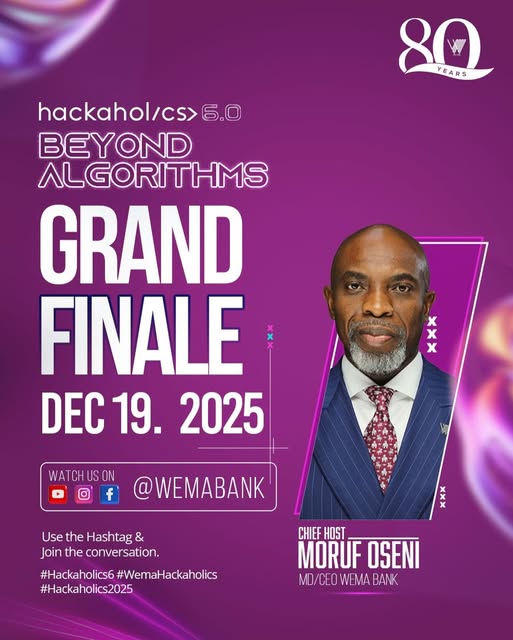
The six edition of the Hackaholics of Wema Bank Plc has produced 20 top finalists shared equally between two streams, Ideathon and Hackathon.
The Hackathon finalists are Rapid DEV, Secure IT, Neurafeed, Trust Lock Babcock, Pulse Track, IlluminiTrust, Trust Lock FUTA, Fix Fraud AI, KASH Flow and VOC AI.
The Ideathon finalists include PLOY, Fertitude, VarsityScape, Mama ALERT, StockMed, Chao, All Arbitrate, FarmSlate, Sane AI and Cycle X.
They emerged after a two-day pre-pitch held on December 16 and 17, 2025, for the grand finale slated for Friday, December 19, 2025.
They grand finale of Hackaholics 6.0 will convene the top players in Africa’s tech and innovation ecosystem, creating an avenue for these finalists to not only put their creativity to the ultimate test but also give their solutions visibility to potential investors for additional funding opportunities beyond the prizes to be won.
The prizes to be won for the Ideathon include N25 million for the winner, N20 million for the first runner-up, N15 million for the second runner-up and N5 million each for two women-led teams.
In the Hackathon category, the first to fourth-place winners will receive N20 million, N15 million, N10 million and N5 million, respectively.
The pre-pitch saw the top 43 contenders battle in a game of innovation and problem solving, presenting compelling pitches for a chance to make it to top 10 in their respective streams.
After a rigorous stretch of pitches and presentations, the top 20 emerged, securing their spot in the grand finale of Hackaholics 6.0.
“Hackaholics started off as a hackathon and morphed into an ideation. For Hackaholics 6.0, the sixth edition, we decided to give both the builders of new solutions and the refiners of existing ones, an opportunity to make meaningful impact.
“For us at Wema Bank, we understand that innovation isn’t just building from scratch. Sometimes, it’s looking at what exists and developing new ways to optimise that and create more efficiency. This is the idea behind our two-stream Ideathon-Hackathon structure.
“Every year, Hackaholics shows us just how eager and motivated Nigerian youth are when it comes to exploring creativity and innovation, and we are honoured to be the institution that provides them with the platform and resources to put this drive to good use.
“We toured seven cities, indulged 1,460 participants and discovered hundreds of remarkable ideas; some of which needed some refining and some of which deserved to move to the next stage.
“For those who needed to go back to the drawing board, we provided useful guidance and for the top contenders, we were able to shortlist to the top 43, who proceeded to the pre-pitch. To every participant, Wema Bank is proud of you. This is just the beginning,” the chief executive of Wema Bank, Mr Moruf Oseni, said.


By Adedapo Adesanya
The Nigeria Customs Service (NCS) says it will enforce penalties against designated banks that delay the remittance of customs revenue, in a move aimed at strengthening transparency and safeguarding government earnings.
This was disclosed in a statement on the NCS official account on X, formerly known as Twitter and signed by its spokesman, Mr Abdullahi Maiwada, who said the delays undermine the efficiency, transparency, and integrity of government revenue administration.
“The Nigeria Customs Service has noted instances of delayed remittance of customs revenue by some designated banks following reconciliation of collections processed through the B’odogwu platform,” the statement read.
“Such delays constitute a breach of remittance obligations and negatively impact the efficiency, transparency, and integrity of government revenue administration.
“In line with the provisions of the Service Level Agreement executed between the Nigeria Customs Service and designated banks, the Service hereby notifies stakeholders of the commencement of enforcement actions against banks found to be in default of agreed remittance timelines.”
Mr Maiwada disclosed that any bank that fails to remit collected Customs revenue within the prescribed timeline will be liable to penalty interest calculated at three per cent above the prevailing Nigerian Interbank Offered Rate for the period of the delay.
He added that affected banks would be formally notified of the delayed amounts, the applicable penalty, and the deadline for settlement.
“Accordingly, any designated bank that fails to remit collected Customs revenue within the prescribed period shall be liable to penalty interest calculated at three per cent above the prevailing Nigerian Interbank Offered Rate for the duration of the delay.
“Affected banks will receive formal notifications indicating the delayed amount, applicable penalty, and the timeline for settlement,” the statement read.

By Aduragbemi Omiyale
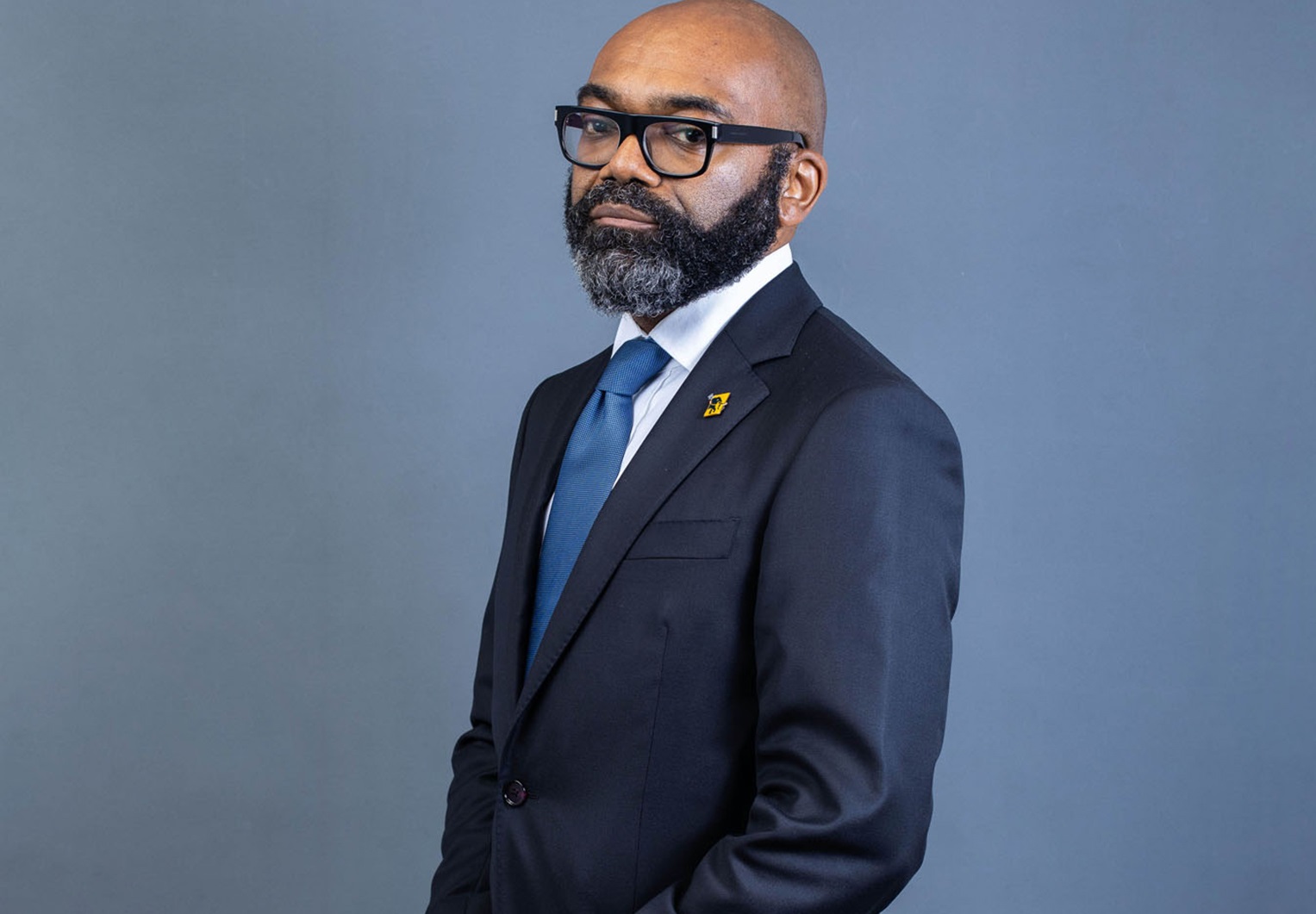
The deputy managing director of First Bank of Nigeria (FBN) Limited, Mr Ini Ebong, has offloaded some shares of FBN Holdings Plc, the parent firm of the banking institution.
A regulatory notice from the Nigerian Exchange (NGX) Limited confirmed the development on Thursday.
It was disclosed that the transaction occurred on Friday, December 12, 2025, on the floor of the stock exchange.
The sale involved about 11.8 million shares, precisely 11,783,333 units traded at N31.14 per share, amounting to about N366.9 million.
Mr Ebong, who studied Architecture from University of Ife and obtained Bachelor and Master of Science degrees, became the DMD of First Bank in June 2024. Prior to this appointment, he was Executive Director, Treasury and International Banking since January 2022.
He was previously the Group Executive, Treasury and International Banking, a position he held since 2016 after serving as the bank’s Treasurer from 2011 to 2016.
Before joining First Bank, he was the Head of African Fixed Income and Local Markets Trading, Renaissance Securities Nigeria Limited, the Nigerian registered subsidiary of Renaissance Capital. He also worked with Citigroup for 14 years as Country Treasurer and Sales and Trading Business Head.
He has a passion for market development and has worked actively to drive change and internationalisation of the Nigerian financial markets: foreign exchange, fixed income and securities.
He has worked closely with regulatory bodies such as the Central Bank of Nigeria (CBN) and the Debt Management Office (DMO) in assisting with the development of fresh monetary and foreign exchange policies, to broaden and deepen markets and open them up to international practices.
At various times he has facilitated and delivered courses and seminars on a wide variety of subjects covering Money Markets, Securities and Foreign exchange trading and market risk management subjects to regulators, corporate customers, banks and market participants.










-
 Feature/OPED6 years ago
Davos was Different this year
-
Travel/Tourism9 years ago
Lagos Seals Western Lodge Hotel In Ikorodu
-

 Showbiz3 years ago
Estranged Lover Releases Videos of Empress Njamah Bathing
-
 Banking7 years ago
Sort Codes of GTBank Branches in Nigeria
-

 Economy3 years ago
Subsidy Removal: CNG at N130 Per Litre Cheaper Than Petrol—IPMAN
-

 Banking3 years ago
First Bank Announces Planned Downtime
-

 Banking3 years ago
Sort Codes of UBA Branches in Nigeria
-

 Sports3 years ago
Highest Paid Nigerian Footballer – How Much Do Nigerian Footballers Earn