

Economy
Nigeria to Expect $340.8m IPOs, $2.9b M&A in 2019—Report


The Global Transactions Forecast (Forecast) issued by global law firm Baker McKenzie and Oxford Economics (OE) has showed that the value of domestic Initial Public Offering (IPO) in Nigeria this year should reach $340.8 million, $139.7 million in 2020 and $216.3 million in 2021.
According to the Head of Capital Markets at Baker McKenzie in Johannesburg, Wildu Du Plessis, “Political instability caused a big collapse in capital raising in Nigeria in recent years, but it’s good to see that Nigeria is recovering and that there is a return of predicted IPOs for 2019, 2020 and 2021. Hopefully this is the start of a long upswing in capital raising activity in the country.”
Also in the report, it was predicted that Nigeria should see a rise in the value of mergers and acquisitions in 2019.
It was disclosed that last year, mergers and acquisitions (M&A) activity grew in 2018.
“Economic growth in Nigeria has recovered slowly in the last two years as a gradual increase in both oil prices and oil output have supported expansion, and dealmaking has followed suit. M&A activity showed an improvement in 2018 from 2017, led by two major inbound acquisitions from the United States.
“And with better macroeconomic fundamentals for 2019, total M&A value it set to reach a cyclical peak at just below $3bn in total M&A,” says Morne van der Merwe, Head of Corporate/M&A at Baker McKenzie in Johannesburg.
According to the Global Transactions Forecast, M&A deals in Nigeria in 2017 amounted to $469.8 million, rising to $2.7 billion in 2018.
In 2019, it is expected that deals worth around $2.9 billion will be concluded, dropping slightly to $2.5 billion in 2020.
In 2021, M&A deal value in Nigeria is forecast to rise to around $3 bn. In terms of deal volume, there were 26 M&A deals in Nigeria in 2017, dropping to 23 in 2018. In 2019, 24 M&A deals are expected to be concluded in Nigeria, rising to 27 in 2020 and increasing again to 38 in 2021.



By Adedapo Adesanya
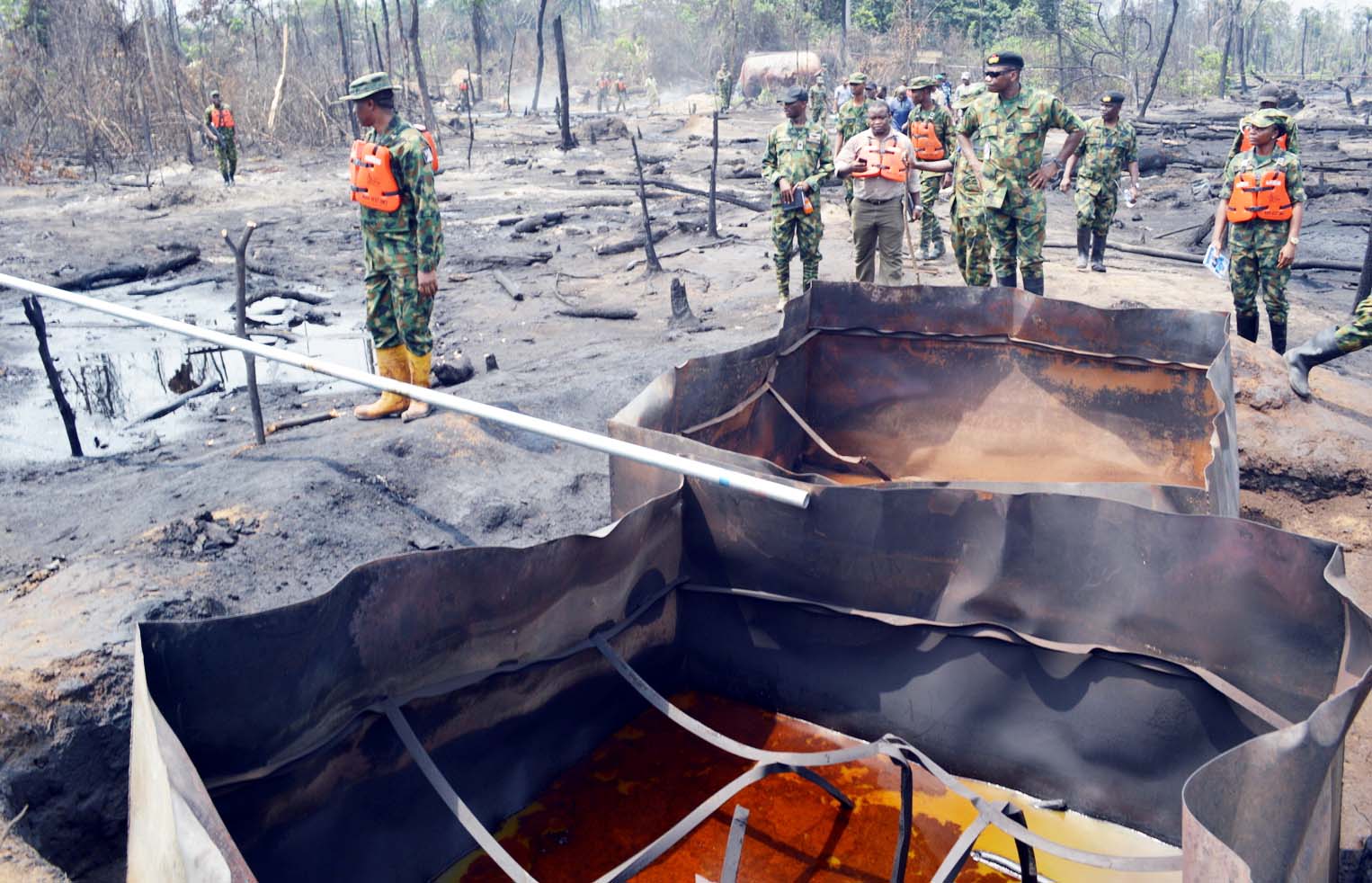
The Nigerian Upstream Petroleum Regulatory Commission (NUPRC) has disclosed that ExxonMobil and its partners have committed $1 billion to on-block activities for the Usan Infill project in oil mining lease (OML) 138, a development expected to add 40,000 barrels per day of oil production.
According to a statement by NUPRC spokesperson, Mr Eniola Akinkuotu, the managing director of ExxonMobil affiliates in Nigeria, Mr Jagir Baxir, announced the investment commitment at the ongoing 2026 NOG Energy Week Conference on Tuesday.
Mr Akinkuotu said the investment is expected to add 40,000 barrels per day as Nigeria seeks to attract new upstream investment and raise crude oil production through the development of offshore and onshore assets.
“Esso Exploration and Production is the operator of OML 138, which contains the Usan field. The block is operated under a Production Sharing Contract with NNPC Limited,” he said.
“Co-venture partners in OML 138 include Chevron, TotalEnergies, and Nexen, a wholly owned subsidiary of CNOOC.
“As a short-cycle investment, the project is expected to sustain and increase production from the Usan field, with first production within 18 months after the seismic data identified the investment opportunity.”
Also, the chief executive of NUPRC, Mrs Oritsemyiwa Eyesan, said the announcement was particularly important because Esso Exploration and Production Nigeria – ExxonMobil’s affiliate – had not undertaken any drilling operation since 2016.
“With Esso’s last drilling operation dating back to 2016, the resumption of drilling signals renewed potential and value in our deep water acreage,” she said, noting that her organisation remains steadfast in advancing Nigeria’s portfolio of deep water projects.
She noted that the projects are critical to meeting the country’s production targets, boosting oil and gas reserves, sustaining government revenue, and strengthening investor confidence.
According to the statement, the NUPRC presented petroleum prospecting licences (PPLs) from the successful conclusion of the 2022/2023 mini bid round and the Nigeria 2024 licensing round.
“Some of the companies that were presented with their awards at the venue include: Broron Energy Limited (PPL 2009), Petroli Energy Marketing and Supply Limited (PPL 269), Sahara Deepwater Resources Limited (PPL 270 and PPL 271) and Tulcan Energy E&P Co (PPL 2008),” NUPRC said.
The commission said execution ceremonies for companies whose representatives were absent would be held at later dates agreed upon by both parties.
According to the NUPRC, the exercise covers 12 successful awardees across 19 PPLs, spanning a balanced mix of deep offshore, shallow water and continental shelf acreages.
The commission said the portfolio reflects the wide range of investment opportunities offered through the licensing rounds.
NUPRC described the awards as another major milestone in Nigeria’s ongoing drive to attract investment into the upstream petroleum sector.
The commission added that the awards would help accelerate exploration activities, expand the country’s hydrocarbon reserves, and generate long-term value for the Nigerian economy.
By Adedapo Adesanya
The Nigerian National Petroleum Company (NNPC) Limited has announced the signing of six strategic agreements with key partners, ranging from Memorandum of Understanding (MoU), Gas Supply Agreement (GSA) and other gas transportation deals, marking a significant milestone in Nigeria’s journey towards industrial revitalisation and enhanced energy security.
The agreements, executed on the sidelines of the ongoing 25th NOG Energy Week in Abuja on Tuesday, include: an MoU with Ajaokuta Steel Company Limited, ASCL; a Gas Sale Aggregation Agreement with Ajaokuta Steel Company Limited; a GSA with UTM FLNG; a Network Entry Agreement with Chevron Nigeria Limited; a Network Entry Agreement with AGPC, and a Network Entry Agreement with NNPC Exploration & Production Limited.
According to the chief executive of the NNPC, Mr Bayo Ojulari, the agreements underscore the state oil company’s commitment to advancing the federal government’s gas-based industrialisation agenda, driving sustainable economic growth and enhancing Nigeria’s energy security.
“What we are witnessing today is not just about signing agreements. It is about igniting the engine of Nigeria’s industrialisation. Gas is the key. It is a source of revenue and profit. It is also the only product that can have that level of industrial impact on Nigeria, more than any other hydrocarbon,” Mr Ojulari stated.
He particularly described the agreements as a testament to NNPC’s shared commitment to transparency, efficiency, and a standardised framework for Nationwide gas utilisation, which will unlock new supply capacity for the domestic market and solidify the role of gas as a catalyst for economic transformation.
Mr Ojulari noted that the agreements signal a new era of strategic partnerships that will drive local content, enhance energy security and accelerate Nigeria’s journey towards becoming a global industrial powerhouse.
He described NNPC as the partner of choice. “We are on a journey, even as we look forward to greater collaboration with industry partners.”
A cornerstone of the signing ceremony was the agreement with Ajaokuta Steel Company Limited. In the MoU, NNPC and ASCL committed to extend collaboration beyond gas supply, aiming to catalyse the production of raw materials for oil and gas pipes, a critical enabler for major infrastructure projects such as the African- Atlantic Gas Pipeline and the Escravos -Lagos Pipeline System (ELPS).
The MoU is anchored on two major pillars: the revitalisation of the Ajaokuta Steel Complex and the expansion of domestic gas utilisation through the Nigerian Gas Transportation Network Code.
This was complemented by the execution of a 20-year Gas Sale and Aggregation Agreement between NNPC E&P Limited, Gas Aggregation Company of Nigeria Ltd/Gte and ASCL.
This agreement will see the supply of 3MMscf/d of Firm Contract Volumes and 47MMscf/d of Interruptible Contract Volumes to be used as feedstock for the power plant servicing the steel complex.
NNPC Ltd/Seplat JV also took a major step towards commercialising Nigeria’s vast natural gas resources by signing a 15-year Wet Gas Sale and Purchase Agreement WGSPA between the NNPC Ltd/Seplat Energy Producing Nigeria Unlimited Joint Venture and UTM FLNG Limited.
Under the agreement, the Joint Venture will supply 200 million standard cubic feet of gas per day (MMscf/d) to the UTM Floating LNG project, providing the long-term feedgas certainty required to support financing and position the project for a Final Investment Decision (FID) in the fourth quarter of 2026.
Further demonstrating its commitment to a regulated and efficient gas market, NNPC announced the successful migration of legacy interconnection agreements to the new Nigerian Gas Transportation Network Code. This involved the signing of Network Entry Agreements with three major gas producers.
These agreements, signed with Chevron Nigeria Limited, CNL, AGPC, and NEPL, will inject up to 800MMscf/d of natural gas into the domestic transportation network. This will serve Nigeria’s power plants, Gas-Based Industries (GBIs), and industrial clusters, significantly enhancing network connectivity and operational flexibility while improving the security of gas supply.
By Adedapo Adesanya
The International Monetary Fund (IMF) has retained Nigeria’s economic growth projections at 4.1 per cent for 2026 and 4.3 per cent for 2027, expressing confidence that ongoing macroeconomic reforms will continue to support the country’s recovery.
The projections, contained in the IMF’s July 2026 World Economic Outlook (WEO) Update titled “Global Economy in Crosscurrents of War and Technology”, remain unchanged from the forecasts released in April, despite mounting global uncertainties stemming from the conflict in the Middle East.
According to the report released yesterday, Nigeria’s growth outlook is being supported by improved macroeconomic stability and favourable terms of trade arising from its status as an oil-exporting nation.
However, the Bretton Woods institution warned that rising prices of essential goods could offset part of these gains by worsening poverty and food insecurity across the country.
The report stated that, “Nigeria is supported by improved macroeconomic stability and favourable terms of trade effects, though higher prices for essentials are expected to further aggravate poverty and food insecurity.”
Speaking during the IMF’s virtual briefing on the July 2026 World Economic Outlook Update for Sub-Saharan Africa and Nigeria, Division Chief in the IMF’s Research Department, Ms Deniz Igan, described Nigeria as one of the region’s stronger-performing large economies, noting that policy reforms have strengthened macroeconomic stability.
“Just to give you a sense, the two largest economies in the region, Nigeria is expected to grow at 4.1 per cent, quite stable, and this is supported by improved macroeconomic stability and favourable terms of trade, with Nigeria being an oil exporter,” Ms Igan said.
She, however, cautioned that inflationary pressures on essential commodities remain a major concern.
“At the same time, tighter prices, so there is some offset to that positive terms of trade effect because higher prices for essentials are expected to aggravate poverty and food insecurity,” she added.
The lender also retained Nigeria’s 2027 growth forecast at 4.3 per cent, as it noted that recent economic reforms are laying the foundation for sustained expansion despite persistent global headwinds.
For the global economy, the IMF projected growth to moderate to 3.0 per cent in 2026 from 3.5 per cent recorded in 2025, attributing the slowdown largely to the economic impact of the Middle East conflict, which is expected to offset part of the gains from the accelerating artificial intelligence-driven technology cycle.
For Sub-Saharan Africa, the IMF projected economic growth of 4.3 per cent in 2026 before improving to 4.5 per cent in 2027. The latest forecast represents a 0.1 percentage point upward revision from the Fund’s April outlook.
Ms Igan noted that the region had experienced broad-based economic recovery in 2025 before the outbreak of the Middle East conflict altered the growth trajectory.
“Let me start by noting that we actually had seen a broad-based pickup in growth in 2025 in the region. We had an acceleration of growth to 4.5 per cent.
“Now, the war obviously has clouded the outlook for 2026, and we are now projecting a softening of growth to 4.3 per cent in the region as a whole,” she said.
