

Economy
Nigeria Likely to Adopt Single Exchange Rate 2020—Fitch

By Dipo Olowookere
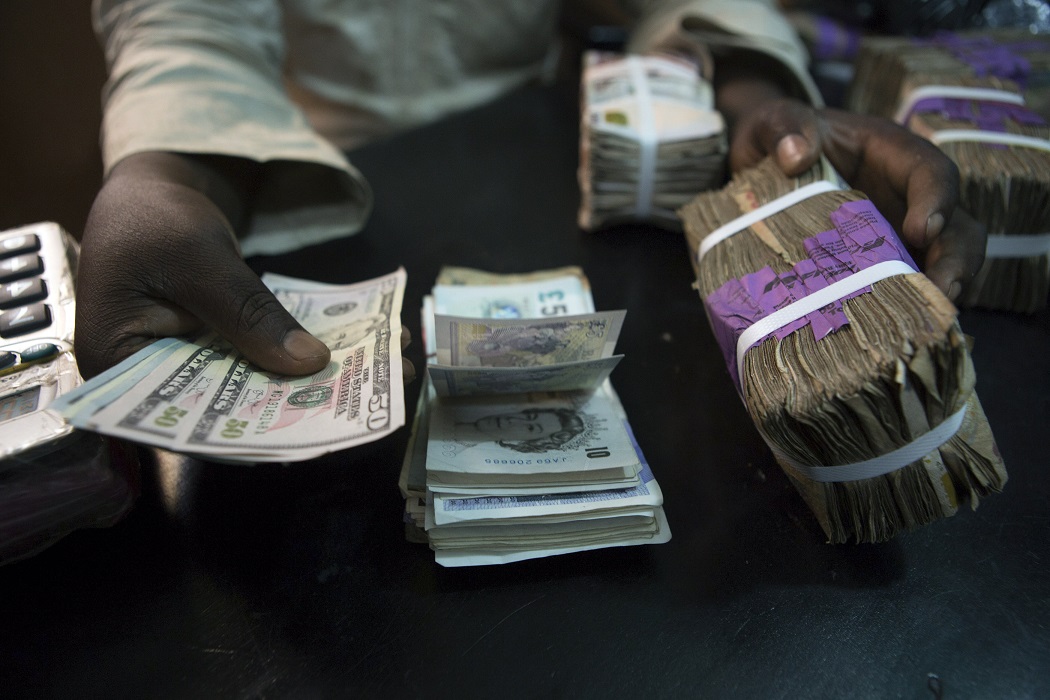
The multiple exchange rate system operated by the Central Bank of Nigeria (CBN) has been talked about and kicked against by several financial experts and economists in and outside the country. They have always argued that the system was absurd.
In the wake of this present administration, former CBN Governor and now Emir of Kano, Mr Sanusi Lamido, said the system was making few individuals millionaires and billionaires at the expense of the nation.
This is because the central bank has a rate of N305 per Dollar that is far lesser than the rates at the black market as well as the investors and exporters forex window of N363 to a Dollar.
The traditional ruler had argued that with the present system, it was easy for few powerful Nigerians to obtain forex at the interbank rate and make a profit of over N50 per Dollar selling to black market traders.
But the CBN has always argued that it would gradually unify the different rates at the forex market segments.
Business Post reports that the major market windows in the country are the Interbank, Investors & Exporters, Bureau De Change (BDC) and the black market.
Recently, renowned rating agency, Fitch, released a report, where it said the country’s apex bank will likely not carry out any forex reform this year but in 2020.
Before the February 2019 presidential, which was won by the incumbent President Muhammadu Buhari, his opponent at the poll, Mr Atiku Abubaker, had promised a unification of the rates to allow a more free-market.
With the election over, Fitch said in the short-term, “We believe that there will be little change to Nigeria’s current exchange rate regime in the immediate aftermath of the February 2019 general election.
“The official interbank rate currently sits at N305.87/$, while the ‘investor and export’ window (also known as the Nigerian Autonomous Foreign Exchange Rate, NAFEX) is trading at N362.68/$.
“The official interbank rate is officially pegged to the US dollar at the current level and used primarily as a reference rate for transactions by the state-owned Nigerian National Petroleum Corporation (NNPC).
“The NAFEX rate – at which investors, importers and non-state oil exporters buy and sell FX – is ostensibly free-floating but is also in effect managed.
“We believe that the authorities will remain determined – and able – to hold rates around their existing levels in the months ahead,” Fitch said in the report obtained by Business Post.
In terms of ability, Nigeria’s total gross reserves stood at $43.1 billion in late January – some 6.2 percent above levels seen at this point last year.
Import cover stands at more than 8 months, which although down from the October 2017 level of more than nine months is well above Nigeria’s recent low of 4.8 months in 2014.
“This level of reserves will give the authorities the resources to keep the market supplied in the context of slowing dollar inflows,” the agency stated.
Fitch said it has the strong believe that in the long-term, “We expect a shift away from the multi-tiered exchange rate and a consolidation of exchange rates, initially around the prevailing NAFEX level.
“However, this is unlikely to take place in 2019, and we thus expect the interbank rate – the rate that we forecast – to end the year at N306/$.
“Rather, we believe it is far more likely to take place in 2020, alongside the projected completion of the 650,000bbl/day Dangote oil refinery,” it said.
According to the National Bureau of Statistics (NBS), Nigeria’s downstream oil and gas sector imported petrol worth N1.02 trillion in the third quarter of 2018 alone. The coming online of the refinery will go some of the way towards easing the size of the import bill and making the effective devaluation of the interbank rate (which is used primarily for fuel imports) less painful.
“We thus expect the new Naira rate to end the year at some N370$.
“Following the unification, we believe that a gradual depreciation of the new Naira rate is likely. The authorities are likely to continue heavily managing its exchange rate regime.
“However, deteriorating fundamentals will put downward pressure on the currency. This underpins our forecast that the Naira will end 2020 at N370/$, and will continue to depreciate steadily thereafter.
“We expect the price of Brent crude to average $75.0/bbl in 2019 and $82.0/bbl in 2020, and while this is an improvement on the $71.7/bbl in 2018, oil prices will remain well below their 2011-14 highs, and risks are weighted to the downside,” Fitch said.
“Our Oil & Gas team currently see limited growth in the sector beyond 2019 given a very restricted pipeline of projects, although there is an upside risk that genuine reform of the industry will spur a resurgence in much needed investment.
“In the context of only muted growth in oil revenues, we expect the Central Bank of Nigeria (CBN) to allow the unified rate to devalue slowly in a bid to ease the pressure on reserves,” it concluded.




By Adedapo Adesanya
Three securities lifted the NASD Over-the-Counter (OTC) Securities Exchange by 1.38 per cent on Friday, July 3, with the NASD Security Index (NSI) up by 58.80 points to 4,307.26 points from 4,248.46 points, and the market capitalisation closing higher by N35.30 billion to N2.585 trillion from N2.549 trillion.
The price gainers were led by 11 Plc, which expanded by N20.05 to close at N220.55 per share compared with the previous day’s N200.50 per share, FrieslandCampina Wamco Nigeria Plc increased by N5.36 to N151.82 per unit from N146.46 per unit, and Central Securities Clearing System (CSCS) Plc appreciated by N3.52 to N90.74 per share from N87.22 per share.
Yesterday, the value of transactions surged by 1,431.2 per cent to N160.1 million from the preceding session’s N10.5 million, and the volume of trades rose by 303.7 per cent to 1.8 million units from 440,653 units, while the number of deals decreased by 34.4 per cent to 21 deals from 32 deals.
Great Nigeria Insurance (GNI) Plc was the most traded stock by value on a year-to-date basis, with 3.4 billion units sold for N8.4 billion, followed by Infrastructure Credit Guarantee (Infracredit) Plc with 2.3 billion units worth N6.5 billion, and CSCS Plc with 70.7 million units transacted for N4.9 billion.
GNI Plc was also the most traded stock by volume on a year-to-date basis, with 3.4 billion units valued at N8.4 billion, followed by Infracredit Plc with 2.3 billion units exchanged for N6.5 billion, and Resourcery Plc with 1.1 billion units traded for N415.7 million.
By Dipo Olowookere
The losing streak on the Nigerian Exchange (NGX) Limited was halted on Friday after the bourse closed higher by 2.19 per cent at the close of trading activities.
The gains reported by Nigerian stocks were buoyed by renewed bargain-hunting by investors, which resulted in all the key sectors of Customs Street ended in the green territory.
The banking space rose by 2.78 per cent, the insurance counter appreciated by 1.26 per cent, the energy segment expanded by 0.36 per cent, the consumer goods index chalked up 0.06 per cent, and the industrial goods sector grew by 0.05 per cent.
Consequently, the All-Share Index (ASI) went up by 4,918.37 points to 229,240.34 points from 224,321.97 points, and the market capitalisation increased by N3.156 trillion to N147.103 trillion from N143.947 trillion.
Investor sentiment was bullish after 34 stocks ended on the price gainers’ chart and 18 stocks finished on the losers’ log, representing a positive market breadth index.
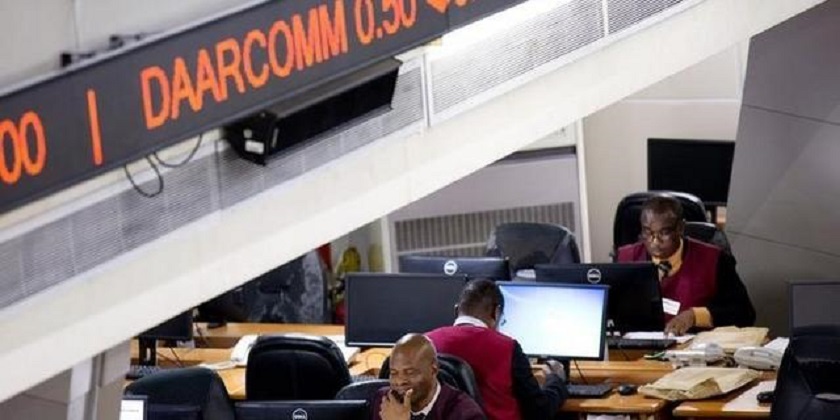
The quintet of The Initiates, Universal Insurance, DAAR Communications, Omatek, and Airtel Africa surged by 10.00 per cent to sell for N25.85, 88 Kobo, N1.65, N1.76, and N5,274.00, respectively.
On the flip side, International Energy Insurance lost 9.96 per cent to trade at N4.70, Meyer shed 9.95 per cent to close at N18.55, Veritas Kapital dropped 5.07 per cent to finish at N1.31, Fidelity Bank slipped by 2.17 per cent to N18.00, and Jaiz Bank crashed by 1.84 per cent to N28.12.
During the session, a total of 414.7 million equities worth N25.1 billion exchanged hands in 47,106 deals compared with the 855.4 million equities valued at N28.4 billion transacted in the preceding day in 51,609 deals, implying a contraction in the trading volume, value, and number of deals by 51.52 per cent, 11.62 per cent, and 8.73 per cent, respectively.
By Adedapo Adesanya
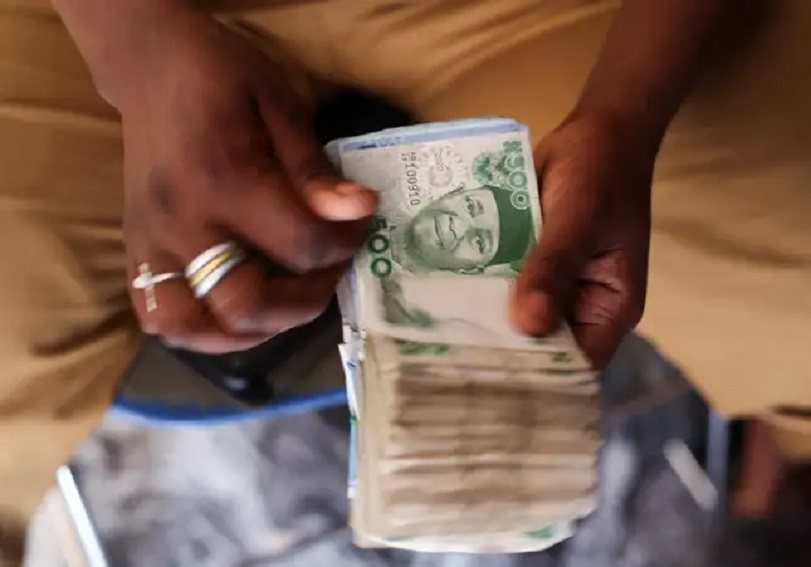
The Naira closed flat against the United States Dollar at N1,370.19/$1 in the Nigerian Autonomous Foreign Exchange Market (NAFEX) on Friday, July 3.
However, it appreciated against the Pound Sterling in the same market segment by N2.29 to settle at N1,829.88/£1 compared with the previous day’s N1,832.17/£1, and marginally depreciated against the Euro by 4 Kobo to close at N1,568.32/€1 versus Thursday’s closing price of N1,568.28/€1.
At the parallel market, the Naira also traded flat against the US Dollar at N1,390/$1, and at the GTBank forex desk, it also maintained stability at N1,832/$1.
Market conditions improved shortly after the following minimal intervention by the Central Bank of Nigeria (CBN) through modest Dollar sales, which boosted liquidity and supported stronger trading activity.
Easing pressure came after half-year profit-taking tapered down, while continued stronger policy signals from the central bank add to near-term support.
Deals executed at the official market on Friday came in at $70.430 million across 82 interbank deals, from $85.517 million the previous day.
Meanwhile, the cryptocurrency market continued its recovery after June non-farm payrolls printed at 57,000, less than half the 113,000 consensus, sending the implied probability of a September Federal Reserve rate hike from 64 per cent to 54 per cent and dragging AI stocks sharply lower.
Weak labour data reduces inflationary pressure and, by extension, the Federal Reserve’s justification for holding rates elevated. That transmission mechanism is direct: lower rate-hike odds compress the opportunity cost of holding non-yielding assets like crypto.
Bitcoin regained the $62,000 mark after it rose by 1.3 per cent to $62,475.29.
Cardano (ADA) gained 6.6 per cent to trade at $0.1759, Ripple (XRP) appreciated by 3.5 per cent to $1.14, Ethereum (ETH) expanded by 2.4 per cent to $1,756.82, Dogecoin (DOGE) improved by 2.1 per cent to $0.0768, Solana (SOL) chalked up 1.8 per cent to $82.65, TRON (TRX) increased by 1.5 per cent to $0.3235, and Binance Coin (BNB) soared by 1.4 per cent to $569.12, while the US Dollar Tether (USDT) and the US Dollar Coin (USDC) traded flat at $1.00 apiece.

-
 Feature/OPED6 years ago
Davos was Different this year
-
Travel/Tourism10 years ago
Lagos Seals Western Lodge Hotel In Ikorodu
-

 Showbiz4 years ago
Estranged Lover Releases Videos of Empress Njamah Bathing
-
 Banking8 years ago
Sort Codes of GTBank Branches in Nigeria
-

 Economy3 years ago
Subsidy Removal: CNG at N130 Per Litre Cheaper Than Petrol—IPMAN
-

 Banking3 years ago
Sort Codes of UBA Branches in Nigeria
-

 Banking3 years ago
First Bank Announces Planned Downtime
-

 Sports3 years ago
Highest Paid Nigerian Footballer – How Much Do Nigerian Footballers Earn
2 Comments