Connect with us

Economy

Nigerian Firm Tops Seeds Index Ranking

Published

on

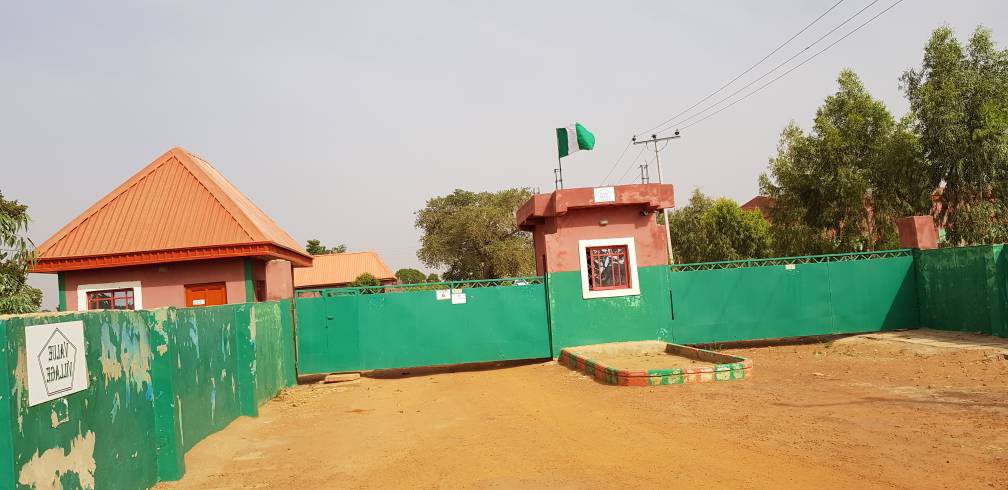
A company based in Nigeria known as Value Seeds Limited has topped the rankings in new research on seed companies operating in Western and Central Africa.

However, the overall picture is one of international and African seed companies falling short in delivering quality seed and new varieties to smallholder farmers.

This limits the potential to address food security, nutrition and climate resilience, according to a new study by the Amsterdam-based Access to Seeds Foundation.

While there is a growing number of seed companies active in the region, both home grown and international, less than half of the 23 companies researched conduct plant breeding in Western and Central Africa. This limits the release of new varieties adapted to the region, and explains the high number of varieties that are older than five years offered in company portfolios.

The Access to Seeds Index 2019 – Western and Central Africa ranks Value Seeds number one. Like most of the other companies from the region, it operates exclusively in its home country of Nigeria. It stands out for its maize and rice ‘value kits’, all-in-one input packages tailored for smallholders.

Also, it provides capacity building activities that specifically target women and next-generation farmers. Other Nigerian companies also dominate the top half, such as Maslaha Seeds, Premier Seed, and Da-Allgreen Seeds, showing the relative strength of the seed industry from Nigeria.

Ranked second is Technisem from France, which has the widest presence in the region, covering 17 countries and offering training in 13 of them. The company sets an example by establishing Novalliance, which taps into local potential of homegrown African seed companies. Among the top-ten index companies that belong to this group are Tropicasem from Senegal, Semagri from Cameroon, and Nankosem from Burkina Faso. Their combined breeding efforts result in the most up-to-date portfolio in the region, with a high number of newly released varieties.

“What both Value Seeds and Technisem represent is the importance of partnerships to improve access to seeds in the region,” said Ido Verhagen, Executive Director at Access to Seeds Index. “In the case of Value Seeds, its partnership with the Alliance for a Green Revolution in Africa (AGRA) paid off, as its grant-based support enabled the company to improve its products and intensify its outreach to smallholder famers.”

For the most part, open-pollinated varieties still dominate across the region, in contrast with Eastern Africa and South Asia. The exception is maize, for which hybrid varieties are more commonly available. In addition, research shows that for almost half (48%) of the crops, the most recent variety is older than five years, with only a fifth (21%) having a variety less than three years. The lack of newly developed varieties seriously impacts the resilience to a changing climate and emerging disease and pests, which reduces yields.

Compared to a dozen of companies active in Nigeria and Senegal, only one company is active in each of Central African Republic, Equatorial Guinea and Guinea-Bissau.

“Our study shows the potential of homegrown seed companies. However, most operate only in their home markets, which causes geographic imbalances in seed sector development,” said Mr Verhagen.

“This also means that capacity building activities offered by companies only reach farmers in a handful of countries. This limits the adoption of new technologies by farmers in overlooked countries”, he added.

“The relevance of access to seeds and plant breeding should not be underestimated,” said Verhagen. “The number of undernourished people in the world reached an estimated 821 million in 2017 – it’s rising. Climate change and weather extremes have been identified as a major reason for the increase. The seed industry has a vital role to play in helping farmers to adapt to climatic challenges while simultaneously raising production levels.”

According to the FAO, the number of undernourished people has been on the rise in Western Africa and Sub-Saharan Africa as a whole in recent years. Western Africa has seen undernourishment rise to 15.1% of the population in 2017 from 10.4% in 2010.

The Access to Seeds Index 2019 is one of the first Sustainable Development Goals (SDGs) benchmarks published by the World Benchmarking Alliance.

The alliance was launched in September 2018 during the UN General Assembly in New York. The Access to Seeds Index was established with support from the Bill & Melinda Gates Foundation and the Government of the Netherlands.

The Access to Seeds Index for Western and Central Africa focuses on 23 leading seed companies in this region. This was preceded by rankings of the industry in both Eastern and Southern Africa and South and Southeast Asia, along with a ranking of Global Seed Companies.


Dipo Olowookere is a journalist based in Nigeria that has passion for reporting business news stories. At his leisure time, he watches football and supports 3SC of Ibadan. Mr Olowookere can be reached via [email protected]

Click to comment

Leave a Reply

Your email address will not be published. Required fields are marked *

Economy

El-Rufai Gets Bail in Ongoing ICPC Corruption Proceedings

Published

on

icpc el rufai

By Adedapo Adesanya

Former Kaduna Governor Nasir Ahmad El-Rufai has been granted bail in the ongoing corruption case filed by the Independent Corrupt Practices and Other Related Offences Commission (ICPC).

However, Mr El-Rufai will remain in ICPC custody until he fulfils all the bail conditions set by the court.

The development was confirmed by his son, Mr Bello El-Rufai, shortly after the ruling.

This comes amid separate proceedings at the Kaduna State High Court, where the ICPC recently amended its charges against the former governor. Mr El-Rufai has pleaded not guilty to the allegations.

The chieftain of the opposition African Democratic Congress (ADC) was arraigned by the ICPC over charges related to alleged corruption and abuse of office during his tenure in the North-Western state from 2015 to 2023. Allegations ranging from abuse of office and fraud to intent to commit fraud and conferring undue advantage were levied against the politician.

The commission disclosed that both charges were instituted on March 18, 2026, as part of its ongoing efforts to enforce accountability and combat corruption.

The scrutiny of Mr El-Rufai by the ICPC follows the report of the Kaduna State House of Assembly’s ad hoc committee constituted in 2024 to investigate finances, loans and contracts awarded between 2015 and 2023 under his eight-year administration of the state.

Presenting the committee’s report during plenary last year, the committee chairman, Mr Henry Zacharia, alleged that most of the loans obtained by the El-Rufai administration within the eight years were not utilised for the purposes for which they were secured.

While receiving the report, the Speaker of the House, Mr Yusuf Dahiru Leman, alleged that about N423 billion was siphoned under the El-Rufai administration, leaving Kaduna State with heavy financial liabilities and a rising debt profile.

The committee recommended the investigation and prosecution of the former governor and several members of his cabinet over alleged abuse of office, award of contracts without due process, diversion of public funds, money laundering and reckless borrowing.

The Assembly subsequently endorsed a petition to the EFCC and the ICPC, urging them to take up the matter.

The embattled former FCT Minister is equally embroiled in a case with the federal government over alleged unlawful interception of the phone communications of the National Security Adviser, Mr Nuhu Ribadu.

Continue Reading

Economy

Nigeria Retains ‘B’ Rating as Fitch Foresees Naira Depreciation

Published

on

Fitch Ratings

By Adedapo Adesanya

Credit rating agency, Fitch, has affirmed Nigeria’s Long-Term Foreign Currency Issuer Default Rating at ‘B’ with a stable outlook, while projecting depreciation for the Naira in the near term.

The decision underscores the country’s large economy, relatively developed and liquid domestic debt market, substantial oil and gas reserves, and ongoing improvements in monetary and exchange-rate policies.

This comes as the firm expects the country’s external reserves to decline marginally to $47 billion by the end of this year, while inflation is projected to hover around an average of 16 per cent.

The rating agency in its latest report on Nigeria said the rating is constrained by weak governance indicators, high hydrocarbon dependence, high inflation, security challenges and structurally low revenue relative to peers.

Fitch while stating that expects disinflation trend to continue said the risks however remain, “Inflation has moderated since April 2025 supported by policy reforms, but remains structurally high, at 15 per cent year-on-year in February 2026,” adding that, “We expect inflation to average about 16 per cent in 2026, from 23 per cent in 2024, but to remain well above the ‘B’ median of 5.5 per cent.”

Fitch also said that recent measures by the Central Bank of Nigeria (CBN), including the removal of forex restrictions on the repatriation of oil export proceeds by international oil companies, should support further forex market normalisation, improve confidence and support relative naira stability after a 40 per cent depreciation in 2024.

It also noted that it expects “modest depreciation in the near term amid rising fiscal pressures and heightened external risks, while data quality concerns continue to weigh on policy credibility.”

“The CBN began easing monetary policy in September 2025, cutting the policy rate twice by a total of 100bp to 26.5 per cent after an extended tightening cycle. However, a looser fiscal stance ahead of the general election scheduled in January 2027 or further fuel price increases could reverse disinflation and prompt renewed monetary tightening.”

Noting that external reserves are expected to remain strong, it said gross reserves rose to $49.4 billion at end-March 2026, from $32 billion in mid-April 2024, and “we forecast a marginal decline to $47 billion at end-2026, reflecting higher spending pressures and external risks.

“However, we expect reserves to cover seven months of current external payments (CXP), well above the ‘B’ median of 4.3 months,” it said.

“Official disclosure on the composition of the CBN foreign-currency balance sheet remains limited, but the CBN has made substantial progress in unwinding foreign exchange swaps with local banks.

It estimates net reserves at $35 billion at end-2025 (5.5 months of CXP), up from about $4 billion at end-2023.

Continue Reading

Economy

Nigeria Targets Gas Delivery Through AKK Pipeline by July

Published

on

AKK Gas Project

By Adedapo Adesanya

Nigeria hopes to begin delivering natural gas to Abuja by July through its long-delayed Ajaokuta-Kaduna-Kano (AKK) gas pipeline.

According to the Nigerian Upstream Petroleum Regulatory Commission (NUPRC), this marks a key milestone for the country’s gas development plans.

“We’re hoping that by July, gas will be delivered to Abuja through the AKK gas pipeline,” a spokesperson for the commission told the regulator’s in-house magazine.

The 614-kilometre (382-mile) pipeline is designed to deliver more than 2.2 billion cubic feet of gas per day and is a core part of Nigeria’s strategy to shift its energy mix towards gas, supply power plants and industries in the north, and reduce reliance on diesel and fuel oil.

Nigeria holds Africa’s largest gas reserves, estimated at over 210 trillion cubic feet, but much of the country’s gas infrastructure remains underdeveloped, making the AKK pipeline a critical test of its gas-led growth ambitions.

The $2.8 billion project, first conceived in 2008, has missed several delivery targets, including earlier deadlines of 2023 and the final quarter of 2025.

Construction began in 2020 but was slowed by funding pressures and engineering challenges, most notably the crossing of the River Niger.

That section, widely regarded as the project’s most technically demanding, required drilling beneath the riverbed using horizontal directional drilling, often compared to a scaled-down version of the Eurotunnel.

Reuters reported that work on the project is moving at an advanced pace, with the critical pipeline more than 90% complete.

Gas transported through the AKK pipeline will be sourced from Nigeria’s southern producing areas largely through its interconnection with the East-West Obiafu-Obrikom-Oben (OB3) gas pipeline, according to industry officials.

Continue Reading

Trending